

Menu
 Shedding Light on the Risks
& Benefits of Medications
Shedding Light on the Risks
& Benefits of Medications
Shedding Light on the Risks
& Benefits of Medications
Benadryl Has Been Trusted for Decades. Many Doctors Say It Shouldn’t Be
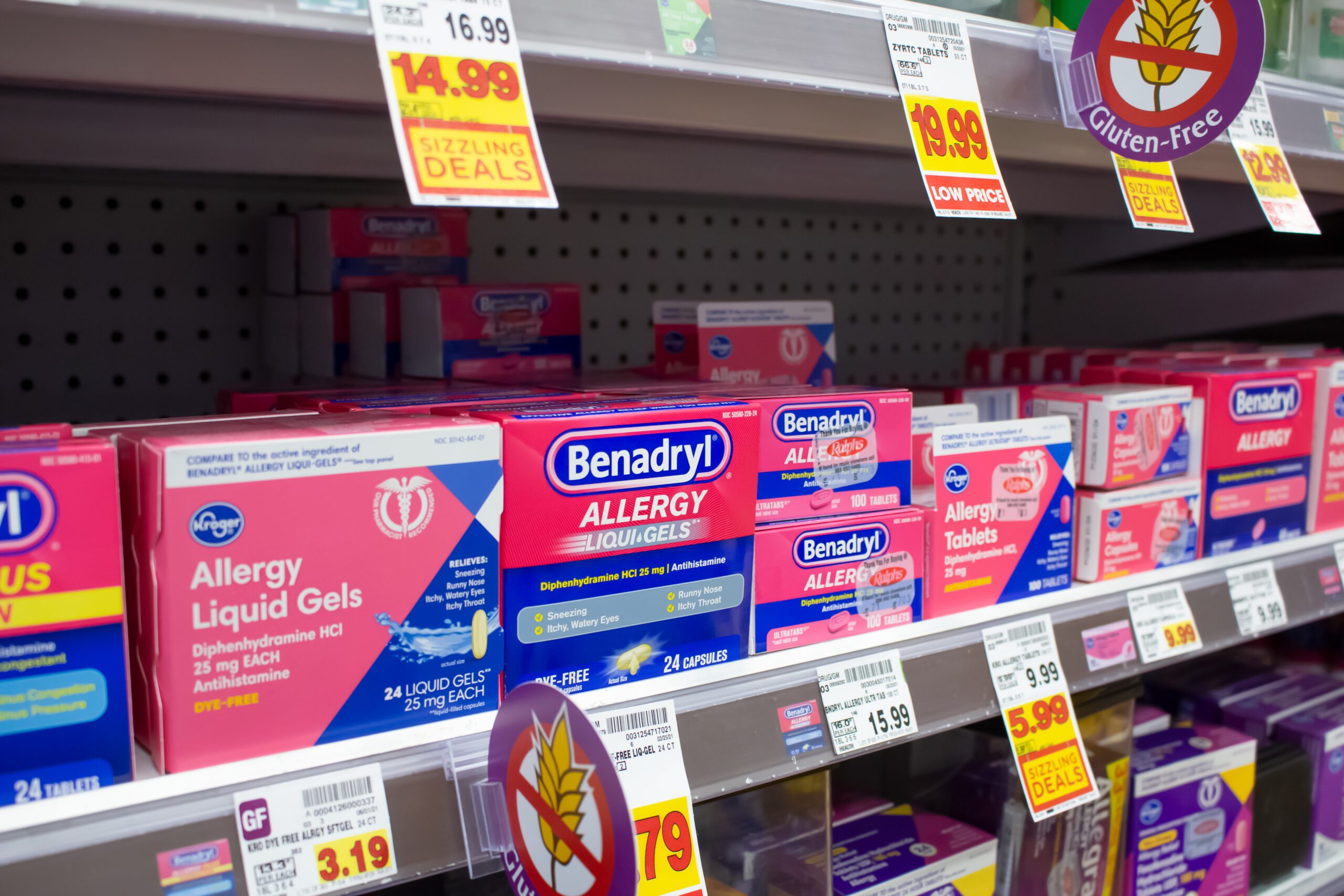
Photo: Shutterstock
Diphenhydramine is linked to severe and sometimes fatal side effects, yet remains widely sold over the counter. Physicians argue that safer alternatives exist, and question why the drug is still so easy to buy
January 6, 2026 (Updated on: March 27, 2026)
0 Comments
republish
Photo: Shutterstock
FACT CHECKED
republish this story
on this page:
In 2024, a 24-year-old female was rushed to the emergency department at Florida State University, where Marshall Frank, D.O., practices. Purple vomit and pill fragments were all over her face; her heartbeat was rapid and irregular.
Her family had found her unresponsive next to a half-empty bottle of Sleep-Aid, a generic over-the-counter (OTC) medication designed to help reduce sleeplessness. En route to the hospital, the woman suffered three seizures and required cardiopulmonary resuscitation, or CPR. Doctors later discovered that she had intentionally taken 182 of the 25 mg diphenhydramine tablets — a potentially deadly amount.
In a published report, Dr. Frank and his colleagues described the nearly-fatal incident as a classic case of an anticholinergic toxidrome, a constellation of symptoms resulting from an overdose on medications that block a type of chemical messenger in the nervous system called acetylcholine. Diphenhydramine — the active ingredient in many OTC sleep aids, cold medications, and Benadryl — is one such anticholinergic drug.
Toxicity from anticholinergic drugs are common enough that clinicians use a well-known mnemonic to recognize its symptoms: blind as a bat (blurred vision), dry as a bone (severe dryness), full as a flask (urinary retention), hot as a hare (elevated body temperature), red as a beet (flushed skin), mad as a hatter (vivid, often easily describable hallucinations), and tacky as a leisure suit (referring to tachycardia, a dangerously fast heart rate).
When those symptoms spiral, the consequences can be severe. An analysis of the Food and Drug Administration’s Adverse Event Reporting System (FAERS) indicates that more than half of the reported diphenhydramine cases between January 2013 and December 2024 were lethal.
It’s a striking finding for a drug that has been in circulation for generations and remains a fixture in household medicine cabinets. As newer and safer alternatives become available, some doctors believe that diphenhydramine no longer has a place on over-the-counter shelves.
Diphenhydramine’s Questionable Safety Profile
Diphenhydramine was first approved for prescription use in 1946, and marketed under the brand name Benadryl to treat allergic reactions. The drug became available over the counter in the 1980s and has since become a staple ingredient in more than 300 over-the-counter formulations, including cough medicine and pain relief products.
After more than 40 years on the OTC market, “people just assume that they can go to their drug store and on the OTC shelf there’s Benadryl,” says Randy Hatton, PharmD., a clinical pharmacist at the University of Florida.
But according to many experts, if evaluated under today’s clinical standards, Benadryl wouldn’t clear the approval bar. The reason lies in how legacy over-the-counter drugs are regulated in the United States.
Grandfathered In: How Benadryl Has Stayed on the Market
Before 1962, there were no federal regulations to ensure that marketed drugs were both safe and effective. When the Kefauver-Harris Drug Amendments of 1962 were passed, hundreds of thousands of drugs that were already available over the counter had to be assessed.
“Instead of using something like a new drug application, which is very rigorous, they (the FDA) established this separate system called the monograph process, which, to me, is flawed and should be reevaluated,” notes Dr. Hatton.
“Instead of using something like a new drug application, which is very rigorous, they (the FDA) established this separate system called the monograph process, which, to me, is flawed and should be reevaluated.”
Under the OTC monograph system, long-standing medications like Benadryl — and other diphenhydramine-containing products — are not required to conduct modern clinical trials to remain on the market. If an ingredient is deemed ‘generally recognized as safe and effective,’ or GRASE for its intended use, it can remain available even when much of the evidence dates back decades.
A Molecularly Promiscuous Drug
Diphenhydramine belongs to a class of drugs called first-generation antihistamines, which block the activity of the chemical messenger, histamine.
Our immune system releases histamine when it encounters allergens or foreign substances. Once histamine gloms onto specific receptors, it triggers inflammatory responses, such as hay fever, hives, itchiness, and swelling.
There are four types of histamine receptors in the human body — H-1, H-2, H-3, and H-4 — and diphenhydramine targets the H-1 receptor, which is located in organs such as the lungs, heart, and brain.
Because diphenhydramine prevents histamine from binding to the H1 receptor, it tempers the inflammatory responses triggered during an allergic reaction. However, the drug acts promiscuously, meaning it has various other dose-dependent effects throughout the body.
This broad activity helps account for both its popularity and its risks.
How Diphenhydramine Acts on the Brain and Body
The chemical structure of diphenhydramine allows it to cross the blood-brain barrier and interact with histamine receptors in the brain, causing sedation or drowsiness. That effect has made it a common ingredient in sleep aids for both adults and children, although there is a lack of evidence to show that it can actually improve sleep quality. Moreover, the drug’s long circulation time in the body causes some people to have a prolonged decrease in mental alertness and can pose a risk of workplace injuries and car accidents. In fact, an older study from Iowa found that drivers who took diphenhydramine for allergies performed worse on driving tests than after consuming two or three alcoholic drinks.
Diphenhydramine also interacts with the acetylcholine receptor — where the word ‘cholinergic’ is derived — in the brain, where the vomiting hub sits, making it useful to treat motion sickness and nausea. However, at high doses, the drug can also cause other anticholinergic effects, such as dizziness, seizures, delirium, and hallucination. Prolonged use of anticholinergics has also been linked to dementia or other cognitive impairments.
Aside from the anticholinergic effects, diphenhydramine also blocks sodium channel proteins, which generate electrical signals that enable the heart to contract and nerves to function properly. “We sometimes use it as an anesthetic, same thing as lidocaine or cocaine,” says Dr. Frank, noting that an injection of diphenhydramine can numb the skin.
Stay Informed. Sign up for our newsletters.
Independent, science-based journalism delivered directly to your inbox.
But at high oral doses, that same mechanism can disrupt sodium channels in the heart. “What ends up happening is their heart muscle has decreased contractility, and basically, the patients go into cardiogenic shock [a condition where the heart cannot pump enough blood throughout the body],” he says.
A Deadly Diphenhydramine TikTok Challenge
Since 2014, diphenhydramine-related adverse events have nearly tripled. Part of the increase may be attributed to an internet craze dubbed “The Benadryl Challenge” which started circulating in 2020 on the social media platform TikTok and dares users to ingest a dozen or more diphenhydramine tablets to induce hallucinations.
“What’s dangerous is that these people, presumably younger people, don’t know what dose they’re taking,” says Dr. Frank.
“What’s dangerous is that these people, presumably younger people, don’t know what dose they’re taking.”
The risk is compounded by the fact that diphenhydramine is frequently sold in formulations where it is combined with other over-the-counter drugs, such as acetaminophen (Tylenol), a medication that can cause liver failure when taken in large amounts.
“So, if they don’t know what they’re doing and they take a combination of diphenhydramine and acetaminophen, they can not only give themselves an anticholinergic toxidrome, but they can also accidentally overdose on acetaminophen,” Dr. Frank continues.
At least three teenage deaths have been linked to the challenge. The FDA warned against taking higher-than-recommended doses of Benadryl in 2020, but the videos continue to circulate.
Why Children and Older Adults Face Higher Risks
The recent TikTok challenge points to a larger problem with diphenhydramine: toxicity is dose-dependent.
This means that the amount of the drug that causes toxic symptoms can vary between individuals depending on their age and body size. According to Dr. Hatton, it’s generally inadvisable to give diphenhydramine to young kids or older adults because they are more sensitive to the drug’s toxicity.
A study that looked at the incidence of fatality from diphenhydramine found that, aside from seizures and cardiovascular events, children could be at risk of experiencing agitation, confusion, extreme sedation, and coma. Yet despite guidance from some health agencies advising against using OTC antihistamines for children aged five and younger, kids’ formulations such as cherry-flavored Benadryl are still widely available, making it easy for parents to overlook the warning.
Meanwhile, older patients who receive first-generation antihistamines in the hospital are also at a greater risk of experiencing delirium.
“Delirium has a huge cost in the hospital,” says Alanna Bridgman, M.D., an internist and dermatology resident at the University of Toronto and the author of a recent study. Her analysis found that about 3.5% of hospitalized adults age 65 and older in Canada were prescribed a first-generation antihistamine. Those prescriptions were associated with up to 41% increased risk of delirium, which has been shown to prolong hospital stay and increase mortality.
Despite this risk, some clinicians still frequently reach for diphenhydramine to treat rashes or itchy skin in hospitalized patients. “People very often will get Benadryl, and it has really no indication for these conditions,” says Dr. Bridgman. One frequent driver of its continued use, she adds, is drug eruptions — rashes that aren’t always histamine-related and may not respond to antihistamines at all.
Some Doctors Say Diphenhydramine No Longer Belongs on OTC Shelves
After years of mounting safety concerns, a growing number of physicians in the U.S. and Canada are now calling for diphenhydramine to be removed from over-the-counter shelves.
“This [drug] can be hurting you in ways that you don’t understand,” says Robert Naclerio, M.D., an Ear, Nose, and Throat specialist at Johns Hopkins University.
“This [drug] can be hurting you in ways that you don’t understand.”
According to the Centers for Disease Control (CDC), during 2019-2020, nearly 15% of U.S. drug overdose deaths were classified as antihistamine-positive (i.e., antihistamine was detected on their postmortem toxicology or listed as a cause of death), and about 3.6% were antihistamine-involved; meaning the antihistamine was listed as a cause of death. Among those deaths, first-generation antihistamines, especially diphenhydramine, accounted for the vast majority. The annual report of the National Poison Data System (NPDS) lists sedating antihistamines among the top 10 substances associated most frequently with fatalities in the U.S.
Earlier this year, Dr. Naclerio and his colleagues wrote in the World Allergy Organization Journal that diphenhydramine should be removed from over-the-counter shelves and no longer prescribed by physicians.
In 2019, the Canadian Society of Allergy and Clinical Immunology (CSACI) released a similar statement, stating that diphenhydramine, along with other first-generation antihistamines, “should be used only as a last resort, with eventual consideration given to having them only available behind the counter in pharmacies.”
David Fischer, M.D., who is a senior author of the CSACI statement and an allergist at Western University in Canada, goes so far as to say that “all allergists hate this drug.”
Several European countries, including Germany, the Netherlands, and Sweden, have already restricted access to diphenhydramine to prescription-only use.
In North America, however, limiting access has proved difficult. Dr. Fischer says he and his colleagues have repeatedly urged Health Canada to move diphenhydramine behind the counter, but “they have not really responded.”
In the United States, experts have called for Benadryl’s removal for years. Most recently, in early 2025, Dr. Naclerio and his co-authors filed a Citizen Petition with the FDA — a system to request a review of already approved drugs — asking the agency to remove diphenhydramine from all over-the-counter allergy medications.
The goal, Dr. Naclerio says, was to flag what the group views as a significant public health risk.
The FDA has not yet evaluated the issue, and based on past regulatory actions, a decision could take years.
Better Options Exist: The Case for Second-Generation Antihistamines
The argument to remove diphenhydramine from OTC shelves is not only motivated by its adverse effects. “For pretty much anything that you’d want to use Benadryl over the counter for, there are better alternatives,” says Dr. Hatton.
Newer antihistamines, such as cetirizine (Zyrtec) and loratadine (Claritin), not only treat conditions that first-generation antihistamines are intended for, but also have a superior safety profile. These drugs, known as second-generation antihistamines, selectively block the histamine receptor and do not cross the blood-brain barrier, meaning they are non-sedative.
Unlike diphenhydramine, “all those second-generation antihistamines went through the full FDA approval process. They’re equally effective, maybe better, because they have a longer duration of effect, and they bind to the histamine receptors in the body, which causes all the problems,” notes Dr. Hatton.
Still, old habits are hard to break.
Despite It All: Why Benadryl’s Appeal Persists
“Benadryl has been kind of grandfathered in,” says Allison Hicks, M.D., a pediatric allergist at the Children’s Hospital Colorado. “It’s been hard to get people to move away from it and realize that the second generations are just as effective.”
In 2025, Dr. Hicks surveyed 702 board-certified allergists in the U.S. to understand how clinicians approach first- and second-generation antihistamines. Of the 85 physicians who responded, more than 60% said they preferred second-generation antihistamines for common conditions such as hay fever, allergic rhinitis, and allergic rashes. Respondents also favored newer antihistamines for children under six months and for adults over 55.
Still, Dr. Hicks notes, a substantial number of clinicians reported continuing to use first-generation antihistamines. The pattern was especially pronounced in the management of food allergies. Many allergists conduct oral food challenges, in which a child is given increasing amounts of a food over several hours to assess tolerance. “Quite a few respondents said they were still using first-generation antihistamines for that,” Dr.Hicks said, “and including them in the action plans they give parents,” particularly for mild symptoms such as hives or a single episode of vomiting.
Another factor dictating doctors’ antihistamine preference seemed to be years of practice. “People who had been in practice longer — 20 to 30 years — did have a higher rate of using the first generations,” she says.
Antihistamines came to be viewed as secondary agents for allergy-related swelling and itch in the 1990s. While some experts say over-the-counter diphenhydramine may have limited utility in emergencies — particularly if epinephrine, the prescription-only first-line treatment for anaphylaxis, is not immediately available — that utility is narrow.
Dr. Hicks is unequivocal. “Antihistamine should never replace the use of epinephrine or an EpiPen for a serious reaction that we think is concerning for anaphylaxis.”
“Antihistamine should never replace the use of epinephrine or an EpiPen for a serious reaction that we think is concerning for anaphylaxis.”
Clinical reviews bear that out. Unlike epinephrine, antihistamines do not reverse the most dangerous features of severe allergic reactions, such as low blood pressure or breathing difficulties. They also act far more slowly, taking hours rather than minutes to have an effect.
Even so, diphenhydramine remains widely available — and widely perceived as the strongest option. That persistence, notes Dr. Hicks, continues to shape both patient expectations and clinical practice.
“A lot of families still believe Benadryl is stronger than second-generation antihistamines,” she says. “But for the most part, we have other tools now that are safer and more effective.”
- Frank, M. A., Lund, J., Langley, D. M., Annis, M., & Peredy, T. R. (2024). Diphenhydramine Overdose: A case report and topic review of prehospital diagnosis and treatment. Cureus, 16(10), e70719.
- Anticholinergic Agents (Anticholinergic toxidrome) - CHEMM. (n.d.). https://chemm.hhs.gov/anticholinergic.htm Social media challenge: Encouraging adolescents to engage in dangerous Over-the-Counter drug use. (n.d.).
- Khan, W. N., & Tobias, J. D. (2025). Diphenhydramine: A review of its clinical applications and potential adverse effect profile. The Journal of Pediatric Pharmacology and Therapeutics, 30(2), 182–190.
- Research, C. F. D. E. A. (2022, February 28). Rulemaking history for OTC nighttime Sleep-Aid drug products. U.S. Food And Drug Administration.
- Office of the Commissioner. (2019, April 23). Promoting safe & effective drugs for 100 years. U.S. Food And Drug Administration.
- Research, C. F. D. E. A. (2022a, January 21). New Drug Application (NDA). U.S. Food And Drug Administration.
- Research, C. F. D. E. A. (2023, October 19). OTC drug review process | OTC Drug monographs. U.S. Food And Drug Administration.
- Farzam, K., Sabir, S., & O’Rourke, M. C. (2023, July 10). Antihistamines. StatPearls - NCBI Bookshelf.
- Kou, E., Zhang, X., Dong, B., Wang, B., & Zhu, Y. (2024). Combination of H1 and H2 histamine receptor antagonists: Current knowledge and perspectives of a classic Treatment Strategy. Life, 14(2), 164.
- Culpepper, L., & Wingertzahn, M. A. (2015). Over-the-Counter agents for the treatment of occasional disturbed sleep or transient insomnia. The Primary Care Companion for CNS Disorders, 17(6).
- Weiler, J. M., Bloomfield, J. R., Woodworth, G. G., Grant, A. R., Layton, T. A., Brown, T. L., McKenzie, D. R., Baker, T. W., & Watson, G. S. (2000). Effects of fexofenadine, diphenhydramine, and alcohol on driving performance. Annals of Internal Medicine, 132(5), 354–363
- Borowy, C. S., & Mukherji, P. (2023, April 29). Antihistamine toxicity. StatPearls - NCBI Bookshelf.
- Gray, S. L., Anderson, M. L., Dublin, S., Hanlon, J. T., Hubbard, R., Walker, R., Yu, O., Crane, P. K., & Larson, E. B. (2015). Cumulative use of strong anticholinergics and incident dementia. JAMA Internal Medicine, 175(3), 401.
- Gildengers, A., Stoehr, G. P., Ran, X., Jacobsen, E., Teverovsky, E., Chang, C. H., & Ganguli, M. (2023). Anticholinergic Drug Burden and Risk of Incident MCI and dementia. Alzheimer Disease & Associated Disorders, 37(1), 20–27.
- Kuo, C., Huang, R., & Lou, B. (2000). Inhibition of NA+ current by diphenhydramine and other diphenyl compounds: molecular determinants of selective binding to the inactivated channels. Molecular Pharmacology, 57(1), 135–143.
- Patel, R., Pathak, M., Jain, A., & Lagman, J. (2022). Bringing to light the TikTok Benadryl challenge: A case of seizure from Benadryl overdose. Psychiatry Research Case Reports, 2(1), 100087.
- Research, C. F. D. E. A. (2020, October 1). FDA warns about serious problems with high doses of the allergy medicine diphenhydramine (Benadryl). U.S. Food And Drug Administration.
- Huynh, D. A., Abbas, M., & Dabaja, A. (2023, April 29). Diphenhydramine toxicity. StatPearls - NCBI Bookshelf.
- Nine, J. S., & Rund, C. R. (2006). Fatality from Diphenhydramine Monointoxication. American Journal of Forensic Medicine & Pathology, 27(1), 36–41.
- Kim, J. H., Ha, E. K., Han, B., Han, T., Shin, J., Chae, K. Y., Rhie, S., & Han, M. Y. (2024). First-Generation antihistamines and seizures in young children. JAMA Network Open, 7(8), e2429654.
- Sharfstein, J. M., North, M., & Serwint, J. R. (2007). Over the Counter but No Longer under the Radar — Pediatric Cough and Cold Medications. New England Journal of Medicine, 357(23), 2321–2324.
- Bridgman, A. C., Imrit, M. A., Roberts, S. B., Tadrous, M., Stall, N. M., Fralick, M., Watt, J., Verma, A. A., Razak, F., & Drucker, A. M. (2025). Association of inpatient prescribing of First‐Generation antihistamines with delirium in older adults: a Cross‐Sectional study. Journal of the American Geriatrics Society, 73(11), 3475–3483.
- Pérez‐Ros, P., Plaza‐Ortega, N., & Martínez‐Arnau, F. M. (2025). Mortality Risk Following Delirium in Older inpatients: A Systematic Review and Meta‐Analysis. Worldviews on Evidence-Based Nursing, 22(3), e70027.
- Radovanovic, D., Meier, P. J., Guirguis, M., Lorent, J., & Kupferschmidt, H. (2000). Dose-dependent toxicity of diphenhydramine overdose. Human & Experimental Toxicology, 19(9), 489–495.
- Dinwiddie, A. T., Tanz, L. J., & Bitting, J. (2022). Notes from the Field: Antihistamine Positivity and Involvement in Drug Overdose Deaths — 44 Jurisdictions, United States, 2019–2020. MMWR Morbidity and Mortality Weekly Report, 71(41), 1308–1310
- Gummin, D. D., Mowry, J. B., Beuhler, M. C., Spyker, D. A., Rivers, L. J., Feldman, R., Brown, K., Pham, N. P., Bronstein, A. C., & DesLauriers, C. (2024). 2023 Annual Report of the National Poison Data System® (NPDS) from America’s Poison Centers®: 41st Annual Report. Clinical Toxicology, 62(12), 793–1027.
- Clark, J. H., Meltzer, E. O., & Naclerio, R. M. (2025). Diphenhydramine: It is time to say a final goodbye. World Allergy Organization Journal, 18(2), 101027.
- Fein, M. N., Fischer, D. A., O’Keefe, A. W., & Sussman, G. L. (2019). CSACI position statement: Newer generation H1-antihistamines are safer than first-generation H1-antihistamines and should be the first-line antihistamines for the treatment of allergic rhinitis and urticaria. Allergy Asthma and Clinical Immunology, 15(1), 61.
- Office of the Commissioner. (2018, September 14). Instructions for submitting Citizen Petitions (CPs) electronically. U.S. Food And Drug Administration.
- Office of the Commissioner. (2024, November 7). FDA proposes ending use of oral phenylephrine as OTC monograph nasal decongestant active ingredient after extensive review. U.S. Food And Drug Administration.
- Hatton, R. C., & Hendeles, L. (2025). What we have learned from trying to remove oral phenylephrine from the market. JACCP JOURNAL OF THE AMERICAN COLLEGE OF CLINICAL PHARMACY, 8(3), 214–223.
- Castillo, J. L., Valdés, J. R. F., Orellana, M. M., Satish, S., Ijioma, C. E., Benjamin, J., Alvarez, E. R., Ramirez, M. M., Aruana, V. S., & Martinez, E. C. (2023). The Use and Efficacy of Oral phenylephrine versus placebo Treating nasal Congestion over the years on Adults: a Systematic review. Cureus, 15(11), e49074.
- Linton, S., Hossenbaccus, L., & Ellis, A. K. (2023). Evidence-based use of antihistamines for treatment of allergic conditions. Annals of Allergy Asthma & Immunology, 131(4), 412–420.
- Wood, A. J., Simons, F. E. R., & Simons, K. J. (1994). The pharmacology and use of H1-Receptor-Antagonist drugs. New England Journal of Medicine, 330(23), 1663–1670.
- Brown, J. C., Simons, E., & Rudders, S. A. (2020). Epinephrine in the management of anaphylaxis. The Journal of Allergy and Clinical Immunology in Practice, 8(4), 1186–1195.
- Fineman, S. M. (2014). Optimal treatment of anaphylaxis: antihistamines versus epinephrine. Postgraduate Medicine, 126(4), 73–81.
- Shaker, M. S., Wallace, D. V., Golden, D. B. K., Oppenheimer, J., Bernstein, J. A., Campbell, R. L., Dinakar, C., Ellis, A., Greenhawt, M., Khan, D. A., Lang, D. M., Lang, E. S., Lieberman, J. A., Portnoy, J., Rank, M. A., Stukus, D. R., Wang, J., Natalie Riblet, MD, MPH, Aiyana M. P. Bobrownicki, MPH, MBA, . . . Azadeh Wickham, MS, FNP-BC. (n.d.). Anaphylaxis—a 2020 practice parameter update, systematic review, and Grading of Recommendations, Assessment, Development and Evaluation (GRADE) analysis. Anaphylaxis.
DISCLAIMER: MedShadow provides information and resources related to medications, their effects, and potential side effects. However, it is important to note that we are not a substitute for professional medical advice, diagnosis, or treatment. The content on our site is intended for educational and informational purposes only. Individuals dealing with medical conditions or symptoms should seek guidance from a licensed healthcare professional, such as a physician or pharmacist, who can provide personalized medical advice tailored to their specific circumstances.
While we strive to ensure the accuracy and reliability of the information presented on MedShadow, we cannot guarantee its completeness or suitability for any particular individual’s medical needs. Therefore, we strongly encourage users to consult with qualified healthcare professionals regarding any health-related concerns or decisions. By accessing and using MedShadow, you acknowledge and agree that the information provided on the site is not a substitute for professional medical advice and that you should always consult with a qualified healthcare provider for any medical concerns.
on this page:
RECOMMENDED:


DONATE:
Help fund our fight for improved medication safety and transparency by supporting our independent journalism.
Give NowStay Informed. Sign up for our newsletters.
Independent, science-based journalism delivered directly to your inbox.
We seek to create a world where there are safer medications for all and where all people are fully informed about their medication benefits and side effects, using our explanatory and investigative journalism to both inform and stimulate public discussion to drive toward solutions.
WEBINARS
Learn about your medications and treatment options straight from independent experts.
WATCH
Article HTML
                    <!-- wp:paragraph -->
<p>In 2024, a 24-year-old female was rushed to the emergency department at Florida State University, where <a href="https://med.fsu.edu/smh-emsfellowship/faculty">Marshall Frank, D.O.</a>, practices. Purple vomit and pill fragments were all over her face; her heartbeat was rapid and irregular. </p>
<!-- /wp:paragraph -->

<!-- wp:paragraph -->
<p>Her family had found her unresponsive next to a half-empty bottle of Sleep-Aid, a generic over-the-counter (OTC) medication designed to help reduce sleeplessness. En route to the hospital, the woman suffered three seizures and required cardiopulmonary resuscitation, or CPR. Doctors later discovered that she had intentionally taken 182 of the 25 mg diphenhydramine tablets — a potentially deadly amount. </p>
<!-- /wp:paragraph -->

<!-- wp:paragraph -->
<p>In a published <a href="http://cureus.com/articles/282887-diphenhydramine-overdose-a-case-report-and-topic-review-of-prehospital-diagnosis-and-treatment">report</a>, Dr. Frank and his colleagues described the nearly-fatal incident as a classic case of an <a href="https://chemm.hhs.gov/anticholinergic.htm">anticholinergic toxidrome</a>, a constellation of symptoms resulting from an overdose on medications that block a type of chemical messenger in the nervous system called acetylcholine. Diphenhydramine — the active ingredient in many OTC sleep aids, cold medications, and Benadryl — is one such anticholinergic drug.</p>
<!-- /wp:paragraph -->

<!-- wp:paragraph -->
<p>Toxicity from anticholinergic drugs are common enough that clinicians use a well-known mnemonic to recognize <a href="https://chemm.hhs.gov/anticholinergic.htm">its symptoms</a>: <em>blind as a bat (blurred vision), dry as a bone (severe dryness), full as a flask (urinary retention), hot as a hare (elevated body temperature), red as a beet (flushed skin), mad as a hatter (vivid, often easily describable hallucinations), and tacky as a leisure suit (referring to tachycardia, a dangerously fast heart rate)</em>.</p>
<!-- /wp:paragraph -->

<!-- wp:paragraph -->
<p>When those symptoms spiral, the consequences can be severe. An <a href="https://www.aap.org/en/news-room/news-releases-from-aap-conferences/social-media-challenge-encouraging-adolescents-to-engage-in-dangerous-over-the-counter-drug-use/#xd_co_f=MjZhYTYwYmEtMTFmNi00ODg2LWI0NTEtN2E1ODA0ZDdmMGI0~">analysis </a>of the Food and Drug Administration’s Adverse Event Reporting System (FAERS) indicates that more than half of the reported diphenhydramine cases between January 2013 and December 2024 were lethal. </p>
<!-- /wp:paragraph -->

<!-- wp:paragraph -->
<p>It’s a striking finding for a drug that has been in circulation for generations and remains a fixture in household medicine cabinets. As newer and safer alternatives become available, some doctors believe that diphenhydramine no longer has a place on over-the-counter shelves.</p>
<!-- /wp:paragraph -->

<!-- wp:heading -->
<h2 class="wp-block-heading">Diphenhydramine’s Questionable Safety Profile</h2>
<!-- /wp:heading -->

<!-- wp:paragraph -->
<p>Diphenhydramine was <a href="https://pmc.ncbi.nlm.nih.gov/articles/PMC12288571/">first approved for prescription use</a> in 1946, and marketed under the brand name Benadryl to treat allergic reactions. The drug <a href="https://www.fda.gov/drugs/historical-status-otc-rulemakings/rulemaking-history-otc-nighttime-sleep-aid-drug-products">became available</a> over the counter in the 1980s and has since become a staple ingredient in <a href="https://www.worldallergyorganizationjournal.org/article/S1939-4551(25)00002-X/fulltext">more than 300 </a>over-the-counter formulations, including cough medicine and pain relief products. </p>
<!-- /wp:paragraph -->

<!-- wp:paragraph -->
<p>After more than 40 years on the OTC market, “people just assume that they can go to their drug store and on the OTC shelf there's Benadryl,” says <a href="https://pharmacy.ufl.edu/profile/hatton-randy/">Randy Hatton, PharmD.</a>, a clinical pharmacist at the University of Florida. </p>
<!-- /wp:paragraph -->

<!-- wp:paragraph -->
<p>But according to many experts, if evaluated under today’s clinical standards, Benadryl wouldn’t clear the approval bar. The reason lies in how <a href="https://medshadow.org/why-we-dont-know-how-otc-drugs-work/">legacy over-the-counter drugs are regulated</a> in the United States.</p>
<!-- /wp:paragraph -->

<!-- wp:heading {"level":3} -->
<h3 class="wp-block-heading">Grandfathered In: How Benadryl Has Stayed on the Market</h3>
<!-- /wp:heading -->

<!-- wp:paragraph -->
<p>Before 1962, there were <a href="https://www.fda.gov/about-fda/histories-product-regulation/promoting-safe-effective-drugs-100-years">no federal regulations</a> to ensure that marketed drugs were both safe and effective. When the Kefauver-Harris Drug Amendments of 1962 were passed, hundreds of thousands of drugs that were already available over the counter had to be assessed. </p>
<!-- /wp:paragraph -->

<!-- wp:paragraph -->
<p>“Instead of using something like a <a href="https://www.fda.gov/drugs/types-applications/new-drug-application-nda">new drug application</a>, which is very rigorous, they (the FDA) established this separate system called the monograph process, which, to me, is flawed and should be reevaluated,” notes Dr. Hatton. </p>
<!-- /wp:paragraph -->

<!-- wp:quote -->
<blockquote class="wp-block-quote"><!-- wp:paragraph -->
<p>"Instead of using something like a <a href="https://www.fda.gov/drugs/types-applications/new-drug-application-nda">new drug application</a>, which is very rigorous, they (the FDA) established this separate system called the monograph process, which, to me, is flawed and should be reevaluated." </p>
<!-- /wp:paragraph --></blockquote>
<!-- /wp:quote -->

<!-- wp:paragraph -->
<p>Under the <a href="https://www.fda.gov/drugs/otc-drug-review-process-otc-drug-monographs">OTC monograph system</a>, long-standing medications like Benadryl — and other diphenhydramine-containing products — are not required to conduct modern clinical trials to remain on the market. If an ingredient is deemed ‘generally recognized as safe and effective,’ or GRASE for its intended use, it can remain available even when much of the evidence dates back decades.</p>
<!-- /wp:paragraph -->

<!-- wp:heading -->
<h2 class="wp-block-heading">A Molecularly Promiscuous Drug</h2>
<!-- /wp:heading -->

<!-- wp:paragraph -->
<p>Diphenhydramine belongs to a class of drugs called first-generation <a href="https://www.ncbi.nlm.nih.gov/books/NBK538188/">antihistamines</a>, which block the activity of the chemical messenger, histamine. </p>
<!-- /wp:paragraph -->

<!-- wp:paragraph -->
<p>Our immune system releases histamine when it encounters allergens or foreign substances. Once histamine gloms onto specific receptors, it triggers inflammatory responses, such as hay fever, hives, itchiness, and swelling. </p>
<!-- /wp:paragraph -->

<!-- wp:paragraph -->
<p>There are four types of histamine receptors in the human body — H-1, H-2, H-3, and H-4 — and diphenhydramine targets the H-1 receptor, which is located in organs such as the lungs, heart, and brain. </p>
<!-- /wp:paragraph -->

<!-- wp:paragraph -->
<p>Because diphenhydramine prevents histamine from binding to the H1 receptor, it tempers the inflammatory responses triggered during an allergic reaction. However, the drug acts promiscuously, meaning it has various other dose-dependent effects throughout the body. </p>
<!-- /wp:paragraph -->

<!-- wp:paragraph -->
<p>This broad activity helps account for both its popularity and its risks.</p>
<!-- /wp:paragraph -->

<!-- wp:heading {"level":3} -->
<h3 class="wp-block-heading">How Diphenhydramine Acts on the Brain and Body</h3>
<!-- /wp:heading -->

<!-- wp:paragraph -->
<p>The chemical structure of diphenhydramine allows it to cross the blood-brain barrier and interact with histamine receptors in the brain, causing sedation or drowsiness. That effect has made it a common ingredient in sleep aids for both adults and children, although there is a <a href="https://pmc.ncbi.nlm.nih.gov/articles/PMC4805417/">lack of evidence</a> to show that it can actually improve sleep quality. Moreover, the drug’s long circulation time in the body causes some people to have a prolonged decrease in mental alertness and can pose a risk of workplace injuries and car accidents. In fact, an older <a href="https://doi.org/10.7326/0003-4819-132-5-200003070-00004">study</a> from Iowa found that drivers who took diphenhydramine for allergies performed worse on driving tests than after consuming two or three alcoholic drinks.</p>
<!-- /wp:paragraph -->

<!-- wp:paragraph -->
<p>Diphenhydramine also interacts with the acetylcholine receptor — where the word ‘cholinergic’ is derived — in the brain, where the vomiting hub sits, making it useful to treat motion sickness and nausea. However, at high doses, the drug can also <em>cause</em> other anticholinergic effects, such as dizziness, <a href="https://www.ncbi.nlm.nih.gov/books/NBK482318/">seizures, delirium, and hallucination</a>. Prolonged use of anticholinergics has also been linked to <a href="https://jamanetwork.com/journals/jamainternalmedicine/fullarticle/2091745">dementia </a>or other <a href="https://journals.lww.com/alzheimerjournal/abstract/2023/01000/anticholinergic_drug_burden_and_risk_of_incident.4.aspx">cognitive impairments</a>. </p>
<!-- /wp:paragraph -->

<!-- wp:paragraph -->
<p>Aside from the anticholinergic effects, diphenhydramine also <a href="https://pubmed.ncbi.nlm.nih.gov/10617688/">blocks sodium channel proteins</a>, which generate electrical signals that enable the heart to contract and nerves to function properly. “We sometimes use it as an anesthetic, same thing as lidocaine or cocaine,” says Dr. Frank, noting that an injection of diphenhydramine can numb the skin. </p>
<!-- /wp:paragraph -->

<!-- wp:paragraph -->
<p>But at high oral doses, that same mechanism can disrupt sodium channels in the heart. “What ends up happening is their heart muscle has decreased contractility, and basically, the patients go into cardiogenic shock [a condition where the heart cannot pump enough blood throughout the body],” he says.</p>
<!-- /wp:paragraph -->

<!-- wp:heading -->
<h2 class="wp-block-heading">A Deadly Diphenhydramine TikTok Challenge</h2>
<!-- /wp:heading -->

<!-- wp:paragraph -->
<p>Since 2014, <a href="https://www.healio.com/news/pediatrics/20251002/years-later-study-shows-danger-of-viral-benadryl-challenge">diphenhydramine-related adverse events</a> have nearly tripled. Part of the increase may be attributed to an internet craze dubbed “<a href="https://publications.aap.org/aapnews/news/6210/Benadryl-Challenge-What-pediatricians-need-to-know?autologincheck=redirected">The Benadryl Challenge</a>” which started circulating in 2020 on the social media platform TikTok and dares users to ingest a dozen or more diphenhydramine tablets to induce hallucinations.</p>
<!-- /wp:paragraph -->

<!-- wp:paragraph -->
<p>“What's dangerous is that these people, presumably younger people, don't know what dose they're taking,” says Dr. Frank. </p>
<!-- /wp:paragraph -->

<!-- wp:quote -->
<blockquote class="wp-block-quote"><!-- wp:paragraph -->
<p>"What's dangerous is that these people, presumably younger people, don't know what dose they're taking."</p>
<!-- /wp:paragraph --></blockquote>
<!-- /wp:quote -->

<!-- wp:paragraph -->
<p>The risk is compounded by the fact that diphenhydramine is frequently sold in formulations where it is combined with other over-the-counter drugs, such as acetaminophen (Tylenol), a medication that can cause liver failure when taken in large amounts.</p>
<!-- /wp:paragraph -->

<!-- wp:paragraph -->
<p>“So, if they don't know what they're doing and they take a combination of diphenhydramine and acetaminophen, they can not only give themselves an anticholinergic toxidrome, but they can also accidentally overdose on acetaminophen,” Dr. Frank continues.</p>
<!-- /wp:paragraph -->

<!-- wp:paragraph -->
<p>At least three teenage deaths have been <a href="https://www.sciencedirect.com/science/article/pii/S2773021222000797">linked to the challenge</a>. The FDA <a href="https://www.fda.gov/drugs/drug-safety-and-availability/fda-warns-about-serious-problems-high-doses-allergy-medicine-diphenhydramine-benadryl">warned against </a>taking higher-than-recommended doses of Benadryl in 2020, but the videos <a href="https://www.wral.com/news/local/tiktok-granville-benadryl-challenge-october-2025/">continue to circulate</a>.</p>
<!-- /wp:paragraph -->

<!-- wp:heading -->
<h2 class="wp-block-heading">Why Children and Older Adults Face Higher Risks</h2>
<!-- /wp:heading -->

<!-- wp:paragraph -->
<p>The recent TikTok challenge points to a larger problem with diphenhydramine: toxicity is <a href="https://www.ncbi.nlm.nih.gov/books/NBK557578/">dose-dependent</a>. </p>
<!-- /wp:paragraph -->

<!-- wp:paragraph -->
<p>This means that the amount of the drug that causes toxic symptoms can vary between individuals depending on their age and body size. According to Dr. Hatton, it’s generally inadvisable to give diphenhydramine to young kids or older adults because they are more sensitive to the drug’s toxicity. </p>
<!-- /wp:paragraph -->

<!-- wp:paragraph -->
<p>A <a href="https://journals.lww.com/amjforensicmedicine/abstract/2006/03000/fatality_from_diphenhydramine_monointoxication__a.6.aspx">study </a>that looked at the incidence of fatality from diphenhydramine found that, aside from <a href="https://pubmed.ncbi.nlm.nih.gov/39196558/">seizures</a> and <a href="https://pmc.ncbi.nlm.nih.gov/articles/PMC10457948/">cardiovascular events</a>, children could be at risk of experiencing agitation, confusion, extreme sedation, and coma. Yet despite guidance from some health agencies advising <a href="https://www.nejm.org/doi/full/10.1056/NEJMp0707400">against using OTC antihistamines for children aged five and younger</a>, kids’ formulations such as cherry-flavored Benadryl are still widely available, making it easy for parents to overlook the warning.</p>
<!-- /wp:paragraph -->

<!-- wp:paragraph -->
<p>Meanwhile, older patients who receive first-generation antihistamines in the hospital are also at a greater risk of <span style="box-sizing: border-box; margin: 0px; padding: 0px;">experiencing<a href="https://agsjournals.onlinelibrary.wiley.com/doi/10.1111/jgs.70121?utm_campaign=publicity_wly&utm_content=wrh_10_20_25&utm_medium=email&utm_source=muckrack&utm_term=jgs" target="_blank"> delirium</a></span>. </p>
<!-- /wp:paragraph -->

<!-- wp:paragraph -->
<p>“Delirium has a huge cost in the hospital,” says <a href="https://www.researchgate.net/profile/Alanna-Bridgman-2">Alanna Bridgman, M.D.</a>, an internist and dermatology resident at the University of Toronto and the author of a recent <a href="https://agsjournals.onlinelibrary.wiley.com/doi/10.1111/jgs.70121?utm_campaign=publicity_wly&utm_content=wrh_10_20_25&utm_medium=email&utm_source=muckrack&utm_term=jgs">study</a>. Her analysis found that about 3.5% of hospitalized adults age 65 and older in Canada were prescribed a first-generation antihistamine. Those prescriptions were associated with up to 41% increased risk of delirium, which has been shown to <a href="https://pmc.ncbi.nlm.nih.gov/articles/PMC12078885/">prolong hospital stay and increase mortality</a>.</p>
<!-- /wp:paragraph -->

<!-- wp:paragraph -->
<p>Despite this risk, some clinicians still frequently reach for diphenhydramine to treat rashes or itchy skin in hospitalized patients. “People very often will get Benadryl, and it has really no indication for these conditions,” says Dr. Bridgman. One frequent driver of its continued use, she adds, is drug eruptions — rashes that aren’t always histamine-related and may not respond to antihistamines at all.</p>
<!-- /wp:paragraph -->

<!-- wp:heading -->
<h2 class="wp-block-heading">Some Doctors Say Diphenhydramine No Longer Belongs on OTC Shelves</h2>
<!-- /wp:heading -->

<!-- wp:paragraph -->
<p>After years of mounting safety concerns, a growing number of physicians in the U.S. and Canada are now calling for diphenhydramine to be removed from over-the-counter shelves.</p>
<!-- /wp:paragraph -->

<!-- wp:paragraph -->
<p> “This [drug] can be hurting you in ways that you don't understand,” says <a href="https://health.usnews.com/doctors/robert-naclerio-18631">Robert Naclerio, M.D.</a>, an Ear, Nose, and Throat specialist at Johns Hopkins University. </p>
<!-- /wp:paragraph -->

<!-- wp:quote -->
<blockquote class="wp-block-quote"><!-- wp:paragraph -->
<p>"This [drug] can be hurting you in ways that you don't understand."</p>
<!-- /wp:paragraph --></blockquote>
<!-- /wp:quote -->

<!-- wp:paragraph -->
<p>According to the Centers for Disease Control (CDC), during 2019-2020, <a href="https://www.cdc.gov/mmwr/volumes/71/wr/mm7141a4.htm">nearly 15% of U.S. drug overdose deaths</a> were classified as antihistamine-positive (i.e., antihistamine was detected on their postmortem toxicology or listed as a cause of death), and about 3.6% were antihistamine-involved; meaning the antihistamine was listed as a cause of death. Among those deaths, first-generation antihistamines, especially diphenhydramine, accounted for the vast majority. The annual report of the National Poison Data System (NPDS) lists sedating antihistamines among the <a href="https://www.tandfonline.com/doi/abs/10.1080/15563650.2025.2571299">top 10 substances </a>associated most frequently with fatalities in the U.S. </p>
<!-- /wp:paragraph -->

<!-- wp:paragraph -->
<p>Earlier this year, Dr. Naclerio and his colleagues <a href="https://doi.org/10.1016/j.waojou.2025.101027">wrote</a> in the <em>World Allergy Organization Journal</em> that diphenhydramine should be removed from over-the-counter shelves and no longer prescribed by physicians.</p>
<!-- /wp:paragraph -->

<!-- wp:paragraph -->
<p>In 2019, the Canadian Society of Allergy and Clinical Immunology (CSACI) released a <a href="https://aacijournal.biomedcentral.com/articles/10.1186/s13223-019-0375-9">similar statement</a>, stating that diphenhydramine, along with other first-generation antihistamines, “should be used only as a last resort, with eventual consideration given to having them only available behind the counter in pharmacies.”</p>
<!-- /wp:paragraph -->

<!-- wp:paragraph -->
<p><a href="https://www.centralontarioallergy.com/gallery-2/">David Fischer, M.D.</a>, who is a senior author of the CSACI statement and an allergist at Western University in Canada, goes so far as to say that “all allergists hate this drug.” </p>
<!-- /wp:paragraph -->

<!-- wp:paragraph -->
<p>Several European countries, including Germany, the Netherlands, and Sweden, have already restricted access to diphenhydramine to prescription-only use.</p>
<!-- /wp:paragraph -->

<!-- wp:paragraph -->
<p>In North America, however, limiting access has proved difficult. Dr. Fischer says he and his colleagues have repeatedly urged Health Canada to move diphenhydramine behind the counter, but “they have not really responded.”</p>
<!-- /wp:paragraph -->

<!-- wp:paragraph -->
<p>In the United States, experts have called for Benadryl’s removal for years. Most recently, in early 2025, Dr. Naclerio and his co-authors filed a <a href="https://www.fda.gov/regulatory-information/dockets-management/instructions-submitting-citizen-petitions-cps-electronically">Citizen Petition</a> with the FDA — a system to request a review of already approved drugs — asking the agency <a href="https://share.google/wzIPV5zmKT8j4hPEk">to remove diphenhydramine from all over-the-counter allergy medications</a>.</p>
<!-- /wp:paragraph -->

<!-- wp:paragraph -->
<p>The goal, Dr. Naclerio says, was to flag what the group views as a significant public health risk. </p>
<!-- /wp:paragraph -->

<!-- wp:paragraph -->
<p>The FDA has not yet evaluated the issue, and based on past regulatory actions, <a href="https://accpjournals.onlinelibrary.wiley.com/doi/10.1002/jac5.2080">a decision could take years</a>.</p>
<!-- /wp:paragraph -->

<!-- wp:heading -->
<h2 class="wp-block-heading">Better Options Exist: The Case for Second-Generation Antihistamines</h2>
<!-- /wp:heading -->

<!-- wp:paragraph -->
<p>The argument to remove diphenhydramine from OTC shelves is not only motivated by its adverse effects. “For pretty much anything that you'd want to use Benadryl over the counter for, there are better alternatives,” says Dr. Hatton.</p>
<!-- /wp:paragraph -->

<!-- wp:paragraph -->
<p>Newer antihistamines, such as cetirizine (Zyrtec) and loratadine (Claritin), not only treat conditions that first-generation antihistamines are intended for, but also have a superior safety profile. These drugs, known as second-generation antihistamines, selectively <a href="https://www.annallergy.org/article/S1081-1206%2823%2900524-0/fulltext">block the histamine receptor and do not cross the blood-brain barrier</a>, meaning they are non-sedative.</p>
<!-- /wp:paragraph -->

<!-- wp:paragraph -->
<p>Unlike diphenhydramine, “all those second-generation antihistamines went through the full FDA approval process. They're equally effective, maybe better, because they have a longer duration of effect, and they bind to the histamine receptors in the body, which causes all the problems,” notes Dr. Hatton. </p>
<!-- /wp:paragraph -->

<!-- wp:paragraph -->
<p>Still, old habits are hard to break.</p>
<!-- /wp:paragraph -->

<!-- wp:heading -->
<h2 class="wp-block-heading">Despite It All: Why Benadryl’s Appeal Persists</h2>
<!-- /wp:heading -->

<!-- wp:paragraph -->
<p>“Benadryl has been kind of grandfathered in,” says <a href="https://www.childrenscolorado.org/doctors-and-departments/physicians/h/allison-hicks/">Allison Hicks, M.D.</a>, a pediatric allergist at the Children’s Hospital Colorado. “It's been hard to get people to move away from it and realize that the second generations are just as effective.”</p>
<!-- /wp:paragraph -->

<!-- wp:paragraph -->
<p>In 2025, Dr. Hicks <a href="https://www.jacionline.org/article/S0091-6749(24)01478-7/fulltext">surveyed </a>702 board-certified allergists in the U.S. to understand how clinicians approach first- and second-generation antihistamines. Of the 85 physicians who responded, <a href="https://www.healio.com/news/allergy-asthma/20250301/allergists-prefer-second-vs-firstgeneration-antihistamines-but-some-prefer-both">more than 60%</a> said they preferred second-generation antihistamines for common conditions such as hay fever, allergic rhinitis, and allergic rashes. Respondents also favored newer antihistamines for children under six months and for adults over 55.</p>
<!-- /wp:paragraph -->

<!-- wp:paragraph -->
<p>Still, Dr. Hicks notes, a substantial number of clinicians reported continuing to use first-generation antihistamines. The pattern was especially pronounced in the management of food allergies. Many allergists conduct oral food challenges, in which a child is given increasing amounts of a food over several hours to assess tolerance. “Quite a few respondents said they were still using first-generation antihistamines for that,” Dr.Hicks said, “and including them in the action plans they give parents,” particularly for mild symptoms such as hives or a single episode of vomiting.</p>
<!-- /wp:paragraph -->

<!-- wp:paragraph -->
<p>Another factor dictating doctors’ antihistamine preference seemed to be years of practice. “People who had been in practice longer — 20 to 30 years — did have a higher rate of using the first generations,” she says.</p>
<!-- /wp:paragraph -->

<!-- wp:paragraph -->
<p>Antihistamines came to be viewed as secondary agents for allergy-related swelling and itch <a href="https://www.nejm.org/doi/10.1056/NEJM199406093302307?url_ver=Z39.88-2003">in the 1990s</a>. While some experts say over-the-counter diphenhydramine may have limited utility in emergencies — particularly if epinephrine, the <a href="https://pubmed.ncbi.nlm.nih.gov/32276687/">prescription-only first-line treatment</a> for anaphylaxis, is not immediately available — that utility is narrow.</p>
<!-- /wp:paragraph -->

<!-- wp:paragraph -->
<p>Dr. Hicks is unequivocal. “Antihistamine should never replace the use of epinephrine or an EpiPen for a serious reaction that we think is concerning for anaphylaxis.” </p>
<!-- /wp:paragraph -->

<!-- wp:quote -->
<blockquote class="wp-block-quote"><!-- wp:paragraph -->
<p>"Antihistamine should never replace the use of epinephrine or an EpiPen for a serious reaction that we think is concerning for anaphylaxis."</p>
<!-- /wp:paragraph --></blockquote>
<!-- /wp:quote -->

<!-- wp:paragraph -->
<p><a href="https://pubmed.ncbi.nlm.nih.gov/25141245/">Clinical reviews</a> bear that out. Unlike epinephrine, antihistamines do not reverse the most dangerous features of severe allergic reactions, such as low blood pressure or breathing difficulties. They also act far more slowly, <a href="https://www.aaaai.org/Aaaai/media/Media-Library-PDFs/Professional%20Education/Podcasts/Anaphylaxis-2020-grade-document.pdf">taking hours rather than minutes</a> to have an effect.</p>
<!-- /wp:paragraph -->

<!-- wp:paragraph -->
<p>Even so, diphenhydramine remains widely available — and widely perceived as the strongest option. That persistence, notes Dr. Hicks, continues to shape both patient expectations and clinical practice.</p>
<!-- /wp:paragraph -->

<!-- wp:paragraph -->
<p>“A lot of families still believe Benadryl is stronger than second-generation antihistamines,” she says. “But for the most part, we have other tools now that are safer and more effective.”</p>
<!-- /wp:paragraph -->