
Menu
 Shedding Light on the Risks
& Benefits of Medications
Shedding Light on the Risks
& Benefits of Medications
Shedding Light on the Risks
& Benefits of Medications
6 Things To Know About Antidepressant Ketamine
6 Things To Know About Antidepressant Ketamine
January 26, 2021 (Updated on: September 1, 2025)
0 Comments
6 Things To Know About Antidepressant Ketamine
Share
on this page:
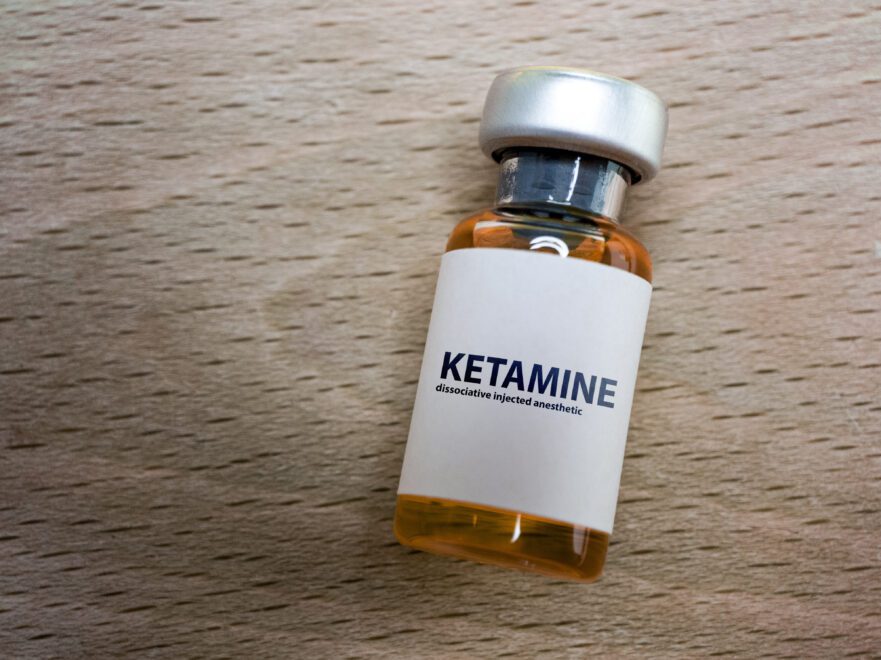
The anesthetic ketamine is increasingly being used off-label for depression. The drug seems to work rapidly, but its long-term side effects are unknown.
Two decades ago, ketamine was known as two things: an anesthetic used in pet surgery and a party drug nicknamed “special K” that was popular at raves. Now, it’s the hottest new treatment for depression that hasn’t responded despite psychotherapy or antidepressant.
How hot? Very. Dozens of ketamine clinics have popped up across the United States over the past few years, offering hope to people whose depression doesn’t respond to treatment. You’ll find them offering infusions everywhere from big cities like New York, Chicago and Los Angeles to Jackson, Wyoming, and Montpelier, Vermont.
The clinics all offer a controversial medical treatment using ketamine infusions for depression. Ketamine is approved by the Food and Drug Administration (FDA) only as an anesthetic, not for depression. Ketamine is primarily used for starting and maintaining anesthesia. Your insurance company is unlikely to pay for ketamine infusions, the treatment’s long-term effects are unknown, and if it works, it may stop working over time.
So why is it so popular? There are claims that it alleviates depression rapidly — frequently in a matter of hours — though the effect can be temporary. And because those seeking care are often so desperate for relief, they’re willing to accept the risks, cost — a single infusion can cost hundreds of dollars — and uncertainties.
Here are six things you should know about ketamine as a treatment for depression:
1. Antidepressant Ketamine is reserved for the worst cases
Depression is very common in the U.S. A 2019 CDC (Centers for Disease Control and Prevention) survey found that 18.5% of American adults aged 18 and up suffered from depression in the two week period prior to the survey — 21.8% of women and 15% of men. And the COVID-19 pandemic made it worse. Research in 2020 found that the prevalence of depression during the pandemic was more than three times higher than it was from 2017 to 2018, based on CDC data, with severe depression increasing more than five-fold.
Ketamine isn’t a first-line treatment for depression. Instead, ketamine clinics focus on a smaller group: patients with so-called “refractory” or “treatment-resistant” depression that doesn’t respond to common treatments like talk therapy and antidepressants.
An estimated one-third of people with depression fall into this category, and their lives can be full of misery and suicidal thoughts. “Most of our patients have been severely disabled and impaired for many years,” said Cristina Cusin, MD, associate professor of psychiatry and director of the ketamine clinic at Massachusetts General Hospital. “A patient can get pretty desperate.”
2. Ketamine isn’t an easy or simple fix
At first glance, the news about the effects of ketamine sounds incredibly promising. Studies suggest treatment with ketamine can relieve depression symptoms in many patients in as few as two hours. It may go on to provide relief for as long as two weeks. Research suggests that ketamine infusions may also help improve symptoms of posttraumatic stress disorder (PTSD), a chronic and sometimes disabling syndrome resulting from exposure to a traumatic event. In a 2021 study published in The American Journal of Psychiatry, researchers administered either six ketamine infusions or six infusions of a psychoactive placebo to 30 people with chronic PTSD over a two-week period. Those given ketamine showed significantly greater improvement in PTSD symptoms than the placebo group, with improvements lasting 28 days after the treatment ended.
One patient with depression described the effects of ketamine this way in a 2015 National Public Radio report: “I remember I was in my bathroom, and I literally fell to my knees crying because I had no anxiety, I had no depression.”
As Dr. Cusin puts it: “There’s a lot of hope that this is a magic fix.” But ketamine isn’t easy to take, and it isn’t a simple solution even when patients respond.
For one thing, ketamine isn’t available as a pill. Patients must go to a clinic or hospital and undergo intravenous infusion treatments that require time and monitoring. In March 2019 a nasal spray form of ketamine known as esketamine (Spravato) was approved by the FDA as a fast-acting treatment for people at risk of suicide due to depression. In a phase III clinical trial sponsored by the drug’s manufacturer Janssen Research & Development, published in 2020, people who were moderately to extremely suicidal were given oral antidepressants and either eskatamine or a placebo nasal spray twice weekly for four weeks. People given esketamine showed greater improvements in depression scores at four hours, 24 hours and at various time points over the four-week study period. Similarly, a study in JAMA Psychiatry showed benefits over placebo in a 16-week study. Some experts have since questioned the efficacy and safety of the drug, in part because in clinical trials three study participants committed suicide after their last dose of esketamine. And some feel that the drug was pushed too quickly through the FDA approval process.
Intravenous (IV) ketamine treatments aren’t the same as the nasal spray or a normal injection like a flu shot. Patients are hooked up to an IV for perhaps 40 minutes. The immediate effect is “like a light anesthetic,” said Mark S. George, MD, professor of psychiatry and behavioral sciences at the Medical University of South Carolina. “It makes you spacey and a little bit dreamy, but most people tolerate it.”
Most of the disorientation tends to lift within 15 to 30 minutes after a treatment, but patients aren’t allowed to drive home afterward, said Allison Wells, MD, an anesthesiologist at Superior Pain Relief, a pain clinic in The Woodlands, Texas. You may need to get someone to pick you up, although some clinics allow patients to ride home via Uber, she said.
There’s another complication: Ketamine isn’t a solo treatment. It must be used with complex regimens of other psychiatric medications that treat depression and anxiety, Dr. Cusin said. “If the expectation is to stop everything else and take ketamine,” she said, “it does not work this way.”
3. Other treatments may be better options
Ketamine is a good option for some patients, Dr. Cusin said, “but we consider many patients to not be appropriate because they haven’t failed other treatments that would be a good option.”
Alternative treatments include electroconvulsive therapy (formerly known as electroshock therapy), transcranial magnetic stimulation and older types of antidepressants. These are typically used before ketamine since there is more clinical evidence supporting their effectiveness.
Not all ketamine clinics have a psychiatrist or psychologist on staff to ask questions about the treatments you’ve tried. Many clinics are run by anesthesiologists who’ve pioneered the fledgling field of ketamine care, and some don’t have any mental health professionals on their staff. You may want to be wary of these clinics.
Critics don’t think this is a good idea. “It’s malpractice to not have a mental health professional involved if the disease being treated is depression,” Dr. George said.
4. Ketamine costs a lot, and your insurer probably won’t pay a dime
Insurers typically won’t pay for ketamine treatments. That’s because ketamine for depression is considered experimental since it hasn’t been approved for this purpose by the FDA. It’s legal for healthcare professionals to offer ketamine as an “off-label” treatment for depression. It’s not unusual for a doctor to prescribe drugs for a condition for which the FDA has not approved the drug.
Ketamine itself may not be expensive, but the equipment and monitoring needed to provide infusions are. Patient costs can add up quickly. Intravenous ketamine treatments can cost from $400 to $800 each, and patients often start with six infusions over two weeks.
According to Dr. Wells, the Texas anesthesiologist, “usually by four to six treatments, a patient can go four to six weeks between infusions.”
5. You might take ketamine forever…or not
How much ketamine should patients take and for how long? Research doesn’t provide much in the way of answers.
A 2020 report in the journal BMJ General Psychiatry notes that “the studies that were made for testing ketamine are relatively small and some of the studies made showed considerable risks for abuse and addiction.”
Some patients have undergone ketamine infusions for years, while others have seen its effects fade over time. “The consequences of long-term use are not known,” Dr. Cusin said.
6. Antidepressant Ketamine comes with a risk of dependence and abuse
The 2020 report in the journal BMJ General Psychiatry also noted that ketamine can be abused in any administered form, intravenously or nasally, and ketamine has a potential risk of abuse by patients self-medicating for depression. According to the U.S. Drug Enforcement Administration ketamine has the potential for abuse and its use may lead to physical or psychological dependence.
Dr. George, the Medical University of South Carolina physician, is so concerned about the various risks of ketamine that he only recommends its use in psychiatric emergencies, such as when a patient is suicidal and needs relief in order to make it to the next day.
Many physicians disagree with Dr. George about the appropriate use of ketamine. But one thing is clear: Even when ketamine works, patients aren’t instantly cured.
The psychological damage of depression — isolation, ruined relationships, loss of jobs — won’t get better on its own, with or without ketamine. “You need a good psychotherapist to work through the grief of everything you’ve lost,” Dr. Cusin said. “The medication isn’t going to fix that.”
- KETAMINE HYDROCHLORIDE injection. (n.d.-a). DailyMed.
- Meisner, R. C., MD. (2019, May 22). Ketamine for major depression: New tool, new questions. Harvard Health Publishing.
- KETAMINE HYDROCHLORIDE injection. (n.d.-b). DailyMed.
- Club Drugs. (n.d.). MedlinePlus.
- Rapidly-Acting Treatments for Treatment-Resistant Depression (RAPID). (n.d.). National Institute of Mental Health (NIMH).
- Villarroel, M. A., & Terlizzi, E. P. (2020, September). Symptoms of Depression Among Adults: United States, 2019. CDC.
- Ettman, C. K., Abdalla, S. M., Cohen, G. H., Sampson, L., Vivier, P. M., & Galea, S. (2020). Prevalence of Depression Symptoms in US Adults Before and During the COVID-19 Pandemic. JAMA Network Open, 3(9), e2019686.
- Mayo Clinic Staff. (2021, April 10). Treatment-resistant depression. Mayo Clinic.
- Ionescu, D. F., Rosenbaum, J. F., & Alpert, J. E. (2015). Pharmacological approaches to the challenge of treatment-resistant depression. Dialogues in Clinical Neuroscience, 17(2), 111–126.
- Corriger, A., & Pickering, G. (2019). Ketamine and depression: a narrative review. Drug Design Development and Therapy, 13, 3051–3067.
- Post-Traumatic Stress Disorder: Also called: PTSD. (n.d.). MedlinePlus.
- Feder, A., Costi, S., Rutter, S. B., Collins, A. B., Govindarajulu, U., Jha, M. K., Horn, S. R., Kautz, M., Corniquel, M., Collins, K. A., Bevilacqua, L., Glasgow, A. M., Brallier, J., Pietrzak, R. H., Murrough, J. W., & Charney, D. S. (2021). A Randomized Controlled Trial of Repeated Ketamine Administration for Chronic Posttraumatic Stress Disorder. American Journal of Psychiatry, 178(2), 193–202.
- Hamilton, J. (2015, September 28). Club Drug Ketamine Gains Traction As A Treatment For Depression. NPR.
- Intravenous. (n.d.). MedlinePlus.
- infusion. (n.d.). In NCI Dictionary of Cancer Terms.
- Esketamine Nasal Spray. (n.d.). MedlinePlus.
- FDA approves new nasal spray medication for treatment-resistant depression; available only at a certified doctor’s office or clinic. (2019, March 5). FDA.
- Fu, D., Ionescu, D. F., Li, X., Lane, R., Lim, P., Sanacora, G., Hough, D., Manji, H., Drevets, W. C., & Canuso, C. M. (2020). Esketamine Nasal Spray for Rapid Reduction of Major Depressive Disorder Symptoms in Patients Who Have Active Suicidal Ideation With Intent. The Journal of Clinical Psychiatry, 81(3).
- Daly, E. J., Trivedi, M. H., Janik, A., Li, H., Zhang, Y., Li, X., Lane, R., Lim, P., Duca, A. R., Hough, D., Thase, M. E., Zajecka, J., Winokur, A., Divacka, I., Fagiolini, A., Cubala, W. J., Bitter, I., Blier, P., Shelton, R. C., . . . Singh, J. B. (2019). Efficacy of Esketamine Nasal Spray Plus Oral Antidepressant Treatment for Relapse Prevention in Patients With Treatment-Resistant Depression. JAMA Psychiatry, 76(9), 893.
- Schatzberg, A. F. (2019). A Word to the Wise About Intranasal Esketamine. American Journal of Psychiatry, 176(6), 422–424.
- Electroconvulsive therapy. (n.d.). MedlinePlus.
- Thielking, M. (2018, September 24). Ketamine gives hope to patients with severe depression. But some clinics stray from the science and hype its benefits. STAT.
- Off-label drug prescribing: What does it mean for you? (n.d.). Consumer Reports.
- Ketamine Infusion Cost. (n.d.). Ketamine Clinics Directory.
- Ramadan, A. M., & Mansour, I. A. (2020). Could ketamine be the answer to treating treatment-resistant major depressive disorder? General Psychiatry, 33(5), e100227.
- Ketamine. (2020). In DEA.
DISCLAIMER: MedShadow provides information and resources related to medications, their effects, and potential side effects. However, it is important to note that we are not a substitute for professional medical advice, diagnosis, or treatment. The content on our site is intended for educational and informational purposes only. Individuals dealing with medical conditions or symptoms should seek guidance from a licensed healthcare professional, such as a physician or pharmacist, who can provide personalized medical advice tailored to their specific circumstances.
While we strive to ensure the accuracy and reliability of the information presented on MedShadow, we cannot guarantee its completeness or suitability for any particular individual’s medical needs. Therefore, we strongly encourage users to consult with qualified healthcare professionals regarding any health-related concerns or decisions. By accessing and using MedShadow, you acknowledge and agree that the information provided on the site is not a substitute for professional medical advice and that you should always consult with a qualified healthcare provider for any medical concerns.
on this page:
RECOMMENDED:


DONATE:
Help fund our fight for improved medication safety and transparency by supporting our independent journalism.
Give NowStay Informed. Sign up for our newsletters.
Independent, science-based journalism delivered directly to your inbox.
About Our Advocacy:
We seek to create a world where there are safer medications for all and where all people are fully informed about their medication benefits and side effects, using our explanatory and investigative journalism to both inform and stimulate public discussion to drive toward solutions.
WEBINARS
Want to hear expert insights about medication safety and other care options? Watch all our past webinars and sign up for upcoming ones.
WATCH Now