

Menu
 Shedding Light on the Risks
& Benefits of Medications
Shedding Light on the Risks
& Benefits of Medications
Shedding Light on the Risks
& Benefits of Medications
Inside the FDA’s Quiet Move to Weaken Drug Approval Standards
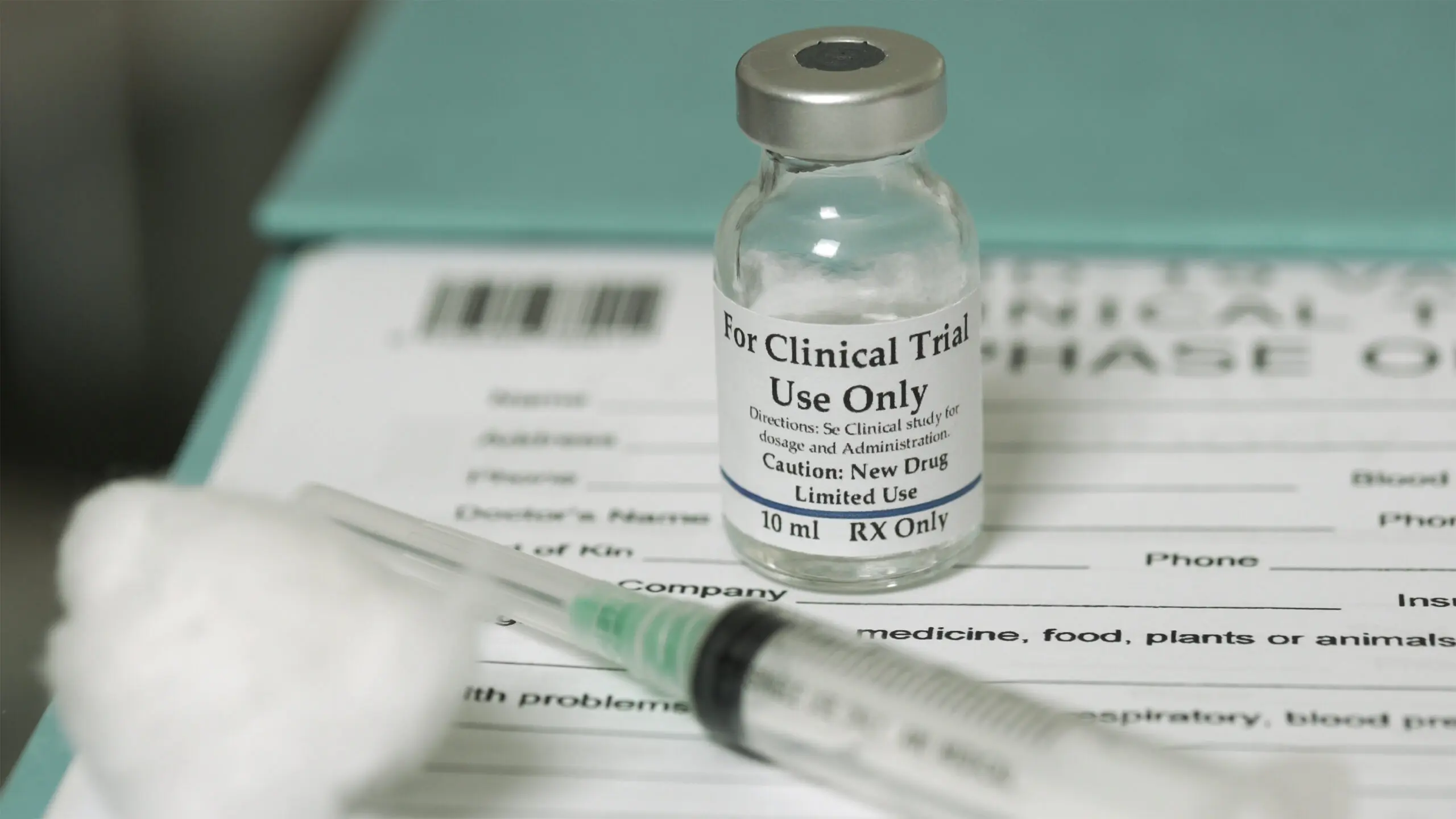
Photo: Shutterstock
Comments from the Commissioner signal that the agency is preparing to reduce clinical trial requirements. Independent experts say the change may increase the risk of ineffective or unsafe drugs reaching the market
December 17, 2025
0 Comments
Photo: Shutterstock
Share
FACT CHECKED
on this page:
The Food and Drug Administration (FDA) is preparing to reduce the default number of clinical trials it will require to approve new drugs, a shift confirmed by FDA Commissioner Marty Makary in an interview with STAT News. The decision could allow drugmakers to pursue FDA approval with just one pivotal trial, instead of multiple studies that together are typically required to demonstrate safety and efficacy.
The FDA noted that the policy changes could take effect within three to six months, but offered very little insight into the process behind the decision or how the FDA plans to operationalize it.
“For the most part, it’s not clear to me why the announcement is coming out in the way that it’s coming out,” says Joseph Ross, M.D., a professor of medicine and public health who researches issues concerning pharmaceutical regulations at Yale School of Medicine. “The FDA has a very clear and structured process for proposing new policy that involves establishing draft guidance, working with experts, and putting it out for public comment before finalizing that guidance. This idea of just telling everybody that the standards have changed is not the way policy is typically made.”
A Long Trend Toward Looser Drug Approval Standards
For decades, the FDA’s standard for market approval has been for drugmakers to demonstrate the effectiveness of their products through substantial evidence from at least two adequate and well-controlled studies, typically phase 3 clinical trials. In its 1998 clinical trial guidelines, the agency stated, “a single clinical experimental finding of efficacy, unsupported by other independent evidence, has not usually been considered adequate scientific support for a conclusion of effectiveness.” According to the guidelines, reasons for this inadequacy include systematic biases that may skew the study’s conclusions, positive results generated by chance, or outright scientific fraud.
Yet there has always been room for exceptions. Under the FDA Modernization Act of 1997 — an act largely designed to increase efficiency at the agency — the FDA noted it would allow approval of a drug based on just one trial “if [the agency] determines, based on relevant science, that data from one adequate and well-controlled clinical investigation and confirmatory evidence (obtained prior to or after such investigation) are sufficient to establish effectiveness.”
Additionally, in 2014, the FDA put together four programs designed to speed the review of new drugs developed for serious and life-threatening conditions. These programs include:
- Fast-track designation (which eases parts of the review process)
- Breakthrough therapy designation (which accelerates evaluation for treatments showing early signs of effectiveness)
- Priority review designation (which shortens the agency’s decision window by several months)
- Accelerated approval (which allows drugs to reach the market faster if they have convincing surrogate endpoints — lab tests or other interim indicators that stand in for actual clinical outcomes — when evaluating new therapies)
And if the goal is to reduce barriers to investigational drugs, the FDA has also built out pathways like the Right To Try Act and Expanded Access that let people obtain medications while they’re still in trials.
But while expedited approvals were always meant to be exceptions in the process of novel drug rollout, they have steadily become the norm: Since 2020, and without much fanfare, the median number of pivotal trials for all new drug approvals has dropped from two to one.
But while expedited approvals were always meant to be exceptions in the process of novel drug rollout, they have steadily become the norm: Since 2020, and without much fanfare, the median number of pivotal trials for all new drug approvals has dropped from two to one.
“The FDA has been drifting in this direction for quite a long time now,” says Robert Kaplan, Ph.D., a health policy researcher at Stanford Clinical Excellence Research Center and a former associate director of the National Institutes of Health.
Dr. Kaplan and his colleagues have been tracking what they call a steady decline in clinical evidence requirements. They point to a major shift in 2016, when the 21st Century Cures Act encouraged the FDA to rely more heavily on validated surrogate endpoints (for example, a reduction in blood pressure may be used as a proxy for a lower risk of heart attack). The Act was supported by more than 1,300 lobbyists, the majority of whom reportedly worked for pharmaceutical companies. The intent was to make it easier and faster to demonstrate a drug’s safety and effectiveness, further lowering the evidentiary bar for approval.
“The Cures Act was a piece of legislation that was very much supported by industry, and with the justification that we needed to get products to people much more rapidly,” Dr. Kaplan explains. “But what happened with the 21st Century Cures Act, in my opinion, very much loosened the standards. And I think that that has been problematic.”
In 2022, lawmakers introduced the 21st Century Cures 2.0 bill, an updated package building on the 2016 legislation, which aimed to further streamline the drug-approval process. Among its provisions is a plan to phase out mandatory animal testing in certain cases. The measure, however, has not advanced as a standalone bill.
Why Assurances of ‘Confirmatory Evidence’ Leave Room for Skepticism
With the agency’s recent announcement of an official shift toward fewer trials and a lowered burden of regulations, the safety and efficacy of new drugs increasingly hinge on the strength of the confirmatory evidence supporting them. Such evidence can include real-world data drawn from electronic health records, explanations of a drug’s mechanism of action, and findings from related or similar therapies (the types of confirmatory evidence that can complement a single trial result can be found in the FDA’s 2023 draft guidance).
In a Dec. 3 interview with STAT, Makary said, “You can achieve the same statistical power with one trial as you would with two trials when it’s designed and controlled appropriately.”
And while new guidelines may be put in place to ensure that requiring only a single trial does not compromise a new product’s quality, some remain skeptical. A 2025 study led by Dr. Ross found that fewer than 20% of new drugs approved on a single pivotal trial from 2015 to 2023 were supported by any confirmatory evidence of effectiveness. “That means 80% of the time, we had no idea how the approval based on a single pivotal trial was being made,” he says.
A 2025 study led by Dr. Ross found that fewer than 20% of new drugs approved on a single pivotal trial from 2015 to 2023 were supported by any confirmatory evidence of effectiveness. “That means 80% of the time, we had no idea how the approval based on a single pivotal trial was being made,” he says.
There is also the risk of selective reporting with a single trial, says Dr. Kaplan. “If we do 20 trials, we expect one of those to have a statistically significant result by chance.” That scenario, he says, could create a strong incentive not to report unfavorable results.
This kind of selective reporting can mean patients are exposed to drugs whose real risks haven’t been fully identified. A 2022 study found that almost 70% of FDA-approved drugs for rare diseases — which already undergo significantly fewer trials — later required safety-related labeling changes, signaling risks that hadn’t been recognized at the time of approval. About 15% of those updates involved severe side effects.
And while expedited approval can be useful, there is little data to prove its benefit in patients’ lives. One review of cancer drugs granted accelerated approval between 2013 and 2017 found that more than 40% failed to demonstrate gains in either survival or quality of life.
And as for the impact of the new single-trial strategy on overall drug safety, “it will take some time to discover that,” notes Dr. Kaplan.
A Split Standard: Less Evidence for Drugs, More Expectations for Vaccines
Industry leaders have weighed in on Makary’s statement with mixed feelings. Some celebrated the reduced cost and duration to get products to market, while others cautioned that the shift puts a heavier burden on clinical study design. Del Smith, Ph.D., CEO and co-founder of Acclinate, a digital health company that uses data to identify underrepresented populations in healthcare, wrote on LinkedIn, “In a two-trial world, you had a margin for error. In a “one-shot” world, you don’t.”
The FDA’s move to ease evidence requirements for new drugs stands in stark contrast to the agency’s recent stance on vaccines. In a letter published in the New England Journal of Medicine, twelve former FDA commissioners criticized the agency’s plan to subject vaccines to a higher and more subjective approval bar, such as demanding randomized controlled trials that are costly and time-consuming. Their concern with the new oversight is that it will impede the agency’s ability to keep up with the evolution of viruses and bacteria, and ultimately “disadvantage the people the FDA exists to protect, including millions of Americans at high risk from serious infections.”
Ultimately, loosening the criteria for drug approval means patients and clinicians will have fewer data to inform clinical decisions, notes Dr. Ross, who worries, “we’re going to be less certain about whether a drug is effective and safe when they are approved for use.”
MedShadow has reached out to the FDA for comments and will continue to monitor any updates from the agency.
- Zhan, S. J., Kunz, C. U., & Stallard, N. (2022). Should the two‐trial paradigm still be the gold standard in drug assessment? Pharmaceutical Statistics, 22(1), 96–111.
- Research, C. F. D. E. A. (2018, August 24). Providing clinical evidence of effectiveness for human drug and biological products. U.S. Food And Drug Administration.
- Office of the Commissioner. (2018, March 29). Food and Drug Administration Modernization Act (FDAMA) of 1997. U.S. Food And Drug Administration.
- Research, C. F. D. E. A. (2023, November 28). Expedited programs for serious conditions | Drugs and Biologics. U.S. Food And Drug Administration.
- Research, C. F. D. E. A. (2025, August 29). Table of surrogate endpoints that were the basis of drug approval or licensure. U.S. Food And Drug Administration.
- Office of the Commissioner. (2024, December 12). Right to try. U.S. Food And Drug Administration.
- Office of the Commissioner. (2025, September 8). Expanded access. U.S. Food And Drug Administration
- Zhang, A. D., Puthumana, J., Downing, N. S., Shah, N. D., Krumholz, H. M., & Ross, J. S. (2020). Assessment of clinical trials supporting US Food and Drug Administration approval of novel therapeutic agents, 1995-2017. JAMA Network Open, 3(4), e203284.
- Yesichapell. (2025, February 10). Analysis: The majority of novel drugs approved by FDA rely on evidence from a single pivotal trial. AgencyIQ by POLITICO.
- Office of the Commissioner. (2020, January 31). 21st Century Cures Act. U.S. Food And Drug Administration.
- Goble, J. A. (2018). The potential effect of the 21st century cures act on drug development. Journal of Managed Care & Specialty Pharmacy, 24(7), 677–681.
- U.S. Department of Health and Human Services, Food and Drug Administration, Center for Devices and Radiological Health, Center for Biologics Evaluation and Research, & Less, J. R. (2002). The least burdensome provisions of the FDA Modernization Act of 1997: concept and principles; Final guidance for FDA and industry.
- Han, J. J. (2023). FDA Modernization Act 2.0 allows for alternatives to animal testing. Artificial Organs, 47(3), 449–450.
- Research, C. F. D. E. A. (2023b, November 30). Demonstrating substantial evidence of effectiveness with one Adequate and Well-Controlled clinical investigation and confirmatory evidence. U.S. Food And Drug Administration.
- Godoy, C. B., Ramachandran, R., Sapre, P., & Ross, J. S. (2025). Confirmatory evidence supporting single pivotal trial new drug approvals by the Food and Drug Administration, 2015 through 2023. Clinical Trials, 17407745251376620.
- Fan, M., Chan, A. Y. L., Yan, V. K. C., Tong, X., Lau, L. K. W., Wan, E. Y. F., Tam, E. Y. T., Ip, P., Lum, T. Y., Wong, I. C. K., & Li, X. (2022). Postmarketing safety of orphan drugs: a longitudinal analysis of the US Food and Drug Administration database between 1999 and 2018. Orphanet Journal of Rare Diseases, 17(1), 3.
- Koong, A. J., Irvin, V., Narayan, A., Song, S., & Kaplan, R. (2025). Evidence available and used by the Food and Drug Administration for the approval of orphan and nonorphan drugs. Health Affairs Scholar, 3(4), qxaf057.
- Liu, I. T. T., Kesselheim, A. S., & Cliff, E. R. S. (2024). Clinical benefit and regulatory outcomes of cancer drugs receiving accelerated approval. JAMA, 331(17), 1471.
- Usdin, S. (2025, December 2). FDA’s Vinay Prasad, in his own words. BioCentury.
- Giroir, B. P., Henney, J. E., & Ostroff, S. M. (2025). A threat to Evidence-Based vaccine policy and public health security at the FDA. New England Journal of Medicine.
DISCLAIMER: MedShadow provides information and resources related to medications, their effects, and potential side effects. However, it is important to note that we are not a substitute for professional medical advice, diagnosis, or treatment. The content on our site is intended for educational and informational purposes only. Individuals dealing with medical conditions or symptoms should seek guidance from a licensed healthcare professional, such as a physician or pharmacist, who can provide personalized medical advice tailored to their specific circumstances.
While we strive to ensure the accuracy and reliability of the information presented on MedShadow, we cannot guarantee its completeness or suitability for any particular individual’s medical needs. Therefore, we strongly encourage users to consult with qualified healthcare professionals regarding any health-related concerns or decisions. By accessing and using MedShadow, you acknowledge and agree that the information provided on the site is not a substitute for professional medical advice and that you should always consult with a qualified healthcare provider for any medical concerns.
on this page:
RECOMMENDED:


DONATE:
Help fund our fight for improved medication safety and transparency by supporting our independent journalism.
Give NowStay Informed. Sign up for our newsletters.
Independent, science-based journalism delivered directly to your inbox.
About Our Advocacy:
We seek to create a world where there are safer medications for all and where all people are fully informed about their medication benefits and side effects, using our explanatory and investigative journalism to both inform and stimulate public discussion to drive toward solutions.
WEBINARS
Want to hear expert insights about medication safety and other care options? Watch all our past webinars and sign up for upcoming ones.
WATCH Now