The rise of remote work, constant smartphone use, and the industrialization of the natural world have all pushed Americans toward a shared reality: we are spending more of our lives indoors, with fewer opportunities to interact with nature than perhaps ever before.
Recent research suggests that Americans now spend approximately 90% of our time inside, with many of those hours devoted to the glowing screens that dominate our workplaces, homes, and pockets. At the same time, the U.S. Department of Agriculture estimates that roughly 6,000 acres of open space are lost each day to support ongoing urban and suburban expansion. Together, these shifts have contributed to what some scientists describe as a “nature deficit,” with many researchers wondering what exactly this is doing to our mental, physical, and emotional health.
This is where the concept of forest bathing comes in. While the phrase “forest bathing,” or Shinrin-yoku, may sound ancient, it’s actually a relatively modern idea. The term was coined in Japan in the early 1980s, when the country’s Forest Agency and Ministry of Health, Labour and Welfare introduced it as a response to rising “technostress” levels among office workers. The idea was simple: encourage people to step outside and immerse themselves in the forest for sessions of rest and mindfulness, allowing nature to counterbalance the pressures of modern life.
In the decades since, forest bathing has spread across the globe and become the focus of a growing body of research. Studies have explored its potential effects on everything from blood pressure and cortisol levels to anxiety, depression, and overall well-being. But how strong is the evidence in those studies, and what do they really say about the benefits?
Here’s what the latest science suggests, and what researchers are still working to understand about this increasingly popular practice.
What Is Forest Bathing?
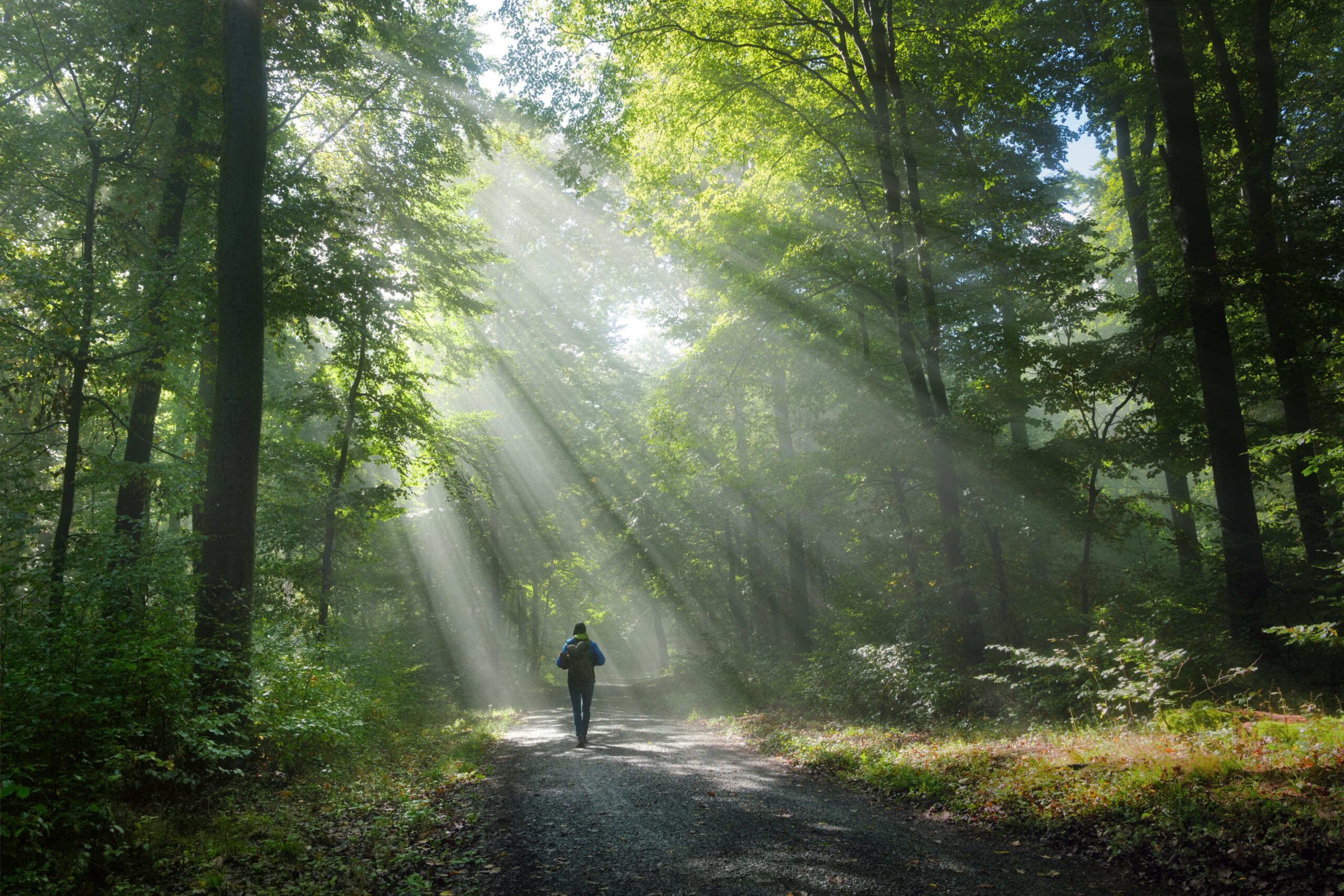
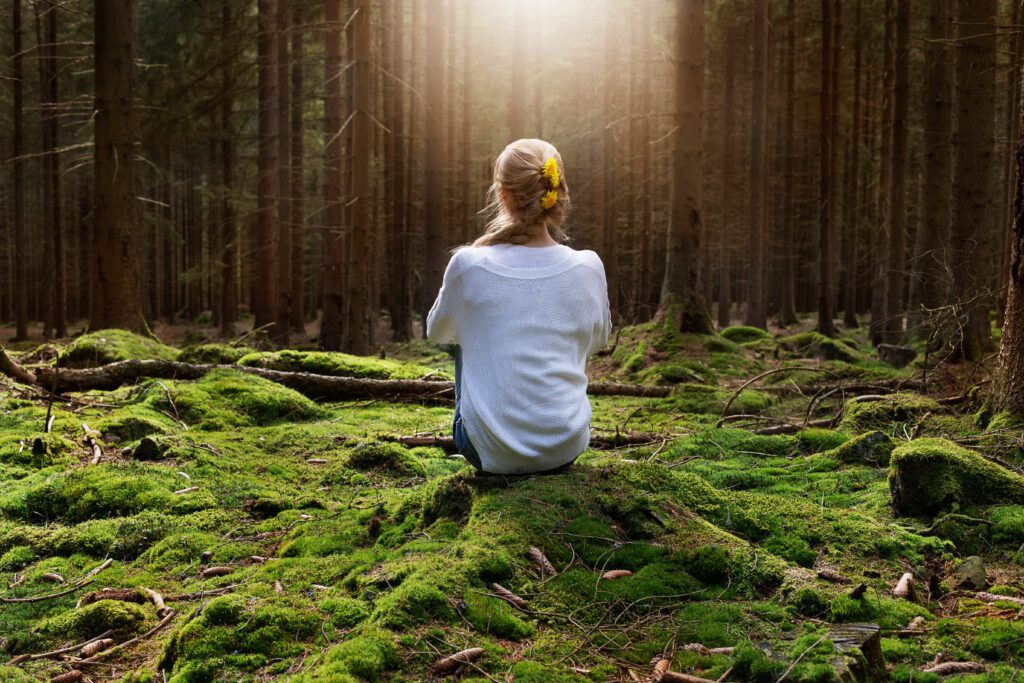
Forest bathing involves spending quiet time alone in a forested environment, without distractions, to simply be outdoors and present.
“It’s basically a slow, intentional walk through the woods where you’re really paying attention to what’s around you,” says John La Puma, M.D., a board-certified internist based in Santa Barbara, CA. “You’re not trying to get your heart rate up or hit a distance goal. The whole point is to let your nervous system chill out by actually using your senses — really looking, listening, smelling, touching, breathing.”
This “walk” can also take the form of sitting still or simply wandering, according to Sabine Huemer, Ph.D., an environmental and climate psychologist and assistant professor of practice at Oregon State University. A session can be as short as 15 minutes or last a few hours.
“The intentional mindfulness component of forest bathing adds a powerful layer that goes beyond movement alone,” explains Dr. Huemer. While a person may glean some benefits from walking through a city park, the fewer distractions (think: other people’s conversations, street noises, the ping of electronic devices), the better. Some research also suggests that the variety and abundance of plant life in the forest itself (rather than just “taking a walk” down the sidewalk) may be beneficial.
“While all green spaces support health, the effects of [urban parks] tend to be smaller than those of denser, more biodiverse environments like forests,” notes Dr. Huemer. The health-related effects of forest exposure may be linked to the emission of various bioactive organic compounds, including phytoncides, and increased levels of negative air ions.
Although a number of health professionals acknowledge the potential benefits of forest bathing, it’s not a standard medical recommendation. Instead, people typically come across it through popular media, including books like Forest Bathing: How Trees Can Help You Find Health and Happiness by Dr. Qing Li and Shinrin Yoku: The Japanese Art of Forest Bathing by Yoshifumi Miyazaki.
The Scientific Benefits of Forest Bathing
A peaceful walk through the woods might sound like a calming practice, but what does the research actually say about the benefits of forest bathing? While the studies below suggest measurable health benefits, it’s important to note that much of the cited work involves small groups of generally healthy participants. Due to limited research, we also don’t have a clear picture of how forest bathing stacks up against other treatments.
Experts agree that larger, more robust studies are needed to fully understand the true impact of the practice.
Photo: Shutterstock
Lowered Stress
Stress reduction appears to be forest bathing’s most reliable and consistently demonstrated benefit. “The strongest evidence supports short-term reductions in cortisol (the hormone associated with stress) after forest bathing or forest therapy compared with urban control conditions,” says Rusly Harsono, M.D., a pediatric critical care physician and head of the Lifestyle Medicine Physician Training Program at the Stanford School of Medicine.
One very small study published in the Journal of Physiological Anthropology in 2007 followed 12 healthy male students after they spent 40-minute sessions in city and forested environments. Researchers found that salivary cortisol and cerebral activity in the prefrontal area were significantly and reliably lower following forest exposure. While this initial study was tiny and conducted some 20 years ago, these findings have been repeated in larger studies across different populations.
Stay Informed. Sign up for our newsletters.
Independent, science-based journalism delivered directly to your inbox.
In a 2019 meta-analysis of eight studies, researchers found that six of those studies showed lower cortisol levels after forest bathing. Overall, the average drop was small (about 0.05 μg/dL), but it suggests a modest, detectable effect on stress.
Reduced Blood Pressure
According to a 2024 report, nearly half of all adults in the United States have high blood pressure, also known as hypertension. This chronic condition raises the risk of heart disease and stroke, which contributed to more than 600,000 deaths in the U.S. in 2023. What if this could all be alleviated by a walk in the woods?
Studies show that forest bathing does reduce high blood pressure — at least in the short term. A very small 2025 study following 36 participants aged 60 to 80 with diagnosed hypertension found that a three-day, two-night intervention in a forest-bathing setting significantly lowered diastolic and systolic blood pressure: On average, systolic pressure fell to about 134 mmHg in the forest group compared with 146 mmHg in an urban comparison group, while diastolic pressure averaged 78 mmHg versus 85 mmHg — a difference of roughly 12 points systolic and 6 points diastolic over the short study period.
A meta-analysis published in 2023, pooling results from 28 studies, found average reductions of about 4.8 mmHg systolic and 3.8 mmHg diastolic.
While intriguing, Dr. Harsono points out that the changes are modest, long-term data is limited, and any benefits likely depend on repeated exposure. Still, Owen Scott Muir, M.D., interventional psychiatrist and co-founder and chief medical officer of Radial, underscores that when it comes to forest bathing and blood pressure, the benefits outweigh the risks. “None of the studies found that it increased blood pressure, so even if you are dubious about the blood pressure benefits, it’s only likely to help you.”
Reduced Anxiety and Depression
Anxiety and depression are two of the most common mental health challenges today, and they often overlap. Many people experience symptoms of both at the same time. Because of this, spending more time outdoors is frequently recommended to reduce stress and support emotional well-being. Even a single forest bathing session has been shown to ease symptoms linked to anxiety and low mood.
One meta-analysis published in The Journal of Mental Health Nursing in 2023 found that across nine studies examining anxiety and 12 following depression, participants reported improvements in symptoms after forest bathing experiences.
A key caveat to this encouraging research, Dr. Muir notes, is that although the studies showing benefits are “overwhelmingly positive,” they mostly focus on relatively healthy people.
While some studies have included people with depressive symptoms — including a small 2019 study of adults ages 18 to 60 that found mood improvements after two hours of forest bathing — participants with diagnosed or severe depression are often left out. This detail matters because it limits how these results can be applied to individuals with diagnosed mood disorders.
Due to these limitations, forest bathing may be best understood as supportive, notes Dr. Harsono. “[It] should be framed as an adjunctive rather than a stand-alone treatment for clinical mood disorders,” Dr. Harsono advises.
What We Still Don’t Know About Forest Bathing Benefits
Up until this point, research on forest bathing for its ability to lower stress, blood pressure, anxiety, and depression has its bright spots, but experts agree that what we know about the benefits is still very limited. Here’s what is still unclear:
Proper ‘Dosage’
Across forest bathing studies, protocols vary widely: some follow participants on 20-minute excursions, while others examine multi-day retreats. Dr. Harsono says that “frequency, duration, and minimum effective dose across populations” needs to be researched in order to better understand the benefits of this practice.
Long-Term Outcomes
While reports have found that participants benefited from singular forest bathing experiences, long-term outcomes are not known. “We need pragmatic, real-world trials for conditions like hypertension, anxiety, and depression with longer follow-ups and endpoints that actually matter clinically,” says Dr. La Puma.
How It Compares to Other Treatments
The studies examining forest bathing typically compare forest bathing to a control of an urban setting or nothing at all. What we don’t know is how forest bathing stacks up against pharmaceuticals for blood pressure or anxiety, for instance, or other similar evidence-based stress interventions like guided mindfulness programs or outdoor exercise.
The Standards
“We need clearer definitions of what the intervention actually is — what kind of forest, what pace, guided or not, phones or no phones, specific sensory practices — so studies are actually comparable,” says Dr. La Puma.
Forest bathing isn’t a magic fix, and researchers are still working to understand how strong or long-lasting its effects really are. Still, emerging studies suggest that time in the woods can help ease stress and support well-being, especially in a world where many of us spend most of our days indoors.
“The bottom line is the data is really good for forest bathing, in a wide range of individuals, and the downsides are equivalent to the risks of everyday activity,” says Dr. Muir. “You can trip and fall in a forest, but you can trip and fall in a city. Walking around the forest seems to be healthy! And it’s low risk, unlike most of the other things we would do medically to address depression, anxiety, and hypertension.”
DISCLAIMER: MedShadow provides information and resources related to medications, their effects, and potential side effects. However, it is important to note that we are not a substitute for professional medical advice, diagnosis, or treatment. The content on our site is intended for educational and informational purposes only. Individuals dealing with medical conditions or symptoms should seek guidance from a licensed healthcare professional, such as a physician or pharmacist, who can provide personalized medical advice tailored to their specific circumstances.
While we strive to ensure the accuracy and reliability of the information presented on MedShadow, we cannot guarantee its completeness or suitability for any particular individual’s medical needs. Therefore, we strongly encourage users to consult with qualified healthcare professionals regarding any health-related concerns or decisions. By accessing and using MedShadow, you acknowledge and agree that the information provided on the site is not a substitute for professional medical advice and that you should always consult with a qualified healthcare provider for any medical concerns.
Independent, science-based journalism delivered directly to your inbox.
We seek to create a world where there are safer medications for all and where all people are fully informed about their medication benefits and side effects, using our explanatory and investigative journalism to both inform and stimulate public discussion to drive toward solutions.


 Shedding Light on the Risks
& Benefits of Medications
Shedding Light on the Risks
& Benefits of Medications