

Menu
 Shedding Light on the Risks
& Benefits of Medications
Shedding Light on the Risks
& Benefits of Medications
Shedding Light on the Risks
& Benefits of Medications
Prednisone, the Steroid that Gave Me Mood Swings

When I was prescribed a high dose of prednisone, I had no idea it could cause panic attacks so severe I landed in the ER.
September 6, 2024 (Updated on: February 19, 2026)
0 Comments
Share
Medically Reviewed By: Gina Jansheski, MD
Gina Jansheski, M.D., is a pediatrician with 22 years of practice experience. Dr. Jansheski completed her medical education at the University of Arizona College of Medicine, followed by a pediatric residency and a one-year fellowship in Developmental and Behavioral Pediatrics. She served as the medical director of Tucson Pediatric Hospitalists, providing pediatric hospice and palliative care services.
LIVE WEBINAR: MARCH 3
Curious about trustworthy alternative treatments? Get answers from an expert: what works, what doesn't, and how to afford it.
SAVE YOUR SPOTon this page:
All medicines come with side effects, and corticosteroids like prednisone are no exception. These miraculous drugs have life-saving anti-inflammatory properties, but they are also known to produce unexpected emotional reactions.
Most doctors will warn patients prescribed corticosteroids—often called steroids for short—about potential weight gain, insomnia, acne, nausea and headache. Typically, these side effects are minor but increase with longer-term use. Longer courses of corticosteroids can also cause increased body hair, fat redistribution and reduced bone density.
However, many patients aren’t warned about the psychological side effects of steroids, which can include anxiety, depression, and psychosis.1 What’s more, these serious reactions can occur even when they aren’t taken long-term. I took prednisone for 19 days, and spent the following month in and out of the emergency room with severe anxiety.
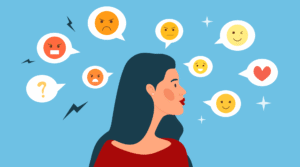
Steroid Can Cause Mood Swings
Steroids Can Cause Mood Swings
Steroids affect areas of the brain that manage the regulation of neurotransmitters like serotonin and dopamine, which are also known as the feel-good hormones. Some people actually experience euphoria when taking steroids like prednisone. Other responses can be frightening, especially if you don’t know what to expect. For me, the delayed reaction I had to prednisone was startling and scary.
I was prescribed a 19-day course of high-dose prednisone to treat a severe allergic reaction. The prescriber warned me about the possibility of developing insomnia and several other physical reactions. Aside from the chance I’d experience difficulty sleeping, they mentioned nothing about a possible psychological response. When insomnia struck, I was ready for it. I went to the doctor to get a sleep aid. I completed my course of prednisone without any other side effects and thought I was in the clear.
I was wrong. My prednisone problems were only just beginning.
‘It’s important to know what may happen to you. A lot of doctors will talk about the physical side effects, but not the psychological ones.’
Five days after my last dose, I was struck with sudden shortness of breath. Thinking it was a heart attack, I went to the hospital. The doctor determined that my heart was fine and diagnosed my problem as a panic attack.
Neither the doctor nor I made the correlation between prednisone and the attack. I wasn’t battling any anxiety at the time and had never experienced an anxiety episode, so this felt like it had come out of the blue.
Over the next month, I continued to have more mild versions of the panic attack, resulting in multiple doctor visits. Finally, I was urged to see a psychiatrist about my recurring anxiety.
Prednisone and Anxiety
When I told the psychiatrist about my allergic reaction two months prior and the prednisone treatment, she informed me that anxiety was an expected side effect of the drug.
While this was reassuring, it sure would have been nice to know that sooner! Not only could I have avoided many doctor visits and saved a lot of money on additional tests, but I would have suffered much less emotionally. Looking through my medical charts, I saw my providers had described me as an anxious individual and it made me wonder if they had really taken seriously my concerns seriously.

Mystery Solved
Studies have shown that people who take corticosteroids are at risk for a variety of mood changes, such as anxiety, depression, mania and delirium.2 One study found that among people who were prescribed more than 28 days of corticosteroids, nearly 1 out of every 20 developed a mental disorder. Many of these patients experienced anxiety, as well as depression and panic disorder.1
The Benefits of Steroids
Many people enjoy the benefits of prednisone and other corticosteroids which are powerful anti-inflammatory drugs that can reduce pain and discomfort related to allergic reactions, arthritis, autoimmune conditions and more.3 In some cases, they even elevate mood, creating a sense of euphoria and excessive energy. Lene Andersen, who has rheumatoid arthritis, reports having occasionally taken the drug. “I tend to feel really good on prednisone,” she says. “When I went to a higher dose, I had some depression, though I’m not sure if it was from the prednisone.”

On the flip side, anxiety and irritability are well-known side effects, she says.
“When we live with rheumatoid arthritis, we often put up with serious side effects because of the benefit of the drug,” she explains. “When it comes to emotional side effects, see if there are other solutions rather than adding more drugs to combat the psychological effects.”
Alternatives to Steroids
Anderson finds that non-pharmaceutical strategies can often be used to help manage her symptoms. “Meditation cannot be underestimated,” she says. “It’s a way to take a deep breath and not get caught up in that spiral of emotional reaction.”

There are pros and cons to knowing all the adverse side effects of prednisone before taking it, she says. “But information is power,” she explains. “It’s important to know what may happen to you. A lot of doctors will talk about the physical side effects, but not the psychological ones.”
She urges those taking prednisone to ask friends and family to keep an eye on them. “Knowing what to expect psychologically may lessen the emotional toll of the side effects,” she says.
This article was originally written by Shawna De La Rosa and published on May 30, 2019. It was updated most recently by Emma Yasinski on September 6, 2024.
Stay Informed. Sign up for our newsletters.
Independent, science-based journalism delivered directly to your inbox.
- Alturaymi, M., Almadhi, O., Alageel, Y., Alsubayyil, M., & Alkhateeb, B. (2023). The Association Between Prolonged Use of Oral Corticosteroids and Mental Disorders: Do Steroids Have a Role in Developing Mental Disorders? Cureus. https://doi.org/10.7759/cureus.37627
- Koning, A., Meulen, M., Schaap, D., Satoer, D., Vinkers, C., Rossum, E., Furth, W., Pereira, A., Meijer, O., & Dekkers, O. (2024). Neuropsychiatric Adverse Effects of Synthetic Glucocorticoids: A Systematic Review and Meta-Analysis. The Journal of Endocrinology and Metabolism. https://doi.org/10.1210/clinem/dgad701
- Puckett, Y., Gabbar, A., & Bokhari, A. (2024). Prednisone. StatPearls. https://www.ncbi.nlm.nih.gov/books/NBK534809/
DISCLAIMER: MedShadow provides information and resources related to medications, their effects, and potential side effects. However, it is important to note that we are not a substitute for professional medical advice, diagnosis, or treatment. The content on our site is intended for educational and informational purposes only. Individuals dealing with medical conditions or symptoms should seek guidance from a licensed healthcare professional, such as a physician or pharmacist, who can provide personalized medical advice tailored to their specific circumstances.
While we strive to ensure the accuracy and reliability of the information presented on MedShadow, we cannot guarantee its completeness or suitability for any particular individual’s medical needs. Therefore, we strongly encourage users to consult with qualified healthcare professionals regarding any health-related concerns or decisions. By accessing and using MedShadow, you acknowledge and agree that the information provided on the site is not a substitute for professional medical advice and that you should always consult with a qualified healthcare provider for any medical concerns.
on this page:
RECOMMENDED:


DONATE:
Help fund our fight for improved medication safety and transparency by supporting our independent journalism.
Give NowStay Informed. Sign up for our newsletters.
Independent, science-based journalism delivered directly to your inbox.
About Our Advocacy:
We seek to create a world where there are safer medications for all and where all people are fully informed about their medication benefits and side effects, using our explanatory and investigative journalism to both inform and stimulate public discussion to drive toward solutions.
LIVE WEBINAR: MARCH 3
Curious about trustworthy alternative treatments? Get answers from an expert: what works, what doesn't, and how to afford it.
SAVE YOUR SPOT