

Menu
 Shedding Light on the Risks
& Benefits of Medications
Shedding Light on the Risks
& Benefits of Medications
Shedding Light on the Risks
& Benefits of Medications
Can I Take Prilosec with Levothyroxine?
While studies suggest that proton pump inhibitors may interfere with the absorption of thyroid hormone, short-term use is unlikely to have noticeable effects
August 21, 2025
0 Comments
republish
Medically Reviewed By: Gina Jansheski, M.D.
Gina Jansheski, M.D., is a pediatrician with 22 years of practice experience. Dr. Jansheski completed her medical education at the University of Arizona College of Medicine, followed by a pediatric residency and a one-year fellowship in Developmental and Behavioral Pediatrics. She served as the medical director of Tucson Pediatric Hospitalists, providing pediatric hospice and palliative care services.
on this page:
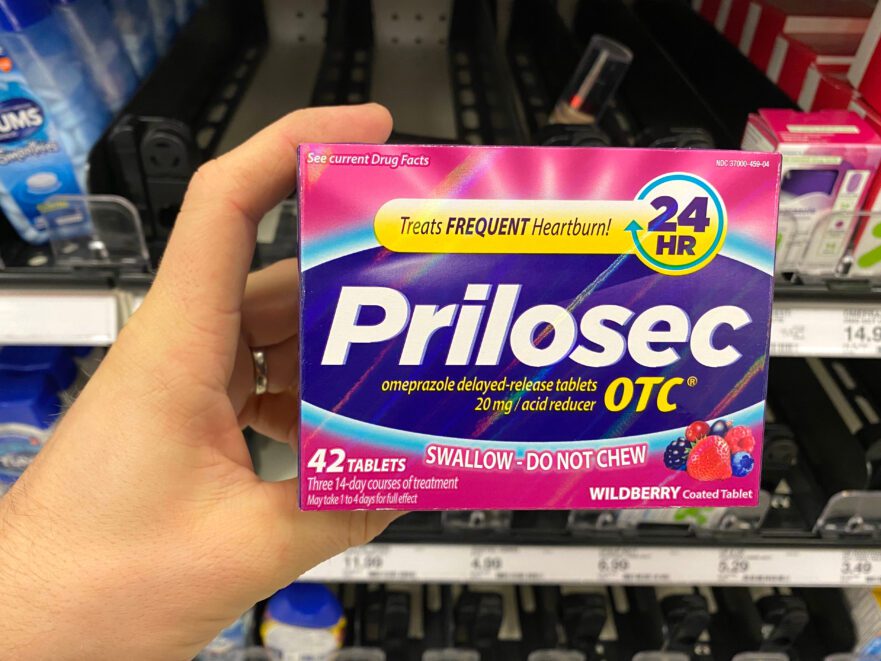
If you experience frequent heartburn, you’ve likely considered taking an over-the-counter proton-pump inhibitor (PPI) like omeprazole (brand names include Prilosec OTC and Zegerid OTC). Some research suggests that PPIs can reduce the body’s absorption of levothyroxine, a synthetic hormone commonly prescribed when blood thyroid hormone levels are too low. But experts say this potential interaction shouldn’t be a concern for people taking a non-prescription PPI for a short period of time.
Omeprazole and Levothyroxine Interactions: Minimal Short-Term Effects
PPIs lower gastric acid levels by blocking acid-producing enzymes in the stomach lining. Over-the-counter PPIs, such as omeprazole, esomeprazole (Nexium 24HR), and lansoprazole (Prevacid 24HR), can be taken for 14 days up to three times per year. Side effects are uncommon, but they may include headaches, nausea, vomiting, diarrhea, constipation and gas. Long-term use of PPIs has been linked with an increased risk of several medical conditions, including kidney disease, infections and bone loss.
Typically taken as a tablet, levothyroxine replaces the body’s thyroid hormone in individuals with deficiency, which can be caused by the autoimmune disorder Hashimoto thyroiditis, surgical removal of the thyroid, or other conditions.
Levothyroxine tablets dissolve in the stomach before being absorbed in the small intestine. Since PPIs suppress stomach acid, researchers have questioned whether they might reduce the absorption of levothyroxine. However, while a few clinical studies have reported small changes in thyroid levels in participants with hypothyroidism on who are on thyroid replacement therapy while taking PPIs, a clear connection has not been firmly established.
Stay Informed. Sign up for our newsletters.
Independent, science-based journalism delivered directly to your inbox.
“A lot of the studies that have looked at this are very small, so it’s hard to make a definitive statement,” notes Rachel Pessah-Pollack, M.D., an endocrinologist at NYU Langone Health.
Any interference with absorption is unlikely to be clinically significant for people taking a short course of an over-the-counter PPI, continues Randolph Regal, Pharm.D., meaning it would not necessitate a change to the person’s thyroid treatment. Dr. Regal, a clinical pharmacist specializing in internal medicine at the University of Michigan, explains that levothyroxine has a half-life of about a week. This means that it takes at least one month (four half-lives) for levels of the hormone to stabilize in the body following a change. Thus, a minor reduction in levothyroxine absorption over a short period is unlikely to have a lasting effect.
Since food can interfere with levothyroxine absorption, it’s recommended to take the drug at least 30 to 60 minutes before breakfast. Dr. Pessah-Pollack suggests taking a PPI three to four hours after levothyroxine to minimize potential interactions, but acknowledges that some people find it easier to take both medications at the same time.
What Are Alternatives to Omeprazole?
H2 blockers like famotidine, available over-the-counter and by prescription, are shorter-acting acid reducers that provide more immediate symptom relief than PPIs. Diet and lifestyle changes, such as sitting upright after eating and avoiding spicy foods, can also reduce reflux symptoms, says Dr. Pessah-Pollack.
However, people with severe reflux are more likely to require prescription PPIs. If you start using a long-term PPI, it’s important to tell your thyroid care provider, notes Boston Medical Center endocrinologist Elizabeth Pearce, M.D. Individuals taking PPIs continually may need to be on a higher dose of levothyroxine.
For those individuals who need to take both medications, switching to liquid levothyroxine (Tirosint-SOL) may be an alternative, since it does not rely on stomach acid for absorption and has not been shown to interact with PPIs. The drawback is that the liquid formulation is often more costly than generic tablets.
If you’re dealing with ongoing heartburn — whether or not you take thyroid medication — it’s always a good idea to work with your doctor to find the cause, rather than depending on symptom-relieving drugs alone.
- Omeprazole: MedlinePlus drug information. (n.d.).
- Levothyroxine: MedlinePlus drug information. (n.d.).
- Esomeprazole | StatPearls | Treatment & Management. (n.d.).
- Website, N. (2025, August 14). Lansoprazole. nhs.uk.
- Kaur, J., & Jialal, I. (2025, February 9). Hashimoto thyroiditis. StatPearls – NCBI Bookshelf.
- Guzman-Prado, Y., Vita, R., & Samson, O. (2021). Concomitant Use of Levothyroxine and Proton Pump Inhibitors in Patients with Primary Hypothyroidism: a Systematic Review. Journal of General Internal Medicine, 36(6), 1726–1733
- Hallare, J., & Gerriets, V. (2025, May 3). Elimination Half-Life of Drugs. StatPearls – NCBI Bookshelf.
- Ebner, Susana. Hypothyroidism: Use of proton pump inhibitors and levothyroxine. (2024, December 12). Clinical Thyroidology for the Public. Vol 17 Issue 12 P.10-11.
- Business Wire. (2023, December 4). Food and Drug Administration grants two new label changes to Tirosint®-Sol (Levothyroxine sodium) oral solution. Business Wire.
DISCLAIMER: MedShadow provides information and resources related to medications, their effects, and potential side effects. However, it is important to note that we are not a substitute for professional medical advice, diagnosis, or treatment. The content on our site is intended for educational and informational purposes only. Individuals dealing with medical conditions or symptoms should seek guidance from a licensed healthcare professional, such as a physician or pharmacist, who can provide personalized medical advice tailored to their specific circumstances.
While we strive to ensure the accuracy and reliability of the information presented on MedShadow, we cannot guarantee its completeness or suitability for any particular individual’s medical needs. Therefore, we strongly encourage users to consult with qualified healthcare professionals regarding any health-related concerns or decisions. By accessing and using MedShadow, you acknowledge and agree that the information provided on the site is not a substitute for professional medical advice and that you should always consult with a qualified healthcare provider for any medical concerns.
on this page:
RECOMMENDED:


DONATE:
Help fund our fight for improved medication safety and transparency by supporting our independent journalism.
Give NowStay Informed. Sign up for our newsletters.
Independent, science-based journalism delivered directly to your inbox.
We seek to create a world where there are safer medications for all and where all people are fully informed about their medication benefits and side effects, using our explanatory and investigative journalism to both inform and stimulate public discussion to drive toward solutions.
WEBINARS
Learn about your medications and treatment options straight from independent experts.
WATCH
Article HTML
                    <!-- wp:paragraph -->
<p>If you experience frequent heartburn, you’ve likely considered taking an over-the-counter proton-pump inhibitor (PPI) like <a href="https://medlineplus.gov/druginfo/meds/a693050.html" target="_blank" rel="noreferrer noopener">omeprazole</a> (brand names include Prilosec OTC and Zegerid OTC). Some research suggests that PPIs can reduce the body’s absorption of <a href="https://medlineplus.gov/druginfo/meds/a682461.html" target="_blank" rel="noreferrer noopener">levothyroxine</a>, a synthetic hormone commonly prescribed when blood thyroid hormone levels are too low. But experts say this potential interaction shouldn’t be a concern for people taking a non-prescription PPI for a short period of time.</p>
<!-- /wp:paragraph -->

<!-- wp:heading -->
<h2 class="wp-block-heading">Omeprazole and Levothyroxine Interactions: Minimal Short-Term Effects</h2>
<!-- /wp:heading -->

<!-- wp:paragraph -->
<p>PPIs lower gastric acid levels by blocking acid-producing enzymes in the stomach lining. Over-the-counter PPIs, such as omeprazole, <a href="https://www.statpearls.com/point-of-care/search?q=Esomeprazole" target="_blank" rel="noreferrer noopener">esomeprazole</a> (Nexium 24HR), and <a href="https://www.nhs.uk/medicines/lansoprazole/" target="_blank" rel="noreferrer noopener">lansoprazole</a> (Prevacid 24HR), can be taken for 14 days up to three times per year. Side effects are uncommon, but they may include headaches, nausea, vomiting, diarrhea, constipation and gas. <a href="https://medshadow.org/ppis-heartburn-drugs-side-effects-dementia/" target="_blank" rel="noreferrer noopener">Long-term use of PPIs has been linked with an increased risk of several medical conditions</a>, including kidney disease, infections and bone loss.</p>
<!-- /wp:paragraph -->

<!-- wp:paragraph -->
<p>Typically taken as a tablet, levothyroxine replaces the body’s thyroid hormone in individuals with deficiency, which can be caused by the autoimmune disorder <a href="https://www.ncbi.nlm.nih.gov/books/NBK459262/" target="_blank" rel="noreferrer noopener">Hashimoto thyroiditis</a>, surgical removal of the thyroid, or other conditions.</p>
<!-- /wp:paragraph -->

<!-- wp:paragraph -->
<p>Levothyroxine tablets dissolve in the stomach before being absorbed in the small intestine. Since PPIs suppress stomach acid, researchers have questioned whether they might reduce the absorption of levothyroxine. However, while a few clinical studies <a href="https://pmc.ncbi.nlm.nih.gov/articles/PMC8175524/" target="_blank" rel="noreferrer noopener">have reported small changes in thyroid levels</a> in participants with hypothyroidism on who are on thyroid replacement therapy while taking PPIs, a clear connection has not been firmly established.</p>
<!-- /wp:paragraph -->

<!-- wp:paragraph -->
<p>“A lot of the studies that have looked at this are very small, so it’s hard to make a definitive statement,” notes <a href="https://nyulangone.org/doctors/1669632196/rachel-pessah-pollack" target="_blank" rel="noreferrer noopener">Rachel Pessah-Pollack, M.D.</a>, an endocrinologist at NYU Langone Health.</p>
<!-- /wp:paragraph -->

<!-- wp:paragraph -->
<p>Any interference with absorption is unlikely to be clinically significant for people taking a short course of an over-the-counter PPI, continues <a href="https://pharmacy.umich.edu/people/regal-randolph/" target="_blank" rel="noreferrer noopener">Randolph Regal, Pharm.D.</a>, meaning it would not necessitate a change to the person’s thyroid treatment. Dr. Regal, a clinical pharmacist specializing in internal medicine at the University of Michigan, explains that levothyroxine has a <a href="https://www.ncbi.nlm.nih.gov/books/NBK554498/" target="_blank" rel="noreferrer noopener">half-life</a> of about a week. This means that it takes at least one month (four half-lives) for levels of the hormone to stabilize in the body following a change. Thus, a minor reduction in levothyroxine absorption over a short period is unlikely to have a lasting effect.</p>
<!-- /wp:paragraph -->

<!-- wp:paragraph -->
<p>Since food can interfere with levothyroxine absorption, it’s recommended to take the drug at least 30 to 60 minutes before breakfast. Dr. Pessah-Pollack suggests taking a PPI three to four hours after levothyroxine to minimize potential interactions, but acknowledges that some people find it easier to take both medications at the same time.</p>
<!-- /wp:paragraph -->

<!-- wp:heading -->
<h2 class="wp-block-heading">What Are Alternatives to Omeprazole?</h2>
<!-- /wp:heading -->

<!-- wp:paragraph -->
<p>H2 blockers like <a href="https://medlineplus.gov/druginfo/meds/a687011.html" target="_blank" rel="noreferrer noopener">famotidine</a>, available over-the-counter and by prescription, are shorter-acting acid reducers that provide more immediate symptom relief than PPIs. Diet and lifestyle changes, such as sitting upright after eating and avoiding spicy foods, can also reduce reflux symptoms, says Dr. Pessah-Pollack.</p>
<!-- /wp:paragraph -->

<!-- wp:paragraph -->
<p>However, people with severe reflux are more likely to require prescription PPIs. If you start using a long-term PPI, it’s important to tell your thyroid care provider, notes Boston Medical Center endocrinologist <a href="https://www.bmc.org/about-us/directory/doctor/elizabeth-n-pearce-md" target="_blank" rel="noreferrer noopener">Elizabeth Pearce, M.D.</a> Individuals taking PPIs continually may need to be on a higher dose of levothyroxine.</p>
<!-- /wp:paragraph -->

<!-- wp:paragraph -->
<p>For those individuals who need to take both medications, switching to liquid levothyroxine (Tirosint-SOL) may be an alternative, since <a href="https://www.thyroid.org/patient-thyroid-information/ct-for-patients/december-2024/vol-17-issue-12-p-10-11/?utm_source=chatgpt.com" target="_blank" rel="noreferrer noopener">it does not rely on stomach acid</a> for absorption and <a href="https://www.businesswire.com/news/home/20231204748430/en/Food-And-Drug-Administration-Grants-Two-New-Label-Changes-To-Tirosint-Sol-Levothyroxine-Sodium-Oral-Solution" target="_blank" rel="noreferrer noopener">has not been shown</a> to interact with PPIs. The drawback is that the liquid formulation is often more costly than generic tablets.</p>
<!-- /wp:paragraph -->

<!-- wp:paragraph -->
<p>If you’re dealing with ongoing heartburn — whether or not you take thyroid medication — it’s always a good idea to work with your doctor to find the cause, rather than depending on symptom-relieving drugs alone.</p>
<!-- /wp:paragraph -->