


Menu
 Shedding Light on the Risks
& Benefits of Medications
Shedding Light on the Risks
& Benefits of Medications
Shedding Light on the Risks
& Benefits of Medications Edible Marijuana Risks for People with Heart Conditions
Marijuana Edibles Can Pose Dangers to Those With Heart Conditions
February 13, 2019
0 Comments
republishMarijuana Edibles Can Pose Dangers to Those With Heart Conditions
on this page:
If you have cardiovascular disease or a heart condition, you might want to lay off eating marijuana edibles as they may cause a heart attack.
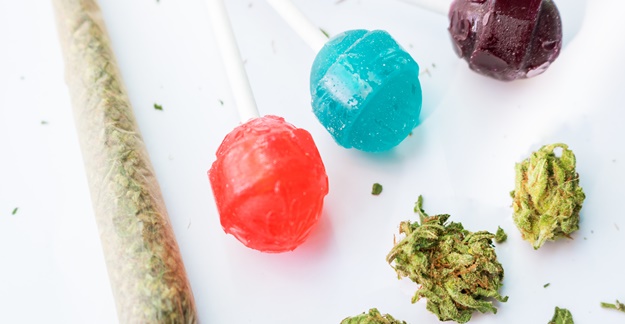
That’s a warning from researchers, based on the case of a 70-year-old man with stable heart disease who ate a marijuana edibles, one of the main compounds found in marijuana, because he thought it would help with pain and sleep problems. The lollipop contained 90 mg of THC. For comparison, a typical marijuana joint has around 7 mg, and Marinol (dronabinol), a synthetic form of THC used to ease nausea and stimulate appetite in cancer and AIDS patients, has a starting dose of 2.5 mg.
The man experienced severe hallucinations and anxiety, leading him to experience a heart attack, the researchers reported in the Canadian Journal of Cardiology. After the hallucinogenic effects of the THC wore off, the chest pain stopped.
The researchers noted there have been other case reports linking cannabis and cardiovascular events, including stroke, abnormal heartbeat and even sudden death.
“Most previous research on marijuana-induced myocardial ischemia focused mostly on younger patients and did not focus on its different formulations and potencies,” lead author and cardiologist Robert S. Stevenson, MD, of Horizon Health Network, Saint John, New Brunswick, Canada, said in a statement. “As a result of widespread marijuana legalization, healthcare providers need to understand and manage cannabis use and its complications in older patients, particularly in those with cardiovascular disease.”

Want to Share Your Story?
If you’ve experienced side effects or medication issues related to this topic, we want to hear from you.
Submit Your StoryDISCLAIMER: MedShadow provides information and resources related to medications, their effects, and potential side effects. However, it is important to note that we are not a substitute for professional medical advice, diagnosis, or treatment. The content on our site is intended for educational and informational purposes only. Individuals dealing with medical conditions or symptoms should seek guidance from a licensed healthcare professional, such as a physician or pharmacist, who can provide personalized medical advice tailored to their specific circumstances.
While we strive to ensure the accuracy and reliability of the information presented on MedShadow, we cannot guarantee its completeness or suitability for any particular individual’s medical needs. Therefore, we strongly encourage users to consult with qualified healthcare professionals regarding any health-related concerns or decisions. By accessing and using MedShadow, you acknowledge and agree that the information provided on the site is not a substitute for professional medical advice and that you should always consult with a qualified healthcare provider for any medical concerns.
on this page:
RECOMMENDED:

DONATE:
Help fund our fight for improved medication safety and transparency by supporting our independent journalism.
Give NowWe seek to create a world where there are safer medications for all and where all people are fully informed about their medication benefits and side effects, using our explanatory and investigative journalism to both inform and stimulate public discussion to drive toward solutions.
WEBINARS
Stream our library on demand, including insights on generic drugs and pain management, straight from experts.
WATCH NOW
Republish This Story for Free
Creative Commons License (CC BY-NC-ND 4.0)MedShadow.org is dedicated to empowering people with our evidence-based journalism about the safest ways to take over-the-counter (OTC) and prescription (Rx) medications.
We also seek to stimulate public discussion about potential improvements to drug research, manufacturing and distribution processes. and also to encourage the improvement of processes to ensure that we are all better protected.
As a result, we encourage other nonprofit newsrooms, mission-aligned outlets, and advocacy organizations to republish our original content under the following conditions:
You May Republish Our Articles for Free If:
1. We Are Credited Fully and Clearly
You must include the byline and credit MedShadow.org as the original publisher. Please include a link to the original article at the top or bottom of the piece. Use the following attribution:
This article was originally published by MedShadow, a nonprofit foundation that focuses on the safest ways to take over-the-counter and prescription medications.
2. Our Content Isn’t Edited Without Permission
You may make small changes for clarity, such as adjusting headlines, subheadings, or transitions, but you may not change the core meaning, tone, or intent of the article. For substantive edits, email us at republish@medshadow.org for review and approval.
3. You Do Not Sell Or Use Our Content Commercially
Our work is free to share, but it may not be sold, monetized, or repurposed for commercial gain. You may not republish our articles behind a paywall or in publications whose primary purpose is advertising or product promotion. You may not place drug or supplement advertising adjacent to our story.
4. Photos, Graphics, and Multimedia Are Not Used Without Permission
Only the text of the article is available for republication. Images, graphics, and videos may not be reused without explicit written permission, unless they are clearly marked as Creative Commons licensed. Contact us if you’d like to request reuse of a visual asset.
You May Not:
- Use our content to promote a product, service, or political candidate
- Republish only part of an article or create derivative works without permission
- Add affiliate links, advertising overlays, or lead generators
- Translate the article without written permission
Contact Us
If you’re unsure whether your intended use falls within these guidelines, or would like to discuss a formal syndication or licensing arrangement, please email: republish@medshadow.org
We want our journalism to reach as many people as possible, especially those making critical decisions about medications and health.
Article HTML
<!-- wp:heading -->
<h2 class="wp-block-heading">If you have cardiovascular disease or a heart condition, you might want to lay off eating marijuana edibles as they may cause a heart attack.</h2>
<!-- /wp:heading --><!-- wp:paragraph -->
<p>That’s a warning from researchers, based on the case of a 70-year-old man with stable heart disease who ate a marijuana edibles, one of the main compounds found in marijuana, because he thought it would help with pain and sleep problems. The lollipop contained 90 mg of THC. For comparison, a typical marijuana joint has around 7 mg, and Marinol (dronabinol), a synthetic form of THC used to ease nausea and stimulate appetite in cancer and AIDS patients, has a starting dose of 2.5 mg.</p>
<!-- /wp:paragraph --><!-- wp:paragraph -->
<p>The man experienced severe hallucinations and anxiety, leading him to experience a heart attack, the researchers reported in the <a href="https://linkinghub.elsevier.com/retrieve/pii/S0828282X18313242" target="_blank" rel="noreferrer noopener">Canadian Journal of Cardiology</a>. After the hallucinogenic effects of the THC wore off, the chest pain stopped.</p>
<!-- /wp:paragraph --><!-- wp:paragraph -->
<p>The researchers noted there have been other case reports linking cannabis and cardiovascular events, including stroke, abnormal heartbeat and even sudden death.</p>
<!-- /wp:paragraph --><!-- wp:paragraph -->
<p>“Most previous research on marijuana-induced myocardial ischemia focused mostly on younger patients and did not focus on its different formulations and potencies,” lead author and cardiologist Robert S. Stevenson, MD, of Horizon Health Network, Saint John, New Brunswick, Canada, said in a statement. “As a result of widespread marijuana legalization, healthcare providers need to understand and manage cannabis use and its complications in older patients, particularly in those with cardiovascular disease.”</p>
<!-- /wp:paragraph -->