

Menu
 Shedding Light on the Risks
& Benefits of Medications
Shedding Light on the Risks
& Benefits of Medications
Shedding Light on the Risks
& Benefits of Medications Are Sunscreen Chemicals Safe?

Photo: Shutterstock
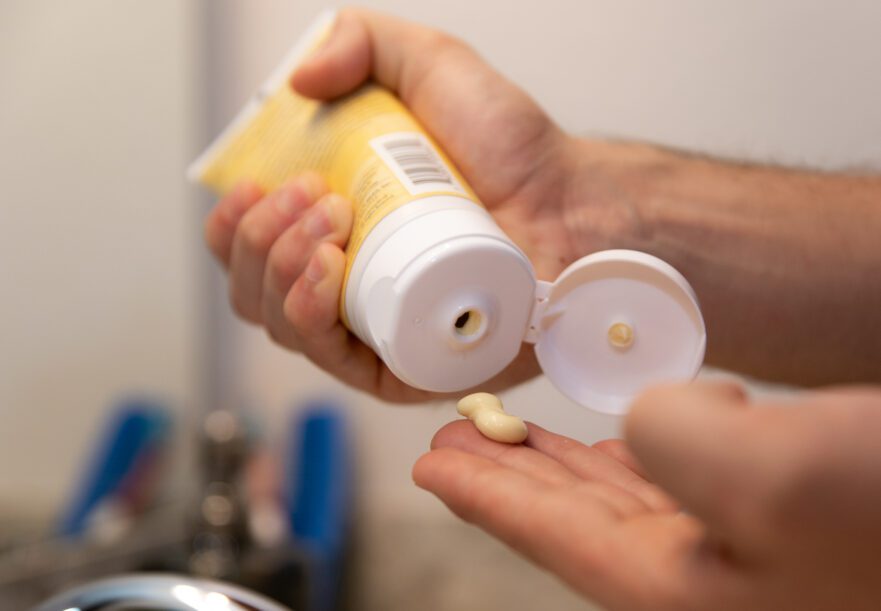
Reports of ingredients that may disrupt hormones have left many wary of sun protection. Find out where the science stands and how to protect your skin from UV damage
June 22, 2026
0 Comments
republishPhoto: Shutterstock
FACT CHECKED
 republish this story
on this page:
Sunscreen ingredients have come under increasing scrutiny in recent years. Online, warnings seem to be everywhere, with claims linking certain ingredients to hormone disruption and other possible health risks. Certain advocacy groups have amplified those concerns. The Campaign for Safe Cosmetics, a program run by the environmental health nonprofit Breast Cancer Prevention Partners, lists 15 so-called “toxic chemicals” found in sunscreens. The Environmental Working Group, meanwhile, advises consumers to avoid six sunscreen ingredients over potential health risks.
Combine the often-conflicting information you might find online with the hundreds of sunscreen options at your local store, and it’s no surprise most consumers feel confused. And while the science around sunscreen ingredients continues to evolve, one thing is certain: Unprotected exposure to the sun’s ultraviolet (UV) rays is the leading cause of skin cancer.
Here’s how to separate fact from fiction when it comes to the “dangers” possibly lurking in your SPF.
Why Sun Protection Is Always Important
Skin cancer is the most common cancer in the United States, affecting 1 in 5 Americans. The most common nonmelanoma skin cancers — basal cell and squamous cell carcinomas — are highly treatable, but melanoma is far more dangerous and can spread quickly if not treated early. The American Cancer Society estimates that more than 100,000 people will be diagnosed with melanoma in 2026, and more than 8,000 people will die from it.
The good news is that skin cancer is also one of the most preventable types of cancer. That’s because an estimated 90% of non-melanoma skin cancers and 86% or more of melanomas are caused by overexposure to UV light. Protecting your skin from the sun is the best way to reduce your risk of any type of skin cancer.
Chemical vs. Mineral: Understanding Sunscreen Ingredients
Sunscreen sold in the US is regulated by the FDA as an over-the-counter (OTC) drug and contains active ingredients categorized into two main types: mineral and chemical.
Mineral sunscreens—often referred to as “physical” sunscreens—work by sitting on top of the skin and reflecting the sun’s rays so they can’t cause damage. They commonly contain the ingredients titanium dioxide and zinc oxide.
Chemical sunscreens absorb UV rays before they can penetrate the skin. They contain ingredients like avobenzone, homosalate, oxybenzone, and octinoxate.
The current list of FDA-approved sunscreen ingredients includes 17 compounds. Of those, only about half are regularly used in sunscreens sold in the U.S.
How Concerns About Hormone Disruption Took Hold
The alarm about certain chemical sunscreen ingredients — oxybenzone, in particular — was first sounded in the early 2000s.
A study published in 2001 in Environmental Health Perspectives examined the effect of the ingredient on immature rats. The animals were fed 1,525 milligrams of oxybenzone per kilogram of body weight for four days (for a total of 6100 mg/kg of body weight). The results showed an increase in uterine weight — a possible indicator that the ingredient can mimic, block, or enhance the effects of estrogen on the body. Other similar animal and in vitro studies followed, also analyzing the effects of oxybenzone and other chemical UV filters at high doses. Although results were mixed, many of the studies showed similar associations between sunscreen ingredients and estrogenic activity.
In 2019, the FDA conducted a study examining absorption levels of several chemical sunscreen ingredients — including oxybenzone, avobenzone, and octocrylene. Researchers found that all of the ingredients absorbed into the body faster and at higher levels than previously believed.
The animal and in vitro studies suggesting possible endocrine effects — combined with new FDA findings on sunscreen absorption levels and rates — fueled growing concern and scrutiny around chemical sunscreens. As a result, the FDA reclassified two ingredients (aminobenzoic acid (PABA) and trolamine salicylate) as not generally recognized as safe and effective (GRASE), “because evidence shows [they] are not GRASE due to safety issues.” And they called for additional safety data on 10 other chemical sunscreen ingredients.
Those 12 ingredients – which include oxybenzone, homosalate, avobenzone and octinoxate – have been reclassified as “not GRASE,” pending further research. It is still legal for sunscreens containing those ingredients to be sold in the US, and the FDA maintains that consumers should still feel safe using them. According to the agency: “This proposed order does not represent a conclusion by the FDA that the sunscreen active ingredients proposed as having insufficient data are unsafe for use in sunscreens. Rather, we are requesting additional information on these ingredients so that we can evaluate their GRASE status in light of changed conditions, including substantially increased sunscreen usage and evolving information about the potential risks associated with these products since they were originally evaluated.”
“The public should understand that the FDA still stands behind the safety of all these UV filters,” says Henry Lim, M.D., dermatologist and senior vice president of academic affairs at Henry Ford Medical Center. “The call for more data is because we now use more sunscreen, more often, than we did years ago when the ingredients were first approved, and we have more information about how they are absorbed into the body.”
As part of the FDA’s call for more data, the agency conducted another study in 2019. Participants applied chemical sunscreen to 75% of their bodies one time on day one and four times per day for the remaining three days. All the ingredients tested were present in the participants’ blood samples at “plasma concentrations that surpassed the FDA threshold,” according to study authors. This threshold indicates that the compounds require further safety testing.
“It’s not surprising that [chemical sunscreens] absorb, since many of these UV filters are made up of small molecules,” says Dr. Lim. “But what’s often overlooked in this discussion is that the clinical significance of this absorption — and whether or not it causes harm — is not known.”
What Current Research Tells Us About Chemical Sunscreen and Endocrine Disruption
Dozens of studies over the years — in animals, people, and petri dishes — have looked at various sunscreen ingredients and their effects on hormones and the endocrine system.
In Vitro and Animal Studies
Much of the research frequently cited as evidence of endocrine disruption from UV filters comes from animal studies (mainly in rats) or in vitro studies — often using doses that far exceed typical human exposure. In vitro studies isolate tissues or cells (from animals or humans) in test tubes or petri dishes to assess the effect of exposure to sunscreen ingredients. These studies have linked certain ingredients (most frequently, oxybenzone) to a variety of endocrine outcomes, including altered mammary glands, increased uterine weight, and thyroid function.
“Certain studies show oxybenzone and similar filters can bind to estrogen and androgen receptors in cells and alter hormone signaling in animals,” says Deborah S. Sarnoff, M.D., president of The Skin Cancer Foundation. “Some in vitro work shows receptor activity changes, which means they can interact with the endocrine system under certain conditions.”
Human Studies
To date, the only studies involving humans are epidemiological, meaning people are followed over time to measure exposure to UV filters and track correlations to endocrine disruption. “These are often small studies that, in some cases, show an association between sunscreen exposure and hormonal changes,” says Dr. Lim. “But they don’t directly prove cause and effect.” Dr. Lim says there is currently no strong, rigorous study that conclusively proves sunscreen exposure can cause an endocrine disruption.
For example, a recent review of 78 human studies from 2014 to 2024 found “significant hormonal disruptions, including reduced testosterone levels in adolescent males, altered thyroid hormones in pregnant women, and associations with delayed pubertal development in boys and early menarche in girls.” While that statement may sound conclusive (and scary), the researchers follow it up by explaining that the studies also showed “significant variability” related to age, gender, amount of sunscreen exposure and the possible synergistic effect of exposure to mixed combinations of ingredients. “This variability underscores the necessity for standardized methodologies and diverse, large-scale cohort studies to refine our understanding of UV filter impacts,” they wrote in the conclusion.
What We Still Don’t Know
Despite many studies over the past two decades, we still don’t have a definitive answer about sunscreen ingredients and their potential for endocrine disruption. This stems, in part, from the lack of randomized clinical trials in humans. There’s also a disconnect between the amount of sunscreen used in animal and in vitro studies and the amount people typically use.
Human studies are often based on sunscreen application at the scientific standard of 2 milligrams per square centimeter of skin surface. “That’s not a practical amount to use in the real world,” says Dr. Lim. “Real world usage is about 25% of that amount.”
The dosage difference between animal studies and real-world use is even greater. Authors of a 2011 research paper tried to put that discrepancy into perspective by calculating the human exposure equivalent to the oxybenzone fed to rats in the 2001 Environmental Health Perspectives study. They calculated that it would take an average-sized woman covering 100 percent of her body every day with a full dose of sunscreen about 35 years to reach that level of oxybenzone exposure.
“There is no evidence that UV filters disrupt hormones in humans at real-world exposure levels,” explains Dr. Sarnoff. “The only studies that show this potential are in animals or in vitro at levels of absorption that humans are not exposed to through sunscreen use.”
Nevertheless, some countries are erring on the side of caution and reducing the allowable concentration of certain sunscreen ingredients. For example, oxybenzone is currently allowed in U.S. products at concentrations up to 6%, and homosalate up to 15%. In the EU, sunscreens marketed for full-body use can have a maximum of 2.2% oxybenzone and .5% homosalate. In Australia, the Therapeutic Goods Administration also recently recommended lowering the maximum concentration of oxybenzone and homosalate in sunscreens due to potential endocrine concerns.
“It is established in health that ‘the dose makes the poison,’” says Nial Wheate, Ph.D., a researcher in medicine formulation and drug delivery at Macquarie University, New South Wales, Australia. “In other words: just because something is dangerous at a high dose does not mean it is dangerous at a low dose.”
How to Stay Safe in the Sun
If you are concerned about the potential for endocrine disruption, experts advise sticking with mineral sunscreens. These products get their protective powers from titanium dioxide and zinc oxide (two ingredients listed as GRASE by the FDA). The American Academy of Pediatrics recommends these ingredients, while suggesting parents avoid using oxybenzone-containing sunscreens on children if possible.
Are self-tanners a safer alternative?
Self-tanners can create the look of a tan without exposing your skin to UV rays. Most products use a color additive called dihydroxyacetone (DHA) that reacts with amino acids on the surface of the skin to darken its color temporarily.
Self-tanners containing DHA are approved for external use as a cosmetic, but because research on the effects of long-term inhalation or ingestion is limited, the FDA advises avoiding inhalation and direct contact with the eyes, lips, and mucous membranes–particularly with spray tans.
As with many FDA-approved cosmetic ingredients, researchers continue to explore DHA’s safety. Some studies have found that applying DHA to isolated skin cells can produce molecules associated with cell damage and cancer, but these studies used a concentration of DHA that far surpasses the amount found in self-tanning products.
Unquestionably, self-tan is not a substitute for sunscreen, and should be used alongside other sun-protective measures whenever necessary.
It’s also important to remember that sunscreen should be just one part of your total sun-protection strategy. “Covering up with photoprotective clothing allows you to use so much less sunscreen, applied just to the exposed areas,” says Dr. Lim.
Other strategies include limiting your sun exposure during peak hours (10 am and 4 pm), wearing a wide-brimmed hat, and seeking shade.
For some people, mineral sunscreens are less cosmetically appealing. They can leave a whitish cast, especially on darker skin, and can be difficult to rub into stubble or facial hair. Chemical sunscreens often feel lighter on the skin and blend in more easily. For those who prefer chemical sunscreen but still worry about the ingredients, it’s getting easier to avoid the potentially most problematic one — oxybenzone. According to the Environmental Working Group, in 2006, 70% of chemical sunscreens contained oxybenzone. In 2026, only 5% did.
On June 9, 2026, the FDA approved an additional sunscreen ingredient for use in the U.S. This broad-spectrum chemical UV filter, Bemotrizinol (BEMT), has been approved for use in the EU since 2000. “It’s a chemical ingredient, but it contains larger molecules that are much less likely to be absorbed into the skin,” says Dr. Lim. According to the company that has exclusive rights to market BEMT in the U.S, it will be sold under the brand name Parsol Shield, and should be available in September 2026.
On June 9, 2026, the FDA approved an additional sunscreen ingredient for use in the U.S. This broad-spectrum chemical UV filter, Bemotrizinol (BEMT), has been approved for use in the EU since 2000.
For now, experts recommend that anyone worried about chemical sunscreen ingredients select products that use mineral UV filters.
Separating Facts From Fear
Conflicting headlines and social media claims about sunscreen safety can make it difficult for consumers to feel confident in their sunscreen choices. Even the research itself can sometimes be misleading. “Systematic reviews can sound scarier than they are depending on how the evidence is presented,” says Dr. Sarnoff. “They aren’t ‘wrong,’ but are often misused. They identify biological plausibility, not proven harm.”
She goes on to say that “skin cancer is by far the more serious health risk to Americans.” So don’t let fear of sunscreen ingredients keep you from protecting your skin from a known carcinogen – UV rays.
Want to Share Your Story?
If you’ve experienced side effects or medication issues related to this topic, we want to hear from you.
Submit Your Story- American Academy of Pediatrics. (n.d.). Sun safety: Information for parents about sunburn and sunscreen.
- https://www.healthychildren.org/English/safety-prevention/at-play/Pages/Sun-Safety.aspx
- Bode, A. M., & Dong, Z. (2020). Are FDA-approved sunscreen components effective in preventing skin cancer? Photodermatology, Photoimmunology & Photomedicine, 36(5), 365–372
- Campaign for Safe Cosmetics. (n.d.). Sunscreen and SPF safety.
- Centers for Disease Control and Prevention. (2026, February 10). About skin cancer.
- Environmental Working Group. (n.d.). EWG’s guide to sunscreen ingredients.
- Environmental Working Group. (2025). EWG’s 19th annual guide to sunscreens: Executive summary.
- Food and Drug Administration. (2020). Effect of sunscreen application on plasma concentration of sunscreen active ingredients: A randomized clinical trial.
- Food and Drug Administration. (2025, December 11). FDA proposes expanding sunscreen active ingredient list
- Food and Drug Administration. (2022, December 16). Questions and answers: FDA posts deemed final order and proposed order for over-the-counter sunscreen.
- JAMA Network. (2020). Systemic absorption of sunscreen ingredients.
- Jaskulak, M., Cinkusz, M., Franchuk, K., & Zorena, K. (2025). Endocrine and reproductive health considerations of sunscreen UV filters: Insights from a comprehensive review 2014–2024. Current Environmental Health Reports.
- Matouskova, K., et al. (2020). Exposure to low doses of oxybenzone during perinatal development alters mammary gland morphology in male and female mice. Reproductive Toxicology, 92, 66–77.
- Sander, M., Sander, M., Burbidge, T., & Beecker, J. (2020). The efficacy and safety of sunscreen use for the prevention of skin cancer. CMAJ (Canadian Medical Association Journal), 192(50), E1802–E1808.
- Schlumpf, M., Cotton, B., Conscience, M., Haller, V., Steinmann, B., & Lichtensteiger, W. (2001). In vitro and in vivo estrogenicity of UV screens. Environmental Health Perspectives, 109(3), 239–244.
- Schmutzler, C., Hamann, I., Hofmann, P. J., Kovacs, G., Stemmler, L., Mentrup, B., & Schomburg, L. (2007). Endocrine disruptors and the thyroid gland—A combined in vitro and in vivo analysis of potential new biomarkers. Environmental Health Perspectives, 115(Suppl 1), 77–83.
- The Skin Cancer Foundation. (n.d.). Skin cancer facts & statistics.
- The Skin Cancer Foundation. (n.d.). Sunscreen.
- Therapeutic Goods Administration. (n.d.). Regulation of sunscreens in Australia.
- Wang, S. Q., Burnett, M. E., & Lim, H. W. (2011). Safety of oxybenzone: Putting numbers into perspective. JAMA Dermatology.
DISCLAIMER: MedShadow provides information and resources related to medications, their effects, and potential side effects. However, it is important to note that we are not a substitute for professional medical advice, diagnosis, or treatment. The content on our site is intended for educational and informational purposes only. Individuals dealing with medical conditions or symptoms should seek guidance from a licensed healthcare professional, such as a physician or pharmacist, who can provide personalized medical advice tailored to their specific circumstances.
While we strive to ensure the accuracy and reliability of the information presented on MedShadow, we cannot guarantee its completeness or suitability for any particular individual’s medical needs. Therefore, we strongly encourage users to consult with qualified healthcare professionals regarding any health-related concerns or decisions. By accessing and using MedShadow, you acknowledge and agree that the information provided on the site is not a substitute for professional medical advice and that you should always consult with a qualified healthcare provider for any medical concerns.
on this page:
RECOMMENDED:

DONATE:
Help fund our fight for improved medication safety and transparency by supporting our independent journalism.
Give NowWe seek to create a world where there are safer medications for all and where all people are fully informed about their medication benefits and side effects, using our explanatory and investigative journalism to both inform and stimulate public discussion to drive toward solutions.

Republish This Story for Free
Creative Commons License (CC BY-NC-ND 4.0)MedShadow.org is dedicated to empowering people with our evidence-based journalism about the safest ways to take over-the-counter (OTC) and prescription (Rx) medications.
We also seek to stimulate public discussion about potential improvements to drug research, manufacturing and distribution processes. and also to encourage the improvement of processes to ensure that we are all better protected.
As a result, we encourage other nonprofit newsrooms, mission-aligned outlets, and advocacy organizations to republish our original content under the following conditions:
You May Republish Our Articles for Free If:
1. We Are Credited Fully and Clearly
You must include the byline and credit MedShadow.org as the original publisher. Please include a link to the original article at the top or bottom of the piece. Use the following attribution:
This article was originally published by MedShadow, a nonprofit foundation that focuses on the safest ways to take over-the-counter and prescription medications.
2. Our Content Isn’t Edited Without Permission
You may make small changes for clarity, such as adjusting headlines, subheadings, or transitions, but you may not change the core meaning, tone, or intent of the article. For substantive edits, email us at republish@medshadow.org for review and approval.
3. You Do Not Sell Or Use Our Content Commercially
Our work is free to share, but it may not be sold, monetized, or repurposed for commercial gain. You may not republish our articles behind a paywall or in publications whose primary purpose is advertising or product promotion. You may not place drug or supplement advertising adjacent to our story.
4. Photos, Graphics, and Multimedia Are Not Used Without Permission
Only the text of the article is available for republication. Images, graphics, and videos may not be reused without explicit written permission, unless they are clearly marked as Creative Commons licensed. Contact us if you’d like to request reuse of a visual asset.
You May Not:
- Use our content to promote a product, service, or political candidate
- Republish only part of an article or create derivative works without permission
- Add affiliate links, advertising overlays, or lead generators
- Translate the article without written permission
Contact Us
If you’re unsure whether your intended use falls within these guidelines, or would like to discuss a formal syndication or licensing arrangement, please email: republish@medshadow.org
We want our journalism to reach as many people as possible, especially those making critical decisions about medications and health.
Article HTML
<!-- wp:paragraph -->
<p>Sunscreen ingredients have come under increasing scrutiny in recent years. Online, warnings seem to be everywhere, with claims linking certain ingredients to hormone disruption and other possible health risks. Certain advocacy groups have amplified those concerns. The Campaign for Safe Cosmetics, a program run by the environmental health nonprofit <a href="https://www.bcpp.org/">Breast Cancer Prevention Partners</a>, lists <a href="https://www.safecosmetics.org/resources/safer-sunscreens/#elementor-toc__heading-anchor-3">15 so-called “toxic chemicals”</a> found in sunscreens. The Environmental Working Group, meanwhile, advises consumers to avoid <a href="https://www.ewg.org/sunscreen/report/the-trouble-with-sunscreen-chemicals/">six sunscreen ingredients</a> over potential health risks. </p>
<!-- /wp:paragraph --><!-- wp:paragraph -->
<p>Combine the often-conflicting information you might find online with the hundreds of sunscreen options at your local store, and it’s no surprise most consumers feel confused. And while the science around sunscreen ingredients continues to evolve, one thing is certain: Unprotected exposure to the sun’s ultraviolet (UV) rays is the<a href="https://www.skincancer.org/skin-cancer-information/skin-cancer-facts/"> leading cause of skin cancer</a>.  </p>
<!-- /wp:paragraph --><!-- wp:paragraph -->
<p>Here’s how to separate fact from fiction when it comes to the “dangers” possibly lurking in your SPF.</p>
<!-- /wp:paragraph --><!-- wp:heading -->
<h2 class="wp-block-heading">Why Sun Protection Is Always Important</h2>
<!-- /wp:heading --><!-- wp:paragraph -->
<p><a href="https://www.cdc.gov/skin-cancer/about/index.html">Skin cancer is the most common cancer</a> in the United States,<a href="https://www.skincancer.org/skin-cancer-information/skin-cancer-facts/"> affecting 1 in 5 Americans</a>. The most common nonmelanoma skin cancers — basal cell and squamous cell carcinomas — are highly treatable, but melanoma is far more dangerous and can spread quickly if not treated early. The American Cancer Society estimates that<a href="https://www.cancer.org/cancer/types/melanoma-skin-cancer/about/key-statistics.html"> more than 100,000 people will be diagnosed with melanoma in 2026, and more than 8,000 people will die from it</a>.</p>
<!-- /wp:paragraph --><!-- wp:paragraph -->
<p>The good news is that skin cancer is also one of the most preventable types of cancer. That’s because an estimated<a href="https://www.skincancer.org/skin-cancer-information/skin-cancer-facts/#nonmelanoma"> 90% of non-melanoma skin cancers and 86% or more of melanomas are caused by overexposure to UV light</a>. Protecting your skin from the sun is the best way to reduce your risk of any type of skin cancer.</p>
<!-- /wp:paragraph --><!-- wp:heading -->
<h2 class="wp-block-heading">Chemical vs. Mineral: Understanding Sunscreen Ingredients</h2>
<!-- /wp:heading --><!-- wp:paragraph -->
<p>Sunscreen sold in the US is regulated by the FDA as an over-the-counter (OTC) drug and contains active ingredients categorized into two main types: mineral and chemical. </p>
<!-- /wp:paragraph --><!-- wp:paragraph -->
<p>Mineral sunscreens—often referred to as “physical” sunscreens—<a href="https://www.skincancer.org/skin-cancer-prevention/sun-protection/sunscreen/#what">work by sitting on top of the skin</a> and reflecting the sun’s rays so they can’t cause damage. They commonly contain the ingredients titanium dioxide and zinc oxide.</p>
<!-- /wp:paragraph --><!-- wp:paragraph -->
<p>Chemical sunscreens <a href="https://www.skincancer.org/skin-cancer-prevention/sun-protection/sunscreen/#what">absorb UV rays</a> before they can penetrate the skin. They contain ingredients like avobenzone, homosalate, oxybenzone, and octinoxate.</p>
<!-- /wp:paragraph --><!-- wp:paragraph -->
<p>The current list of FDA-approved sunscreen ingredients includes<a href="https://pmc.ncbi.nlm.nih.gov/articles/PMC12332967/"> 17 compounds</a>. Of those,<a href="https://pmc.ncbi.nlm.nih.gov/articles/PMC7407267/"> only about half are regularly used in sunscreens</a> sold in the U.S. </p>
<!-- /wp:paragraph --><!-- wp:heading -->
<h2 class="wp-block-heading">How Concerns About Hormone Disruption Took Hold</h2>
<!-- /wp:heading --><!-- wp:paragraph -->
<p>The alarm about certain chemical sunscreen ingredients — oxybenzone, in particular — was first sounded in the early 2000s. </p>
<!-- /wp:paragraph --><!-- wp:paragraph -->
<p>A<a href="https://pmc.ncbi.nlm.nih.gov/articles/PMC1240241/"> study published in 2001 in <em>Environmental Health Perspectives</em></a> examined the effect of the ingredient on immature rats. The animals were fed 1,525 milligrams of oxybenzone per kilogram of body weight for four days (for a total of 6100 mg/kg of body weight). The results showed an increase in uterine weight — a possible indicator that the ingredient can mimic, block, or enhance the effects of estrogen on the body. Other similar animal and in vitro studies followed, also analyzing the effects of oxybenzone and other chemical UV filters at high doses. Although results were mixed, many of the studies showed similar associations between sunscreen ingredients and estrogenic activity. </p>
<!-- /wp:paragraph --><!-- wp:paragraph -->
<p>In<a href="https://pmc.ncbi.nlm.nih.gov/articles/PMC6549296/"> 2019</a>, the FDA conducted a study examining absorption levels of several chemical sunscreen ingredients — including oxybenzone, avobenzone, and octocrylene. Researchers found that all of the ingredients absorbed into the body faster and at higher levels than previously believed. </p>
<!-- /wp:paragraph --><!-- wp:paragraph -->
<p>The animal and in vitro studies suggesting possible endocrine effects — combined with new FDA findings on sunscreen absorption levels and rates — fueled growing concern and scrutiny around chemical sunscreens. As a result, the FDA reclassified two ingredients (aminobenzoic acid (PABA) and trolamine salicylate) as not generally recognized as safe and effective (GRASE), “<a href="https://www.fda.gov/drugs/understanding-over-counter-medicines/questions-and-answers-fda-posts-deemed-final-order-and-proposed-order-over-counter-sunscreen">because evidence shows [they] are not GRASE due to safety issues</a>.” And they called for additional safety data <a href="https://www.federalregister.gov/documents/2019/02/26/2019-03019/sunscreen-drug-products-for-over-the-counter-human-use#h-55">on 10 other chemical sunscreen ingredients</a>. </p>
<!-- /wp:paragraph --><!-- wp:paragraph -->
<p>Those 12 ingredients – which include oxybenzone, homosalate, avobenzone and octinoxate – have been reclassified as “<a href="https://www.fda.gov/drugs/understanding-over-counter-medicines/questions-and-answers-fda-posts-deemed-final-order-and-proposed-order-over-counter-sunscreen">not GRASE</a>,” pending further research. It is still legal for sunscreens containing those ingredients to be sold in the US, and the FDA maintains that consumers should still feel safe using them. <a href="https://www.fda.gov/drugs/understanding-over-counter-medicines/questions-and-answers-fda-posts-deemed-final-order-and-proposed-order-over-counter-sunscreen">According to the agency</a>: “This proposed order does not represent a conclusion by the FDA that the sunscreen active ingredients proposed as having insufficient data are unsafe for use in sunscreens.  Rather, we are requesting additional information on these ingredients so that we can evaluate their GRASE status in light of changed conditions, including substantially increased sunscreen usage and evolving information about the potential risks associated with these products since they were originally evaluated.”</p>
<!-- /wp:paragraph --><!-- wp:paragraph -->
<p>“The public should understand that the FDA still stands behind the safety of all these UV filters,” says<a href="https://www.henryford.com/physician-directory/l/lim-henry"> Henry Lim, M.D</a>., dermatologist and senior vice president of academic affairs at Henry Ford Medical Center. “The call for more data is because we now use more sunscreen, more often, than we did years ago when the ingredients were first approved, and we have more information about how they are absorbed into the body.”</p>
<!-- /wp:paragraph --><!-- wp:paragraph -->
<p>As part of the FDA’s call for more data, the agency conducted <a href="https://jamanetwork.com/journals/jama/fullarticle/2759002?guestAccessKey=81a4a1e1-66d2-4f85-8d80-8d4d1aa1c56e&utm_source=For_The_Media&utm_medium=referral&utm_campaign=ftm_links&utm_content=tfl&utm_term=012120">another study in 2019</a>. Participants applied chemical sunscreen to 75% of their bodies one time on day one and four times per day for the remaining three days. All the ingredients tested were present in the participants’ blood samples at “plasma concentrations that surpassed the FDA threshold,” according to study authors. This threshold indicates that the compounds require further safety testing.</p>
<!-- /wp:paragraph --><!-- wp:paragraph -->
<p>“It’s not surprising that [chemical sunscreens] absorb, since many of these UV filters are made up of small molecules,” says Dr. Lim. “But what’s often overlooked in this discussion is that the clinical significance of this absorption — and whether or not it causes harm — is not known.”</p>
<!-- /wp:paragraph --><!-- wp:heading -->
<h2 class="wp-block-heading">What Current Research Tells Us About Chemical Sunscreen and Endocrine Disruption </h2>
<!-- /wp:heading --><!-- wp:paragraph -->
<p>Dozens of studies over the years — in animals, people, and petri dishes — have looked at various sunscreen ingredients and their effects on hormones and the endocrine system.</p>
<!-- /wp:paragraph --><!-- wp:heading {"level":3} -->
<h3 class="wp-block-heading">In Vitro and Animal Studies</h3>
<!-- /wp:heading --><!-- wp:paragraph -->
<p>Much of the research frequently cited as evidence of endocrine disruption from UV filters comes from animal studies (mainly in rats) or in vitro studies — often using doses that far exceed typical human exposure. In vitro studies isolate tissues or cells (from animals or humans) in test tubes or petri dishes to assess the effect of exposure to sunscreen ingredients. These studies have linked certain ingredients (most frequently, oxybenzone) to a variety of endocrine outcomes, including<a href="https://pubmed.ncbi.nlm.nih.gov/31408669/"> altered mammary glands</a>,<a href="https://pmc.ncbi.nlm.nih.gov/articles/instance/1240241/pdf/ehp0109-000239.pdf"> increased uterine weight</a>, and<a href="https://pmc.ncbi.nlm.nih.gov/articles/PMC2174406/"> thyroid function</a>.</p>
<!-- /wp:paragraph --><!-- wp:paragraph -->
<p>“Certain studies show oxybenzone and similar filters can bind to estrogen and androgen receptors in cells and alter hormone signaling in animals,” says<a href="https://www.skincancer.org/about-us/who-we-are/deborah-sarnoff-md/"> Deborah S. Sarnoff, M.D</a>., president of<a href="https://www.skincancer.org/"> The Skin Cancer Foundation</a>. “Some in vitro work shows receptor activity changes, which means they can interact with the endocrine system under certain conditions.”</p>
<!-- /wp:paragraph --><!-- wp:heading {"level":3} -->
<h3 class="wp-block-heading">Human Studies</h3>
<!-- /wp:heading --><!-- wp:paragraph -->
<p>To date, the only studies involving humans are epidemiological, meaning people are followed over time to measure exposure to UV filters and track correlations to endocrine disruption. “These are often small studies that, in some cases, show an association between sunscreen exposure and hormonal changes,” says Dr. Lim. “But they don’t directly prove cause and effect.” Dr. Lim says there is currently no strong, rigorous study that conclusively proves sunscreen exposure can cause an endocrine disruption. </p>
<!-- /wp:paragraph --><!-- wp:paragraph -->
<p>For example, a<a href="https://pmc.ncbi.nlm.nih.gov/articles/PMC12317922/pdf/40572_2025_Article_492.pdf"> recent review of 78 human studies</a> from 2014 to 2024 found “significant hormonal disruptions, including reduced testosterone levels in adolescent males, altered thyroid hormones in pregnant women, and associations with delayed pubertal development in boys and early menarche in girls.” While that statement may sound conclusive (and scary), the researchers follow it up by explaining that the studies also showed “significant variability” related to age, gender, amount of sunscreen exposure and the possible synergistic effect of exposure to mixed combinations of ingredients. “This variability underscores the necessity for standardized methodologies and diverse, large-scale cohort studies to refine our understanding of UV filter impacts,” they wrote in the conclusion.</p>
<!-- /wp:paragraph --><!-- wp:heading {"level":3} -->
<h3 class="wp-block-heading">What We Still Don’t Know </h3>
<!-- /wp:heading --><!-- wp:paragraph -->
<p>Despite many studies over the past two decades, we still don’t have a definitive answer about sunscreen ingredients and their potential for endocrine disruption. This stems, in part, from the lack of randomized clinical trials in humans. There’s also a disconnect between the amount of sunscreen used in animal and in vitro studies and the amount people typically use.</p>
<!-- /wp:paragraph --><!-- wp:paragraph -->
<p>Human studies are often based on sunscreen application at the scientific standard of 2 milligrams per square centimeter of skin surface. “That’s not a practical amount to use in the real world,” says Dr. Lim. “Real world usage is about 25% of that amount.” </p>
<!-- /wp:paragraph --><!-- wp:paragraph -->
<p>The dosage difference between animal studies and real-world use is even greater. Authors of a<a href="https://jamanetwork.com/journals/jamadermatology/fullarticle/1105240"> 2011 research paper</a> tried to put that discrepancy into perspective by calculating the human exposure equivalent to the oxybenzone fed to rats in the 2001<a href="https://pmc.ncbi.nlm.nih.gov/articles/PMC1240241/"> <em>Environmental Health Perspectives</em> study</a>. They calculated that it would take an average-sized woman covering 100 percent of her body every day with a full dose of sunscreen about 35 years to reach that level of oxybenzone exposure.</p>
<!-- /wp:paragraph --><!-- wp:paragraph -->
<p>“There is no evidence that UV filters disrupt hormones in humans at real-world exposure levels," explains Dr. Sarnoff. “The only studies that show this potential are in animals or in vitro at levels of absorption that humans are not exposed to through sunscreen use.”</p>
<!-- /wp:paragraph --><!-- wp:paragraph -->
<p>Nevertheless, some countries are erring on the side of caution and reducing the allowable concentration of certain sunscreen ingredients. For example,<a href="https://pmc.ncbi.nlm.nih.gov/articles/PMC12332967/#phpp70032-sec-0006"> oxybenzone is currently allowed in U.S. products at concentrations up to 6%, and homosalate up to 15%</a>. In the EU, sunscreens marketed for full-body use can have a<a href="https://pmc.ncbi.nlm.nih.gov/articles/PMC12332967/#phpp70032-sec-0006"> maximum of 2.2% oxybenzone and .5% homosalate</a>. In Australia, the<a href="https://www.tga.gov.au/resources/publication/corporate-reports/safety-review-seven-active-sunscreen-ingredients"> Therapeutic Goods Administration</a> also recently recommended lowering the maximum concentration of oxybenzone and homosalate in sunscreens due to potential endocrine concerns. </p>
<!-- /wp:paragraph --><!-- wp:paragraph -->
<p>“It is established in health that ‘the dose makes the poison,’” says<a href="https://researchers.mq.edu.au/en/persons/nial-wheate/"> Nial Wheate, Ph.D</a>., a researcher in medicine formulation and drug delivery at Macquarie University, New South Wales, Australia. “In other words: just because something is dangerous at a high dose does not mean it is dangerous at a low dose.”</p>
<!-- /wp:paragraph --><!-- wp:heading -->
<h2 class="wp-block-heading">How to Stay Safe in the Sun</h2>
<!-- /wp:heading --><!-- wp:paragraph -->
<p>If you are concerned about the potential for endocrine disruption, experts advise sticking with mineral sunscreens. These products get their protective powers from titanium dioxide and zinc oxide (two ingredients listed as GRASE by the FDA). The<a href="https://www.healthychildren.org/English/safety-prevention/at-play/Pages/Sun-Safety.aspx"> American Academy of Pediatrics recommends these ingredients</a>, while suggesting parents avoid using oxybenzone-containing sunscreens on children if possible. </p>
<!-- /wp:paragraph --><!-- wp:myplugin/custom-alignment-block {"align":"right"} -->
<div class="wp-block-myplugin-custom-alignment-block alignright"><h2><strong>Are self-tanners a safer alternative?</strong></h2><p>Self-tanners can create the look of a tan without exposing your skin to UV rays. Most products use a color additive called dihydroxyacetone (DHA) that<a href="https://www.fda.gov/cosmetics/cosmetic-products/sunless-tanners-bronzers"> reacts with amino acids</a> on the surface of the skin to darken its color temporarily.<br><br>Self-tanners containing DHA are approved for external use as a cosmetic, but because research on the effects of long-term inhalation or ingestion is limited, the<a href="https://www.fda.gov/radiation-emitting-products/tanning/tanning-products"> FDA advises</a> avoiding inhalation and direct contact with the eyes, lips, and mucous membranes--particularly with spray tans.<br><br>As with many FDA-approved cosmetic ingredients, researchers continue to explore DHA's safety. Some<a href="https://www.sciencedirect.com/science/article/pii/S2213231720306790"> studies</a> have found that applying DHA to isolated skin cells can produce molecules associated with cell damage and cancer, but these studies used a concentration of DHA that far surpasses the amount found in self-tanning products.<br><br>Unquestionably, self-tan is not a substitute for sunscreen, and should be used alongside other sun-protective measures whenever necessary.</p></div>
<!-- /wp:myplugin/custom-alignment-block --><!-- wp:paragraph -->
<p>It’s also important to remember that sunscreen should be just one part of your total sun-protection strategy. “Covering up with photoprotective clothing allows you to use so much less sunscreen, applied just to the exposed areas,” says Dr. Lim. </p>
<!-- /wp:paragraph --><!-- wp:paragraph -->
<p>Other strategies include limiting your sun exposure during peak hours (10 am and 4 pm), wearing a wide-brimmed hat, and seeking shade.</p>
<!-- /wp:paragraph --><!-- wp:paragraph -->
<p>For some people, mineral sunscreens are less cosmetically appealing. They can leave a whitish cast, especially on darker skin, and can be difficult to rub into stubble or facial hair. Chemical sunscreens often feel lighter on the skin and blend in more easily. For those who prefer chemical sunscreen but still worry about the ingredients, it’s getting easier to avoid the potentially most problematic one — oxybenzone. According to the Environmental Working Group, in<a href="https://www.ewg.org/sunscreen/report/executive-summary/"> 2006, 70%  of chemical sunscreens contained oxybenzone. In 2026, only 5% did</a>. </p>
<!-- /wp:paragraph --><!-- wp:paragraph -->
<p>On June 9, 2026, the FDA approved an additional sunscreen ingredient for use in the U.S. This broad-spectrum chemical UV filter, <a href="https://www.fda.gov/news-events/press-announcements/fda-proposes-expanding-sunscreen-active-ingredient-list">Bemotrizinol (BEMT)</a>, has been approved for use in the EU since 2000. “It’s a chemical ingredient, but it contains larger molecules that are much less likely to be absorbed into the skin,” says Dr. Lim. According to the company that has exclusive rights to market BEMT in the U.S, <a href="https://www.npr.org/2026/06/13/nx-s1-5856385/sunscreen-skin-protection-bemotrizinol">it will be sold</a> under the brand name Parsol Shield, and should be available in September 2026.</p>
<!-- /wp:paragraph --><!-- wp:quote -->
<blockquote class="wp-block-quote"><!-- wp:paragraph -->
<p>On June 9, 2026, the FDA approved an additional sunscreen ingredient for use in the U.S. This broad-spectrum chemical UV filter, <a href="https://www.fda.gov/news-events/press-announcements/fda-proposes-expanding-sunscreen-active-ingredient-list">Bemotrizinol (BEMT)</a>, has been approved for use in the EU since 2000.</p>
<!-- /wp:paragraph --></blockquote>
<!-- /wp:quote --><!-- wp:paragraph -->
<p>For now, experts recommend that anyone worried about chemical sunscreen ingredients select products that use mineral UV filters. </p>
<!-- /wp:paragraph --><!-- wp:heading -->
<h2 class="wp-block-heading">Separating Facts From Fear</h2>
<!-- /wp:heading --><!-- wp:paragraph -->
<p>Conflicting headlines and social media claims about sunscreen safety can make it difficult for consumers to feel confident in their sunscreen choices. Even the research itself can sometimes be misleading. “Systematic reviews can sound scarier than they are depending on how the evidence is presented,” says Dr. Sarnoff. “They aren’t ‘wrong,’ but are often misused. They identify biological plausibility, not proven harm.” </p>
<!-- /wp:paragraph --><!-- wp:paragraph -->
<p>She goes on to say that “skin cancer is by far the more serious health risk to Americans.” So don’t let fear of sunscreen ingredients keep you from protecting your skin from a known carcinogen – UV rays. </p>
<!-- /wp:paragraph -->