

Menu
 Shedding Light on the Risks
& Benefits of Medications
Shedding Light on the Risks
& Benefits of Medications
Shedding Light on the Risks
& Benefits of Medications
4 Tips For Your Parkinson’s Disease Diet
4 Tips For Your Parkinson’s Disease Diet
April 10, 2023 (Updated on: February 20, 2026)
0 Comments
4 Tips For Your Parkinson’s Disease Diet
Share
LIVE WEBINAR: MARCH 3
Curious about trustworthy alternative treatments? Get answers from an expert: what works, what doesn't, and how to afford it.
SAVE YOUR SPOTon this page:
Struggling with a new diagnosis of Parkinson’s disease is difficult enough. Learning how to eat to treat your illness is an even greater struggle.
Alison Acerra, registered dietitian with MedShadow, provides her tips for a healthy diet that can ease your symptoms and slow the progression of this debilitating condition.
View this post on Instagram
Stay Informed. Sign up for our newsletters.
Independent, science-based journalism delivered directly to your inbox.
Watch the Full Video: Nutrition and Foods for Parkinson’s Disease
1. Incorporate the Mediterranean Diet
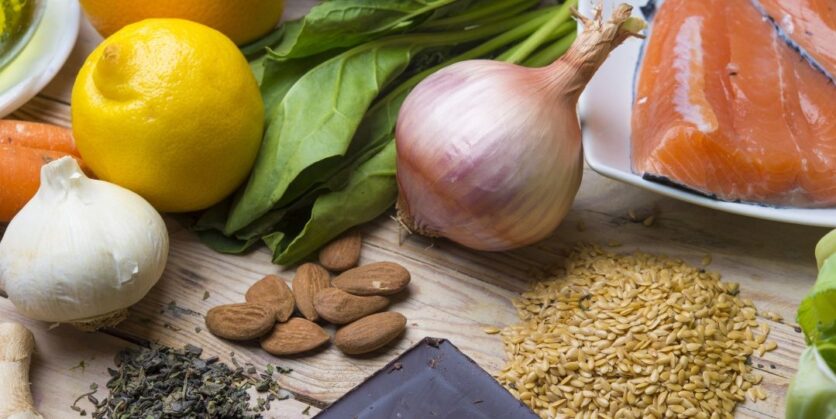
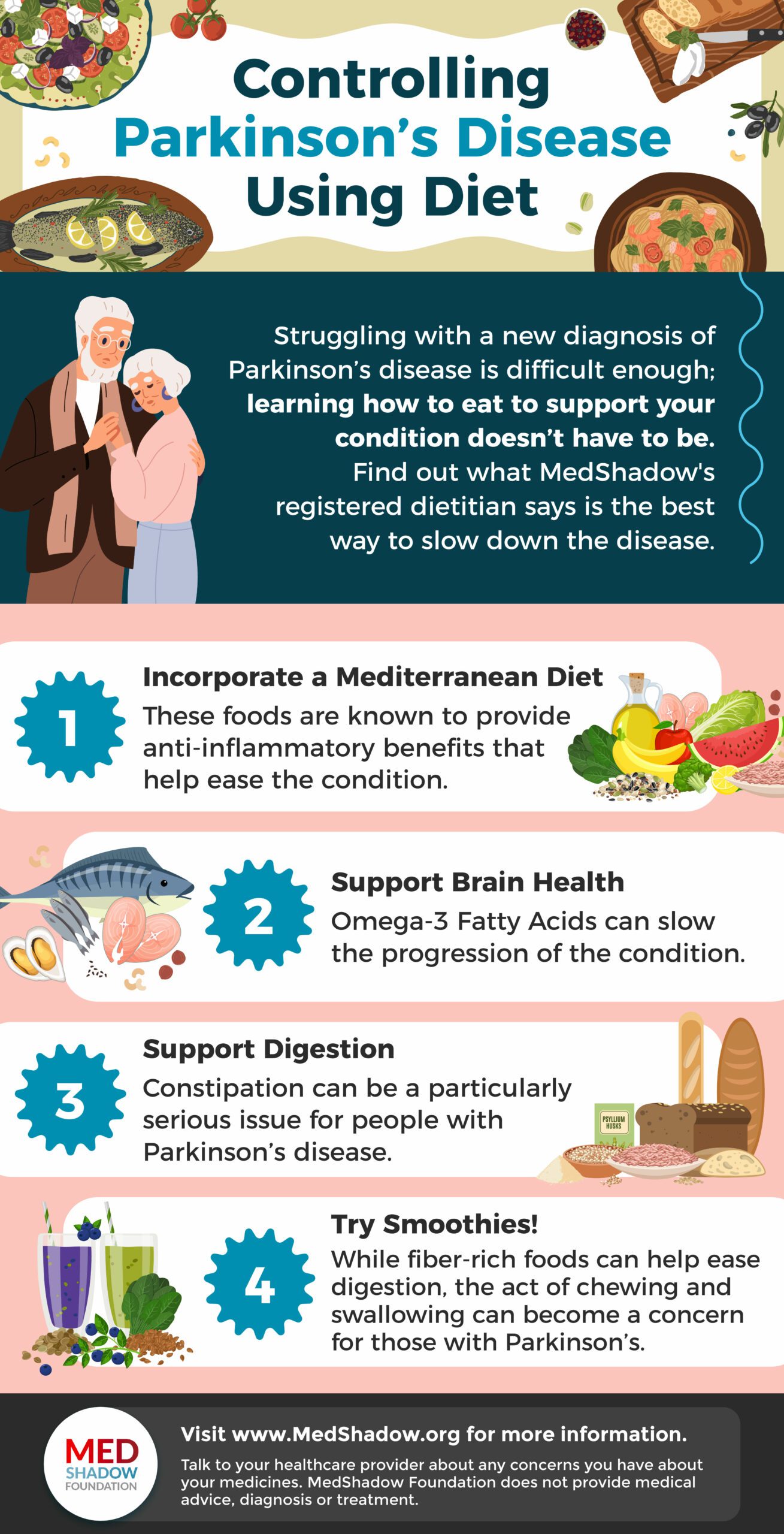
One popular diet trend, known as the Mediterranean Diet, can help to slow the progression of Parkinson’s disease. The foods are known to provide anti-inflammatory benefits which helps to ease the condition.
Some of the main focal points of the Mediterranean diet include:
- Whole foods
- Fresh fruits and vegetables
- Fatty fish
- Nuts and seeds
- Fatty oils
- Whole grains
Acerra says that patients (and their caregivers) should focus on “minimally processed foods.”
“You want to minimize canned food, processed food, and prepackaged foods,” she said. “We want to focus on ones we prepare fresh from scratch, and add spices and seasonings to make them delicious.”
2. Support Brain Health
When juggling the struggles and symptoms of Parkinson’s disease, you want to focus your diet around brain health. Acerra says this “speaks to the role of Omega-3 Fatty Acids,” which can slow the progression of the condition.
Acerra says that some great foods for brain health include:
- Fatty fish
- Flax seed
- Chia seeds
- Walnuts
- Soybeans
- Oysters
Including plenty of sources of Omega-3s will be a crucial part of any diet for a Parkinson’s patient.
3. Foods to Support Digestive Health
Another important addition to any diet combating Parkinson’s disease will need to include foods that can support digestive health.
“Unfortunately, constipation is a debilitating symptom for patients,” says Acerra.
In addition to adding fiber-rich foods to encourage regular bowel movements, she also notes that safe hydration is key.
“Swallowing may be an issue, and we may need to thicken drinks to swallow them safely,” said Acerra.
Some great sources of dietary fiber can include:
- Hemp seeds
- Baobab powder
- Psyllium husk
- Whole grains
4. Try Smoothies
While fiber-rich foods can help ease digestion, the act of chewing and swallowing can become a concern for those with Parkinson’s. Because of this challenge, Acerra recommends adding smoothies to the diet.
“Smoothies can incorporate many great ingredients,” she says. She noted the thicker liquid can also be easier to swallow, helping to keep patients hydrated, as well.
Some easy-to-add ingredients for healthy smoothies can include:
- Flax seeds
- Hemp seeds
- Spinach
- Blueberries
“Hemp seeds are a good source of magnesium,” said Acerra. “You can add spinach, which is full of antioxidants. Blueberries have polyphenols, and also add antioxidants to smoothies.”
The same foods that work in smoothies also can encourage a Mediterranean diet, which focuses on whole fruits and vegetables. The foods can serve multiple purposes as a digestive aid, an anti-inflammatory, and brain health!
If you have questions about a diet for Parkinson’s disease, or would like more information on nutritional advice for your medical condition or symptoms, please feel free to email MedShadow Foundation at editorial@medshadow.org.
DISCLAIMER: MedShadow provides information and resources related to medications, their effects, and potential side effects. However, it is important to note that we are not a substitute for professional medical advice, diagnosis, or treatment. The content on our site is intended for educational and informational purposes only. Individuals dealing with medical conditions or symptoms should seek guidance from a licensed healthcare professional, such as a physician or pharmacist, who can provide personalized medical advice tailored to their specific circumstances.
While we strive to ensure the accuracy and reliability of the information presented on MedShadow, we cannot guarantee its completeness or suitability for any particular individual’s medical needs. Therefore, we strongly encourage users to consult with qualified healthcare professionals regarding any health-related concerns or decisions. By accessing and using MedShadow, you acknowledge and agree that the information provided on the site is not a substitute for professional medical advice and that you should always consult with a qualified healthcare provider for any medical concerns.
on this page:
RECOMMENDED:


DONATE:
Help fund our fight for improved medication safety and transparency by supporting our independent journalism.
Give NowStay Informed. Sign up for our newsletters.
Independent, science-based journalism delivered directly to your inbox.
We seek to create a world where there are safer medications for all and where all people are fully informed about their medication benefits and side effects, using our explanatory and investigative journalism to both inform and stimulate public discussion to drive toward solutions.
LIVE WEBINAR: MARCH 3
Curious about trustworthy alternative treatments? Get answers from an expert: what works, what doesn't, and how to afford it.
SAVE YOUR SPOT