

Menu
 Shedding Light on the Risks
& Benefits of Medications
Shedding Light on the Risks
& Benefits of Medications
Shedding Light on the Risks
& Benefits of Medications Can I Drink Coffee While Taking Iron Supplements?
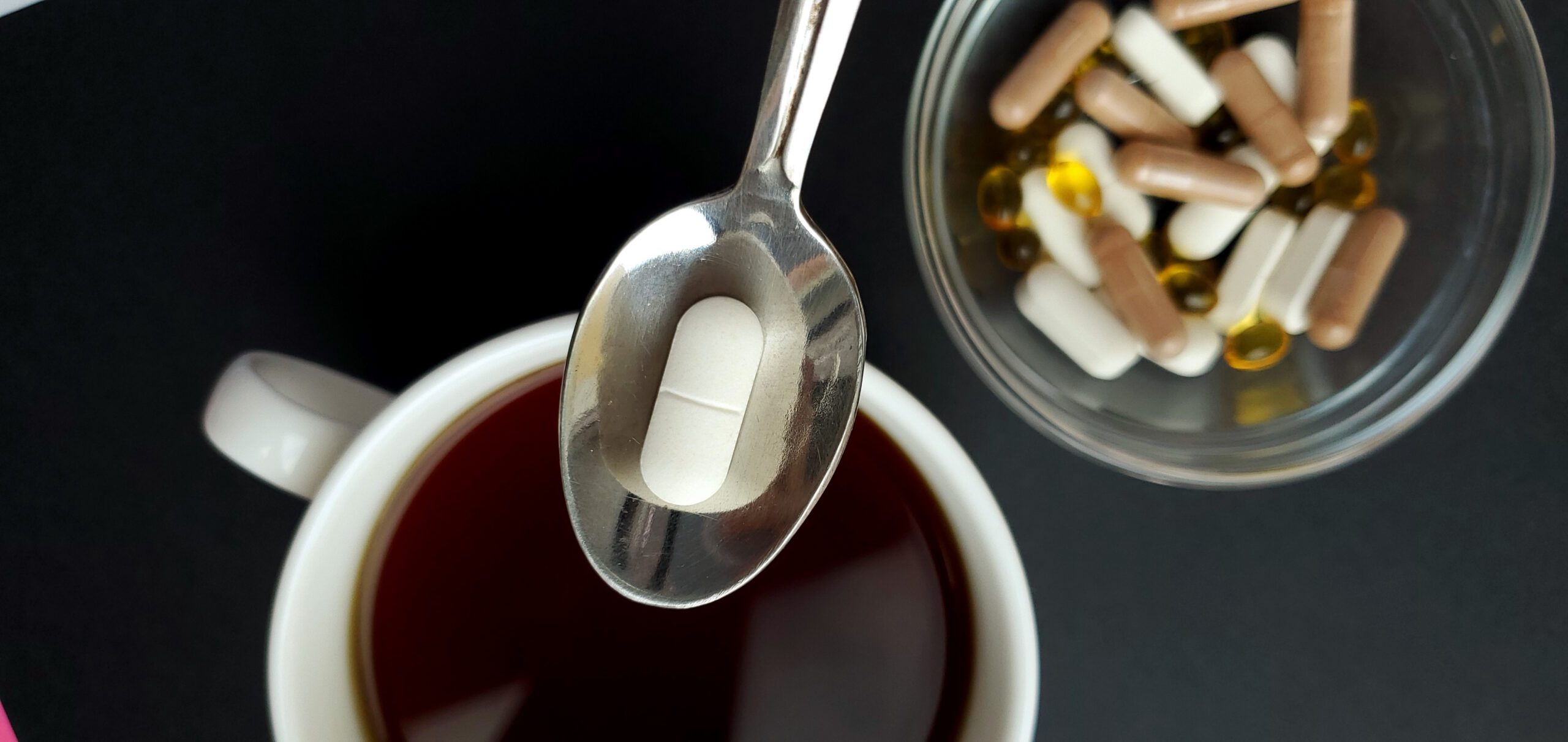
Photo: Shutterstock
Coffee and tea can reduce iron absorption, but it’s not because of caffeine. Whether it matters depends on when you drink them, your iron levels, and your overall diet
May 26, 2026
0 Comments
republishPhoto: Shutterstock
FACT CHECKED
 republish this story
on this page:
If you take an iron supplement with your morning coffee or tea, you may be reducing how much iron your body absorbs. But that doesn’t necessarily mean your caffeine habit is sabotaging your iron levels.
Yes, coffee and tea can interfere with iron absorption under certain circumstances. But it’s largely because of compounds called polyphenols, not the caffeine itself. For many people, this interaction is unlikely to cause problems. But if you’re taking an iron supplement due to low iron levels, or you’re at risk of developing low iron, paying attention to when you drink these beverages may be more important.
It’s Not the Caffeine, It’s Polyphenols
Coffee and tea don’t interfere with iron because of caffeine. Other compounds called polyphenols are primarily to blame, says Michael Blyumin, PharmD, a clinical ambulatory care pharmacist at Stanford Health Care.
Polyphenols are plant chemicals with antioxidant and anti-inflammatory properties that help protect cells from damage. The major polyphenols in coffee are chlorogenic acids, and the major polyphenols in teas are tannins. Polyphenols bind to certain types of iron in your gut, forming a larger iron-polyphenol molecule that your body can’t absorb as well. Because your body can only absorb iron in a usable, soluble form, less iron gets into your bloodstream.
Although decaf coffee and teas have less caffeine, they can still contain polyphenols, though the amount may vary. And matcha, a type of green tea, is highly concentrated with polyphenols.
Heme or Non-heme: Your Primary Source of Iron Matters
Iron comes in two main forms: heme and non-heme. Heme iron, found in meat, chicken, and seafood, is mostly unaffected by polyphenols. It’s absorbed through a different pathway.
Non-heme iron, found in plant foods like lentils, beans, and spinach, is also the form used in most iron supplements. Non-heme iron absorption is blocked by polyphenols in coffee or tea.
“Someone who gets most of their iron from animal sources usually doesn’t need to worry as much about timing their coffee or tea intake,” says Christopher Gold, DO, an internal medicine physician at Mount Sinai in New York, adding that those with a vegetarian or vegan diet, or who take iron supplements, may need to pay closer attention to timing.
What the Research Shows
Research suggests that coffee and tea can reduce non-heme iron absorption. But how much this matters in real life is harder to answer.
“The real-world impact seems to vary,” says Dr. Gold. Some studies show that drinking coffee or tea decreases iron absorption or bioavailability, while others don’t show a clinically significant effect on iron levels, he says.
Part of the challenge is that many iron absorption studies are small and short-term. They often look at how much iron is absorbed from one meal or one supplement dose, not whether someone’s iron levels change over months. And while observational studies from the past few years are useful, they often depend on people accurately reporting how much coffee or tea they drink, which is not always reliable.
Even with those limitations, several studies have found associations between coffee or tea consumption and lower iron absorption or ferritin levels:
- A few older studies found that coffee and tea can reduce iron absorption when consumed with a meal or iron-containing foods. In an older coffee study, larger amounts of coffee reduced absorption, whereas drinking coffee 1 hour before a meal did not appear to reduce iron absorption to the same extent.
- A 2023 Japanese study of nearly 10,500 adults found that higher green tea and coffee intake was linked to lower ferritin levels in men and postmenopausal women. In premenopausal women, only green tea consumption was associated with lower ferritin. Ferritin is a protein that binds to and stores iron in the body.
- A 2023 Korean study of 4,322 premenopausal women found that coffee intake was linked to lower ferritin levels. And the more coffee participants drank, the lower their ferritin levels tended to be.
- Another 2023 randomized crossover study of 34 women with iron deficiency found that drinking coffee with an iron supplement reduced absorption.
- However, a 2007 French study of nearly 2,600 healthy adults found no association between tea intake and ferritin levels, regardless of tea type, strength, or time of day.
Who Should Be Most Careful
“The significance of the interaction between iron and coffee or tea depends on the individual,” says Dr. Gold. Most healthy adults with normal iron levels probably don’t need to worry too much about coffee or tea lowering their iron. But this interaction matters more if you’re already at higher risk for iron deficiency, including those who:
- Have heavy menstrual bleeding
- Are pregnant or breastfeeding
- Eat a vegetarian or vegan diet
- Have celiac disease or inflammatory bowel disease
- Have had bariatric surgery
- Take proton pump inhibitors long term, such as omeprazole (Prilosec) or pantoprazole (Protonix).
If you fall into one of these categories, or you’re among the roughly 15% of Americans who take an iron-containing supplement, making sure iron actually gets absorbed matters. So it’s worth talking to your doctor about checking your iron status. And you may also need to pay closer attention to when you drink your coffee or tea.
How to Take Iron if You Drink Coffee or Tea
If you are taking iron supplements for low iron, the simplest plan is to separate them from coffee or tea. The American Gastroenterological Association recommends avoiding coffee and tea within one hour of taking oral iron. Here are a few real-life ways to make this work:
- Take iron first thing in the morning, then wait at least one hour before coffee or tea. If you sip coffee or tea all morning, take iron later in the day, ideally away from coffee, tea, and meals.
- Try an iron supplement that you can stomach. “Ferrous sulfate is the most common oral iron supplement, but it tends to have the most gastrointestinal side effects,” Dr. Blyumin says, “so switching to something else, like ferrous bisglycinate, may be useful.”
- Ask whether every-other-day dosing makes sense. Both Dr. Gold and Dr. Blyumin say “every other day” dosing of iron is usually as effective as daily dosing and may be an option for some people to limit how many pills they take, save money, and potentially have fewer side effects. Ask your healthcare professional whether this is an option for you.
- Take it with food if you have to. Though iron is best taken in the morning on an empty stomach, this can often cause nausea. Just taking your iron is “more important than taking it at the optimal time,” says Dr. Gold. So if you can’t take iron on an empty stomach, go ahead and take it with a small amount of food. Another option is to have an early dinner, then take it at bedtime several hours after you last ate.
- Check your levels. If you’re worried about your iron levels, or you have a known iron deficiency, ask your healthcare provider what labs to check and how often. This will help give you an idea of whether your coffee or tea is affecting your iron levels.
- Consider pairing iron with vitamin C. Though the evidence is mixed on whether taking iron with vitamin C improves iron levels long-term, consider this pairing to boost short-term absorption.
Like many supplements, iron shouldn’t be taken without medical guidance — especially given potential gastrointestinal and gut microbiota side effects — or used long term without follow-up. If you’re living with low iron, make sure you continue to monitor your levels with your doctor, and, if possible, leave some time between your morning coffee or tea and taking your supplement.
Want to Share Your Story?
If you’ve experienced side effects or medication issues related to this topic, we want to hear from you.
Submit Your Story- National Institutes of Health, Office of Dietary Supplements. (2025). Iron: Fact sheet for health professionals. U.S. Department of Health and Human Services.
- Wierzejska, R. E., Gielecińska, I., Hallmann, E., & Wojda, B. (2024). Polyphenols vs. caffeine in coffee from franchise coffee shops: Which serving of coffee provides the optimal amount of this compounds to the body. Molecules, 29(10), 2231
- National Library of Medicine. (2025, November 18). Antioxidants. MedlinePlus.
- Hurrell, R. F. (2004). Phytic acid degradation as a means of improving iron absorption. International Journal for Vitamin and Nutrition Research, 74(6), 445–452.
- Feizollahi, E., Mirmahdi, R. S., Zoghi, A., Zijlstra, R. T., Roopesh, M. S., & Vasanthan, T. (2021). Review of the beneficial and anti-nutritional qualities of phytic acid, and procedures for removing it from food products. Food Research International, 143, 110284
- Morck, T. A., Lynch, S. R., & Cook, J. D. (1983). Inhibition of food iron absorption by coffee. The American Journal of Clinical Nutrition, 37(3), 416–420
- Lynch, S. R., Cook, J. D., & Hurrell, R. F. (1980). Interaction of vitamin C and iron. Annals of the New York Academy of Sciences, 355, 32–44.
- Cook, J. D., Dassenko, S. A., & Whittaker, P. (1991). Calcium supplementation: Effect on iron absorption. The American Journal of Clinical Nutrition, 53(1), 106–111
- Mennen, L. I., Hirvonen, T., Arnault, N., Bertrais, S., Galan, P., & Hercberg, S. (2007). Consumption of black, green and herbal tea and iron status in French adults. European Journal of Clinical Nutrition, 61(10), 1174–1179
- Nanri, H., Nakamoto, M., Sakamoto, N., et al. (2023). Association between green tea and coffee consumption and body iron stores in Japanese middle-aged and older adults. Nutrients, 15(16), 3550
- Lee, D., Choi, Y. J., Lee, H. J., Kim, M. H., & Choi, M. K. (2023). Association of coffee or green tea with ferritin or hemoglobin in premenopausal women. Nutrients, 15(6), 1479
- von Siebenthal, H. K., Moretti, D., Zimmermann, M. B., & Stoffel, N. U. (2023). Effect of dietary factors and time of day on iron absorption from oral iron supplements in iron deficient women. American Journal of Hematology, 98(9), 1356–1363
- Pasupathy, E., Kandasamy, R., Thomas, K., & Basheer, A. (2023). Alternate day versus daily oral iron for treatment of iron deficiency anemia: A randomized controlled trial. Scientific Reports, 13(1), 1818
- Zijp, I. M., Korver, O., & Tijburg, L. B. M. (2000). Effect of tea and other dietary factors on iron absorption. Critical Reviews in Food Science and Nutrition, 40(5), 371–398
- Skolmowska, D., Głąbska, D., Kołota, A., Guzek, D., Tomczak, A., Górecka, D., Gutkowska, K., & Włodarek, D. (2019). Heme and non-heme iron intake and iron dietary sources in adolescent menstruating females in a national Polish sample. Nutrients, 11(5), 1049
- Kim, E.-Y., Ham, S.-K., Shigenaga, M. K., & Han, O. (2008). Bioactive dietary polyphenolic compounds reduce nonheme iron transport across human intestinal cell monolayers. The Journal of Nutrition, 138(9), 1647–1651.
- https://www.academia.edu/95594869/A_Mini_Review_on_The_Relationship_Between_Coffee_And_Tea_Consumption_And_Iron_Absorption_in_The_Gut_Iron_Deficiency_Anemia
- American Society of Hematology. (n.d.). Iron-deficiency anemia
- DeLoughery, T. G., Jackson, C. S., Ko, C. W., & Rockey, D. C. (2024). AGA clinical practice update on management of iron deficiency anemia: Expert review. Clinical Gastroenterology and Hepatology, 22(8), 1575–1583
- Jakubczyk, K., Kochman, J., Kwiatkowska, A., Kałduńska, J., Dec, K., Kawczuga, D., & Janda, K. (2020). Antioxidant properties and nutritional composition of matcha green tea. Foods, 9(4), 483
- Scarano, A., Laddomada, B., Blando, F., De Santis, S., Verna, G., Chieppa, M., & Santino, A. (2023). The chelating ability of plant polyphenols can affect iron homeostasis and gut microbiota. Antioxidants, 12(3), 630
- National Institutes of Health, Office of Dietary Supplements. (2025, September 4). Iron: Fact sheet for health professionals. U.S. Department of Health and Human Services
DISCLAIMER: MedShadow provides information and resources related to medications, their effects, and potential side effects. However, it is important to note that we are not a substitute for professional medical advice, diagnosis, or treatment. The content on our site is intended for educational and informational purposes only. Individuals dealing with medical conditions or symptoms should seek guidance from a licensed healthcare professional, such as a physician or pharmacist, who can provide personalized medical advice tailored to their specific circumstances.
While we strive to ensure the accuracy and reliability of the information presented on MedShadow, we cannot guarantee its completeness or suitability for any particular individual’s medical needs. Therefore, we strongly encourage users to consult with qualified healthcare professionals regarding any health-related concerns or decisions. By accessing and using MedShadow, you acknowledge and agree that the information provided on the site is not a substitute for professional medical advice and that you should always consult with a qualified healthcare provider for any medical concerns.
on this page:
RECOMMENDED:
DONATE:
Help fund our fight for improved medication safety and transparency by supporting our independent journalism.
Give NowWe seek to create a world where there are safer medications for all and where all people are fully informed about their medication benefits and side effects, using our explanatory and investigative journalism to both inform and stimulate public discussion to drive toward solutions.
WEBINARS
Stream our library on demand, including insights on generic drugs and pain management, straight from experts.
WATCH NOW
Republish This Story for Free
Creative Commons License (CC BY-NC-ND 4.0)MedShadow.org is dedicated to empowering people with our evidence-based journalism about the safest ways to take over-the-counter (OTC) and prescription (Rx) medications.
We also seek to stimulate public discussion about potential improvements to drug research, manufacturing and distribution processes. and also to encourage the improvement of processes to ensure that we are all better protected.
As a result, we encourage other nonprofit newsrooms, mission-aligned outlets, and advocacy organizations to republish our original content under the following conditions:
You May Republish Our Articles for Free If:
1. We Are Credited Fully and Clearly
You must include the byline and credit MedShadow.org as the original publisher. Please include a link to the original article at the top or bottom of the piece. Use the following attribution:
This article was originally published by MedShadow, a nonprofit foundation that focuses on the safest ways to take over-the-counter and prescription medications.
2. Our Content Isn’t Edited Without Permission
You may make small changes for clarity, such as adjusting headlines, subheadings, or transitions, but you may not change the core meaning, tone, or intent of the article. For substantive edits, email us at republish@medshadow.org for review and approval.
3. You Do Not Sell Or Use Our Content Commercially
Our work is free to share, but it may not be sold, monetized, or repurposed for commercial gain. You may not republish our articles behind a paywall or in publications whose primary purpose is advertising or product promotion. You may not place drug or supplement advertising adjacent to our story.
4. Photos, Graphics, and Multimedia Are Not Used Without Permission
Only the text of the article is available for republication. Images, graphics, and videos may not be reused without explicit written permission, unless they are clearly marked as Creative Commons licensed. Contact us if you’d like to request reuse of a visual asset.
You May Not:
- Use our content to promote a product, service, or political candidate
- Republish only part of an article or create derivative works without permission
- Add affiliate links, advertising overlays, or lead generators
- Translate the article without written permission
Contact Us
If you’re unsure whether your intended use falls within these guidelines, or would like to discuss a formal syndication or licensing arrangement, please email: republish@medshadow.org
We want our journalism to reach as many people as possible, especially those making critical decisions about medications and health.
Article HTML
<!-- wp:paragraph -->
<p>If you take an iron supplement with your morning coffee or tea, you may be reducing how much iron your body absorbs. But that doesn’t necessarily mean your caffeine habit is sabotaging your iron levels.</p>
<!-- /wp:paragraph --><!-- wp:paragraph -->
<p>Yes, coffee and tea can interfere with iron absorption under certain circumstances. But it’s largely because of compounds called polyphenols, not the caffeine itself. For many people, this interaction is unlikely to cause problems. But if you’re taking an iron supplement due to low iron levels, or you’re at risk of developing low iron, paying attention to when you drink these beverages may be more important.</p>
<!-- /wp:paragraph --><!-- wp:heading -->
<h2 class="wp-block-heading">It’s Not the Caffeine, It’s Polyphenols</h2>
<!-- /wp:heading --><!-- wp:paragraph -->
<p>Coffee and tea don’t interfere with iron because of caffeine. Other compounds called polyphenols are primarily to blame, says <a href="https://www.linkedin.com/in/mgblyumin">Michael Blyumin</a>, PharmD, a clinical ambulatory care pharmacist at Stanford Health Care. </p>
<!-- /wp:paragraph --><!-- wp:paragraph -->
<p><a href="https://www.mdpi.com/1420-3049/29/10/2231">Polyphenols</a> are plant chemicals with <a href="https://medlineplus.gov/antioxidants.html">antioxidant</a> and anti-inflammatory properties that help protect cells from damage. The major polyphenols in coffee are chlorogenic acids, and the major polyphenols in teas are tannins. Polyphenols bind to certain types of iron in your gut, forming a larger iron-polyphenol molecule that your body can’t absorb as well. Because your body can only absorb iron in a usable, soluble form, less iron gets into your bloodstream. </p>
<!-- /wp:paragraph --><!-- wp:paragraph -->
<p>Although decaf coffee and teas have less caffeine, they can still contain polyphenols, though the amount may vary. And matcha, a type of green tea, is <a href="https://pmc.ncbi.nlm.nih.gov/articles/PMC7231151/">highly concentrated with polyphenols</a>.</p>
<!-- /wp:paragraph --><!-- wp:heading -->
<h2 class="wp-block-heading">Heme or Non-heme: Your Primary Source of Iron Matters</h2>
<!-- /wp:heading --><!-- wp:paragraph -->
<p>Iron comes in two main forms: <a href="https://pmc.ncbi.nlm.nih.gov/articles/PMC6567869/">heme and non-heme</a>. Heme iron, found in meat, chicken, and seafood, is mostly unaffected by polyphenols. It’s absorbed through a different pathway. </p>
<!-- /wp:paragraph --><!-- wp:paragraph -->
<p>Non-heme iron, found in plant foods like lentils, beans, and spinach, is also the form used in most iron supplements. Non-heme iron absorption is <a href="https://www.sciencedirect.com/science/article/pii/S0022316622099254?via%3Dihub">blocked by polyphenols</a> in coffee or tea.</p>
<!-- /wp:paragraph --><!-- wp:paragraph -->
<p>“Someone who gets most of their iron from animal sources usually doesn’t need to worry as much about timing their coffee or tea intake,” says Christopher Gold, DO, an internal medicine physician at Mount Sinai in New York, adding that those with a vegetarian or vegan diet, or who take iron supplements, may need to pay closer attention to timing.</p>
<!-- /wp:paragraph --><!-- wp:heading -->
<h2 class="wp-block-heading">What the Research Shows</h2>
<!-- /wp:heading --><!-- wp:paragraph -->
<p>Research suggests that coffee and tea can reduce non-heme iron absorption. But how much this matters in real life is harder to answer.</p>
<!-- /wp:paragraph --><!-- wp:paragraph -->
<p>“The real-world impact seems to vary,” says Dr. Gold. Some studies show that drinking coffee or tea decreases iron absorption or bioavailability, while others don’t show a clinically significant effect on iron levels, he says.</p>
<!-- /wp:paragraph --><!-- wp:paragraph -->
<p>Part of the challenge is that many iron absorption studies are small and short-term. They often look at how much iron is absorbed from one meal or one supplement dose, not whether someone’s iron levels change over months. And while observational studies from the past few years are useful, they often depend on people accurately reporting how much coffee or tea they drink, which is not always reliable.</p>
<!-- /wp:paragraph --><!-- wp:paragraph -->
<p>Even with those limitations, several studies have found associations between coffee or tea consumption and lower iron absorption or ferritin levels:</p>
<!-- /wp:paragraph --><!-- wp:list -->
<ul class="wp-block-list"><!-- wp:list-item -->
<li>A few older studies found that <a href="https://www.researchgate.net/publication/16793217_Inhibition_of_food_iron_absorption_by_coffee">coffee</a> and <a href="https://pmc.ncbi.nlm.nih.gov/articles/PMC1410962/?page=1">tea</a> can reduce iron absorption when consumed with a meal or iron-containing foods. In an older coffee study, larger amounts of coffee reduced absorption, whereas drinking coffee 1 hour before a meal did not appear to reduce iron absorption to the same extent.</li>
<!-- /wp:list-item --><!-- wp:list-item -->
<li>A 2023 Japanese study of nearly 10,500 adults found that <a href="https://pubmed.ncbi.nlm.nih.gov/37637954/">higher green tea and coffee intake was linked to lower ferritin</a> levels in men and postmenopausal women. In premenopausal women, only green tea consumption was associated with lower ferritin. <a href="https://medlineplus.gov/lab-tests/ferritin-blood-test/">Ferritin</a> is a protein that binds to and stores iron in the body.</li>
<!-- /wp:list-item --><!-- wp:list-item -->
<li>A 2023 Korean study of<a href="https://pmc.ncbi.nlm.nih.gov/articles/PMC10040265/"> 4,322 premenopausal women</a> found that coffee intake was linked to lower ferritin levels. And the more coffee participants drank, the lower their ferritin levels tended to be. </li>
<!-- /wp:list-item --><!-- wp:list-item -->
<li>Another <a href="https://onlinelibrary.wiley.com/doi/full/10.1002/ajh.26987">2023 randomized crossover study of 34 women</a> with iron deficiency found that drinking coffee with an iron supplement reduced absorption. </li>
<!-- /wp:list-item --><!-- wp:list-item -->
<li>However, a 2007 French study of nearly 2,600 healthy adults <a href="https://pubmed.ncbi.nlm.nih.gov/17299492/">found no association</a> between tea intake and ferritin levels, regardless of tea type, strength, or time of day.</li>
<!-- /wp:list-item --></ul>
<!-- /wp:list --><!-- wp:heading -->
<h2 class="wp-block-heading">Who Should Be Most Careful</h2>
<!-- /wp:heading --><!-- wp:paragraph -->
<p>“The significance of the interaction between iron and coffee or tea depends on the individual,” says Dr. Gold. Most healthy adults with normal iron levels probably don’t need to worry too much about coffee or tea lowering their iron. But this interaction matters more if you’re already at higher risk for iron deficiency, including <a href="https://www.hematology.org/education/patients/anemia/iron-deficiency">those who</a>:</p>
<!-- /wp:paragraph --><!-- wp:list -->
<ul class="wp-block-list"><!-- wp:list-item -->
<li>Have heavy menstrual bleeding</li>
<!-- /wp:list-item --><!-- wp:list-item -->
<li>Are pregnant or breastfeeding</li>
<!-- /wp:list-item --><!-- wp:list-item -->
<li>Eat a vegetarian or vegan diet</li>
<!-- /wp:list-item --><!-- wp:list-item -->
<li>Have celiac disease or inflammatory bowel disease</li>
<!-- /wp:list-item --><!-- wp:list-item -->
<li>Have had bariatric surgery</li>
<!-- /wp:list-item --><!-- wp:list-item -->
<li>Take <a href="https://medshadow.org/conditions-treatments/alzheimers-dementia/the-ppi-debate-are-heartburn-drugs-like-prilosec-and-nexium-linked-to-dementia/">proton pump inhibitors long term</a>, such as omeprazole (Prilosec) or pantoprazole (Protonix).</li>
<!-- /wp:list-item --></ul>
<!-- /wp:list --><!-- wp:paragraph -->
<p>If you fall into one of these categories, or you’re among the roughly <a href="https://ods.od.nih.gov/factsheets/Iron-HealthProfessional/">15% of Americans</a> who take an iron-containing supplement, making sure iron actually gets absorbed matters. So it’s worth talking to your doctor about checking your iron status. And you may also need to pay closer attention to when you drink your coffee or tea.</p>
<!-- /wp:paragraph --><!-- wp:heading -->
<h2 class="wp-block-heading">How to Take Iron if You Drink Coffee or Tea</h2>
<!-- /wp:heading --><!-- wp:paragraph -->
<p>If you are taking iron supplements for low iron, the simplest plan is to separate them from coffee or tea. The American Gastroenterological Association recommends <a href="https://www.cghjournal.org/article/S1542-3565(24)00410-5/fulltext">avoiding coffee and tea within one hour of taking oral iron</a>. Here are a few real-life ways to make this work:</p>
<!-- /wp:paragraph --><!-- wp:list -->
<ul class="wp-block-list"><!-- wp:list-item -->
<li><strong>Take iron first thing in the morning</strong>, then wait at least one hour before coffee or tea. If you sip coffee or tea all morning, take iron later in the day, ideally away from coffee, tea, and meals.</li>
<!-- /wp:list-item --><!-- wp:list-item -->
<li><strong>Try an iron supplement that you can stomach.</strong> “Ferrous sulfate is the most common oral iron supplement, but it tends to have the most gastrointestinal side effects,” Dr. Blyumin says, “so switching to something else, like ferrous bisglycinate, may be useful.”</li>
<!-- /wp:list-item --><!-- wp:list-item -->
<li><strong>Ask whether every-other-day dosing makes sense. </strong>Both Dr. Gold and Dr. Blyumin say “every other day” dosing of iron is usually <a href="https://pmc.ncbi.nlm.nih.gov/articles/PMC9892593/">as effective as daily dosing</a> and may be an option for some people to limit how many pills they take, save money, and potentially have fewer side effects. Ask your healthcare professional whether this is an option for you.</li>
<!-- /wp:list-item --><!-- wp:list-item -->
<li><strong>Take it with food if you have to</strong>. Though iron is best taken in the morning on an empty stomach, this <a href="https://pmc.ncbi.nlm.nih.gov/articles/PMC4336293/">can often cause nausea</a>. Just taking your iron is “more important than taking it at the optimal time,” says Dr. Gold. So if you can’t take iron on an empty stomach, go ahead and take it with a small amount of food. Another option is to have an early dinner, then take it at bedtime several hours after you last ate.</li>
<!-- /wp:list-item --><!-- wp:list-item -->
<li><strong>Check your levels</strong>. If you’re worried about your iron levels, or you have a known iron deficiency, ask your healthcare provider what labs to check and how often. This will help give you an idea of whether your coffee or tea is affecting your iron levels.</li>
<!-- /wp:list-item --><!-- wp:list-item -->
<li><strong>Consider pairing iron with vitamin C. </strong>Though the evidence is mixed on whether taking iron with vitamin C <a href="https://pubmed.ncbi.nlm.nih.gov/11124756/">improves iron levels long-term</a>, consider this pairing to boost short-term absorption.</li>
<!-- /wp:list-item --></ul>
<!-- /wp:list --><!-- wp:paragraph -->
<p>Like many supplements, iron shouldn’t be taken without medical guidance — especially given potential <a href="https://www.mdpi.com/2036-7481/12/2/33">gastrointestinal and gut microbiota side effects</a> — or used long term without follow-up. If you’re living with low iron, make sure you continue to monitor your levels with your doctor, and, if possible, leave some time between your morning coffee or tea and taking your supplement.</p>
<!-- /wp:paragraph -->