


Menu
 Shedding Light on the Risks
& Benefits of Medications
Shedding Light on the Risks
& Benefits of Medications
Shedding Light on the Risks
& Benefits of Medications
Can I Take Advil with Eliquis?

Thinking of taking Advil with Eliquis? Here’s what you need to know about the risk of increased bleeding — and some safer alternatives.
June 23, 2025
0 Comments
republish
Medically Reviewed By: Gina Jansheski, M.D.
Gina Jansheski, M.D., is a pediatrician with 22 years of practice experience. Dr. Jansheski completed her medical education at the University of Arizona College of Medicine, followed by a pediatric residency and a one-year fellowship in Developmental and Behavioral Pediatrics. She served as the medical director of Tucson Pediatric Hospitalists, providing pediatric hospice and palliative care services.
on this page:
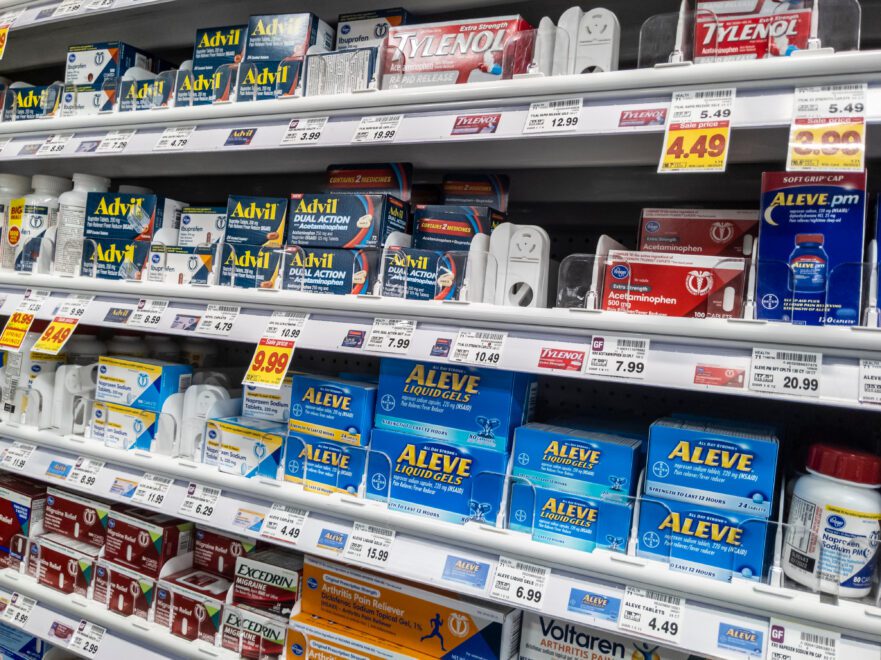
Advil (ibuprofen) is one of the most popular over-the-counter (OTC) pain relievers, often used to treat minor aches, pains and inflammation. But if you’ve been prescribed Eliquis (apixaban) or other blood thinners, you should consult with your doctor before also taking Advil, due to the increased risk of bleeding when they are combined.
Advil and Eliquis Interactions: Risk of Increased Bleeding
Advil, a brand name for ibuprofen, belongs to a class of medications called non-steroidal anti-inflammatory drugs (NSAIDs). Available both OTC and by prescription, NSAIDs offer pain relief by blocking the enzyme cyclooxygenase-2 (COX-2).
The COX-2 enzyme is activated by inflammation and other disturbances within the body. It induces the production of prostaglandins, hormones that contribute to pain. NSAIDs like Advil work by blocking this process, reducing pain and inflammation.
While inhibiting the COX-2 enzyme is helpful for pain relief, Advil also blocks COX-1, an enzyme that helps with blood clotting and protects the stomach lining. This COX-1 inhibition can result in adverse effects, like stomach ulcers and bleeding. Additionally, continually blocking COX-1 reduces the production of prostaglandin, which helps create stomach mucus and neutralize stomach acid. When there isn’t enough prostaglandin, the stomach lining becomes more vulnerable to the effects of stomach acid, resulting in the potential for ulcers to develop. Ulcers are prone to bleeding, and with the inhibition of COX-1, platelets aren’t able to help mitigate that bleeding.
Due to this risk of gastrointestinal bleeding, taking NSAIDs while on blood-thinning medications (like Eliquis) is not recommended.
Eliquis is prescribed for individuals with an increased risk of heart attacks, strokes or blood clots. As a direct oral anticoagulant, Eliquis inhibits the body’s clotting factors. This prevents the formation of blood clots that can block blood vessels and cause deep vein thrombosis, pulmonary embolism, heart attack, or stroke.
This inhibition of clotting can sometimes cause excessive bleeding from minor injuries, such as a paper cut. “Direct oral anticoagulants do not cause bleeding on their own, but if bleeding starts for another reason, say due to a stomach ulcer in the setting of NSAID use, bleeding may be more severe or last longer,” says Nathan Connell, M.D., chief of medicine at Brigham and Women’s Faulkner Hospital.
What Is a Safer Alternative to Advil?
If you’ve been prescribed Eliquis and are looking for an OTC pain reliever, Dr. Connell recommends Tylenol (acetaminophen) as an NSAID alternative. Unlike Advil, Tylenol doesn’t have blood-thinning properties that might compound the effects of Eliquis.
Interestingly, certain prescription NSAIDs primarily impact COX-2 and not COX-1, notes Dr. Connell, meaning they may be a safer bet for patients taking Eliquis. Celecoxib (Celebrex), for example, is often prescribed for treating pain in individuals with inherited bleeding disorders. However, Dr. Connell emphasizes that these COX-2 inhibitors aren’t right for everyone and require a prescription from a physician.
Topical NSAIDs, such as diclofenac gel, are also an alternative for isolated pain, notes Dr. Connell. “These can be helpful for pain in a specific joint that is bothersome,” Dr. Connell says. “And there isn’t as much absorption into the rest of the body, so the risk of bleeding while on direct oral anticoagulants is thought to be much less.”

Want to Share Your Story?
If you’ve experienced side effects or medication issues related to this topic, we want to hear from you.
Submit Your Story- Ibuprofen. (n.d.). MedlinePlus.
- Apixaban. (n.d.). MedlinePlus.
- Zheng, Y., Zhang, N., Tse, G., Li, G., Lip, G. Y., & Liu, T. (2023). Co-administered oral anticoagulants with nonsteroidal anti-inflammatory drugs and the risk of bleeding: A systematic review and meta-analysis. Thrombosis Research, 232, 15–26.
- Qureshi, O., & Dua, A. (2024, February 28). COX Inhibitors. StatPearls – NCBI Bookshelf.
- Simon, L. S. (1999). Role and regulation of cyclooxygenase-2 during inflammation. The American Journal of Medicine, 106(5), 37S-42S.
- Drina, M. (2017). Peptic ulcer disease and non-steroidal anti-inflammatory drugs. Australian Prescriber, 40(3), 91–93.
- Wautier, J., & Wautier, M. (2023). Pro- and Anti-Inflammatory Prostaglandins and Cytokines in Humans: A mini review. International Journal of Molecular Sciences, 24(11), 9647.
- Institute for Quality and Efficiency in Health Care (IQWiG). (2021, November 16). Peptic ulcers: Research summaries – Preventing peptic ulcers. InformedHealth.org – NCBI Bookshelf.
- Bristol-Myers Squibb. (2016). HIGHLIGHTS OF PRESCRIBING INFORMATION [Prescribing information]
- Website, N. (2024, November 28). Common questions about apixaban. nhs.uk.
- Website, N. (2024, June 13). DVT (deep vein thrombosis). nhs.uk.
- Gerriets, V., Anderson, J., Patel, P., & Nappe, T. M. (2024, January 11). Acetaminophen. StatPearls – NCBI Bookshelf.
- Celecoxib: MedlinePlus drug information. (n.d.).
- Diclofenac Topical (arthritis pain): MedlinePlus Drug Information. (n.d.).
DISCLAIMER: MedShadow provides information and resources related to medications, their effects, and potential side effects. However, it is important to note that we are not a substitute for professional medical advice, diagnosis, or treatment. The content on our site is intended for educational and informational purposes only. Individuals dealing with medical conditions or symptoms should seek guidance from a licensed healthcare professional, such as a physician or pharmacist, who can provide personalized medical advice tailored to their specific circumstances.
While we strive to ensure the accuracy and reliability of the information presented on MedShadow, we cannot guarantee its completeness or suitability for any particular individual’s medical needs. Therefore, we strongly encourage users to consult with qualified healthcare professionals regarding any health-related concerns or decisions. By accessing and using MedShadow, you acknowledge and agree that the information provided on the site is not a substitute for professional medical advice and that you should always consult with a qualified healthcare provider for any medical concerns.
on this page:
RECOMMENDED:

DONATE:
Help fund our fight for improved medication safety and transparency by supporting our independent journalism.
Give NowWe seek to create a world where there are safer medications for all and where all people are fully informed about their medication benefits and side effects, using our explanatory and investigative journalism to both inform and stimulate public discussion to drive toward solutions.
WEBINARS
Learn about your medications and treatment options straight from independent experts.
WATCH
Article HTML
<!-- wp:paragraph -->
<p>Advil (<a href="https://medlineplus.gov/druginfo/meds/a682159.html" target="_blank" rel="noreferrer noopener">ibuprofen</a>) is one of the most popular over-the-counter (OTC) pain relievers, often used to treat minor aches, pains and inflammation. But if you’ve been prescribed Eliquis (<a href="https://medlineplus.gov/druginfo/meds/a613032.html" target="_blank" rel="noreferrer noopener">apixaban</a>) or other blood thinners, you should consult with your doctor before also taking Advil, due to the <a href="https://www.sciencedirect.com/science/article/abs/pii/S0049384823002888" target="_blank" rel="noreferrer noopener">increased risk of bleeding</a> when they are combined.</p>
<!-- /wp:paragraph -->
<!-- wp:heading -->
<h2 class="wp-block-heading">Advil and Eliquis Interactions: Risk of Increased Bleeding</h2>
<!-- /wp:heading -->
<!-- wp:paragraph -->
<p>Advil, a brand name for ibuprofen, belongs to a class of medications called non-steroidal anti-inflammatory drugs (<a href="https://medshadow.org/nsaids/" target="_blank" rel="noreferrer noopener">NSAIDs</a>). Available both OTC and by prescription, NSAIDs offer pain relief by blocking the enzyme cyclooxygenase-2 (<a href="https://www.ncbi.nlm.nih.gov/books/NBK549795/" target="_blank" rel="noreferrer noopener">COX-2</a>).</p>
<!-- /wp:paragraph -->
<!-- wp:paragraph -->
<p>The <a href="https://pubmed.ncbi.nlm.nih.gov/10390126/" target="_blank" rel="noreferrer noopener">COX-2 enzyme is activated by inflammation</a> and other disturbances within the body. It induces the production of prostaglandins, hormones that contribute to pain. NSAIDs like Advil work by blocking this process, reducing pain and inflammation.</p>
<!-- /wp:paragraph -->
<!-- wp:paragraph -->
<p>While inhibiting the COX-2 enzyme is helpful for pain relief, Advil also blocks COX-1, an enzyme that helps with blood clotting and protects the stomach lining. This COX-1 inhibition can result in adverse effects, like <a href="https://pmc.ncbi.nlm.nih.gov/articles/PMC5478398/" target="_blank" rel="noreferrer noopener">stomach ulcers</a> and bleeding. Additionally, continually blocking COX-1 reduces the production of <a href="https://www.mdpi.com/1422-0067/24/11/9647" target="_blank" rel="noreferrer noopener">prostaglandin</a>, which helps create stomach mucus and neutralize stomach acid. When there isn’t enough prostaglandin, the stomach lining becomes more vulnerable to the effects of stomach acid, resulting in the <a href="https://www.ncbi.nlm.nih.gov/books/NBK310269/" target="_blank" rel="noreferrer noopener">potential for ulcers to develop</a>. Ulcers are prone to <a href="https://www.nhs.uk/conditions/stomach-ulcer/complications/" target="_blank" rel="noreferrer noopener">bleeding</a>, and with the inhibition of COX-1, platelets aren’t able to help mitigate that bleeding.</p>
<!-- /wp:paragraph -->
<!-- wp:paragraph -->
<p>Due to this risk of gastrointestinal bleeding, taking NSAIDs while on blood-thinning medications (like Eliquis) is not recommended.</p>
<!-- /wp:paragraph -->
<!-- wp:paragraph -->
<p><a href="https://www.accessdata.fda.gov/drugsatfda_docs/label/2016/202155s012lbl.pdf" target="_blank" rel="noreferrer noopener">Eliquis is prescribed</a> for individuals with an increased risk of heart attacks, strokes or blood clots. As a direct oral anticoagulant, Eliquis inhibits the body’s <a href="https://www.nhs.uk/medicines/apixaban/common-questions-about-apixaban/" target="_blank" rel="noreferrer noopener">clotting factors</a>. This prevents the formation of blood clots that can block blood vessels and cause <a href="https://www.nhs.uk/conditions/deep-vein-thrombosis-dvt/" target="_blank" rel="noreferrer noopener">deep vein thrombosis</a>, pulmonary embolism, heart attack, or stroke.</p>
<!-- /wp:paragraph -->
<!-- wp:paragraph -->
<p>This inhibition of clotting can sometimes cause excessive bleeding from minor injuries, such as a paper cut. “Direct oral anticoagulants do not cause bleeding on their own, but if bleeding starts for another reason, say due to a stomach ulcer in the setting of NSAID use, bleeding may be more severe or last longer,” says <a href="https://physiciandirectory.brighamandwomens.org/details/12553/nathan-connell-hematology-boston-jamaica_plain" target="_blank" rel="noreferrer noopener">Nathan Connell</a>, M.D., chief of medicine at Brigham and Women’s Faulkner Hospital.</p>
<!-- /wp:paragraph -->
<!-- wp:heading -->
<h2 class="wp-block-heading">What Is a Safer Alternative to Advil?</h2>
<!-- /wp:heading -->
<!-- wp:paragraph -->
<p>If you’ve been prescribed Eliquis and are looking for an OTC pain reliever, Dr. Connell recommends Tylenol (<a href="https://www.ncbi.nlm.nih.gov/books/NBK482369/" target="_blank" rel="noreferrer noopener">acetaminophen</a>) as an NSAID alternative. Unlike Advil, Tylenol doesn’t have blood-thinning properties that might compound the effects of Eliquis.</p>
<!-- /wp:paragraph -->
<!-- wp:paragraph -->
<p>Interestingly, certain prescription NSAIDs primarily impact COX-2 and not COX-1, notes Dr. Connell, meaning they may be a safer bet for patients taking Eliquis. <a href="https://medlineplus.gov/druginfo/meds/a699022.html" target="_blank" rel="noreferrer noopener">Celecoxib</a> (Celebrex), for example, is often prescribed for treating pain in individuals with inherited bleeding disorders. However, Dr. Connell emphasizes that these COX-2 inhibitors aren’t right for everyone and require a prescription from a physician.</p>
<!-- /wp:paragraph -->
<!-- wp:paragraph -->
<p>Topical NSAIDs, such as <a href="https://medlineplus.gov/druginfo/meds/a611002.html" target="_blank" rel="noreferrer noopener">diclofenac gel</a>, are also an alternative for isolated pain, notes Dr. Connell. “These can be helpful for pain in a specific joint that is bothersome,” Dr. Connell says. “And there isn’t as much absorption into the rest of the body, so the risk of bleeding while on direct oral anticoagulants is thought to be much less.”</p>
<!-- /wp:paragraph -->