


Menu
 Shedding Light on the Risks
& Benefits of Medications
Shedding Light on the Risks
& Benefits of Medications
Shedding Light on the Risks
& Benefits of Medications FDA Drug Recalls and Warnings: Recalls for Glaucoma Eye Medications and Allergy Eye Drops
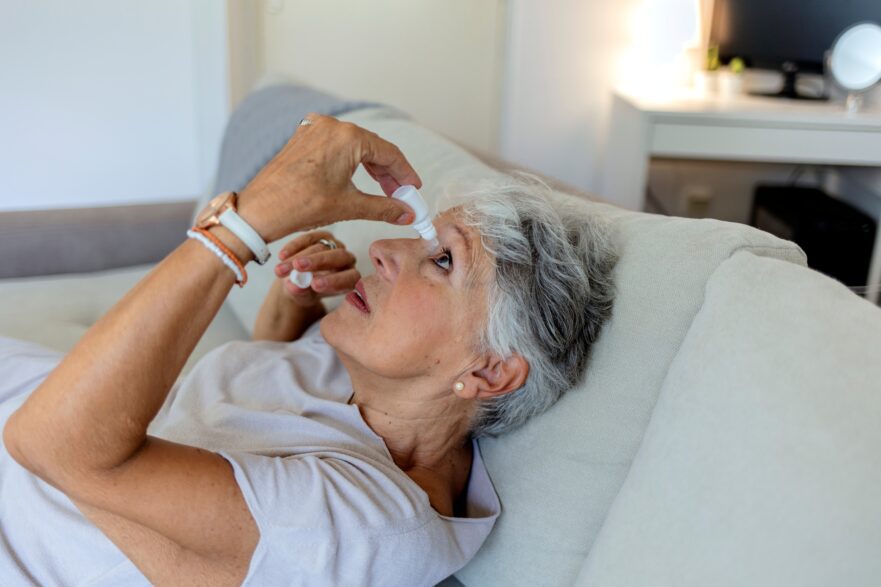
Get the latest FDA updates on medication recalls, manufacturing violations, and quality concerns that could affect your prescriptions
September 4, 2025
0 Comments
republishon this page:
Welcome to the FDA Recalls and Warnings Update, a series dedicated to keeping you informed about the latest medication recalls, manufacturing violations, and quality concerns affecting your prescriptions. In this installment, we’re highlighting recalls for these prescription ophthalmic (eye) medications: Azelastine, Brimonidine Tartrate/Timolol Maleate, Ketorolac Tromethamine, and Timolol Maleate. All of the recalls in this installment have been assigned a “Class II” level by the FDA (see below for definitions of types of recalls).
How to Read This Report
This report is prepared using the most recent information posted in the FDA’s Enforcement Reports Database (for recalls), Warning Letters Database (for warning letters), and Drug Imports Alerts Database (for drug importers subject to import bans). Not all new entries to the databases are included in this report. Selected entries are chosen based on the type of product and the potential safety impact of the recall or warning.
Recall announcements and warnings are simplified to improve clarity and accessibility. In some cases, additional sources such as company statements, FDA press releases, and industry publications may provide further details. The primary sources for this report include:
Recalls (Enforcement Reports Database)
The Food and Drug Administration (FDA) categorizes product recalls in its Enforcement Report database based on the level of health risk, labeling them as Class I, II, III, or “not yet classified.”
While the database includes drugs, food, cosmetics, medical devices, biologics, tobacco, and veterinary products, this report only covers selected drug recalls.
- Class I recalls are the most serious. In these situations, there is “reasonable probability that the use of or exposure to a product will cause serious adverse health consequences or death.”
- Class II recalls are for drugs that may cause temporary or medically reversible adverse health consequences or where use of the product is unlikely to result in serious adverse health consequences.
- Class III recalls are the least serious. Use of the product is not likely to cause adverse health consequences.
Warning Letters (Warning Letters Database)
Drug manufacturers, supplement companies, and medical device makers may receive a Warning Letter from the FDA if they commit serious violations of federal regulations. This letter comes from an overseeing FDA office, such as the Center for Drug Evaluation and Research. Common violations include poor manufacturing practices, false product claims, selling misbranded items, or marketing unapproved products. The letter gives the recipient a chance to correct the issues and requires a response, usually within 15 days.
Drug Imports Alerts Database
FDA Import Alerts notify field staff and the public when the agency has enough evidence to detain products without physical examination (DWPE) due to suspected violations of FDA laws, including violations of “current good manufacturing practices for finished pharmaceuticals” or unapproved new drugs. The violations lists are arranged by type of violation, then by country and then by the importing company. In some cases, Import Alerts may be linked to Warning Letters for issues like manufacturing violations.
Drug Recalls
Azelastine HCl Ophthalmic Solution
Company: Apotex
Manufacturing Location: Toronto, Ontario, Canada
Scope: 105,456 Bottles (0.05%, 6 mL)
Drug Description: Relieves symptoms associated with allergic conjunctivitis (itchy, red, swollen eyes due to allergies).
Recall Reason: Lack of assurance of sterility
Recall Initiation Date: May 28, 2025
Link: FDA Enforcement Report
This is a supplier-level recall and is not directed at consumers. However, consumers may wish to check the enforcement report for the list of affected product lot numbers and expiration dates.
Brimonidine Tartrate/Timolol Maleate Ophthalmic Solution
Company: Apotex
Manufacturing Location: Toronto, Ontario, Canada
Scope: 6,000 bottles (0.2%/0.5%, 15 mL)
Drug Description: Treats glaucoma
Recall Reason: Lack of assurance of sterility
Recall Initiation Date: May 28, 2025
Link: FDA Enforcement Report
This is a supplier-level recall and is not directed at consumers. However, consumers may wish to check the enforcement report for the list of affected product lot numbers and expiration dates.
Ketorolac Tromethamine Ophthalmic Solution
Company: Apotex
Manufacturing Location: Toronto, Ontario, Canada
Scope: 87,840 bottles (0.5%, 10 mL)
Drug Description: Relieves symptoms associated with allergic conjunctivitis (itchy, red, swollen eyes due to allergies). Also treats postoperative inflammation associated with cataract surgery.
Recall Reason: Lack of assurance of sterility
Recall Initiation Date: May 28, 2025
Link: FDA Enforcement Report
This is a supplier-level recall and is not directed at consumers. However, consumers may wish to check the enforcement report for the list of affected product lot numbers and expiration dates.
Timolol Maleate Ophthalmic Eye Drops
Company: FDC Limited (distributed by Rising Sun Pharmaceuticals)
Manufacturing Location: Aurangabad, Maharashtra, India
Scope: 154,176 bottles of 5 mL (0.5%) and 60,428 bottles of 10 mL (0.5%)
Drug Description: Treats glaucoma
Recall Reason: Defective cap and container; the spike of the cap may lodge in the nozzle, preventing the solution from being dispensed
Recall Initiation Date: July 5, 2025 (5 mL); April 18 (10mL)
Link: FDA Enforcement Report (5 mL) and FDA Enforcement Report (10 mL)
This is a supplier-level recall and is not directed at consumers. However, consumers may wish to check the enforcement report for the list of affected product lot numbers and expiration dates.

Want to Share Your Story?
If you’ve experienced side effects or medication issues related to this topic, we want to hear from you.
Submit Your StoryDISCLAIMER: MedShadow provides information and resources related to medications, their effects, and potential side effects. However, it is important to note that we are not a substitute for professional medical advice, diagnosis, or treatment. The content on our site is intended for educational and informational purposes only. Individuals dealing with medical conditions or symptoms should seek guidance from a licensed healthcare professional, such as a physician or pharmacist, who can provide personalized medical advice tailored to their specific circumstances.
While we strive to ensure the accuracy and reliability of the information presented on MedShadow, we cannot guarantee its completeness or suitability for any particular individual’s medical needs. Therefore, we strongly encourage users to consult with qualified healthcare professionals regarding any health-related concerns or decisions. By accessing and using MedShadow, you acknowledge and agree that the information provided on the site is not a substitute for professional medical advice and that you should always consult with a qualified healthcare provider for any medical concerns.
on this page:
RECOMMENDED:

DONATE:
Help fund our fight for improved medication safety and transparency by supporting our independent journalism.
Give NowWe seek to create a world where there are safer medications for all and where all people are fully informed about their medication benefits and side effects, using our explanatory and investigative journalism to both inform and stimulate public discussion to drive toward solutions.
WEBINARS
Stream our library on demand, including insights on generic drugs and pain management, straight from experts.
WATCH NOW
Republish This Story for Free
Creative Commons License (CC BY-NC-ND 4.0)MedShadow.org is dedicated to empowering people with our evidence-based journalism about the safest ways to take over-the-counter (OTC) and prescription (Rx) medications.
We also seek to stimulate public discussion about potential improvements to drug research, manufacturing and distribution processes. and also to encourage the improvement of processes to ensure that we are all better protected.
As a result, we encourage other nonprofit newsrooms, mission-aligned outlets, and advocacy organizations to republish our original content under the following conditions:
You May Republish Our Articles for Free If:
1. We Are Credited Fully and Clearly
You must include the byline and credit MedShadow.org as the original publisher. Please include a link to the original article at the top or bottom of the piece. Use the following attribution:
This article was originally published by MedShadow, a nonprofit foundation that focuses on the safest ways to take over-the-counter and prescription medications.
2. Our Content Isn’t Edited Without Permission
You may make small changes for clarity, such as adjusting headlines, subheadings, or transitions, but you may not change the core meaning, tone, or intent of the article. For substantive edits, email us at republish@medshadow.org for review and approval.
3. You Do Not Sell Or Use Our Content Commercially
Our work is free to share, but it may not be sold, monetized, or repurposed for commercial gain. You may not republish our articles behind a paywall or in publications whose primary purpose is advertising or product promotion. You may not place drug or supplement advertising adjacent to our story.
4. Photos, Graphics, and Multimedia Are Not Used Without Permission
Only the text of the article is available for republication. Images, graphics, and videos may not be reused without explicit written permission, unless they are clearly marked as Creative Commons licensed. Contact us if you’d like to request reuse of a visual asset.
You May Not:
- Use our content to promote a product, service, or political candidate
- Republish only part of an article or create derivative works without permission
- Add affiliate links, advertising overlays, or lead generators
- Translate the article without written permission
Contact Us
If you’re unsure whether your intended use falls within these guidelines, or would like to discuss a formal syndication or licensing arrangement, please email: republish@medshadow.org
We want our journalism to reach as many people as possible, especially those making critical decisions about medications and health.
Article HTML
<!-- wp:paragraph -->
<p>Welcome to the FDA Recalls and Warnings Update, a series dedicated to keeping you informed about the latest medication recalls, manufacturing violations, and quality concerns affecting your prescriptions. In this installment, we’re highlighting recalls for these prescription ophthalmic (eye) medications: Azelastine, Brimonidine Tartrate/Timolol Maleate, Ketorolac Tromethamine, and Timolol Maleate. All of the recalls in this installment have been assigned a “Class II” level by the FDA (see below for definitions of types of recalls).</p>
<!-- /wp:paragraph --><!-- wp:lightweight-accordion/lightweight-accordion {"title":"How to Read This Report"} -->
<!-- wp:paragraph -->
<p>This report is prepared using the most recent information posted in the<a href="https://www.accessdata.fda.gov/scripts/ires/index.cfm" target="_blank" rel="noreferrer noopener"> FDA’s Enforcement Reports Database</a> (for recalls), <a href="https://www.fda.gov/inspections-compliance-enforcement-and-criminal-investigations/compliance-actions-and-activities/warning-letters" target="_blank" rel="noreferrer noopener">Warning Letters Database</a> (for warning letters), and<a href="https://www.fda.gov/industry/actions-enforcement/import-alerts" target="_blank" rel="noreferrer noopener"> Drug Imports Alerts Database</a> (for drug importers subject to import bans). Not all new entries to the databases are included in this report. Selected entries are chosen based on the type of product and the potential safety impact of the recall or warning.</p>
<!-- /wp:paragraph --><!-- wp:paragraph -->
<p>Recall announcements and warnings are simplified to improve clarity and accessibility. In some cases, additional sources such as company statements, FDA press releases, and industry publications may provide further details. The primary sources for this report include:</p>
<!-- /wp:paragraph --><!-- wp:heading {"level":3} -->
<h3 class="wp-block-heading">Recalls (Enforcement Reports Database)</h3>
<!-- /wp:heading --><!-- wp:paragraph -->
<p>The Food and Drug Administration (FDA) categorizes product recalls in its Enforcement Report database based on the level of health risk, labeling them as Class I, II, III, or “not yet classified.”</p>
<!-- /wp:paragraph --><!-- wp:paragraph -->
<p>While the database includes drugs, food, cosmetics, medical devices, biologics, tobacco, and veterinary products, this report only covers selected drug recalls.</p>
<!-- /wp:paragraph --><!-- wp:list -->
<ul class="wp-block-list"><!-- wp:list-item -->
<li>Class I recalls are the most serious. In these situations, there is “reasonable probability that the use of or exposure to a product will cause serious adverse health consequences or death.”</li>
<!-- /wp:list-item --><!-- wp:list-item -->
<li>Class II recalls are for drugs that may cause temporary or medically reversible adverse health consequences or where use of the product is unlikely to result in serious adverse health consequences.</li>
<!-- /wp:list-item --><!-- wp:list-item -->
<li>Class III recalls are the least serious. Use of the product is not likely to cause adverse health consequences.</li>
<!-- /wp:list-item --></ul>
<!-- /wp:list --><!-- wp:heading {"level":3} -->
<h3 class="wp-block-heading">Warning Letters (Warning Letters Database)</h3>
<!-- /wp:heading --><!-- wp:paragraph -->
<p>Drug manufacturers, supplement companies, and medical device makers may receive a Warning Letter from the FDA if they commit serious violations of federal regulations. This letter comes from an overseeing FDA office, such as the Center for Drug Evaluation and Research. Common violations include poor manufacturing practices, false product claims, selling misbranded items, or marketing unapproved products. The letter gives the recipient a chance to correct the issues and requires a response, usually within 15 days.</p>
<!-- /wp:paragraph --><!-- wp:heading {"level":3} -->
<h3 class="wp-block-heading">Drug Imports Alerts Database</h3>
<!-- /wp:heading --><!-- wp:paragraph -->
<p>FDA Import Alerts notify field staff and the public when the agency has enough evidence to detain products without physical examination (DWPE) due to suspected violations of <a href="https://www.ecfr.gov/current/title-21/chapter-I/subchapter-C/part-211" target="_blank" rel="noreferrer noopener">FDA laws</a>, including violations of “current good manufacturing practices for finished pharmaceuticals” or <a href="https://www.ecfr.gov/current/title-21/chapter-I/subchapter-A/part-99" target="_blank" rel="noreferrer noopener">unapproved new drugs</a>. The violations lists are arranged by type of violation, then by country and then by the importing company. In some cases, Import Alerts may be linked to Warning Letters for issues like manufacturing violations.</p>
<!-- /wp:paragraph -->
<!-- /wp:lightweight-accordion/lightweight-accordion --><!-- wp:heading -->
<h2 class="wp-block-heading">Drug Recalls</h2>
<!-- /wp:heading --><!-- wp:heading {"level":3} -->
<h3 class="wp-block-heading">Azelastine HCl Ophthalmic Solution</h3>
<!-- /wp:heading --><!-- wp:paragraph -->
<p><strong>Company</strong>: Apotex<br><strong>Manufacturing Location</strong>: Toronto, Ontario, Canada<br><strong>Scope</strong>: 105,456 Bottles (0.05%, 6 mL)<br><strong>Drug Description</strong>: Relieves symptoms associated with<a href="https://medlineplus.gov/ency/article/001031.htm" target="_blank" rel="noreferrer noopener"> allergic conjunctivitis</a> (itchy, red, swollen eyes due to allergies).<br><strong>Recall Reason</strong>: Lack of assurance of sterility<br><strong>Recall Initiation Date</strong>: May 28, 2025<br><strong>Link</strong>: <a href="https://www.accessdata.fda.gov/scripts/ires/?Event=96954" target="_blank" rel="noreferrer noopener">FDA Enforcement Report<br></a><br>This is a supplier-level recall and is not directed at consumers. However, consumers may wish to check the enforcement report for the list of affected product lot numbers and expiration dates.</p>
<!-- /wp:paragraph --><!-- wp:heading {"level":3} -->
<h3 class="wp-block-heading">Brimonidine Tartrate/Timolol Maleate Ophthalmic Solution</h3>
<!-- /wp:heading --><!-- wp:paragraph -->
<p><strong>Company</strong>: Apotex<br><strong>Manufacturing Location</strong>: Toronto, Ontario, Canada<br><strong>Scope</strong>:  6,000 bottles (0.2%/0.5%, 15 mL)<br><strong>Drug Description</strong>: Treats glaucoma<br><strong>Recall Reason</strong>: Lack of assurance of sterility<br><strong>Recall Initiation Date</strong>: May 28, 2025<br>Link: <a href="https://www.accessdata.fda.gov/scripts/ires/?Event=96954" target="_blank" rel="noreferrer noopener">FDA Enforcement Report</a></p>
<!-- /wp:paragraph --><!-- wp:paragraph -->
<p>This is a supplier-level recall and is not directed at consumers. However, consumers may wish to check the enforcement report for the list of affected product lot numbers and expiration dates.</p>
<!-- /wp:paragraph --><!-- wp:heading {"level":3} -->
<h3 class="wp-block-heading">Ketorolac Tromethamine Ophthalmic Solution</h3>
<!-- /wp:heading --><!-- wp:paragraph -->
<p><strong>Company</strong>: Apotex<br><strong>Manufacturing</strong> Location: Toronto, Ontario, Canada<br><strong>Scope</strong>: 87,840 bottles (0.5%, 10 mL)<br><strong>Drug Description</strong>: Relieves symptoms associated with <a href="https://medlineplus.gov/ency/article/001031.htm" target="_blank" rel="noreferrer noopener">allergic conjunctivitis</a> (itchy, red, swollen eyes due to allergies). Also treats postoperative inflammation associated with cataract surgery.<br><strong>Recall Reason</strong>: Lack of assurance of sterility<br><strong>Recall Initiation Date</strong>: May 28, 2025<br><strong>Link</strong>: <a href="https://www.accessdata.fda.gov/scripts/ires/?Event=96954" target="_blank" rel="noreferrer noopener">FDA Enforcement Report</a></p>
<!-- /wp:paragraph --><!-- wp:paragraph -->
<p>This is a supplier-level recall and is not directed at consumers. However, consumers may wish to check the enforcement report for the list of affected product lot numbers and expiration dates.</p>
<!-- /wp:paragraph --><!-- wp:heading {"level":3} -->
<h3 class="wp-block-heading">Timolol Maleate Ophthalmic Eye Drops</h3>
<!-- /wp:heading --><!-- wp:paragraph -->
<p><strong>Company</strong>: FDC Limited (distributed by Rising Sun Pharmaceuticals)<br><strong>Manufacturing Location</strong>: Aurangabad, Maharashtra, India<br><strong>Scope</strong>: 154,176 bottles of 5 mL (0.5%) and 60,428 bottles of 10 mL (0.5%)<br><strong>Drug Description</strong>: Treats glaucoma<br><strong>Recall Reason</strong>: Defective cap and container; the spike of the cap may lodge in the nozzle, preventing the solution from being dispensed<br><strong>Recall Initiation Date</strong>: July 5, 2025 (5 mL); April 18 (10mL)<br><strong>Link</strong>: <a href="https://www.accessdata.fda.gov/scripts/ires/index.cfm?Product=214861" target="_blank" rel="noreferrer noopener">FDA Enforcement Report</a> (5 mL) and <a href="https://www.accessdata.fda.gov/scripts/ires/index.cfm?Event=96740" target="_blank" rel="noreferrer noopener">FDA Enforcement Report</a> (10 mL)</p>
<!-- /wp:paragraph --><!-- wp:paragraph -->
<p>This is a supplier-level recall and is not directed at consumers. However, consumers may wish to check the enforcement report for the list of affected product lot numbers and expiration dates.</p>
<!-- /wp:paragraph -->