

Menu
 Shedding Light on the Risks
& Benefits of Medications
Shedding Light on the Risks
& Benefits of Medications
Shedding Light on the Risks
& Benefits of Medications To Grieve Is to Grow Stronger
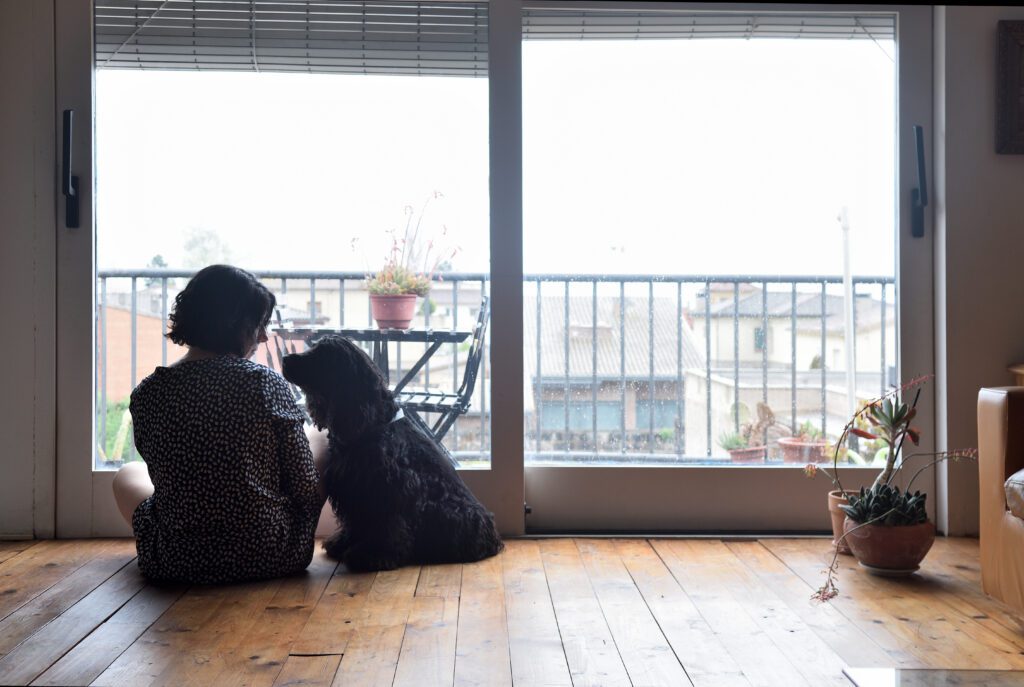
Photo: Shutterstock
After losing both her sister and niece to alcoholism, Suzanne Robotti reflects on mourning, medication, and the difficult work of living with loss
June 8, 2026
0 Comments
republishPhoto: Shutterstock
opinion
 republish this story
on this page:
My very first niece was Jill, and the first one always holds a special place. When she was nine, ten, and eleven years old, she was sent out to me, her Aunt Su, to spend a week each summer exploring New York City — FAO Schwartz, Central Park, a Broadway show. Today, at moments I cannot predict, I will think, with a physical jolt, “Jill is gone.”
My niece Jill’s death at age 45 was unexpected. She had battled alcoholism for decades. After several years of sobriety, she relapsed last summer. We (the family) knew she was drinking, but she stayed in contact and maintained her job. We had hopes that she would go back to rehab soon.
Jill’s death was all the more stunning because her mother, my sister Linda, died from the same disease, from drinking the same liquor, exactly twenty years earlier.
Linda was the oldest of us four daughters, and growing up, my two other sisters and I thought she was the smartest, most athletically talented, and the prettiest out of all of us. She did everything first. She dominated the local swim team. She led the way to high school and then college. She dyed her hair, dated boys, defied my parents, bought a car, got a speeding ticket, got married, and had children.
But then, sometime around thirty years old, it all started slipping away. There was a bankruptcy, heavy drinking, and fighting with her husband. Linda was clearly struggling. My sister’s first stint in rehab was when her daughter Jill was about 14. Linda died at age 54. Jill died at 45.
That’s something you start doing right away when someone dies. First, you calculate her age, then you compare her age at death to others. You see patterns: twenty years between their two deaths… the numbers of their ages of death reversed… Even as I told myself that I was wasting time, that all of this rumination was irrelevant, I stayed obsessed.
I don’t know what age Jill was when she started drinking. I don’t know why she chose vodka, her mother’s addiction. About five years ago, we decided to meet up regularly. She came from the Chicago area; I came from NYC. We talked about her mother many times; she loved her fiercely. Jill told me, “I used to accuse her of choosing vodka over us, her kids. But now that I’m drinking vodka, I know why.”
At Linda’s funeral, I realized my grief was filled with anger. Why had she made such destructive decisions? How dare she waste her beautiful life? I wondered if there was a moment then when her future could have changed. At her first rehab, with her first DUI, or the first time she broke curfew as a teen. And now I wonder, if Linda’s course could have been redirected, maybe her daughter’s future might have changed, too.
I had a supporting role in the planning of Linda’s and then Jill’s funerals. Even so, it took all my determination to force myself to show up and help with the decisions: the location, the flowers, the readings…it felt endless and useless. But it’s not.
The chores of planning a funeral keep you busy and force you to accept that this funeral will happen. It makes you say the words “burial,” “services,” “died,” out loud. It makes you talk to people. I don’t think you should feel restricted if your loved one said she or he did not want a funeral. That funeral is not for the one who has died, but for you, the one left living.
Once Jill’s service was over and the condolences were accepted, the supportive friends went home. My visits and texts with Jill don’t happen anymore. Now, I feel the silence of the phone.
People cope with grief in different ways. Linda had two daughters and a son. My surviving niece, Jill’s sister, manages her loneliness by listening to old voice mails and reading old texts. That doesn’t work for me; I have no interest in that. But it helps her.
A few years after my sister Linda died, both of my parents died of the complications of aging. So when Jill died in January of this year, I’d had more experience with grief. Though I am familiar with the emotion now, I realize that losing Linda and Jill was a much sharper pain than losing my parents. My parents had had a good run. I could bury them without shaking my fist at God: Why God? Why is our family cursed with this plague?
With each death of someone I love, whether it was anticipated, accepted, or fought by me, I found it took a year for my sadness to lift. After my parents died, 18 months apart, people would ask me how I was, and I’d say, “I’m fine. I’m sad, but I’m fine.” You’ll find yourself talking and even laughing — but the grief is always there. For me, the sadness sits at my feet like a loyal dog. Sometimes it pokes its dog-nose at me, demanding attention. Mostly, it just sits with me, waiting. It’s next to me now.
In my experience, people can talk about death, the hows, whys, the timing, and the shock. But grief, that long period after a death, makes people uncomfortable. They want to fix it. They don’t want you to hurt. Because, of course, the time after a loss is actually painful. Internal and external adjustments have to be made, and each one is wrenching.
I felt fragile during each of my years of grieving. I’d like to bring back the wearing of a black armband, as people did in WWII when soldiers died. We need this public signal so people know: “treat me gently, my heart’s been wounded.”
There are ways to buffer the grief. You can deny and barter. You can rage and blame. You can ignore it and compartmentalize it (as I sometimes do). Or you can medicate it — telling yourself it’s just a little bit of help to stop feeling bad. In fact, about 18% of all people who experience bereavement use a prescribed psychotropic drug.
After my sister Linda died, my doctor offered me antidepressants to “get through it.” The doctor offered me an antidepressant again after my mother’s death. I said no both times, not because medication is wrong, but because I needed to feel it. Avoiding pain, not wanting to feel pain — isn’t that perhaps at least part of what drove my sister’s and my niece’s addictions? I need to feel this sadness. It has helped me to incorporate loss into my being. I believe that if I hadn’t gone through the sadness, I would never have been able to get back to feeling joy at the memories.
I treasure the last five years, the years when Jill and I chose to connect more. I’m so happy that we became closer, even though it hurt even more when she died.
Life is sad sometimes. And living, even with difficult, socially uncomfortable emotions, is important. That loyal dog will sit by your side, but eventually, you will get used to this presence. And you’ll find yourself saying, “I’m fine, I’m sad, but I’m fine.”
Want to Share Your Story?
If you’ve experienced side effects or medication issues related to this topic, we want to hear from you.
Submit Your StoryDISCLAIMER: MedShadow provides information and resources related to medications, their effects, and potential side effects. However, it is important to note that we are not a substitute for professional medical advice, diagnosis, or treatment. The content on our site is intended for educational and informational purposes only. Individuals dealing with medical conditions or symptoms should seek guidance from a licensed healthcare professional, such as a physician or pharmacist, who can provide personalized medical advice tailored to their specific circumstances.
While we strive to ensure the accuracy and reliability of the information presented on MedShadow, we cannot guarantee its completeness or suitability for any particular individual’s medical needs. Therefore, we strongly encourage users to consult with qualified healthcare professionals regarding any health-related concerns or decisions. By accessing and using MedShadow, you acknowledge and agree that the information provided on the site is not a substitute for professional medical advice and that you should always consult with a qualified healthcare provider for any medical concerns.
on this page:
RECOMMENDED:

DONATE:
Help fund our fight for improved medication safety and transparency by supporting our independent journalism.
Give NowWe seek to create a world where there are safer medications for all and where all people are fully informed about their medication benefits and side effects, using our explanatory and investigative journalism to both inform and stimulate public discussion to drive toward solutions.
WEBINARS
Stream our library on demand, including insights on generic drugs and pain management, straight from experts.
WATCH NOW