

Menu
 Shedding Light on the Risks
& Benefits of Medications
Shedding Light on the Risks
& Benefits of Medications
Shedding Light on the Risks
& Benefits of Medications
Surprising Side Effects of Essential Oils
Copyright (c) 2023 New Africa/Shutterstock
August 17, 2021
1 Comments
republish
Copyright (c) 2023 New Africa/Shutterstock
on this page:
October 25, 2021 update: The CDC found a deadly bacterium, Burkholderia pseudomallei, which causes the disease melioidosis in a lavender essential oil spray called “Better Homes & Gardens Lavender & Chamomile Essential Oil Infused Aromatherapy Room Spray with Gemstones.” Read more here.
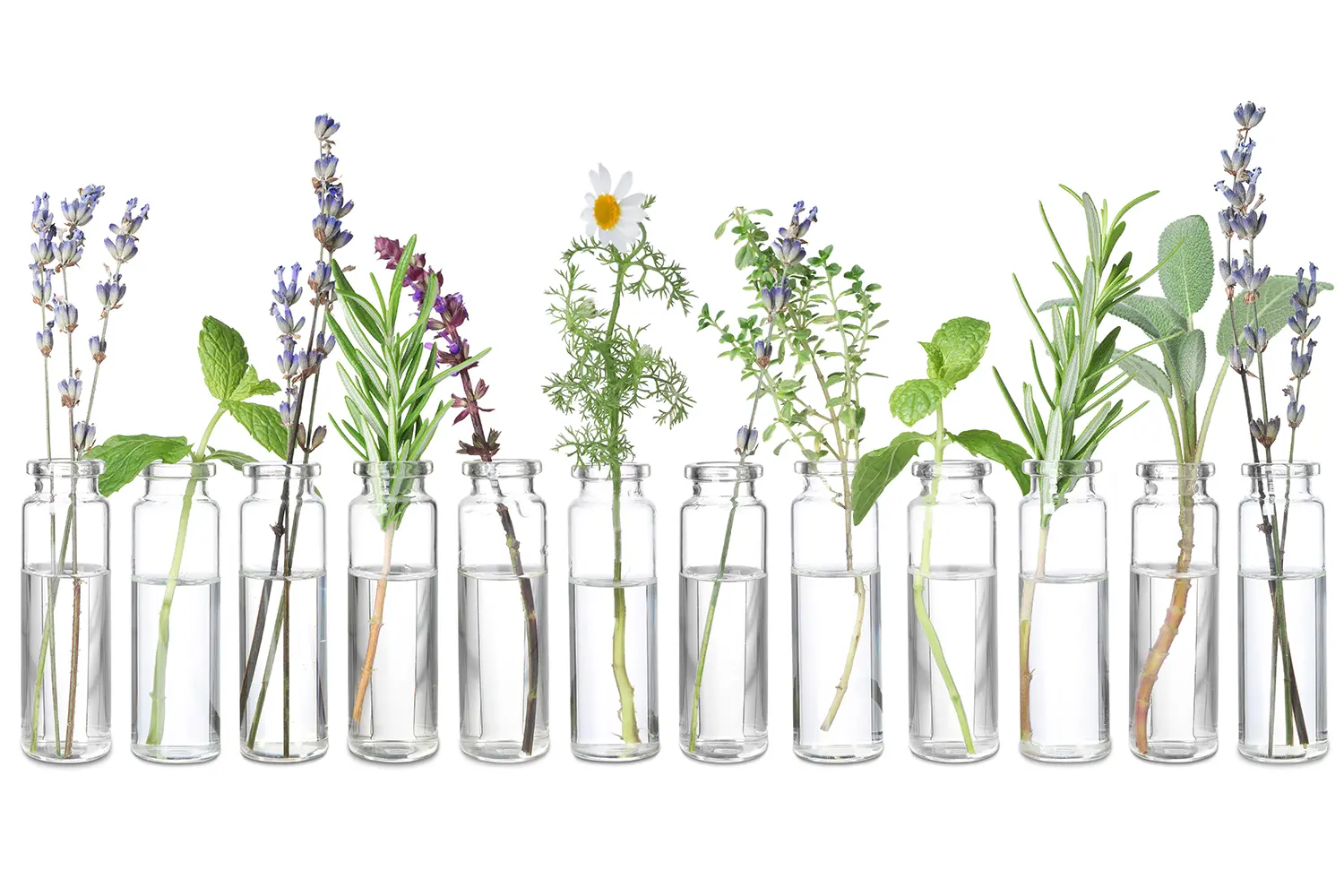
The pandemic has only enhanced an already surging demand for essential oils, according to Fortune Business Insights. Those concentrated liquids, which are fragrant compounds extracted from plants, are thought to treat headaches and anxiety and to even heal wounds. In addition to selling them in their pure form, the oils have a home with cosmetic companies, which add them to washes and lotions. Some health influencers even suggest drinking the oils.
With dozens of popular essential oils on the market, there’s evidence that some of them may indeed help you manage stress and insomnia as well as improve sleep and digestion and enhance skin care. Note, though, that there are also many potential side effects of essential oils, depending on how you use them.
Ways to Use Essential Oils
Doctors suggest that if you try essential oils, it’s best to smell them, using either a diffuser or an accessory, like a necklace made with an absorbent material that contains essential oils. The second-safest option is to rub them on your skin. Even though some advertisers and influencers may suggest drinking or eating them, healthcare professionals warn that you should never ingest the oils because they may have contaminants. Not only can the oils themselves hurt your body, but they are not regulated by the Food and Drug Administration (FDA), which adds a level of protection for the consumer.
Side Effects of Essential Oils on Your Skin
Many oils have antimicrobial effects and may help clear and brighten skin or even heal wounds. However, the oils can also aggravate your skin. Plus, anything you rub on your skin can be absorbed into your body. Doctors in the New England Journal of Medicine reported several cases in which prepubescent boys who used products containing lavender and tea tree oils experienced hormone disruption leading to enlarged breasts. The chemicals had mimicked estrogen, a hormone that increases during puberty in women.
Certain oils, especially those isolated from citrus fruits such as grapefruit, lemon and orange, can make your skin more sensitive to the sun, causing serious burns.
Annie Gonzalez, MD, a dermatologist in Miami, told The New York Times that essential oils’ reactions are one of the leading causes of allergic contact dermatitis she sees. The situation has worsened during the pandemic, she said, because people stuck at home during the pandemic are experimenting with essential oils remedies in their spare time.
What you can do:
First, start by diluting an essential oil in coconut oil or another neutral carrier oil, so that what you rub on your skin is less potent than the original oil. Then, apply the mixture to a small patch of skin and leave it alone for two days. This is called a patch test and can alert you if your skin reacts poorly to certain oils. If the patch of skin turns red or develops a rash or hives, you will know not to apply the oil to any other parts of your body.
If you’re using an oil that’s known to react with the sun (such as those derived from citrus), apply it indoors and at night. Be sure to wash your skin before going outside.
You can be allergic to any oil, but some are more likely to cause a skin reaction than others. These include:
- Tea tree
- Nutmeg
- Peppermint
- Lemon verbena
- Cinnamon
- Bergamot
Inhale the Scent
Doctors agree that inhaling through a diffuser or a smelling accessory, is the safest way to use essential oils. Scents are known to evoke especially strong emotions and memories. The scents of some oils can be calming, and many people find certain scents soothing.
Enjoying essential oils this way does still come with a few risks. First, the vaporized oils can irritate your eyes, nose and throat. While some advertise essential oils as a way to ease asthma symptoms, these chemicals can, in some patients, also trigger asthma attacks. “Essential oils are fine when used in aromatherapy for no longer than 30 minutes, as longer periods can cause the body to stress.” Says Mubashar Rehman, Ph.D., a medical writer at HealthCreeds.com. “Also, some people can find the smell of certain oils as an allergy trigger, causing eyesores, sneezes and a runny nose. In those cases, they [people] should avoid those oils entirely.”
Stay Informed. Sign up for our newsletters.
Independent, science-based journalism delivered directly to your inbox.
What you can do:
Make sure the area in your home or office in which you diffuse oils is well-ventilated and that you don’t expose yourself to the oils for more than 30 minutes at a time.
Drinking or Adding Oils to Foods
“Mixing [essential oils] with food or drinks is not proven [to be safe or have benefits] and may even lead to health problems. Pure essential oils are very potent. Even just a small amount can irritate the throat and even the linings of the stomach.” Says Victoria Swift, MD, at DebilitatingDiseases.net. “It can even lead to second-degree burns.”
“The risk of poisoning is so high that the first symptoms can manifest quickly, [in] under 30 minutes.” Explains Rehman, some essential oils, such as eucalyptus and sage, can trigger seizures.
Additionally, because there’s no government regulation of essential oils, there’s no guarantee that what you’re drinking is pure. It may contain dangerous contaminants.
Doses and Dilution
In most cases, you should be diluting essential oils in a carrier oil before using them. Knowing your dosage and following the guidelines on the bottle are important.
Some guidelines from Essential Oil Safety, a reference book for healthcare professionals, also points out that doses for children are different from those for adults. If you’re planning to use oils on your child’s skin, for example, it recommends the following concentrations based on his or her age.
- 3 to 24 months: 0.25% to 0.5%
- 2 to 6 years: 1 to 2%
- 6 to 15 years: 1.5% to 3%
- More than 15 years: 2.5% to 5%
Essential Oils May Help Treat These Conditions
There are very few high-powered randomized clinical trials testing the effects of essential oils on specific conditions, but some smaller studies suggest that oils may be able to help relieve stress and reduce inflammation associated with skin and respiratory issues, and ease pain. A few examples are below.
Oils that may reduce stress and anxiety
Oils that may address skin conditions
Oils that may alleviate headaches and pain
Oils that may lessen congestion or improve respiratory issues
Oils that may increase energy or brighten mood
What to Keep in Mind When You Buy Them
In the absence of government regulation, here are signs that can help you determine if you’re getting a high-quality product. Buy products in dark-colored glass containers, as this protects them from light degradation. The labels should state if the oil is 100% pure and the name of the plant’s part from which the oil was isolated. Unfortunately, there’s no grading or purity standards, when it comes to essential oils.
Some studies have shown that certain oils have antibiotic, antiviral and antifungal effects. If you are diagnosed with an infection, or believe you may have one, remember to discuss the use of oils with your doctor, as some can interfere with the treatments you are prescribed. Never replace medicines with essential oils without consulting your healthcare provider.
“My family has essential oils at home and my health practitioners do know about them. [The healthcare practitioners] aren’t negative about them,” says Ian Sells.
Rehman adds, “under appropriate usage, essential oils can be safe.” But, because they “do not have 100% proven medical effects, they shouldn’t be used to replace prescription medicine, nor should they be consumed. Even using them topically without medical supervision can cause skin damage or even poisoning.”
- Aromatherapy: Do Essential Oils Really Work? (2024, June 20). Johns Hopkins Medicine.
- De Cássia Da Silveira E Sá, R., Lima, T., Da Nóbrega, F., De Brito, A., & De Sousa, D. (2017b). Analgesic-Like Activity of Essential Oil Constituents: An Update. International Journal of Molecular Sciences, 18(12), 2392.
- De Cássia Da Silveira E Sá, R., Lima, T., Da Nóbrega, F., De Brito, A., & De Sousa, D. (2017). Analgesic-Like Activity of Essential Oil Constituents: An Update. International Journal of Molecular Sciences, 18(12), 2392
- Examine.com. (n.d.). Peppermint.
- Busse, D., Kudella, P., Grüning, N. M., Gisselmann, G., Ständer, S., Luger, T., Jacobsen, F., Steinsträßer, L., Paus, R., Gkogkolou, P., Böhm, M., Hatt, H., & Benecke, H. (2014). A Synthetic Sandalwood Odorant Induces Wound-Healing Processes in Human Keratinocytes via the Olfactory Receptor OR2AT4. Journal of Investigative Dermatology, 134(11), 2823–2832.
- Examine.com. (n.d.). Rose essential oil.
- Shinjyo, N., Waddell, G., & Green, J. (2020). Valerian Root in Treating Sleep Problems and Associated Disorders—A Systematic Review and Meta-Analysis. Journal of Evidence-Based Integrative Medicine, 25, 2515690X2096732.
- Examine.com. (n.d.). Lavender.
- Gibbs, J. E. (2019). <p>Essential oils, asthma, thunderstorms, and plant gases: a prospective study of respiratory response to ambient biogenic volatile organic compounds (BVOCs)</p> Journal of Asthma and Allergy, Volume 12, 169–182
- Stierwalt, E. E. S. (2024, February 20). Why Do Smells Trigger Memories? Scientific American.
- Henley, D. V., Lipson, N., Korach, K. S., & Bloch, C. A. (2007). Prepubertal Gynecomastia Linked to Lavender and Tea Tree Oils. New England Journal of Medicine, 356(5), 479–485
- Pearcy, A. (2021, December 12). The Dangers of Drinking Essential Oils – Elemental. Medium.
- Essential Oils Market Size, Share, Analysis, Report, 2024-2032. (n.d.)
- FastStats. (n.d.-b). Body Measurements.
DISCLAIMER: MedShadow provides information and resources related to medications, their effects, and potential side effects. However, it is important to note that we are not a substitute for professional medical advice, diagnosis, or treatment. The content on our site is intended for educational and informational purposes only. Individuals dealing with medical conditions or symptoms should seek guidance from a licensed healthcare professional, such as a physician or pharmacist, who can provide personalized medical advice tailored to their specific circumstances.
While we strive to ensure the accuracy and reliability of the information presented on MedShadow, we cannot guarantee its completeness or suitability for any particular individual’s medical needs. Therefore, we strongly encourage users to consult with qualified healthcare professionals regarding any health-related concerns or decisions. By accessing and using MedShadow, you acknowledge and agree that the information provided on the site is not a substitute for professional medical advice and that you should always consult with a qualified healthcare provider for any medical concerns.
on this page:
RECOMMENDED:

DONATE:
Help fund our fight for improved medication safety and transparency by supporting our independent journalism.
Give NowStay Informed. Sign up for our newsletters.
Independent, science-based journalism delivered directly to your inbox.
We seek to create a world where there are safer medications for all and where all people are fully informed about their medication benefits and side effects, using our explanatory and investigative journalism to both inform and stimulate public discussion to drive toward solutions.
WEBINARS
Learn about your medications and treatment options straight from independent experts.
WATCH
Article HTML
                    <!-- wp:paragraph -->
<p><strong>October 25, 2021 update:</strong> The CDC <a href="https://www.cdc.gov/media/releases/2021/p1022-aromatherapy-bacteria.html" target="_blank" rel="noreferrer noopener">found a deadly bacterium</a>, <em>Burkholderia pseudomallei, </em>which causes the disease <a href="https://www.cdc.gov/melioidosis/index.html" target="_blank" rel="noreferrer noopener">melioidosis</a> in a lavender essential oil spray called “Better Homes & Gardens Lavender & Chamomile Essential Oil Infused Aromatherapy Room Spray with Gemstones.” Read more <a href="https://medshadow.org/aromatherapy-room-spray-recalled/" target="_blank" rel="noreferrer noopener">here</a>.</p>
<!-- /wp:paragraph -->

<!-- wp:paragraph -->
<p>The pandemic has only enhanced an already surging demand for essential oils, according to<a href="https://www.fortunebusinessinsights.com/industry-reports/essential-oils-market-101063" target="_blank" rel="noreferrer noopener"> Fortune Business Insights</a>. Those concentrated liquids, which are fragrant compounds extracted from plants, are thought to treat headaches and anxiety and to even heal wounds. In addition to selling them in their pure form, the oils have a home with cosmetic companies, which add them to washes and lotions. Some health influencers even suggest<a href="https://elemental.medium.com/the-dangers-of-drinking-essential-oils-36a89dd8d600" target="_blank" rel="noreferrer noopener"> drinking the oils</a>.</p>
<!-- /wp:paragraph -->

<!-- wp:paragraph -->
<p>With dozens of popular essential oils on the market, there’s evidence that some of them may indeed help you manage stress and insomnia as well as improve sleep and digestion and enhance skin care. Note, though, that there are also many potential side effects of essential oils, depending on how you use them.</p>
<!-- /wp:paragraph -->

<!-- wp:heading -->
<h2 class="wp-block-heading"><strong>Ways to Use Essential Oils</strong></h2>
<!-- /wp:heading -->

<!-- wp:paragraph -->
<p>Doctors suggest that if you try essential oils, it’s best to smell them, using either a diffuser or an accessory, like a necklace made with an absorbent material that contains essential oils. The second-safest option is to rub them on your skin. Even though some advertisers and influencers may suggest drinking or eating them, healthcare professionals warn that you should never ingest the oils because they may have contaminants. Not only can the oils themselves hurt your body, but they are not regulated by the Food and Drug Administration (FDA), which adds a level of protection for the consumer.</p>
<!-- /wp:paragraph -->

<!-- wp:heading -->
<h2 class="wp-block-heading"><strong>Side Effects of Essential Oils on Your Skin</strong></h2>
<!-- /wp:heading -->

<!-- wp:paragraph -->
<p>Many oils have antimicrobial effects and may help clear and brighten skin or even heal wounds. However, the oils can also aggravate your skin. Plus, anything you rub on your skin can be absorbed into your body. Doctors in the<a href="https://www.nejm.org/doi/full/10.1056/NEJMoa064725" target="_blank" rel="noreferrer noopener"> <em>New England Journal of Medicine</em></a> reported several cases in which prepubescent boys who used products containing lavender and tea tree oils experienced hormone disruption leading to enlarged breasts.  The chemicals had mimicked estrogen, a hormone that increases during puberty in women. </p>
<!-- /wp:paragraph -->

<!-- wp:paragraph -->
<p>Certain oils, especially those isolated from citrus fruits such as grapefruit, lemon and orange, can make your skin more sensitive to the sun, causing serious burns.</p>
<!-- /wp:paragraph -->

<!-- wp:paragraph -->
<p>Annie Gonzalez, MD, a dermatologist in Miami, told <em>The</em><a href="https://www.nytimes.com/2021/03/11/style/self-care-essential-oils-may-be-wreaking-havoc-on-your-skin.html" target="_blank" rel="noreferrer noopener"> <em>New York Times</em></a> that essential oils’ reactions are one of the leading causes of allergic contact dermatitis she sees. The situation has worsened during the pandemic, she said, because people stuck at home during the pandemic are experimenting with essential oils remedies in their spare time.</p>
<!-- /wp:paragraph -->

<!-- wp:paragraph -->
<p><em>What you can do:</em></p>
<!-- /wp:paragraph -->

<!-- wp:paragraph -->
<p>First, start by diluting an essential oil in coconut oil or another neutral carrier oil, so that what you rub on your skin is less potent than the original oil. Then, apply the mixture to a small patch of skin and leave it alone for two days. This is called a patch test and can alert you if your skin reacts poorly to certain oils. If the patch of skin turns red or develops a rash or hives, you will know not to apply the oil to any other parts of your body.</p>
<!-- /wp:paragraph -->

<!-- wp:paragraph -->
<p>If you’re using an oil that’s known to react with the sun (such as those derived from citrus), apply it indoors and at night. Be sure to wash your skin before going outside. </p>
<!-- /wp:paragraph -->

<!-- wp:paragraph -->
<p>You can be allergic to any oil, but some are more likely to cause a skin reaction than others. These include:</p>
<!-- /wp:paragraph -->

<!-- wp:list -->
<ul class="wp-block-list"><!-- wp:list-item -->
<li>Tea tree</li>
<!-- /wp:list-item -->

<!-- wp:list-item -->
<li>Nutmeg</li>
<!-- /wp:list-item -->

<!-- wp:list-item -->
<li>Peppermint</li>
<!-- /wp:list-item -->

<!-- wp:list-item -->
<li>Lemon verbena</li>
<!-- /wp:list-item -->

<!-- wp:list-item -->
<li>Cinnamon</li>
<!-- /wp:list-item -->

<!-- wp:list-item -->
<li>Bergamot</li>
<!-- /wp:list-item --></ul>
<!-- /wp:list -->

<!-- wp:heading -->
<h2 class="wp-block-heading"><strong>Inhale the Scent</strong> </h2>
<!-- /wp:heading -->

<!-- wp:paragraph -->
<p>Doctors agree that inhaling through a diffuser or a smelling accessory, is the safest way to use essential oils. Scents are known to evoke especially<a href="https://www.scientificamerican.com/article/why-do-smells-trigger-memories1/" target="_blank" rel="noreferrer noopener"> strong emotions and memories</a>. The scents of some oils can be calming, and many people find certain scents soothing. </p>
<!-- /wp:paragraph -->

<!-- wp:paragraph -->
<p>Enjoying essential oils this way does still come with a few risks. First, the vaporized oils can<a href="https://medicalxpress.com/news/2020-04-essential-oil-diffusers-pollution-home.html" target="_blank" rel="noreferrer noopener"> irritate your eyes, nose and throat</a>. While some advertise essential oils as a way to ease asthma symptoms, these chemicals can, in some patients, also<a href="https://www.ncbi.nlm.nih.gov/pmc/articles/PMC6593190/" target="_blank" rel="noreferrer noopener"> trigger asthma attacks</a>. “Essential oils are fine when used in aromatherapy for no longer than 30 minutes, as longer periods can cause the body to stress.” Says Mubashar Rehman, Ph.D., a medical writer at HealthCreeds.com. “Also, some people can find the smell of certain oils as an allergy trigger, causing eyesores, sneezes and a runny nose. In those cases, they [people] should avoid those oils entirely.”</p>
<!-- /wp:paragraph -->

<!-- wp:paragraph -->
<p><em>What you can do:</em></p>
<!-- /wp:paragraph -->

<!-- wp:paragraph -->
<p>Make sure the area in your home or office in which you diffuse oils is well-ventilated and that you don’t expose yourself to the oils for more than 30 minutes at a time.</p>
<!-- /wp:paragraph -->

<!-- wp:heading -->
<h2 class="wp-block-heading"><strong>Drinking or Adding Oils to Foods</strong></h2>
<!-- /wp:heading -->

<!-- wp:paragraph -->
<p>“Mixing [essential oils] with food or drinks is not proven [to be safe or have benefits] and may even lead to health problems. Pure essential oils are very potent. Even just a small amount can irritate the throat and even the linings of the stomach.” Says Victoria Swift, MD, at<a href="https://www.debilitatingdiseases.net/" target="_blank" rel="noreferrer noopener"> DebilitatingDiseases.net</a>. “It can even lead to second-degree burns.”</p>
<!-- /wp:paragraph -->

<!-- wp:paragraph -->
<p>“The risk of poisoning is so high that the first symptoms can manifest quickly, [in] under 30 minutes.” Explains Rehman, some essential oils, such as eucalyptus and sage, can trigger seizures.</p>
<!-- /wp:paragraph -->

<!-- wp:paragraph -->
<p>Additionally, because there’s no government regulation of essential oils, there’s no guarantee that what you’re drinking is pure. It may contain<a href="https://medshadow.org/supplements-tainted-drugs/" target="_blank" rel="noreferrer noopener"> dangerous</a><a href="https://medshadow.org/brain-boosting-supplements-may-contain-unapproved-drugs/" target="_blank" rel="noreferrer noopener"> contaminants</a>.</p>
<!-- /wp:paragraph -->

<!-- wp:heading -->
<h2 class="wp-block-heading"><strong>Doses and Dilution</strong></h2>
<!-- /wp:heading -->

<!-- wp:paragraph -->
<p>In most cases, you should be diluting essential oils  in a carrier oil before using them. Knowing your dosage and following the guidelines on the bottle are important.</p>
<!-- /wp:paragraph -->

<!-- wp:paragraph -->
<p>Some guidelines from <em>Essential Oil Safety</em>, a reference book for healthcare professionals, also points out that doses for children are different from those for adults. If you’re planning to use oils on your child’s skin, for example, it recommends the following concentrations based on his or her age.</p>
<!-- /wp:paragraph -->

<!-- wp:list -->
<ul class="wp-block-list"><!-- wp:list-item -->
<li>3 to 24 months: 0.25% to 0.5%</li>
<!-- /wp:list-item -->

<!-- wp:list-item -->
<li>2 to 6 years: 1 to 2%</li>
<!-- /wp:list-item -->

<!-- wp:list-item -->
<li>6 to 15 years: 1.5% to 3%</li>
<!-- /wp:list-item -->

<!-- wp:list-item -->
<li>More than 15 years: 2.5% to 5%</li>
<!-- /wp:list-item --></ul>
<!-- /wp:list -->

<!-- wp:heading -->
<h2 class="wp-block-heading"><strong>Essential Oils May Help Treat These Conditions</strong></h2>
<!-- /wp:heading -->

<!-- wp:paragraph -->
<p>There are very few high-powered randomized clinical trials testing the effects of essential oils on specific conditions, but some smaller studies suggest that oils may be able to help relieve stress and reduce inflammation associated with skin and respiratory issues, and ease pain. A few examples are below.</p>
<!-- /wp:paragraph -->

<!-- wp:heading {"level":3} -->
<h3 class="wp-block-heading"><strong>Oils that may reduce stress and anxiety</strong></h3>
<!-- /wp:heading -->

<!-- wp:paragraph -->
<p><a href="https://examine.com/supplements/lavender/" target="_blank" rel="noreferrer noopener">Lavender</a></p>
<!-- /wp:paragraph -->

<!-- wp:paragraph -->
<p><a href="https://examine.com/supplements/rose-essential-oil/" target="_blank" rel="noreferrer noopener">Rose</a></p>
<!-- /wp:paragraph -->

<!-- wp:paragraph -->
<p><a href="https://www.ncbi.nlm.nih.gov/pmc/articles/PMC7585905/" target="_blank" rel="noreferrer noopener">Valerian</a></p>
<!-- /wp:paragraph -->

<!-- wp:heading {"level":3} -->
<h3 class="wp-block-heading"><strong>Oils that may address skin conditions</strong></h3>
<!-- /wp:heading -->

<!-- wp:paragraph -->
<p><a href="https://www.ncbi.nlm.nih.gov/pmc/articles/PMC2833428/" target="_blank" rel="noreferrer noopener">Chamomile</a></p>
<!-- /wp:paragraph -->

<!-- wp:paragraph -->
<p><a href="https://pubmed.ncbi.nlm.nih.gov/24999593/" target="_blank" rel="noreferrer noopener">Sandalwood</a></p>
<!-- /wp:paragraph -->

<!-- wp:heading {"level":3} -->
<h3 class="wp-block-heading"><strong>Oils that may alleviate headaches and pain</strong></h3>
<!-- /wp:heading -->

<!-- wp:paragraph -->
<p><a href="https://examine.com/supplements/peppermint/" target="_blank" rel="noreferrer noopener">Peppermint</a></p>
<!-- /wp:paragraph -->

<!-- wp:paragraph -->
<p><a href="https://www.ncbi.nlm.nih.gov/pmc/articles/PMC5751100/" target="_blank" rel="noreferrer noopener">Bergamot</a></p>
<!-- /wp:paragraph -->

<!-- wp:heading {"level":3} -->
<h3 class="wp-block-heading"><strong>Oils that may lessen congestion or improve respiratory issues</strong></h3>
<!-- /wp:heading -->

<!-- wp:paragraph -->
<p><a href="https://www.ncbi.nlm.nih.gov/pmc/articles/PMC4262447/" target="_blank" rel="noreferrer noopener">Peppermint</a></p>
<!-- /wp:paragraph -->

<!-- wp:paragraph -->
<p><a href="https://www.researchgate.net/profile/Francesco-Di-Pierro/publication/287279226_Functional_study_on_Boswellia_phytosome_as_complementary_intervention_in_asthmatic_patients/links/5e75e58f4585157b9a4e0e42/Functional-study-on-Boswellia-phytosome-as-complementary-intervention-in-asthmatic-patients.pdf" target="_blank" rel="noreferrer noopener">Frankincense</a></p>
<!-- /wp:paragraph -->

<!-- wp:heading {"level":3} -->
<h3 class="wp-block-heading"><strong>Oils that may increase energy or brighten mood</strong></h3>
<!-- /wp:heading -->

<!-- wp:paragraph -->
<p><a href="https://www.hopkinsmedicine.org/health/wellness-and-prevention/aromatherapy-do-essential-oils-really-work" target="_blank" rel="noreferrer noopener">Lemon</a></p>
<!-- /wp:paragraph -->

<!-- wp:paragraph -->
<p><a href="https://www.ajol.info/index.php/bafm/article/view/169943" target="_blank" rel="noreferrer noopener">Rosemary</a></p>
<!-- /wp:paragraph -->

<!-- wp:heading -->
<h2 class="wp-block-heading"><strong>What to Keep in Mind When You Buy Them</strong></h2>
<!-- /wp:heading -->

<!-- wp:paragraph -->
<p>In the absence of government regulation, here are signs that can help you determine if you’re getting<a href="https://medshadow.org/over-the-counter-medication-or-supplement-labels/" target="_blank" rel="noreferrer noopener"> a high-quality product</a>. Buy products in dark-colored glass containers,  as this protects them from light degradation. The labels should state if the oil is 100% pure and the name of the plant’s part from which the oil was isolated. Unfortunately, there’s<a href="https://www.hopkinsmedicine.org/health/wellness-and-prevention/aromatherapy-do-essential-oils-really-work" target="_blank" rel="noreferrer noopener"> no grading or purity standards</a>, when it comes to essential oils.</p>
<!-- /wp:paragraph -->

<!-- wp:paragraph -->
<p>Some studies have shown that certain oils have antibiotic, antiviral and antifungal effects. If you are diagnosed with an infection, or believe you may have one,  remember to discuss the use of oils with your doctor, as some can<a href="https://medshadow.org/herbal-supplements-cancer-dangerous/" target="_blank" rel="noreferrer noopener"> interfere with the treatments</a> you are prescribed. Never replace medicines with essential oils without consulting your healthcare provider.</p>
<!-- /wp:paragraph -->

<!-- wp:paragraph -->
<p>“My family has essential oils at home and my health practitioners do know about them. [The healthcare practitioners] aren’t negative about them,” says Ian Sells.</p>
<!-- /wp:paragraph -->

<!-- wp:paragraph -->
<p>Rehman adds, “under appropriate usage, essential oils can be safe.” But, because they “do not have 100% proven medical effects, they shouldn’t be used to replace prescription medicine, nor should they be consumed. Even using them topically without medical supervision can cause skin damage or even poisoning.”</p>
<!-- /wp:paragraph -->
