

Menu
 Shedding Light on the Risks
& Benefits of Medications
Shedding Light on the Risks
& Benefits of Medications
Shedding Light on the Risks
& Benefits of Medications
INVESTIGATING GENERICS: Push for Safer Generic Drugs Picks Up Speed on Capitol Hill

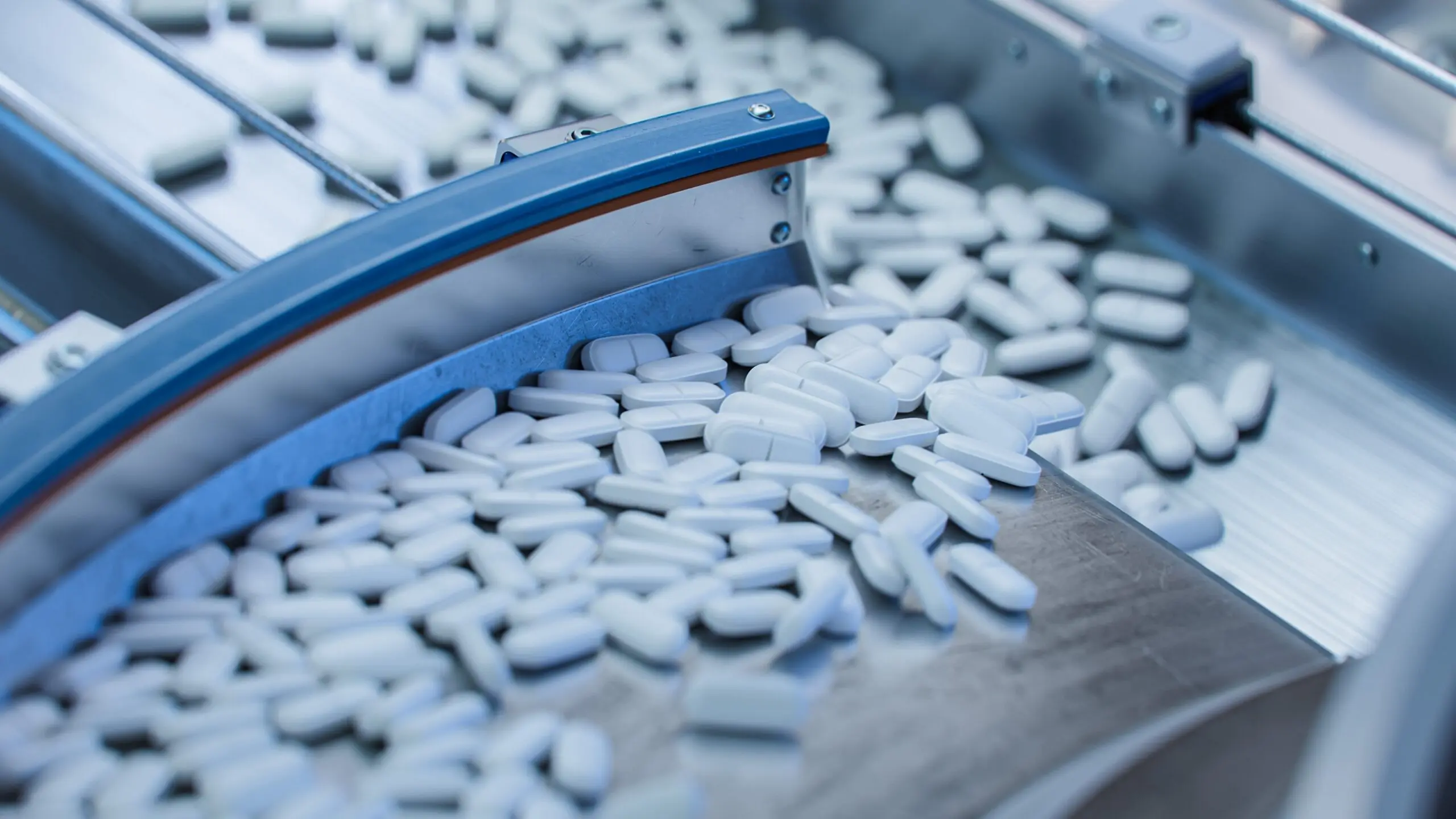
Photo: Shutterstock
A Senate proposal to add manufacturing details to drug labels is part of a broader push for supply-chain transparency, testing, and oversight
February 5, 2026 (Updated on: February 9, 2026)
0 Comments
Photo: Shutterstock
Share
LIVE WEBINAR: MARCH 3
Curious about trustworthy alternative treatments? Get answers from an expert: what works, what doesn't, and how to afford it.
SAVE YOUR SPOTon this page:
MedShadow’s Investigating Generics series is driven by the premise that Americans deserve safer, more reliable generic medications. For the past year and a half, we’ve focused on the vulnerabilities in the drug supply chain, aiming to spark public discussion among policymakers and industry leaders about marketplace changes that could move us closer to that goal.
Now, we’re advocating for reforms that would make quality problems easier to detect and harder to ignore.
These reforms include:
Round-the-clock remote monitoring of manufacturing facilities. In-person inspections provide only a brief snapshot of overall operations, and the FDA has not been able to complete them with sufficient frequency. A recent AP investigation found that the FDA hadn’t inspected more than 2000 manufacturing labs in more than five years.
Additionally, inspections are labor-intensive, costly, and, when it comes to overseas labs, ultimately compromised by the inability to conduct them unannounced. In an earlier hearing and in a MedShadow webinar, Peter Baker, a former FDA inspector, laid out serious shortcomings in the inspection process. In one example, he said that because foreign companies often receive advance notice of upcoming inspections, one manufacturer used this time to stage a fake lab in place of the facility actually making the drugs.
Remote monitoring would mitigate these deceptions. And should a company disable the remote monitoring system, its importation to the U.S. would be paused.
Regular batch testing for drug quality. While the FDA conducts chemical analyses on a small number of medications every year, it’s not nearly enough. A sample from each batch of medication should undergo independent testing before being released to pharmacies to verify active ingredients, contaminants, and dissolution rates. This testing could be performed by academic labs, government labs, or private companies.
Temporary removal of generic drugs from the market when tests show that a batch does not match the same standards as the brand-name drugs. Generic drugs are approved for the market once they’re shown to be bioequivalent to a name-brand drug, meaning they work the same way in the body. But once on the market, changes in manufacturing conditions can sometimes cause a generic drug to act differently in the body. When these changes are discovered, the FDA usually updates an online database called the Orange Book (a publicly accessible list of drugs that notes whether generic drugs remain interchangeable with brand-name versions), but does not alert anyone to the discrepancy.
These altered generics should not be distributed until they are shown to be comparable to the name brand.
Increased transparency in labeling. Currently, a medication’s label includes less manufacturing information than labels on our food and clothing. Drug manufacturers are required to list only the name and address of a single company involved in the manufacturing process, which may be the labeler, distributor, or manufacturer. As a result, it’s nearly impossible to know where the finished drug or its active pharmaceutical ingredient (API) was made.
MedShadow supports the work of researchers such as John Gray, Ph.D., professor of operations at Ohio State University, who recommends labels that contain QR codes that link facility-level information on API manufacturing, finished drug production, and distribution, along with the drug’s Orange Book listing.
Americans Deserve to Know Where Their Drugs Come From, Says Government Committee
Because improving drug quality requires shared commitment from both manufacturers and lawmakers, MedShadow has closely followed the bipartisan Senate Committee on Aging’s ongoing hearings on drug safety, co-chaired by Sens. Rick Scott (R–Fla.) and Kirsten Gillibrand (D–N.Y.), including the committee’s recent focus on making drug labels more transparent and useful for consumers and healthcare providers. On January 29, 2025, the Committee held the fourth in its series of hearings, titled “Truth in Labeling: Americans Deserve to Know Where Their Drugs Came From.”
At the start of the hearing, Senator Scott announced plans to introduce a new bill, the Consumer Labeling for Enhanced API Reporting and Legitimate Accountability for Base Entity Listings (CLEAR LABELS) Act. This Act would require prescription drug labels to contain a link to an online portal listing the names and addresses of the facilities where the active pharmaceutical ingredient (API) was made, where the finished drug product was manufactured, and where the medication was packaged.
“Every American deserves honesty and transparency about what they’re putting into their bodies. We label food, clothes, and other products, but we don’t require that same standard of medicines that Americans, and especially our aging population, rely on. Can anybody really disagree with that?” Scott asked.
“We must examine the underlying economic dynamics in the current marketplace and adjust incentives to fix the ‘race to the bottom’ in generic drug pricing, which can create drug quality issues, drive manufacturing outside of the U.S., or cause companies to stop production of certain drugs altogether,” Gillibrand added at a previous hearing.
“We must examine the underlying economic dynamics in the current marketplace and adjust incentives to fix the ‘race to the bottom’ in generic drug pricing.”
Four experts testified during the January 29th hearing, weighing the nuances of labeling language and the potential impacts and feasibility of adding different types of information to medication labels.
Dr. Gray, who also presented in a MedShadow webinar, described a proposal for a medication label that would contain a QR code linking to a website with the following information for each drug:
- The name and address of the manufacturer of the drug’s finished dosage form
- The name and address of the manufacturer of the drug’s active pharmaceutical ingredient
- A drug quality score, created through a Pentagon project that should be complete later this year.
- Access to the same information for any drugs the FDA deems exchangeable with the current medication.
Taken together, this transparency would allow generics manufacturers to compete on something other than cost and help to slow or even halt the race to the bottom that has ensued in this industry for some time,” said Dr. Gray.
Read John Gray’s full testimony.
Dr. Gray’s testimony was followed by that of Michael Ganio, Pharm D, senior director of pharmaceutical practice and quality at the American Society of Health Systems Pharmacists (ASHP), who emphasized that simply knowing the country where a drug or its API was made isn’t enough to determine its quality or prevent supply shortages.
“We support public disclosure of where our drugs are made, but we ask that the committee consider additional policies if the intended result is to improve the overall reliability and resiliency of America’s drug supply chain. Drug shortages, product quality, and national healthcare security are all related to the resiliency and reliability of our pharmaceutical supply chain,” he said.
“Drug shortages, product quality, and national healthcare security are all related to the resiliency and reliability of our pharmaceutical supply chain.”
In addition to more transparent labeling, Ganio said AHSP supports stronger enforcement of requirements that manufacturers report supply chain problems and risk management plans, as well as policies that encourage new manufacturing sites, long-term purchasing contracts for essential medicines, and greater geographic diversity in manufacturing sites to protect against obstacles such as natural disasters.
Read Michael Ganio’s full testimony.
Next up was Stephen Schondelmeyer, PharmD, Ph.D., professor of pharmaceutical management and economics at the University of Minnesota, who explained why labeling rules need to be very specific.
For example, phrases like “manufactured by,” “manufactured for,” and “product of” may sound similar, but they don’t always make clear whether the company listed refers to its headquarters, the facility that manufactured the finished product, or any other step in the manufacturing chain.
“If a finished pharmaceutical product is made using API from a factory in China and then the powder is shipped to New Jersey, where it is pressed into a tablet, it is not sufficient to label this product as simply, ‘Made in the USA,’” Dr. Schondelmeyer told the Committee. “Such a label would be a material misrepresentation of where the functional component of the product was actually made. This product should be labeled as an active ingredient ‘Made in China’ and finished product ‘Made in the USA’,” he continued.
“If a finished pharmaceutical product is made using API from a factory in China and then the powder is shipped to New Jersey, where it is pressed into a tablet, it is not sufficient to label this product as simply, ‘Made in the USA’.”
Dr. Schondelmeyer also highlighted New Zealand’s publicly accessible online database, which, he says, the U.S. could emulate. This database contains information regarding the location of each step in the manufacturing process.
Read Stephen Schondelmeyer’s full testimony.
Finally, the senators and audience heard from Stephen Colvill, assistant research director at Duke-Margolis Institute for Health Policy, who suggested that, beyond labeling, the committee must work toward incentivizing purchasers to commit to longer-term contracts with manufacturers that have stronger reliability track records. This would help bolster supply chains and lower the risk of shortages. Colvill also discussed encouraging the building of new manufacturing facilities both domestically and abroad to diversify the supply chain and create backups should natural disasters or geopolitical problems interfere with drug supply.
“Absence of new incentives to encourage pharmacies and other purchasers to select reliable and/or domestic manufacturers, any positive impacts from pharmaceutical labeling reforms are likely to be limited,” he said.
Read Stephen Colvill’s full testimony.
To read the full scope of MedShadow’s reporting on this subject, visit our Investigating Generics page and watch our three-part webinar series.
MedShadow is a nonprofit. We produce quality, unbiased journalism free from pharmaceutical dollars or political agenda. Your support allows us to continue to deliver breakthroughs and insights about the benefits and risks of medications. Please consider DONATING today.
- Home | United States Senate Special Committee on Aging. (n.d.). Senate Committee on Aging.
- Sen. Rick Scott Announces CLEAR LABELS Act to Hold Drug Manufacturers Accountable and Strengthen Supply Chain Oversight. (2026, January 29). U.S. Senator Rick Scott.
- Edney, A., & Griffin, R. (2023, December 5). The Pentagon Wants to Root Out Shoddy Drugs. The FDA Is In Its Way. Bloomberg.com.
- MedSafe Home Page. (n.d.).
DISCLAIMER: MedShadow provides information and resources related to medications, their effects, and potential side effects. However, it is important to note that we are not a substitute for professional medical advice, diagnosis, or treatment. The content on our site is intended for educational and informational purposes only. Individuals dealing with medical conditions or symptoms should seek guidance from a licensed healthcare professional, such as a physician or pharmacist, who can provide personalized medical advice tailored to their specific circumstances.
While we strive to ensure the accuracy and reliability of the information presented on MedShadow, we cannot guarantee its completeness or suitability for any particular individual’s medical needs. Therefore, we strongly encourage users to consult with qualified healthcare professionals regarding any health-related concerns or decisions. By accessing and using MedShadow, you acknowledge and agree that the information provided on the site is not a substitute for professional medical advice and that you should always consult with a qualified healthcare provider for any medical concerns.
on this page:
RECOMMENDED:

DONATE:
Help fund our fight for improved medication safety and transparency by supporting our independent journalism.
Give NowStay Informed. Sign up for our newsletters.
Independent, science-based journalism delivered directly to your inbox.
We seek to create a world where there are safer medications for all and where all people are fully informed about their medication benefits and side effects, using our explanatory and investigative journalism to both inform and stimulate public discussion to drive toward solutions.
LIVE WEBINAR: MARCH 3
Curious about trustworthy alternative treatments? Get answers from an expert: what works, what doesn't, and how to afford it.
SAVE YOUR SPOT