


Menu
 Shedding Light on the Risks
& Benefits of Medications
Shedding Light on the Risks
& Benefits of Medications
Shedding Light on the Risks
& Benefits of Medications What To Know About Lipfendra, The New Cholesterol-Lowering Pill

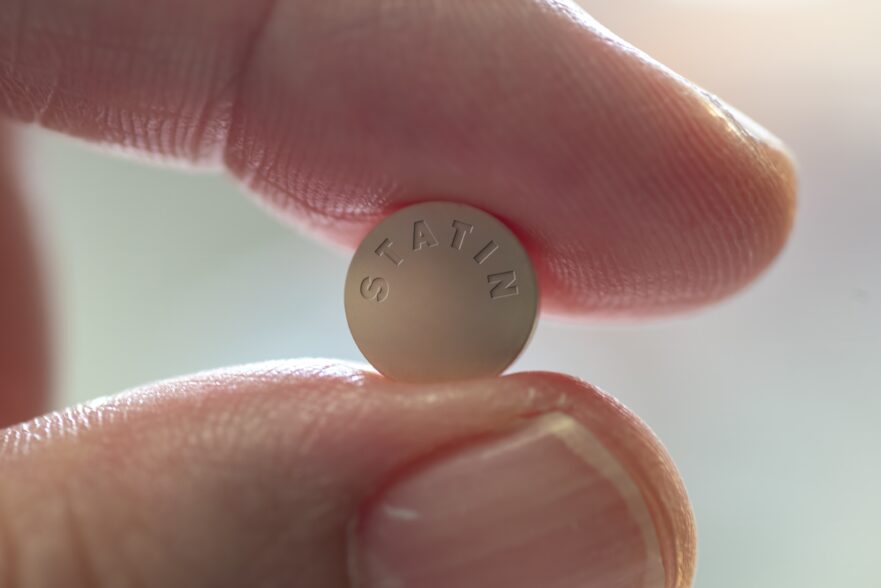
Photo: Shutterstock
A new oral PCSK9 inhibitor may lower cholesterol by more than half when added to statins and other existing treatments, but whether it prevents heart attacks and strokes remains unknown
August 5, 2026
0 Comments
republishPhoto: Shutterstock
FACT CHECKED
 republish this story
on this page:
For people whose cholesterol remains high despite taking statins — or who have difficulty tolerating them — the next step often involves an additional injectable medication. Lipfendra (enlicitide), approved by the U.S. Food and Drug Administration (FDA) on July 16, 2026, offers a new oral alternative.
Statins, the most commonly used cholesterol-lowering medications, work by blocking HMG-CoA reductase, a liver enzyme involved in cholesterol production. More than 90 million U.S. adults take a statin each day.
Lipfendra blocks PCSK9, an enzyme that limits the liver’s ability to clear LDL-C from the blood. By blocking PCSK9, Lipfendra allows LDL-C to be removed from circulation.
Two injectable PCSK9 inhibitors — Repatha (evolocumab) and Praluent (alirocumab) — are already available and have comparable efficacies, but Lipfendra is the first drug in the class that can be taken by mouth. “The more options we have for patients, the better,” says Steven Nissen, M.D., a Cleveland Clinic cardiologist and lipid-therapy consultant (Dr. Nissen was not involved in Lipfendra’s development).
Doctors generally prescribe PCSK9 inhibitors in two situations. The first is for people who are already taking the highest tolerated dose of a statin but have still not reached their LDL-C goal. In those cases, a PCSK9 inhibitor may be added to statin therapy. The second is for the 8 to 10 percent of statin takers who can’t tolerate the medication due to side effects, such as muscle symptoms or liver-related concerns.
In those cases, a PCSK9 inhibitor could serve as a replacement, explains Harpreet Bhatia, M.D., a cardiologist at UC San Diego who was not involved in the development of Lipfendra but consults for several pharmaceutical companies, including Merck, the drug’s manufacturer.
However, the trials supporting Lipfendra’s approval evaluated it on top of existing cholesterol-lowering treatment. Most participants were taking statins, so it is less clear how well Lipfendra works when taken on its own.
The Evidence Behind Lipfendra’s Approval
Lipfendra was reviewed under the FDA’s Commissioner’s National Priority Voucher pilot program, which is intended to speed review of therapies that address national public health priorities. The FDA approved the drug based on results from two phase 3 clinical trials.
The first trial (dubbed CORALreef HeFH) was published in November 2025 in JAMA and compared enlicitide plus statin therapy with placebo plus statin therapy in adults with heterozygous familial hypercholesterolemia (HeFH), an inherited condition that can cause LDL-C levels to be more than twice the recommended levels set by the American College of Cardiology.
The trial included 303 adults with an average age of 52, all of whom were taking a high- or moderate-intensity statin. Approximately half were women; 71% were White, 15% Asian, 4% Black, and 19% identified as multiracial.
After 24 weeks, the group that took a daily dose of Lipfendra with their statin medication had a reduction of up to 60% of their starting LDL-C level. This reduction was sustained through week 52, when the final data points were collected. Meanwhile, trial participants given a placebo had a slight increase (less than 5%) in their LDL-C, which doctors say is expected.
The second trial — “CORALreef Lipids” — was published in the New England Journal of Medicine in February 2026. It included 2,909 adults with an average age of 63 who either had atherosclerotic cardiovascular disease (ASCVD) — a condition caused by plaque buildup in the arteries — or were at high risk of developing it. All participants were already receiving cholesterol-lowering treatment, including statins, ezetimibe (another prescription pill that is generally less potent than statins), or both. Of the participants, 39% were women and 61% were men. Approximately 53% were White, 26% Asian, 9% Black, 0.2% American Indian or Alaska Native, and 11% identified as multiracial.
“Overall, the trial populations are reasonably representative of the patients most likely to receive Lipfendra in clinical practice,” says Dr. Sara Rogers, PharmD, a clinical pharmacist at Texas A&M Physicians Clinic and a Health and Medical Advisory panelist for MedShadow. “However, as with many cardiovascular trials, some groups were underrepresented, including women, Black individuals, and adults over the age of 80, where polypharmacy, frailty, and adherence issues become especially important.”
As in the first study, those who received Lipfendra in addition to their statin medication achieved a reduction in LDL cholesterol by more than 50%. Whereas those who received a placebo had a slight increase of about 3%.
Side Effects of Lipfendra
In both trials, overall rates of adverse events were similar in the Lipfendra and placebo groups. In the smaller CORALreef HeFH trial, diarrhea occurred in 7.4% of participants taking Lipfendra, compared with 2% receiving placebo, while dizziness occurred in 6.9% and 4%, respectively. Other commonly reported events — including respiratory infections, influenza, headache, and nausea — generally occurred at similar rates in both groups.
“While the results are applicable to many patients seen in routine practice, post-marketing data will be important to better understand the drug’s effectiveness, safety, and adherence across a more diverse real-world population,” says Dr. Rogers.
William Boden, M.D., a preventive cardiologist at Boston University School of Medicine and Harvard Medical School who was not involved in the development of Lipfendra, says an oral option could increase the use of PCSK9 inhibitors. Despite evidence that existing injectable PCSK9 inhibitors can reduce the risk of heart attack and stroke in people with established cardiovascular disease, their cost and the need for regular injections have limited their use, he says.
Secondary prevention — reducing the risk of heart attack, stroke, or other cardiovascular events in people who already have established cardiovascular disease — is “critically important,” Dr. Boden says. However, these trials measured Lipfendra’s effect on cholesterol levels, not whether it prevents heart attacks or strokes. An ongoing trial is expected to answer that question in 2029.
“That will be the main determinant of how widely this drug is used and the degree to which payers are going to reimburse it,” notes Dr. Boden.
The Long-Term Safety and Practicality of Lipfendra
“Based on the product label, Lipfendra doesn’t seem to have any drug interactions with other medications, which is good,” says Dr. Rogers.
But Lipfendra does come with one practical limitation: it must be taken first thing in the morning on an empty stomach, and patients must avoid food for at least 30 minutes afterward so it can be absorbed properly. That requirement did not appear to be a major barrier in clinical trials, but it could be inconvenient for some patients in real life.
“Often, patients who have high cholesterol may have other conditions as well. So the timing of all the different medications they take can become important,” Dr. Rogers adds.
While Dr. Nissen says he would consider prescribing Lipfendra to patients who strongly prefer an oral option over injections, he remains cautious about widespread use until the drug has been on the market longer.
“It’s always good to have a drug out there for a couple years before you widely prescribe it, because you may find out that there are things you just didn’t know,” he says.
That caution is not theoretical. A study in 2017 showed that more than one in four approved drugs receive new safety warnings within 10 years.
“We need to recognize that the trials they did for Lipfendra were over the course of one year. So we don’t know as much about the long-term safety data,” adds Dr. Rogers. That is especially important because many people need to take cholesterol-lowering medications for years, if not for life.
Dr. Boden agrees. “We don’t have clinical outcomes data yet,” he says.
For now, Lipfendra’s clearest advantage may be choice: A convenient alternative to injectable PCSK9 therapies.
Disclosures
Harpreet Bhatia, M.D. has served as a consultant or advisor, with financial compensation, for several pharmaceutical companies, including Amgen, Arrowhead, Bayer, Merck, NewAmsterdam, and Novartis.
Steven Nissen, M.D. has served as a consultant for several pharmaceutical companies and has overseen recent clinical trials for AbbVie, Amgen, AstraZeneca, CRSPR Therapeutics, Kardigan, Eli Lilly, Novartis, NewAmsterdam, and Pfizer. However, he does not accept honoraria, consulting fees, or other compensation from commercial entities.
Want to Share Your Story?
If you’ve experienced side effects or medication issues related to this topic, we want to hear from you.
Submit Your Story- Seidah, N. G., & Prat, A. (2021). The Multifaceted Biology of PCSK9. Endocrine Reviews, 43(3), 558–582
- Matyori, A., Brown, C. P., Ali, A., & Sherbeny, F. (2023). Statins utilization trends and expenditures in the U.S. before and after the implementation of the 2013 ACC/AHA guidelines. Saudi Pharmaceutical Journal, 31(6), 795–800.
- Bytyçi, I., Penson, P. E., Mikhailidis, D. P., Wong, N. D., Hernandez, A. V., Sahebkar, A., Thompson, P. D., Mazidi, M., Rysz, J., Pella, D., Reiner, Ž., Toth, P. P., & Banach, M. (2022). Prevalence of statin intolerance: a meta-analysis. European Heart Journal, 43(34), 3213–3223.
- Martirossian, A. N., & Goldberg, A. C. (2022). Management of patients with statin intolerance. Best Practice & Research Clinical Endocrinology & Metabolism, 37(3), 101714.
- Averbukh, L. D., Turshudzhyan, A., Wu, D. C., & Wu, G. Y. (2022). Statin-induced liver injury patterns: a Clinical review. Journal of Clinical and Translational Hepatology, 10(3), 543–552.
- Ballantyne, C. M., Gellis, L., Tardif, J., Banka, P., Navar, A. M., Asprusten, E. A., Scott, R., Stroes, E. S. G., Froman, S., Mendizabal, G., Wang, F., & Catapano, A. L. (2025). Efficacy and safety of oral PCSK9 inhibitor enlicitide in adults with heterozygous familial hypercholesterolemia. JAMA, 335(2), 129.
- Navar, A. M., Catapano, A. L., & Ballantyne, C. M. (2026). Trial of the oral PCSK9 inhibitor enlicitide. New England Journal of Medicine, 394(18), 1867–1868
- Navar, A. M., Mikhailova, E., Catapano, A. L., Banka, P., Blom, D. J., Cadena, A., Kourpanidis, S., Lepor, N. E., Tsukamoto, K., Mendizabal, G., Nunez, J., Zhang, W., Zhu, P., Zhuo, M., & Ballantyne, C. M. (2026). A Placebo-Controlled trial of the oral PCSK9 inhibitor enlicitide. New England Journal of Medicine, 394(6), 529–539.
- Gürgöze, M. T., Muller‐Hansma, A. H., Schreuder, M. M., Galema‐Boers, A. M., Boersma, E., & Van Lennep, J. E. R. (2018). Adverse events associated with PCSK9 inhibitors: A Real‐World experience. Clinical Pharmacology & Therapeutics, 105(2), 496–504.
- Amgen. (2017). Highlights of prescribing information - Repatha [Prescribing information].
- Regeneron Pharmaceuticals. (2025). HIGHLIGHTS OF PRESCRIBING INFORMATION.
- Hwang, J., Peterson, E. D., Gupta, A., Decicco, E., Sarnes, E., & Navar, A. M. (2025). Prescriber uptake and use of novel Lipid‐Lowering therapies. Journal of the American Heart Association, 14(9), e040768.
- Blumenthal, R. S., Morris, P. B., Gaudino, M., Johnson, H. M., Anderson, T. S., Bittner, V. A., Blankstein, R., Brewer, L. C., Cho, L., De Ferranti, S. D., Gianos, E., Gluckman, T. J., Gradney, K. F., Isiadinso, I., Lloyd-Jones, D. M., Marrs, J. C., Martin, S. S., McLain, K. H., Mehta, L. S., . . . Young, J. (2026). 2026 ACC/AHA/AACVPR/ABC/ACPM/ADA/AGS/APHA/ASPC/NLA/PCNA Guideline on the Management of Dyslipidemia: A report of the American College of Cardiology/American Heart Association Joint Committee on Clinical Practice Guidelines. Circulation, 153(17), e1154–e1276.
- ClinicalTrials.gov. (n.d.-b).
DISCLAIMER: MedShadow provides information and resources related to medications, their effects, and potential side effects. However, it is important to note that we are not a substitute for professional medical advice, diagnosis, or treatment. The content on our site is intended for educational and informational purposes only. Individuals dealing with medical conditions or symptoms should seek guidance from a licensed healthcare professional, such as a physician or pharmacist, who can provide personalized medical advice tailored to their specific circumstances.
While we strive to ensure the accuracy and reliability of the information presented on MedShadow, we cannot guarantee its completeness or suitability for any particular individual’s medical needs. Therefore, we strongly encourage users to consult with qualified healthcare professionals regarding any health-related concerns or decisions. By accessing and using MedShadow, you acknowledge and agree that the information provided on the site is not a substitute for professional medical advice and that you should always consult with a qualified healthcare provider for any medical concerns.
on this page:
RECOMMENDED:

DONATE:
Help fund our fight for improved medication safety and transparency by supporting our independent journalism.
Give NowWe seek to create a world where there are safer medications for all and where all people are fully informed about their medication benefits and side effects, using our explanatory and investigative journalism to both inform and stimulate public discussion to drive toward solutions.
WEBINARS
Stream our library on demand, including insights on generic drugs and pain management, straight from experts.
WATCH NOW