


Menu
 Shedding Light on the Risks
& Benefits of Medications
Shedding Light on the Risks
& Benefits of Medications
Shedding Light on the Risks
& Benefits of Medications 8 Drugs That Can Cause Vitamin Deficiencies

8 Drugs That Can Cause Vitamin Deficiencies
November 16, 2022
0 Comments
republish8 Drugs That Can Cause Vitamin Deficiencies
On this page
A few years ago, my doctor prescribed me high doses of omeprazole (a proton pump inhibitor) to treat acid reflux twice a day. I didn’t have severe symptoms, but an endoscopy showed that the cells in my esophagus were changing toward a cancerous state to protect themselves from the acid flowing up from my stomach. For three months, I took 40mg of omeprazole each morning and evening—a typical over the counter dose is only 20mg daily—and cut out many foods that can cause acid reflux like coffee, alcohol, and my all-time favorite, dark chocolate. The next endoscopy showed my cells were healing. The drug was working, but my doctor said it was time to taper off of it. Why? Because If I continued taking the drug every day, starting in my 30s, I’d be at risk for osteoporosis and fractures as I aged. Proton pump inhibitors are known to prevent your body from absorbing the calcium you need from food to maintain strong bones.
You probably think of vitamin deficiencies as conditions that happen if you’re not eating a healthy diet or taking multivitamins, but you can also develop a vitamin deficiency for a number of reasons such as conditions that affect your digestion or limited exposure to sun. Vitamin deficiencies are also a surprisingly common side effect of many of the medicines we take regularly.
Here’s what you need to know.
What Is Malabsorption?
Typically, a balanced diet is all you need to ensure you get enough vitamins, minerals, and other nutrients to function your best. As the food moves through your digestive system, your body extracts what it needs and delivers it to your blood and organs.
However, some illnesses and medications can change the way your body absorbs nutrients or other substances. For example, if you take certain medications together, sometimes one can cause you to absorb more of the other than you would had you taken it by itself. Other times, drugs can prevent your body from properly absorbing what it needs from food or other drugs. For example, some conditions or drugs, like diuretics, can cause you to lose nutrients through excess urine. Other factors, like alcohol consumption, can interfere with your body’s ability to absorb specific nutrients like vitamin B. Other drugs might change the makeup of healthy bacteria in your gut that are needed in digestion.
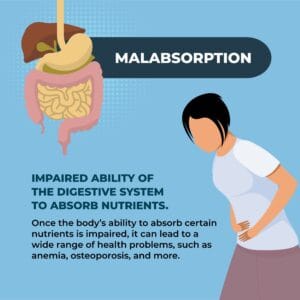
“Once the body’s ability to absorb nutrients is impaired,” says Gabriela Ruiz, MD, PhD, a bariatric surgeon at Vida Wellness and Beauty, “it can lead to a wide range of health problems,” such as anemia, osteoporosis and more. Many deficiencies, such as vitamin B deficiencies, cause wide ranging symptoms, including fatigue and moodiness that can be difficult to diagnose.
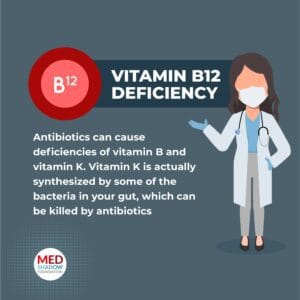
Some nutrients are actually produced inside your body. For example, bacteria in your gut produce Vitamin K, but drugs, like antibiotics, can interfere with this process, leaving you with lower levels of the nutrient.
Michelle Llamas, a Board-Certified Patient Advocate, says that “people who take multiple drugs, especially seniors, are at higher risk,” of developing nutrient deficiencies as a result of the treatments they’ve been prescribed.
Signs of Malabsorption
It can be difficult to recognize that malabsorption is the cause of the symptoms you’re experiencing. Using a symptom tracker can help you recognize when the symptoms started and possibly associate them with a certain drug.
However, many of the symptoms of vitamin deficiencies such as fatigue, nausea, and dizziness can also be some of the most common side effects of the drugs, too. You should be sure to ask your physician if any of the treatments or medications you’re using could cause vitamin deficiencies and whether or not you’ll need regular blood tests. Blood tests are the only sure way to check for deficiencies.
If you’re experiencing diarrhea or frequent urination as a symptom of your condition or side effect of your drugs, you may want to ask for a blood test to check your vitamin levels. Food that isn’t absorbed typically exits your body through your stools.
Some Drugs That Can Cause Malabsorption
“Drugs interact with the digestive system differently and can interfere with the normal absorption of nutrients,” which, if it continues, can lead to vitamin deficiencies, said Ruiz. “For instance, while short-term use of NSAIDs may not lead to problems, long-term use can damage the lining of the stomach, which, in turn, can potentially affect nutrient absorption.
Here are some of the most common culprits, and the deficiencies they might cause.
Alcohol
Your liver uses vitamin B to metabolize alcohol, so heavy drinking can deplete the amount available for other uses. Excess drinking can also limit your appetite and increase urination, leading to other vitamin deficiencies.
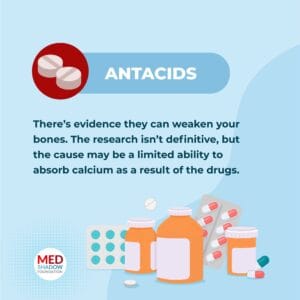
Antacids
Proton Pump Inhibitors such as Zantac can lead to vitamin B and iron deficiencies. There’s also evidence that they can weaken your bones. The research isn’t definitive, but the cause may be a limited ability to absorb calcium as a result of the drugs.

Antibiotics
These medications can cause deficiencies of vitamin B and vitamin K. Vitamin K is actually synthesized by some of the bacteria in your gut.
Anticonvulsants
These drugs may cause deficiencies of biotin, folate, vitamin B6, vitamin K and vitamin D.
Chemotherapy
This treatment can cause a folate deficiency.

Laxatives
These often available over-the-counter medications can prevent you from absorbing many nutrients.
Metformin
This medication, often prescribed to treat pre-diabetes, diabetes, and even PCOS, can cause malabsorption of vitamin B12.
Corticosteroids
These meds can cause vitamin D and vitamin C deficiencies.

Symptoms of Common Vitamin Deficiencies
Many vitamin deficiencies can be difficult to identify since many of the symptoms, such as fatigue, can be common to both vitamin deficiencies and other illnesses or medication side effects. Your healthcare provider will need to order a blood test to know for sure whether or not you have a vitamin deficiency.
Vitamin B12
A lack of vitamin B12 can cause dizziness, weakness, anemia, intestinal issues, mood disorders, and/or nerve damage.
Vitamin D
A lack of vitamin D can cause fatigue, depression, and/or pain.
Iron
Iron deficiency can cause fatigue, weakness, depression, nausea, and/or difficulty regulating body temperature.
Magnesium
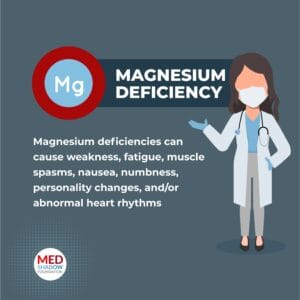
Magnesium deficiencies can cause weakness, fatigue, muscle spasms, nausea, numbness, personality changes, and/or abnormal heart rhythms.
What to Do If You Fear Malabsorption
Whenever you start on a new treatment or medication, you should ask your healthcare provider whether you’ll need regular blood tests to monitor for vitamin deficiencies. Ruiz says you can also reduce the risk of malabsorption by eating a balanced diet, and, in some cases, taking a multivitamin. (Be careful to read the labels.)
Taking your medications with food or immediately after eating can help, as well.
If you experience severe fatigue, unhealthy weight loss, or diarrhea, ask your healthcare provider if it’s possible to switch your medication.
No matter your concern, don’t be afraid to speak to your doctor. Explain your symptoms and fears, and ask if malabsorption could be a problem.

Want to Share Your Story?
If you’ve experienced side effects or medication issues related to this topic, we want to hear from you.
Submit Your Story- Clinic, C. (2024a, August 30). Signs You May Have a Magnesium Deficiency. Cleveland Clinic.
- Vitamin D Deficiency. (2024, October 1). Cleveland Clinic.
- Shaikh, A. S., Guo, X., Li, Y., Cao, L., Liu, X., Li, P., Zhang, R., & Guo, R. (2018). The Impact of Antiepileptic Drugs on Vitamin Levels in Epileptic Patients. Current Pharmaceutical Biotechnology, 19(8), 674–681
- Vitamin K. (n.d.). Mount Sinai Health System.
- Thong, B. K. S., Ima-Nirwana, S., & Chin, K. (2019). Proton Pump Inhibitors and Fracture Risk: A Review of Current Evidence and Mechanisms Involved. International Journal of Environmental Research and Public Health, 16(9), 1571.
- Marshall, D. (2023, May 22). Board Certified Patient Advocate – PACB Home – Get Certified. Patient Advocate Certification Board Organization.
- Drugwatch. (2024, May 29). Michelle Llamas – Drugwatch Senior Writer. Drugwatch.com
- VIDA Wellness and Beauty | World-Class Plastic Surgery in Tijuana, MX. (2024, November 4). VIDA Wellness and Beauty.
DISCLAIMER: MedShadow provides information and resources related to medications, their effects, and potential side effects. However, it is important to note that we are not a substitute for professional medical advice, diagnosis, or treatment. The content on our site is intended for educational and informational purposes only. Individuals dealing with medical conditions or symptoms should seek guidance from a licensed healthcare professional, such as a physician or pharmacist, who can provide personalized medical advice tailored to their specific circumstances.
While we strive to ensure the accuracy and reliability of the information presented on MedShadow, we cannot guarantee its completeness or suitability for any particular individual’s medical needs. Therefore, we strongly encourage users to consult with qualified healthcare professionals regarding any health-related concerns or decisions. By accessing and using MedShadow, you acknowledge and agree that the information provided on the site is not a substitute for professional medical advice and that you should always consult with a qualified healthcare provider for any medical concerns.
RECOMMENDED:


DONATE:
Help fund our fight for improved medication safety and transparency by supporting our independent journalism.
Give NowWe seek to create a world where there are safer medications for all and where all people are fully informed about their medication benefits and side effects, using our explanatory and investigative journalism to both inform and stimulate public discussion to drive toward solutions.
WEBINARS
Stream our library on demand, including insights on generic drugs and pain management, straight from experts.
WATCH NOW