
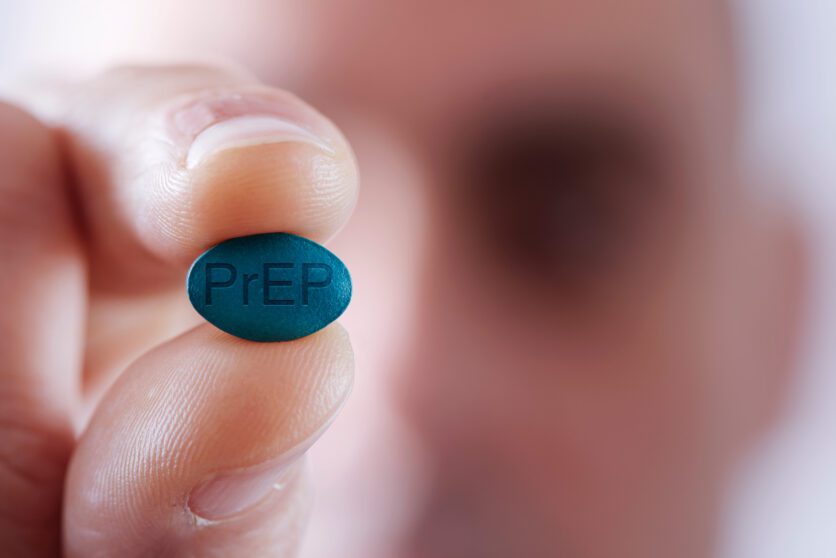

The time it takes to fill a prescription for doxy-PEP may hinder its use and effectiveness.

The time it takes to fill a prescription for doxy-PEP may hinder its use and effectiveness.
|
Getting your Trinity Audio player ready... |
K. Arnold, who asked that we only use his first initial to maintain his medical privacy, first heard about doxy-PEP, a medication that can help prevent sexually transmitted infections (STIs) if taken shortly after unprotected sex, from an Instagram ad. He has always taken good care of his health, and as a man who has sex with men, he knows he has an elevated risk of contracting an STI. But he started taking extra care after he learned a previous partner had not been faithful.
On the rare occasion that he has had sex without a condom over the past year, he quickly found an online healthcare platform where he could get a prescription for doxy-PEP. He hasn’t experienced many side effects from doxy-PEP after having taken it about three times, but he has endured the stress of not having his prescription filled on time, and wondering if he was still protected. If you’re considering doxy-PEP, here’s what you need to know.
The “PEP” in doxy-PEP stands for post-exposure prophylaxis. The drug is a single dose of an antibiotic that you take as soon as possible (up to 72 hours) after having sex without a condom. It helps prevent sexually transmitted infections (STIs) caused by bacteria including syphilis, chlamydia, and gonorrhea from taking hold in your body. It does not prevent viral infections such as human immunodeficiency virus (HIV).
There were not very many side effects observed during the clinical trials for doxy-PEP. The most common side effect of doxy-PEP was diarrhea or gastrointestinal symptoms, which is commonly reported with all types of antibiotics. One patient (out of over 300 who took the medication) in one of the clinical trials had elevated liver enzymes on a blood test, signifying his liver was stressed or damaged, and another single individual reported headaches.
The risk of esophageal ulcers or other gastrointestinal symptoms such as nausea is higher if you lay down within an hour of taking the medication or take it on an empty stomach. Arnold says he was instructed not to lay down for about 30 minutes after taking the medication.
Arnold said his stomach was a little upset the first time he took doxy-PEP, but it was “nothing so extreme where it’s extremely painful. I had to take antibiotics before, and I do specifically recall having diarrhea and other things like that, but not while taking these.”
Independent reporting on drug recalls, medication safety and integrative health, including supplements. No pharma funding.
The drug can also enhance the effects of blood thinners. If you take both doxycycline and blood thinners at the same time, you may need to reduce your dose of the blood thinner to prevent bleeding.
You have to take doxy-PEP within 72 hours of having had unprotected sex for it to be effective, and ideally within 24 hours if possible. However, Arnold points out that that isn’t always possible. He received three prescriptions for doxy-PEP over the last year through an online prescriber, but only once was his pharmacy able to fill the prescription within that 72-hour window. He was anxious at the time, but, “I still went and got tested [for STIs], and I had my results by the time the Doxy-PEP was available,” he says.
Two clinical trials tested doxy-PEP in men who have sex with men. The first, conducted in France and published in 2017, showed that taking the drug after unprotected sex cut the risk of contracting an STI in half. The drug was not effective against gonorrhea but did seem to prevent syphilis and chlamydia. The second study, which took place in San Francisco and Seattle, tested the drug in men who had sex with men and transgender women (assigned male at birth), and was published in 2023. Again, the drug was most effective in preventing syphilis and chlamydia, and less effective at preventing gonorrhea. Taking doxy-PEP lowered the risk of getting a bacterial STI by two-thirds. One of the strengths of the second study is that it included participants who were HIV positive and those who were already using PrEP to prevent HIV.
So far, the drug has only been tested in men who have sex with men and transgender women (assigned male at birth). The study populations have included individuals who are HIV positive as well as HIV negative and who are simultaneously using PrEP to prevent HIV. Doxy-PEP has, so far, demonstrated inconsistent results in women and those assigned female at birth. A 2023 study suggested that the drug was ineffective in those assigned female at birth, though experts emphasized that many of those in the trial didn’t take the drug as directed. Additionally, pregnant women should avoid doxycycline, because it can hinder bone growth in the fetus.
Drinking lots of water can make it easier to swallow and taking it with a meal can help lower your risk of nausea or other gastrointestinal side effects of Doxy-PEP. Experts also suggest avoiding dairy products, calcium, multivitamins, or antacids for two hours before and after taking the drug, because calcium can lower the amount of doxycycline you absorb.
Doxycycline, the antibiotic in doxy-PEP, is used to treat many other conditions and even prevent some other infections such as malaria. For these purposes, you’d need to take doxy-PEP for weeks to months. In these cases, patients have reported more intense side effects such as:
So far, there have been signals that brief exposures to doxy-PEP might raise the risk of antibiotic-resistant microbes emerging, but experts also note that doxycycline is already used in a similar fashion to prevent Lyme disease after a tick bite.
Arnold says he’s keeping up with research on the drug.
“I saw an article about a group that it was tested on and the concerns about bacteria potentially forming resistance to the drug,” he says. He’d also love to see if it can be made even more effective. The existing risk reduction “is better than zero additional preventative care for sure. But it would be awesome to see more research going into this.”
If you’ve experienced side effects or medication issues related to this topic, we want to hear from you.
Submit Your Story
DISCLAIMER: MedShadow provides information and resources related to medications, their effects, and potential side effects. However, it is important to note that we are not a substitute for professional medical advice, diagnosis, or treatment. The content on our site is intended for educational and informational purposes only. Individuals dealing with medical conditions or symptoms should seek guidance from a licensed healthcare professional, such as a physician or pharmacist, who can provide personalized medical advice tailored to their specific circumstances.
While we strive to ensure the accuracy and reliability of the information presented on MedShadow, we cannot guarantee its completeness or suitability for any particular individual’s medical needs. Therefore, we strongly encourage users to consult with qualified healthcare professionals regarding any health-related concerns or decisions. By accessing and using MedShadow, you acknowledge and agree that the information provided on the site is not a substitute for professional medical advice and that you should always consult with a qualified healthcare provider for any medical concerns.

Help fund our fight for improved medication safety and transparency by supporting our independent journalism.
Give NowWe seek to create a world where there are safer medications for all and where all people are fully informed about their medication benefits and side effects, using our explanatory and investigative journalism to both inform and stimulate public discussion to drive toward solutions.
MedShadow.org is dedicated to empowering people with our evidence-based journalism about the safest ways to take over-the-counter (OTC) and prescription (Rx) medications.
We also seek to stimulate public discussion about potential improvements to drug research, manufacturing and distribution processes. and also to encourage the improvement of processes to ensure that we are all better protected.
As a result, we encourage other nonprofit newsrooms, mission-aligned outlets, and advocacy organizations to republish our original content under the following conditions:
1. We Are Credited Fully and Clearly
You must include the byline and credit MedShadow.org as the original publisher. Please include a link to the original article at the top or bottom of the piece. Use the following attribution:
This article was originally published by MedShadow, a nonprofit foundation that focuses on the safest ways to take over-the-counter and prescription medications.
2. Our Content Isn’t Edited Without Permission
You may make small changes for clarity, such as adjusting headlines, subheadings, or transitions, but you may not change the core meaning, tone, or intent of the article. For substantive edits, email us at republish@medshadow.org for review and approval.
3. You Do Not Sell Or Use Our Content Commercially
Our work is free to share, but it may not be sold, monetized, or repurposed for commercial gain. You may not republish our articles behind a paywall or in publications whose primary purpose is advertising or product promotion. You may not place drug or supplement advertising adjacent to our story.
4. Photos, Graphics, and Multimedia Are Not Used Without Permission
Only the text of the article is available for republication. Images, graphics, and videos may not be reused without explicit written permission, unless they are clearly marked as Creative Commons licensed. Contact us if you’d like to request reuse of a visual asset.
If you’re unsure whether your intended use falls within these guidelines, or would like to discuss a formal syndication or licensing arrangement, please email: republish@medshadow.org
We want our journalism to reach as many people as possible, especially those making critical decisions about medications and health.
For website editors
Copy the article body, including its formatting and links, then paste it into your publishing system. Add the byline and required credit described in these guidelines.
<!-- wp:paragraph --> <p>K. Arnold, who asked that we only use his first initial to maintain his medical privacy, first heard about doxy-PEP, a medication that can help prevent sexually transmitted infections (STIs) if taken shortly after unprotected sex, from an Instagram ad. He has always taken good care of his health, and as a man who has sex with men, he knows he has <a href="https://www.cdc.gov/sti/index.html" target="_blank" rel="noreferrer noopener">an elevated risk of contracting an STI</a>. But he started taking extra care after he learned a previous partner had not been faithful.</p> <!-- /wp:paragraph --> <!-- wp:paragraph --> <p>On the rare occasion that he has had sex without a condom over the past year, he quickly found an online healthcare platform where he could get a prescription for doxy-PEP. He hasn’t experienced many side effects from doxy-PEP after having taken it about three times, but he has endured the stress of not having his prescription filled on time, and wondering if he was still protected. If you’re considering doxy-PEP, here’s what you need to know.</p> <!-- /wp:paragraph --> <!-- wp:heading --> <h2 class="wp-block-heading">What Is Doxy-PEP Used For?</h2> <!-- /wp:heading --> <!-- wp:paragraph --> <p>The “PEP” in doxy-PEP stands for post-exposure prophylaxis. The drug is a single dose of an antibiotic that you take as soon as possible (up to 72 hours) after having sex without a condom. It helps prevent sexually transmitted infections (STIs) caused by bacteria including syphilis, chlamydia, and gonorrhea from taking hold in your body. It does not prevent viral infections such as human immunodeficiency virus (HIV).</p> <!-- /wp:paragraph --> <!-- wp:heading --> <h2 class="wp-block-heading">Is Doxy-PEP Safe?</h2> <!-- /wp:heading --> <!-- wp:paragraph --> <p>There were not very many side effects observed during the clinical trials for doxy-PEP. The most common side effect of doxy-PEP was diarrhea or gastrointestinal symptoms, which is commonly reported with all types of <a href="https://medshadow.org/pros-cons-of-antibiotics/#:~:text=Antibiotics%20are%20used%20for%20STDs,to%20the%20effects%20of%20antibiotics." target="_blank" rel="noreferrer noopener">antibiotics</a>. One patient (out of over 300 who took the medication) in <a href="https://www.nejm.org/doi/10.1056/NEJMoa2211934?url_ver=Z39.88-2003&rfr_id=ori:rid:crossref.org&rfr_dat=cr_pub%20%200pubmed" target="_blank" rel="noreferrer noopener">one of the clinical trials</a> had elevated liver enzymes on a blood test, signifying his liver was stressed or damaged, and another single individual reported headaches.</p> <!-- /wp:paragraph --> <!-- wp:paragraph --> <p>The risk of esophageal ulcers or other gastrointestinal symptoms such as <a href="https://www.cdc.gov/malaria/resources/pdf/fsp/drugs_2017/Doxycycline_2017.pdf" target="_blank" rel="noreferrer noopener">nausea</a> is higher if you lay down within an hour of taking the medication or take it on an empty stomach. Arnold says he was instructed not to lay down for about 30 minutes after taking the medication.</p> <!-- /wp:paragraph --> <!-- wp:paragraph --> <p>Arnold said his stomach was a little upset the first time he took doxy-PEP, but it was “nothing so extreme where it’s extremely painful. I had to take antibiotics before, and I do specifically recall having diarrhea and other things like that, but not while taking these.”</p> <!-- /wp:paragraph --> <!-- wp:paragraph --> <p>The drug can also enhance the effects of blood thinners. If you take both doxycycline and blood thinners at the same time, you may need to reduce your dose of the blood thinner to <a href="https://pubmed.ncbi.nlm.nih.gov/18031295/" target="_blank" rel="noreferrer noopener">prevent bleeding</a>.</p> <!-- /wp:paragraph --> <!-- wp:heading --> <h2 class="wp-block-heading">How Long Does It Take Doxy-PEP to Work?</h2> <!-- /wp:heading --> <!-- wp:paragraph --> <p>You have to take doxy-PEP within 72 hours of having had unprotected sex for it to be effective, and ideally within 24 hours if possible. However, Arnold points out that that isn’t always possible. He received three prescriptions for doxy-PEP over the last year through an online prescriber, but only once was his pharmacy able to fill the prescription within that 72-hour window. He was anxious at the time, but, “I still went and got tested [for STIs], and I had my results by the time the Doxy-PEP was available,” he says.</p> <!-- /wp:paragraph --> <!-- wp:heading --> <h2 class="wp-block-heading">How Effective Is Doxy-PEP?</h2> <!-- /wp:heading --> <!-- wp:paragraph --> <p>Two clinical trials tested doxy-PEP in men who have sex with men. <a href="https://pubmed.ncbi.nlm.nih.gov/29229440/" target="_blank" rel="noreferrer noopener">The first</a>, conducted in France and published in 2017, showed that taking the drug after unprotected sex cut the risk of contracting an STI in half. The drug was not effective against gonorrhea but did seem to prevent syphilis and chlamydia. The <a href="https://www.nejm.org/doi/10.1056/NEJMoa2211934?url_ver=Z39.88-2003&rfr_id=ori:rid:crossref.org&rfr_dat=cr_pub%20%200pubmed" target="_blank" rel="noreferrer noopener">second study</a>, which took place in San Francisco and Seattle, tested the drug in men who had sex with men and transgender women (assigned male at birth), and was published in 2023. Again, the drug was most effective in preventing syphilis and chlamydia, and less effective at preventing gonorrhea. Taking doxy-PEP lowered the risk of getting a bacterial STI by two-thirds. One of the strengths of the second study is that it included participants who were HIV positive and those who were already using PrEP to prevent HIV.</p> <!-- /wp:paragraph --> <!-- wp:heading --> <h2 class="wp-block-heading">Who Should Take Doxy-PEP?</h2> <!-- /wp:heading --> <!-- wp:paragraph --> <p>So far, the drug has only been tested in men who have sex with men and transgender women (assigned male at birth). The study populations have included individuals who are HIV positive as well as HIV negative and who are simultaneously using PrEP to prevent HIV. Doxy-PEP has, so far, demonstrated <a href="https://www.croiconference.org/abstract/doxycycline-postexposure-prophylaxis-for-prevention-of-stis-among-cisgender-women/" target="_blank" rel="noreferrer noopener">inconsistent results in women and those assigned female at birth.</a> A 2023 study suggested that the drug was ineffective in those assigned female at birth, though <a href="https://www.npr.org/sections/health-shots/2023/12/20/1220691158/doxy-pep-sti-prevention-pill-women-after-sex" target="_blank" rel="noreferrer noopener">experts emphasized</a> that many of those in the trial didn’t take the drug as directed. Additionally, pregnant women should avoid doxycycline, because it can <a href="https://www.nhs.uk/medicines/doxycycline/pregnancy-breastfeeding-and-fertility-while-taking-doxycycline/#:~:text=Doxycycline%20and%20pregnancy,about%20taking%20a%20different%20antibiotic." target="_blank" rel="noreferrer noopener">hinder bone growth</a> in the fetus.</p> <!-- /wp:paragraph --> <!-- wp:heading --> <h2 class="wp-block-heading">What Foods Should You Avoid While Taking Doxycycline?</h2> <!-- /wp:heading --> <!-- wp:paragraph --> <p>Drinking lots of water can make it easier to swallow and taking it with a meal can help lower your risk of nausea or other gastrointestinal side effects of Doxy-PEP. Experts also suggest <a href="https://publichealth.lacounty.gov/dhsp/DPHSexualHealthClinics/HealthEducationLibrary/DoxyPEP/DoxyPEP_Factsheet-EN_FINAL_05.05.2023.pdf" target="_blank" rel="noreferrer noopener">avoiding dairy products</a>, calcium, multivitamins, or antacids for two hours before and after taking the drug, because calcium can <a href="https://pubmed.ncbi.nlm.nih.gov/2767766/" target="_blank" rel="noreferrer noopener">lower the amount of doxycycline you absorb.</a></p> <!-- /wp:paragraph --> <!-- wp:heading --> <h2 class="wp-block-heading">Side Effects of Longer-Term Use of Doxycycline</h2> <!-- /wp:heading --> <!-- wp:paragraph --> <p>Doxycycline, the antibiotic in doxy-PEP, is used to treat many other conditions and even prevent some other infections such as malaria. For these purposes, you’d need to take doxy-PEP for weeks to months. In these cases, patients have reported more intense side effects such as:</p> <!-- /wp:paragraph --> <!-- wp:list --> <ul class="wp-block-list"><!-- wp:list-item --> <li>Increased <a href="https://academic.oup.com/qjmed/article/111/4/259/4793226?login=false" target="_blank" rel="noreferrer noopener">photosensitivity</a> (rashes or sunburns upon exposure to sunlight)</li> <!-- /wp:list-item --> <!-- wp:list-item --> <li>Pancreatitis</li> <!-- /wp:list-item --> <!-- wp:list-item --> <li>Esophageal ulcers</li> <!-- /wp:list-item --> <!-- wp:list-item --> <li>Skin irritation</li> <!-- /wp:list-item --> <!-- wp:list-item --> <li>Intracranial hypertension, a dangerous buildup of pressure around the brain that can cause headaches and blurry vision.</li> <!-- /wp:list-item --> <!-- wp:list-item --> <li>Birth defects if taken during pregnancy</li> <!-- /wp:list-item --></ul> <!-- /wp:list --> <!-- wp:heading --> <h2 class="wp-block-heading">Should You Be Concerned About Antibiotic Resistance with Doxy-PEP?</h2> <!-- /wp:heading --> <!-- wp:paragraph --> <p>So far, there have been signals that brief exposures to doxy-PEP might raise the risk of <a href="https://www.nih.gov/news-events/news-releases/nih-funded-study-finds-doxycycline-reduces-sexually-transmitted-infections-two-thirds" target="_blank" rel="noreferrer noopener">antibiotic-resistant microbes emerging</a>, but experts also note that doxycycline is already used in a similar fashion to <a href="https://www.cdc.gov/lyme/resources/pdfs/lyme-pep-low-ink-p.pdf" target="_blank" rel="noreferrer noopener">prevent Lyme disease after a tick bite.</a></p> <!-- /wp:paragraph --> <!-- wp:paragraph --> <p>Arnold says he’s keeping up with research on the drug.</p> <!-- /wp:paragraph --> <!-- wp:paragraph --> <p>“I saw an article about a group that it was tested on and the concerns about bacteria potentially forming resistance to the drug,” he says. He’d also love to see if it can be made even more effective. The existing risk reduction “is better than zero additional preventative care for sure. But it would be awesome to see more research going into this.”</p> <!-- /wp:paragraph -->
We think it’s invaluable — and hope you agree. Our work is made possible by donations from readers like you.
We think it’s invaluable — and hope you agree. Our journalism is made possible by donations from readers like you.
As a nonprofit, we don’t take a dime from pharmaceutical or supplement companies. That means we can report on the benefits, risks, and alternatives to prescription and over-the-counter drugs free from corporate pressure or influence.
We've noticed that you're interested in this topic. Would you read a dedicated newsletter about it?