
Photo: Shutterstock
Christina Applegate's reported misdiagnosis highlights how patients can face serious drug side effects from treatments they don't need, while the real cause of their symptoms goes untreated

Photo: Shutterstock
Christina Applegate, who became a powerful activist for multiple sclerosis (MS) awareness after her 2021 diagnosis, now says she was misdiagnosed and does not have the disease. Her experience highlights not only how difficult MS can be to diagnose, but also the potential consequences of getting it wrong, including exposure to medications that carry significant side effects and risks, while the actual cause of a patient’s symptoms goes untreated.
The actress shared details on her podcast “MeSsy,” which she co-hosts with actress Jamie-Lynn Sigler, who has lived with MS for more than two decades. Applegate said her doctor told her, “Congratulations, you don’t have MS.”
“You don’t get misdiagnosed and then all of a sudden I’m better,” Applegate said. “I haven’t gotten better.” She said she still has “every symptom of someone with MS” and doesn’t know what is causing these crushing symptoms.
MS is a chronic, progressive disease in which the immune system attacks the brain, spinal cord, and optic nerves. Because the disease targets the nervous system, symptoms can vary widely and include numbness, vision changes, dizziness, balance problems, and fatigue.
“Diagnosing MS is often like putting together a puzzle,” says Bruce Bebo, Ph.D., chief research and medical affairs officer at the National Multiple Sclerosis Society. And the stakes are high. Drugs used to slow MS progression can cause side effects, including fatigue, gastrointestinal problems, high blood pressure, headaches, elevated liver enzymes, and increased susceptibility to infections.
“An incorrect MS diagnosis can have meaningful consequences,” notes Dr. Bebo. “It may expose someone to treatments they do not need and the potential risks associated with those therapies, while delaying identification and treatment of the condition that is actually causing their symptoms.”
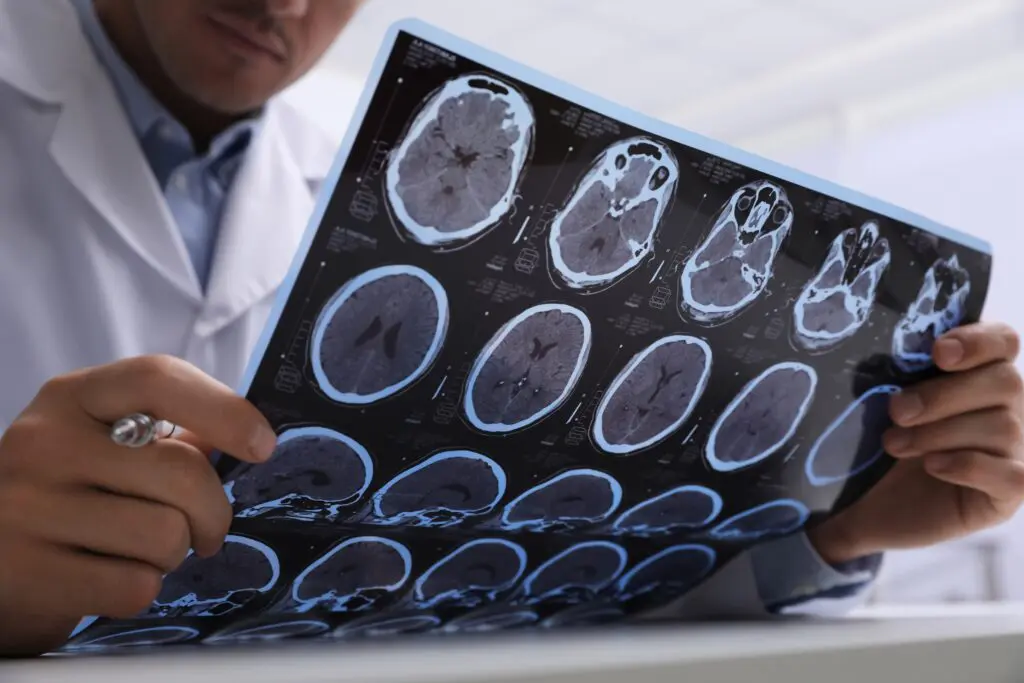
No single test can definitively diagnose MS. Instead, doctors weigh a patient’s history, a neurological exam, MRI scans and, when appropriate, spinal fluid tests.
Annu Navani, M.D., a regenerative medicine specialist and chief medical officer of Reve Health Institute, said the goal is to show damage in more than one part of the nervous system, at more than one point in time, while ruling out other causes. Spinal fluid tests can reveal immune proteins called oligoclonal bands. They strongly support an MS diagnosis but aren’t confirmation on their own, she said.
Independent reporting on drug recalls, medication safety, and supplements. No pharma funding.
“MS misdiagnosis is a well-documented clinical problem,” says Dr. Navani. A 2024 meta-analysis of six studies covering 1,621 people found a 15% misdiagnosis rate, and Dr. Bebo notes that some specialty-center studies report 15% to 20%, but those centers often see the most complex cases, so no single percentage should be assumed to apply to everyone.
One reason MS can be so difficult to diagnose is that several other conditions can produce similar symptoms.
“Multiple sclerosis has numerous clinical and radiological mimics, ranging from relatively common disorders to less frequent but serious neurological diseases,” says Dr. Navani. She points to migraine, stroke, vitamin B12 deficiency, neck-related spinal problems, and other autoimmune and infectious neurological conditions. Dr. Bebo lists neuromyelitis optica spectrum disorder (a rare autoimmune disease that primarily affects the optic nerves and spinal cord), MOG antibody disease (an autoimmune condition that causes inflammation in the brain, spinal cord, and optic nerves) and vascular conditions.
But experts say there is reason for hope. The 2024 McDonald Diagnostic Criteria, the standard guide for diagnosing MS, which the National MS Society helped revise, has incorporated new evidence that can speed diagnosis — and make it more precise.
For example, the new criteria contains more diagnostic clues to help point doctors in the right direction, including optic nerve involvement, advanced MRI findings, and a new spinal fluid marker.
So what should people who aren’t sure if they’re dealing with MS or another issue do? Dr. Navani recommends seeing a neurologist who specializes in MS or neuroimmunology, particularly if someone’s original diagnosis rested mostly on nonspecific symptoms or MRI findings. She says patients should request copies of their MRI images, not just the radiology reports, along with exam findings, spinal fluid results and prior lab work, and should feel free to get a second opinion. Sudden vision loss, new weakness or rapidly worsening symptoms warrant urgent care rather than waiting for a routine appointment.
Resources are available for people diagnosed with MS, Dr. Bebo adds. The National MS Society’s MS Navigator program connects people with information, resources, and guidance.
“Whether the answer is ultimately MS or something else,” says Dr. Bebo, “people deserve an accurate diagnosis and a clear explanation.”
The National MS Society, which receives funding from pharmaceutical companies, says industry contributions account for less than 5% of the funding supporting its programs.
DISCLAIMER: MedShadow provides information and resources related to medications, their effects, and potential side effects. However, it is important to note that we are not a substitute for professional medical advice, diagnosis, or treatment. The content on our site is intended for educational and informational purposes only. Individuals dealing with medical conditions or symptoms should seek guidance from a licensed healthcare professional, such as a physician or pharmacist, who can provide personalized medical advice tailored to their specific circumstances.
While we strive to ensure the accuracy and reliability of the information presented on MedShadow, we cannot guarantee its completeness or suitability for any particular individual’s medical needs. Therefore, we strongly encourage users to consult with qualified healthcare professionals regarding any health-related concerns or decisions. By accessing and using MedShadow, you acknowledge and agree that the information provided on the site is not a substitute for professional medical advice and that you should always consult with a qualified healthcare provider for any medical concerns.
Help fund our fight for improved medication safety and transparency by supporting our independent journalism.
Give NowWe seek to create a world where there are safer medications for all and where all people are fully informed about their medication benefits and side effects, using our explanatory and investigative journalism to both inform and stimulate public discussion to drive toward solutions.
MedShadow.org is dedicated to empowering people with our evidence-based journalism about the safest ways to take over-the-counter (OTC) and prescription (Rx) medications.
We also seek to stimulate public discussion about potential improvements to drug research, manufacturing and distribution processes. and also to encourage the improvement of processes to ensure that we are all better protected.
As a result, we encourage other nonprofit newsrooms, mission-aligned outlets, and advocacy organizations to republish our original content under the following conditions:
1. We Are Credited Fully and Clearly
You must include the byline and credit MedShadow.org as the original publisher. Please include a link to the original article at the top or bottom of the piece. Use the following attribution:
This article was originally published by MedShadow, a nonprofit foundation that focuses on the safest ways to take over-the-counter and prescription medications.
2. Our Content Isn’t Edited Without Permission
You may make small changes for clarity, such as adjusting headlines, subheadings, or transitions, but you may not change the core meaning, tone, or intent of the article. For substantive edits, email us at republish@medshadow.org for review and approval.
3. You Do Not Sell Or Use Our Content Commercially
Our work is free to share, but it may not be sold, monetized, or repurposed for commercial gain. You may not republish our articles behind a paywall or in publications whose primary purpose is advertising or product promotion. You may not place drug or supplement advertising adjacent to our story.
4. Photos, Graphics, and Multimedia Are Not Used Without Permission
Only the text of the article is available for republication. Images, graphics, and videos may not be reused without explicit written permission, unless they are clearly marked as Creative Commons licensed. Contact us if you’d like to request reuse of a visual asset.
If you’re unsure whether your intended use falls within these guidelines, or would like to discuss a formal syndication or licensing arrangement, please email: republish@medshadow.org
We want our journalism to reach as many people as possible, especially those making critical decisions about medications and health.
For website editors
Copy the article body, including its formatting and links, then paste it into your publishing system. Add the byline and required credit described in these guidelines.
<!-- wp:paragraph --> <p>Christina Applegate, who became a powerful activist for multiple sclerosis (MS) awareness after her 2021 diagnosis, now says she was <a href="https://people.com/christina-applegate-ms-misdiagnosis-still-your-warrior-12195531">misdiagnosed</a> and does not have the disease. Her experience highlights not only how difficult MS can be to diagnose, but also the potential consequences of getting it wrong, including exposure to medications that carry significant side effects and risks, while the actual cause of a patient's symptoms goes untreated. </p> <!-- /wp:paragraph --> <!-- wp:paragraph --> <p>The actress shared details on her podcast “<a href="https://www.messythepodcast.com/">MeSsy</a>,” which she co-hosts with actress Jamie-Lynn Sigler, who has lived with MS for <a href="https://www.self.com/story/jamie-lynn-sigler-ms-diagnosis">more than two decades</a>. Applegate said her doctor told her, “Congratulations, you don’t have MS.”</p> <!-- /wp:paragraph --> <!-- wp:paragraph --> <p>“You don’t get misdiagnosed and then all of a sudden I’m better,” Applegate said. “I haven’t gotten better.” She said she still has “every symptom of someone with MS” and doesn’t know what is causing these crushing symptoms. </p> <!-- /wp:paragraph --> <!-- wp:paragraph --> <p>MS is a <a href="https://www.ninds.nih.gov/health-information/disorders/multiple-sclerosis-ms">chronic, progressive disease</a> in which the immune system attacks the brain, spinal cord, and optic nerves. Because the disease targets the nervous system, symptoms can vary widely and include numbness, vision changes, dizziness, balance problems, and fatigue.</p> <!-- /wp:paragraph --> <!-- wp:heading --> <h2 class="wp-block-heading">The Risks of Taking MS Medications You Don't Need</h2> <!-- /wp:heading --> <!-- wp:paragraph --> <p>“Diagnosing MS is often like putting together a puzzle,” says <a href="https://www.nationalmssociety.org/about-the-society/who-we-are/leadership/executive-leadership-team">Bruce Bebo, Ph.D</a>., chief research and medical affairs officer at the National Multiple Sclerosis Society. And the stakes are high. Drugs used to <a href="https://www.drugs.com/pro/teriflunomide.html">slow MS progression</a> can cause side effects, including fatigue, gastrointestinal problems, high blood pressure, headaches, elevated liver enzymes, and increased susceptibility to infections. </p> <!-- /wp:paragraph --> <!-- wp:paragraph --> <p>“An incorrect MS diagnosis can have meaningful consequences,” notes Dr. Bebo. “It may expose someone to treatments they do not need and the potential risks associated with those therapies, while delaying identification and treatment of the condition that is actually causing their symptoms.”</p> <!-- /wp:paragraph --> <!-- wp:heading --> <h2 class="wp-block-heading">Why Is MS Misdiagnosed?</h2> <!-- /wp:heading --> <!-- wp:paragraph --> <p>N<a href="https://www.ninds.nih.gov/health-information/disorders/multiple-sclerosis-ms">o single test</a> can definitively diagnose MS. Instead, doctors weigh a patient’s history, a neurological exam, MRI scans and, when appropriate, spinal fluid tests.</p> <!-- /wp:paragraph --> <!-- wp:paragraph --> <p><a href="https://annunavani.com/about/">Annu Navani, M.D</a>., a regenerative medicine specialist and chief medical officer of Reve Health Institute, said the goal is to show damage in more than one part of the nervous system, at more than one point in time, while ruling out other causes. Spinal fluid tests can reveal immune proteins called oligoclonal bands. They strongly support an MS diagnosis but aren’t confirmation on their own, she said.</p> <!-- /wp:paragraph --> <!-- wp:paragraph --> <p>“MS misdiagnosis is a well-documented clinical problem,” says Dr. Navani. A <a href="https://journals.sagepub.com/doi/10.1177/13524585241274527">2024 meta-analysis</a> of six studies covering 1,621 people found a 15% misdiagnosis rate, and Dr. Bebo notes that some <a href="https://www.msard-journal.com/article/S2211-0348(19)30048-3/abstract">specialty-center studies report</a> 15% to 20%, but those centers often see the most complex cases, so no single percentage should be assumed to apply to everyone.</p> <!-- /wp:paragraph --> <!-- wp:paragraph --> <p>One reason MS can be so difficult to diagnose is that several other conditions can produce similar symptoms.</p> <!-- /wp:paragraph --> <!-- wp:paragraph --> <p>“Multiple sclerosis has numerous clinical and radiological mimics, ranging from relatively common disorders to less frequent but serious neurological diseases,” says Dr. Navani. She points to migraine, stroke, vitamin B12 deficiency, neck-related spinal problems, and other autoimmune and infectious neurological conditions. Dr. Bebo lists neuromyelitis optica spectrum disorder (a rare autoimmune disease that primarily affects the optic nerves and spinal cord), MOG antibody disease (an autoimmune condition that causes inflammation in the brain, spinal cord, and optic nerves) and vascular conditions. </p> <!-- /wp:paragraph --> <!-- wp:heading --> <h2 class="wp-block-heading">How to Work Towards an Accurate MS Diagnosis</h2> <!-- /wp:heading --> <!-- wp:paragraph --> <p>But experts say there is reason for hope. The <a href="https://www.nationalmssociety.org/news-and-magazine/momentum-magazine/research-and-science/updated-diagnostic-criteria">2024 McDonald Diagnostic Criteria</a>, the standard guide for diagnosing MS, which the National MS Society helped revise, has incorporated new evidence that can speed diagnosis — and make it more precise. </p> <!-- /wp:paragraph --> <!-- wp:paragraph --> <p>For example, the new criteria contains more diagnostic clues to help point doctors in the right direction, including optic nerve involvement, advanced MRI findings, and a new spinal fluid marker. </p> <!-- /wp:paragraph --> <!-- wp:paragraph --> <p>So what should people who aren’t sure if they’re dealing with MS or another issue do? Dr. Navani recommends seeing a neurologist who specializes in MS or neuroimmunology, particularly if someone’s original diagnosis rested mostly on nonspecific symptoms or MRI findings. She says patients should request copies of their MRI images, not just the radiology reports, along with exam findings, spinal fluid results and prior lab work, and should feel free to get a second opinion. Sudden vision loss, new weakness or rapidly worsening symptoms warrant urgent care rather than waiting for a routine appointment.</p> <!-- /wp:paragraph --> <!-- wp:paragraph --> <p>Resources are available for people diagnosed with MS, Dr. Bebo adds. The National MS Society’s <a href="https://www.nationalmssociety.org/resources/get-support/ms-navigator?utm_source=sld&utm_medium=semg&utm_campaign=drefy27_aab_eg_pros&utm_content=sem_msnav&referrer=sld-drefy27-aab-eg-pros-semg-sem-msnav&gad_source=1&gad_campaignid=24307863535&gbraid=0AAAAA95NLvB-leOnYmSrUC3GO9jeeX2CR&gclid=CjwKCAjwxeHWBhBPEiwAiqtQ-QpoUXgXbz_80lr6j9pcYzZmHQIrawFlj2TjKN4UuyarDSVm_Z_c7hoCcoYQAvD_BwE">MS Navigator program</a> connects people with information, resources, and guidance. </p> <!-- /wp:paragraph --> <!-- wp:paragraph --> <p>“Whether the answer is ultimately MS or something else,” says Dr. Bebo, “people deserve an accurate diagnosis and a clear explanation.” </p> <!-- /wp:paragraph --> <!-- wp:heading --> <h2 class="wp-block-heading"><strong>Disclosures</strong></h2> <!-- /wp:heading --> <!-- wp:paragraph --> <p>The National MS Society, which receives funding from pharmaceutical companies, says industry contributions account <a href="https://www.nationalmssociety.org/es/about-the-society/who-we-are/financials/sources-of-support">for less than 5% of the funding</a> supporting its programs.</p> <!-- /wp:paragraph -->
We think it’s invaluable — and hope you agree. Our work is made possible by donations from readers like you.
We think it’s invaluable — and hope you agree. Our journalism is made possible by donations from readers like you.
As a nonprofit, we don’t take a dime from pharmaceutical or supplement companies. That means we can report on the benefits, risks, and alternatives to prescription and over-the-counter drugs free from corporate pressure or influence.
We've noticed that you're interested in this topic. Would you read a dedicated newsletter about it?