Photo: Shutterstock/Golden Sikorka

Photo: Shutterstock/Golden Sikorka
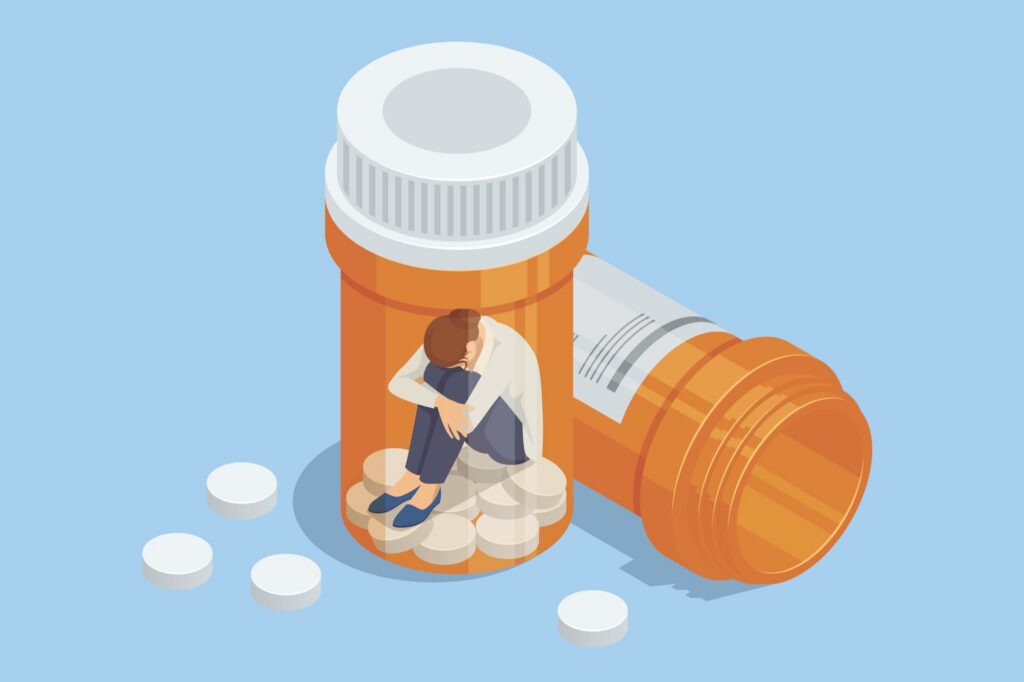
Gabapentin, a drug that’s primarily used to control seizures in patients with epilepsy and to ease nerve pain, is becoming one of the most misused and abused drugs in the country. Also known as Neurontin, it acts as a sedative, creating feelings of relaxation and, in some cases, euphoria, specifically when paired with opioids. The drug is FDA approved and isn’t considered a controlled substance, but, still, Gabapentin abuse is rampant and many states are calling upon the federal government for a change in drug classification.
If you or a loved one take gabapentin, here’s what you should know.
Gabapentin has been used in the United States for more than 25 years. It was initially approved by the FDA for seizure control in adults and children with epilepsy and was then later approved to help manage postherpetic neuralgia (or nerve pain in folks who have had shingles). It also has off-label uses (meaning it’s applied in ways that are not FDA-approved) such as alcohol use disorder, chronic cough, restless legs syndrome, and nerve pain. One study found that gabapentin significantly reduced pain and other nerve symptoms in women undergoing chemo for ovarian cancer.
Thirty-five percent of people on gabapentin had to stop taking it due to side effects, particularly dizziness and gastrointestinal problems. While gabapentin can be helpful in a number of conditions, it also causes side effects that can be debilitating for many people, and even deadly for some.
In December 2019, the FDA issued a warning that people with respiratory risk factors, such as chronic obstructive pulmonary disease (COPD), who are taking gabapentin or pregabalin, a gabapentin-like drug, could experience serious breathing difficulties that may lead to death. The warning also applies to the use of either of these drugs in combination with central nervous system depressants, such as opioids, anti-anxiety drugs, antidepressants, or antihistamines. The FDA is requiring gabapentin and pregabalin manufacturers to add warnings about the risk of respiratory depression to their labels, citing reports of a dozen deaths in people with one or more risk factors.
What’s more, both pregabalin and gabapentin were shown to increase the risk of suicidal behavior, unintentional overdoses, injuries, traffic incidents, and violent crimes, particularly in users between the ages of 15 to 24 years old. (Pregabalin was more potent overall than gabapentin.) Other side effects include dizziness, drowsiness, diarrhea, anxiety, unwanted eye movements, strange or unusual thoughts, weight gain, and more.
Independent reporting on drug recalls, medication safety and integrative health, including supplements. No pharma funding.
The most concerning trait of gabapentin is its overall addictiveness.
“Gabapentin was prescribed off-label for pain because it was thought to be a safer alternative to opioids,” said Steven Evans, MD, medical director of American Addiction Centers/Nevada. “But now people who don’t need it are using it.”
A review of 11 studies and 23 case reports published in the journal Addiction reported that up to 65% of people who had prescriptions for gabapentin misused the drug. Users take more to amplify the drug’s side effects of relaxation, calmness, and euphoria, but it can also be used to stave off withdrawal symptoms and block the effects of medicines used to treat addiction, prolonging a user’s high. In some cases, the user’s goal was self-harm or suicide. Most of the abuse was from people who also took other substances, particularly opioids. When paired with opioids, gabapentin can bolster the drug’s effects, but combining the two can cause significant organ and brain damage, and even death.
Of the people on gabapentin or pregabalin, only 1.6% of non-opioid users abused the drugs compared to 68% of opioid users who engaged in misuse. Gabapentin is the 9th-most prescribed drug in the United States. IQVIA reported that 67 million prescriptions for gabapentin were written in the United States in 2019, a 71% increase from 2012.
“My radar was not on in terms of gabapentin being abused,” said Michele Matthews, PharmD, professor of pharmacy practice at the Massachusetts College of Pharmacy and Health Sciences in Boston.“With the shift from prescription opioids, there was an increase in non-opioid alternatives, and gabapentin was at the top of the list,” she said. “For the most part, it wasn’t something we had to worry about. We’re seeing something different now.”
Matthews works with high-risk patients in the pain management clinic at Brigham and Women’s Hospital. She said that a typical dose of gabapentin for pain is between 1,800 and 3,600 mg a day. “We’re seeing requests for early refills,” Matthews said. “It’s similar to patients who may be misusing opioids. It reminds prescribers that medications need to be monitored closely.”
But according to a 2019 survey of primary care physicians by Quest Diagnostics, 83% of prescribers feel that because of the opioid crisis it’s now much harder to treat patients with chronic pain. And although more than 80% of survey respondents believe they are able to recognize and screen for prescription drug misuse, 75% wish they had more training on what to do if a patient shows signs of addiction.
Gabapentin is not scheduled as a controlled substance by the federal government because when given alone it has not been considered addictive. However, when the drug is taken with other medications, such as opioids, benzodiazepines, and amphetamines, gabapentin’s potential for abuse and addiction increases.
Experts are calling for a change in gabapentin’s classification due to the drug’s potential for abuse. The CDC creates a national list of drugs that are considered likely to cause addiction, abuse, or harm. Presently gabapentin is not on any of the five levels of Drug Classifications, implying that the CDC considers gabapentin to be as safe from causing addiction, abuse, or harm as drugs such as insulin or aspirin. States can apply a more stringent Schedule level for their healthcare community. More than a dozen states now require prescribers to report to a state-level prescription drug monitoring program each time they dispense gabapentin. In 2017 Kentucky became the first state to change gabapentin’s classification to Schedule V, the lowest drug level, increasing regulations and adding restrictions to prescribing and dispensing the drug. A number of states have taken the same step, including West Virginia, Tennessee, Michigan, Virginia, Alabama, and North Dakota. Several others have taken steps to follow suit.
As with all medicines, gabapentin in its many forms can be helpful for some conditions. But it comes with side effects and risks that should be understood and considered before committing to using it.
Additional reporting by Patricia Volin
If you’ve experienced side effects or medication issues related to this topic, we want to hear from you.
Submit Your StoryDISCLAIMER: MedShadow provides information and resources related to medications, their effects, and potential side effects. However, it is important to note that we are not a substitute for professional medical advice, diagnosis, or treatment. The content on our site is intended for educational and informational purposes only. Individuals dealing with medical conditions or symptoms should seek guidance from a licensed healthcare professional, such as a physician or pharmacist, who can provide personalized medical advice tailored to their specific circumstances.
While we strive to ensure the accuracy and reliability of the information presented on MedShadow, we cannot guarantee its completeness or suitability for any particular individual’s medical needs. Therefore, we strongly encourage users to consult with qualified healthcare professionals regarding any health-related concerns or decisions. By accessing and using MedShadow, you acknowledge and agree that the information provided on the site is not a substitute for professional medical advice and that you should always consult with a qualified healthcare provider for any medical concerns.
Help fund our fight for improved medication safety and transparency by supporting our independent journalism.
Give NowWe seek to create a world where there are safer medications for all and where all people are fully informed about their medication benefits and side effects, using our explanatory and investigative journalism to both inform and stimulate public discussion to drive toward solutions.
Stream our library on demand, including insights on generic drugs and pain management, straight from experts.
WATCH NOWMedShadow.org is dedicated to empowering people with our evidence-based journalism about the safest ways to take over-the-counter (OTC) and prescription (Rx) medications.
We also seek to stimulate public discussion about potential improvements to drug research, manufacturing and distribution processes. and also to encourage the improvement of processes to ensure that we are all better protected.
As a result, we encourage other nonprofit newsrooms, mission-aligned outlets, and advocacy organizations to republish our original content under the following conditions:
1. We Are Credited Fully and Clearly
You must include the byline and credit MedShadow.org as the original publisher. Please include a link to the original article at the top or bottom of the piece. Use the following attribution:
This article was originally published by MedShadow, a nonprofit foundation that focuses on the safest ways to take over-the-counter and prescription medications.
2. Our Content Isn’t Edited Without Permission
You may make small changes for clarity, such as adjusting headlines, subheadings, or transitions, but you may not change the core meaning, tone, or intent of the article. For substantive edits, email us at republish@medshadow.org for review and approval.
3. You Do Not Sell Or Use Our Content Commercially
Our work is free to share, but it may not be sold, monetized, or repurposed for commercial gain. You may not republish our articles behind a paywall or in publications whose primary purpose is advertising or product promotion. You may not place drug or supplement advertising adjacent to our story.
4. Photos, Graphics, and Multimedia Are Not Used Without Permission
Only the text of the article is available for republication. Images, graphics, and videos may not be reused without explicit written permission, unless they are clearly marked as Creative Commons licensed. Contact us if you’d like to request reuse of a visual asset.
If you’re unsure whether your intended use falls within these guidelines, or would like to discuss a formal syndication or licensing arrangement, please email: republish@medshadow.org
We want our journalism to reach as many people as possible, especially those making critical decisions about medications and health.
For website editors
Copy the article body, including its formatting and links, then paste it into your publishing system. Add the byline and required credit described in these guidelines.
<!-- wp:paragraph -->
<p><a href="https://medlineplus.gov/druginfo/meds/a694007.html" target="_blank" rel="noreferrer noopener">Gabapentin</a>, a drug that’s primarily used to control seizures in patients with epilepsy and to ease nerve pain, is becoming one of the most misused and abused drugs in the country. Also known as Neurontin, it acts as a sedative, creating feelings of relaxation and, in some cases, euphoria, specifically when paired with opioids. The drug is FDA approved and isn’t considered a controlled substance, but, still, Gabapentin abuse is rampant and many states are calling upon the federal government for a change in drug classification. </p>
<!-- /wp:paragraph -->
<!-- wp:paragraph -->
<p>If you or a loved one take gabapentin, here’s what you should know. </p>
<!-- /wp:paragraph -->
<!-- wp:heading -->
<h2 class="wp-block-heading"><strong>What is Gabapentin?</strong></h2>
<!-- /wp:heading -->
<!-- wp:paragraph -->
<p>Gabapentin has been used in the United States for more than 25 years. It was initially approved by the FDA for seizure control in adults and children with <a href="https://www.ninds.nih.gov/Disorders/All-Disorders/Epilepsy-Information-Page" target="_blank" rel="noreferrer noopener">epilepsy</a> and was then later approved to help manage postherpetic neuralgia (or nerve pain in folks who have had shingles). It also has off-label uses (meaning it’s applied in ways that are not FDA-approved) such as <a href="https://www.ccjm.org/content/86/12/815" target="_blank" rel="noreferrer noopener">alcohol use disorder</a>, <a href="https://www.ncbi.nlm.nih.gov/pmc/articles/PMC6030663/" target="_blank" rel="noreferrer noopener">chronic cough</a>, <a href="https://www.ninds.nih.gov/Disorders/Patient-Caregiver-Education/Fact-Sheets/Restless-Legs-Syndrome-Fact-Sheet" target="_blank" rel="noreferrer noopener">restless legs syndrome</a>, and nerve pain. One <a href="https://pdfs.semanticscholar.org/81b7/919554e7d83f8182e545cd24c7ca277bb987.pdf" target="_blank" rel="noreferrer noopener">study</a> found that gabapentin significantly reduced pain and other nerve symptoms in women undergoing chemo for ovarian cancer.</p>
<!-- /wp:paragraph -->
<!-- wp:heading -->
<h2 class="wp-block-heading"><strong>Side Effects of Gabapentin</strong></h2>
<!-- /wp:heading -->
<!-- wp:paragraph -->
<p>Thirty-five percent of people on gabapentin had to stop taking it due to side effects, particularly <a href="https://medshadow.org/irritable-bowel-syndrome-how-best-treat-it/" target="_blank" rel="noreferrer noopener">dizziness and gastrointestinal problems</a>. While gabapentin can be helpful in a number of conditions, it also causes side effects that can be debilitating for many people, and even deadly for some. </p>
<!-- /wp:paragraph -->
<!-- wp:paragraph -->
<p>In December 2019, the FDA issued a warning that people with respiratory risk factors, such as chronic obstructive pulmonary disease (COPD), who are taking gabapentin or pregabalin, a gabapentin-like drug, could experience serious breathing difficulties that may lead to death. The warning also applies to the use of either of these drugs in combination with central nervous system depressants, such as opioids, anti-anxiety drugs, antidepressants, or antihistamines. The FDA is requiring gabapentin and pregabalin manufacturers to add warnings about the risk of respiratory depression to their labels, citing reports of a dozen deaths in people with one or more risk factors.</p>
<!-- /wp:paragraph -->
<!-- wp:paragraph -->
<p>What’s more, both pregabalin and gabapentin were <a href="https://www.bmj.com/content/365/bmj.l2147" target="_blank" rel="noreferrer noopener">shown</a> to increase the risk of suicidal behavior, unintentional overdoses, injuries, traffic incidents, and violent crimes, particularly in users between the ages of 15 to 24 years old. (Pregabalin was more potent overall than gabapentin.) Other side effects include dizziness, drowsiness, diarrhea, anxiety, unwanted eye movements, strange or unusual thoughts, weight gain, and more.</p>
<!-- /wp:paragraph -->
<!-- wp:heading {"level":3} -->
<h3 class="wp-block-heading"><strong>Gabapentin: </strong>Misuse and Abuse</h3>
<!-- /wp:heading -->
<!-- wp:paragraph -->
<p>The most concerning trait of gabapentin is its overall addictiveness.</p>
<!-- /wp:paragraph -->
<!-- wp:paragraph -->
<p>“Gabapentin was prescribed off-label for pain because it was thought to be a safer alternative to opioids,” said Steven Evans, MD, medical director of <a href="https://americanaddictioncenters.org/addiction-medications/gabapentin" target="_blank" rel="noreferrer noopener">American Addiction Centers/Nevada</a>. “But now people who don’t need it are using it.”</p>
<!-- /wp:paragraph -->
<!-- wp:paragraph -->
<p>A <a href="https://www.ncbi.nlm.nih.gov/pmc/articles/PMC5573873/" target="_blank" rel="noreferrer noopener">review</a> of 11 studies and 23 case reports published in the journal Addiction reported that up to 65% of people who had prescriptions for gabapentin misused the drug. Users take more to amplify the drug’s side effects of relaxation, calmness, and euphoria, but it can also be used to stave off withdrawal symptoms and block the effects of medicines used to treat addiction, prolonging a user’s high. In some cases, the user’s goal was self-harm or suicide. Most of the abuse was from people who also took other substances, particularly opioids. When paired with opioids, gabapentin can bolster the drug’s effects, but combining the two can cause significant organ and brain damage, and even death. </p>
<!-- /wp:paragraph -->
<!-- wp:paragraph -->
<p>Of the people on gabapentin or pregabalin, only 1.6% of non-opioid users abused the drugs compared to 68% of opioid users who engaged in misuse. Gabapentin is the 9th-most prescribed drug in the United States. <a href="https://www.iqvia.com/" target="_blank" rel="noreferrer noopener">IQVIA</a> reported that 67 million prescriptions for gabapentin were written in the United States in <a href="https://s3.amazonaws.com/prod-mdmembers-content/content-files/Keynote%20Address%20Doug%20Long%202019.pdf" target="_blank" rel="noreferrer noopener">2019</a>, a 71% increase from 2012.</p>
<!-- /wp:paragraph -->
<!-- wp:paragraph -->
<p>“My radar was not on in terms of gabapentin being abused,” said Michele Matthews, PharmD, professor of pharmacy practice at the <a href="https://www.mcphs.edu/" target="_blank" rel="noreferrer noopener">Massachusetts College of Pharmacy and Health Sciences </a>in Boston.“With the shift from prescription opioids, there was an increase in non-opioid alternatives, and gabapentin was at the top of the list,” she said. “For the most part, it wasn’t something we had to worry about. We’re seeing something different now.”</p>
<!-- /wp:paragraph -->
<!-- wp:paragraph -->
<p>Matthews works with high-risk patients in the pain management clinic at Brigham and Women’s Hospital. She said that a typical dose of gabapentin for pain is between 1,800 and 3,600 mg a day. “We’re seeing requests for early refills,” Matthews said. “It’s similar to patients who may be misusing opioids. It reminds prescribers that medications need to be monitored closely.”</p>
<!-- /wp:paragraph -->
<!-- wp:paragraph -->
<p>But according to a 2019 survey of primary care physicians by Quest Diagnostics, 83% of prescribers feel that because of the opioid crisis it’s now much harder to treat patients with chronic pain. And although more than 80% of survey respondents believe they are able to recognize and screen for prescription drug misuse, 75% wish they had more training on what to do if a patient shows signs of addiction.</p>
<!-- /wp:paragraph -->
<!-- wp:paragraph -->
<p>Gabapentin is not scheduled as a controlled substance by the <a href="https://www.deadiversion.usdoj.gov/drug_chem_info/gabapentin.pdf" target="_blank" rel="noreferrer noopener">federal government</a> because when given alone it has not been considered addictive. However, when the drug is taken with other medications, such as opioids, benzodiazepines, and amphetamines, gabapentin’s potential for abuse and addiction increases. </p>
<!-- /wp:paragraph -->
<!-- wp:paragraph -->
<p>Experts are calling for a <a href="https://www.ncbi.nlm.nih.gov/pmc/articles/PMC6103607/" target="_blank" rel="noreferrer noopener">change in gabapentin’s classification</a> due to the drug’s potential for abuse. The CDC creates a <a href="https://medshadow.org/drug-classifications-schedule-ii-iii-iv-v/" target="_blank" rel="noreferrer noopener">national list of drugs</a> that are considered likely to cause addiction, abuse, or harm. Presently gabapentin is not on any of the five levels of Drug Classifications, implying that the CDC considers gabapentin to be as safe from causing addiction, abuse, or harm as drugs such as insulin or aspirin. States can apply a more stringent Schedule level for their healthcare community. More than a dozen states now require prescribers to report to a state-level prescription drug monitoring program each time they dispense gabapentin. In 2017 Kentucky became the first state to change gabapentin’s classification to Schedule V, the lowest drug level, increasing regulations and adding restrictions to prescribing and dispensing the drug. A number of states have taken the same step, including West Virginia, Tennessee, <a href="https://www.michigan.gov/lara/0,4601,7-154-11472-487050--,00.html" target="_blank" rel="noreferrer noopener">Michigan</a>, Virginia, Alabama, and <a href="https://nabp.pharmacy/wp-content/uploads/2016/06/North-Dakota-Newsletter-June-2019.pdf" target="_blank" rel="noreferrer noopener">North Dakota</a>. Several others have taken steps to follow suit.</p>
<!-- /wp:paragraph -->
<!-- wp:paragraph -->
<p>As with all medicines, gabapentin in its many forms can be helpful for some conditions. But it comes with side effects and risks that should be understood and considered before committing to using it.</p>
<!-- /wp:paragraph -->
<!-- wp:paragraph -->
<p><em>Additional reporting by Patricia Volin</em></p>
<!-- /wp:paragraph -->We think it’s invaluable — and hope you agree. Our work is made possible by donations from readers like you.
We think it’s invaluable — and hope you agree. Our journalism is made possible by donations from readers like you.
As a nonprofit, we don’t take a dime from pharmaceutical or supplement companies. That means we can report on the benefits, risks, and alternatives to prescription and over-the-counter drugs free from corporate pressure or influence.
No comments yet. Be the first to comment!

We've noticed that you're interested in this topic. Would you read a dedicated newsletter about it?