


Photo: Shutterstock
Millions of Americans take glucosamine for joint pain despite limited evidence that it works. Now, a new study suggests it could accelerate cognitive decline in some people with dementia

Photo: Shutterstock
In 2007, Minute Maid, the Coca-Cola Company’s fruit juice brand, launched a new product called Minute Maid Active, an orange juice it claimed could “help protect cartilage and joints from daily wear.”
The secret ingredient wasn’t another fruit or vitamin. The juice was fortified with glucosamine hydrochloride — a form of glucosamine that had become one of the most widely used dietary supplements in the U.S.
Shortly before sales began, the company approached a team of researchers at the University of Arizona, led by Kent Kwoh, M.D., a rheumatologist and director of the university’s Arthritis Center at the time, to conduct a clinical trial examining whether glucosamine could reduce cartilage damage or improve joint health.
Up until that point, despite its widespread use, studies of glucosamine had produced conflicting results, likely due to how researchers measured efficacy.
Many studies relied on changes in pain to determine whether glucosamine worked — a notoriously difficult outcome to assess, says Sharon Kolasinski, M.D., a rheumatologist at the University of Pennsylvania.
“It is in the nature of arthritis that sometimes it’s more painful, sometimes it’s less painful. If you look at people over a relatively short period of time, some of them [are] going to get better whether you gave them anything or not,” she says.
Dr. Kwoh and his team decided to look for something they could measure more objectively. Rather than relying on participants’ pain reports, they used MRI scans to look for changes in the cartilage in their knees. About 200 people participated in the 24-week trial. Half received a daily lemonade containing 1,500 mg of glucosamine hydrochloride, while the other half received a placebo lemonade without glucosamine.
“We looked for signal[s] that would suggest that there was a benefit,” Dr. Kwoh says, “and we weren’t able to show any.”
By the time Dr. Kwoh and his team published their results in 2014, Minute Maid Active had disappeared from store shelves. Why the company discontinued the juice is unclear, but while Minute Maid’s experiment with glucosamine was short-lived, enthusiasm for the supplement itself has endured. Millions of Americans still take glucosamine in hopes of protecting their joints or easing arthritis symptoms.
Now, new research suggests that for some people, glucosamine may not simply fail to help — it could be doing more harm than good.
According to MedShadow’s analysis of the 2021-2023 National Health and Nutrition Examination Survey (NHANES) by the Centers for Disease Control and Prevention, about 1.6% of US adults — roughly 4.3 million people — take glucosamine supplements daily. Many take them hoping to alleviate joint pain, particularly from osteoarthritis.
“People are looking for something that is effective, [without] the side effects associated with a lot of the medications we use to treat arthritis,” says Dr. Kolasinski.
Although glucosamine is marketed broadly for “joint health,” most research has focused on osteoarthritis, a condition in which joints gradually break down, causing pain, stiffness, and swelling. There is currently no treatment that targets the underlying inflammatory process in this type of arthritis, says Tom Appleton, M.D., a rheumatologist who conducts osteoarthritis research at Western University in Ontario, Canada.
Independent reporting on drug recalls, medication safety and integrative health, including supplements. No pharma funding.
Non-steroidal anti-inflammatory drugs (NSAIDs), like ibuprofen and naproxen, are the first-line therapies for alleviating pain in people with osteoarthritis. These medications “can be very helpful to a lot of patients with osteoarthritis as well as aches and pain for other reasons,” says Dr. Kolasinski. “The problem is that the more you are exposed to a medicine, the more potential you have to have a side effect, and if you have some pre-existing conditions — like heart disease, kidney disease, having had an ulcer before — you are at higher risk for side effects. So we often recommend using these medications at the lowest possible doses for the shortest period of time.”
The placebo effect refers to a beneficial biological outcome that a person experiences when receiving a supposedly ineffective treatment, such as a pill without any active ingredients. According to psychologists, this effect can be traced to the individual’s neurobiological and psychological expectations of the treatment. This effect is not restricted to inactive compounds, such as placebo pills. It can also influence the efficacy and tolerability of pharmaceuticals or medical interventions.
The extent of the placebo effect can vary from person to person, but the scientific basis for these differences is not well understood
The problem, she continues, is that osteoarthritis is a long-term condition, with many people living with it for decades. “Patients struggle with taking medications for long periods of time, doctors struggle with prescribing medications over long periods of time. So, why is it that people seek dietary supplements? They hope for something safer that’s effective.”
For years, “safe and effective” is what glucosamine supplements promised. But as the evidence has accumulated, that promise has become harder to support. Study after study has failed to find convincing evidence that glucosamine meaningfully relieves joint pain or protects cartilage, with questions about its effectiveness persisting across different formulations.
“The broad conclusion from the medical literature is that it’s not effective at treating pain, [slowing] the diseases, or improving cartilage,” says Dr. Kolasinski. Any positive outcomes, she adds, can likely be attributed to the placebo effect.
Last June, researchers at the University of Florida published a study raising new concerns about glucosamine. The researchers were investigating hyperglycosylation — an abnormal increase in the attachment of sugar molecules called glycans to proteins — as a potential contributor to the progression of Alzheimer’s disease.
Because glucosamine is an amino sugar involved in glycan production and can cross the blood-brain barrier, the researchers wondered whether consuming more of it could make matters worse.
When they added glucosamine to the diets of mice with Alzheimer’s disease, the animals’ cognitive impairments worsened.
The researchers then looked for signs of the same effect in humans. They scoured electronic health records from roughly 24,000 people with dementia and 41,000 with mild cognitive impairment (MCI). Among those with MCI, people who took glucosamine supplements were 25% more likely to later be diagnosed with Alzheimer’s disease than those who did not.
The finding was “surprising,” says Dr. Kolasinski. But she cautions that the study cannot establish whether glucosamine itself caused the faster progression. The study also did not show that glucosamine would harm healthy adults or those without dementia.
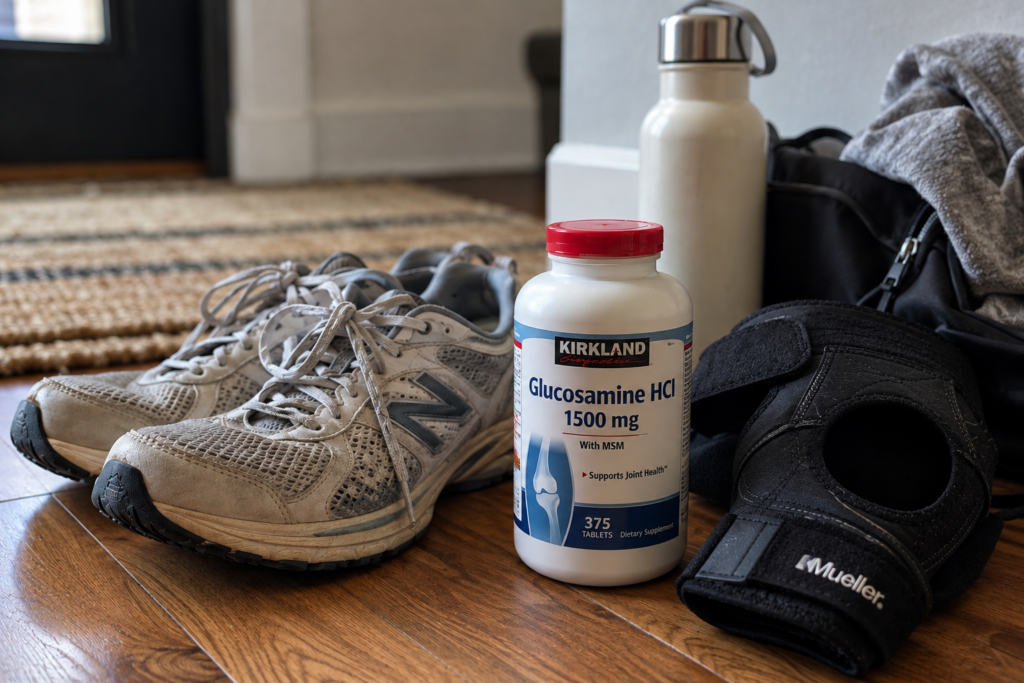
Dr. Appleton agrees. “Maybe glucosamine does actually worsen cognition and memory over time. But it’s also possible that people who took glucosamine in this study were just, for whatever reason, also at a higher risk of developing dementia,” he says.
The researchers themselves acknowledged this limitation. “Since our study was based on patient records rather than a controlled experiment in people, it cannot show that glucosamine causes faster cognitive decline — only that there’s an association,” wrote Ramon Sun, Ph.D., a biochemist at the University of Florida and senior author of the study, in an article for The Conversation.
For Dr. Kwoh, however, the study adds another reason to question whether glucosamine is worth taking. “Any database study is going to have certain limitations and caveats to it,” he says, “The bottom line is there’s not good evidence that glucosamine really benefits your knees or other joints, and this [new study] suggests that if there’s already dementia, then it’s probably not a good idea [to take the supplement].”
“I think there’s a huge unmet need to try to improve the suffering that people have living with osteoarthritis,” says Dr. Appleton.
For now, he and the other rheumatologists MedShadow spoke with agree that one of the most effective tools for protecting joint health and managing osteoarthritis is also one of the simplest: staying physically active.
“Our joints are designed to be moved, and if they’re not moving, the data is very clear: [Arthritis] will progress,” continues Dr. Appleton. “The most common question people ask me in the clinic is ‘Should I stop exercising?’ And it’s a natural question because they might be in pain. [But] no, you shouldn’t stop. Maybe adjust what you’re doing so it doesn’t hurt as much. But the worst thing you can do is stop moving.”
Dr. Kwoh agrees and recommends that people work with a physical therapist who specializes in osteoarthritis or musculoskeletal health and can help develop an exercise plan tailored to their specific joints, symptoms, and abilities.
Additionally, acupuncture, a practice rooted in traditional Chinese medicine, is conditionally recommended by the American College of Rheumatology and Arthritis Foundation for people with knee, hip, or hand osteoarthritis, although the strongest evidence of benefit is for knee osteoarthritis. By contrast, the organizations strongly recommend against glucosamine for those forms of osteoarthritis.
When dealing with persistent pain, an important caveat to remember is that it may not always be caused by arthritis, notes Lillie Rosenthal, D.O., an osteopathic physician and medical advisor for MedShadow. Poor posture, excess weight, sleeping positions, and other factors can contribute to pain and may benefit from non-drug interventions such as dietary changes, ergonomic adjustments, or exercise. Dr. Rosenthal emphasizes the importance of a proper evaluation to identify the underlying cause of joint pain rather than self-treating with dietary supplements.
For Dr. Kwoh, that gets at another potential downside of glucosamine: taking a supplement that doesn’t help may keep people from doing the harder things that do. “That’s really the downside of taking something that doesn’t work,” he says.
Kent Kwoh, M.D., has no conflict of interest related to glucosamine. He has provided consulting services to a number of healthcare and pharmaceutical companies developing osteoarthritis treatment, including Cigna Healthcare, Apos Health, TLC Biosciences, Kolon Tissue Gene, Pleryon Therapeutics, and Envilex Therapeutic LTD.
Tom Appleton, M.D., does not have any conflict of interest related to glucosamine. He has provided consulting services to various companies developing arthritis medications, including Novartis, Pfizer, and Eli Lilly.
DISCLAIMER: MedShadow provides information and resources related to medications, their effects, and potential side effects. However, it is important to note that we are not a substitute for professional medical advice, diagnosis, or treatment. The content on our site is intended for educational and informational purposes only. Individuals dealing with medical conditions or symptoms should seek guidance from a licensed healthcare professional, such as a physician or pharmacist, who can provide personalized medical advice tailored to their specific circumstances.
While we strive to ensure the accuracy and reliability of the information presented on MedShadow, we cannot guarantee its completeness or suitability for any particular individual’s medical needs. Therefore, we strongly encourage users to consult with qualified healthcare professionals regarding any health-related concerns or decisions. By accessing and using MedShadow, you acknowledge and agree that the information provided on the site is not a substitute for professional medical advice and that you should always consult with a qualified healthcare provider for any medical concerns.

Help fund our fight for improved medication safety and transparency by supporting our independent journalism.
Give NowWe seek to create a world where there are safer medications for all and where all people are fully informed about their medication benefits and side effects, using our explanatory and investigative journalism to both inform and stimulate public discussion to drive toward solutions.
Stream our library on demand, including insights on generic drugs and pain management, straight from experts.
WATCH NOWMedShadow.org is dedicated to empowering people with our evidence-based journalism about the safest ways to take over-the-counter (OTC) and prescription (Rx) medications.
We also seek to stimulate public discussion about potential improvements to drug research, manufacturing and distribution processes. and also to encourage the improvement of processes to ensure that we are all better protected.
As a result, we encourage other nonprofit newsrooms, mission-aligned outlets, and advocacy organizations to republish our original content under the following conditions:
1. We Are Credited Fully and Clearly
You must include the byline and credit MedShadow.org as the original publisher. Please include a link to the original article at the top or bottom of the piece. Use the following attribution:
This article was originally published by MedShadow, a nonprofit foundation that focuses on the safest ways to take over-the-counter and prescription medications.
2. Our Content Isn’t Edited Without Permission
You may make small changes for clarity, such as adjusting headlines, subheadings, or transitions, but you may not change the core meaning, tone, or intent of the article. For substantive edits, email us at republish@medshadow.org for review and approval.
3. You Do Not Sell Or Use Our Content Commercially
Our work is free to share, but it may not be sold, monetized, or repurposed for commercial gain. You may not republish our articles behind a paywall or in publications whose primary purpose is advertising or product promotion. You may not place drug or supplement advertising adjacent to our story.
4. Photos, Graphics, and Multimedia Are Not Used Without Permission
Only the text of the article is available for republication. Images, graphics, and videos may not be reused without explicit written permission, unless they are clearly marked as Creative Commons licensed. Contact us if you’d like to request reuse of a visual asset.
If you’re unsure whether your intended use falls within these guidelines, or would like to discuss a formal syndication or licensing arrangement, please email: republish@medshadow.org
We want our journalism to reach as many people as possible, especially those making critical decisions about medications and health.
For website editors
Copy the article body, including its formatting and links, then paste it into your publishing system. Add the byline and required credit described in these guidelines.
<!-- wp:paragraph -->
<p>In 2007, Minute Maid, the Coca-Cola Company’s fruit juice brand, <a href="https://www.nutraceuticalsworld.com/breaking-news/new-minute-maid-products/">launched a new product</a> called Minute Maid Active, an orange juice it claimed could “help protect cartilage and joints from daily wear.”</p>
<!-- /wp:paragraph -->
<!-- wp:paragraph -->
<p>The secret ingredient wasn’t another fruit or vitamin. The juice was fortified with glucosamine hydrochloride — a form of glucosamine that had become one of the <a href="https://jamanetwork.com/journals/jama/fullarticle/183125">most widely used dietary supplements</a> in the U.S.</p>
<!-- /wp:paragraph -->
<!-- wp:paragraph -->
<p>Shortly before sales began, the company approached a team of researchers at the University of Arizona, led by <a href="https://arthritis.arizona.edu/c-kent-kwoh-md-macr">Kent Kwoh, M.D.</a>, a rheumatologist and director of the university’s Arthritis Center at the time, to conduct a <a href="https://clinicaltrials.gov/study/NCT00377286?tab=study">clinical trial</a> examining whether glucosamine could reduce cartilage damage or improve joint health.</p>
<!-- /wp:paragraph -->
<!-- wp:paragraph -->
<p>Up until that point, despite its widespread use, studies of glucosamine had <a href="https://pmc.ncbi.nlm.nih.gov/articles/PMC3629992/">produced conflicting results</a>, likely due to how researchers measured efficacy.</p>
<!-- /wp:paragraph -->
<!-- wp:paragraph -->
<p>Many studies relied on changes in pain to determine whether glucosamine worked — a notoriously difficult outcome to assess, says <a href="https://www.med.upenn.edu/apps/faculty/index.php/g275/p10086">Sharon Kolasinski, M.D.</a>, a rheumatologist at the University of Pennsylvania.</p>
<!-- /wp:paragraph -->
<!-- wp:paragraph -->
<p>“It is in the nature of arthritis that sometimes it's more painful, sometimes it's less painful. If you look at people over a relatively short period of time, some of them [are] going to get better whether you gave them anything or not,” she says.</p>
<!-- /wp:paragraph -->
<!-- wp:paragraph -->
<p>Dr. Kwoh and his team decided to look for something they could measure more objectively. Rather than relying on participants’ pain reports, they used MRI scans to look for changes in the cartilage in their knees. About 200 people participated in the 24-week trial. Half received a daily lemonade containing 1,500 mg of glucosamine hydrochloride, while the other half received a placebo lemonade without glucosamine.</p>
<!-- /wp:paragraph -->
<!-- wp:paragraph -->
<p>“We looked for signal[s] that would suggest that there was a benefit,” Dr. Kwoh says, “and we weren’t able to show any.” </p>
<!-- /wp:paragraph -->
<!-- wp:paragraph -->
<p>By the time Dr. Kwoh and his team published their <a href="https://pubmed.ncbi.nlm.nih.gov/24616448/">results</a> in 2014, Minute Maid Active had disappeared from store shelves. Why the company discontinued the juice is unclear, but while Minute Maid’s experiment with glucosamine was short-lived, enthusiasm for the supplement itself has endured. Millions of Americans still take glucosamine in hopes of protecting their joints or easing arthritis symptoms.</p>
<!-- /wp:paragraph -->
<!-- wp:paragraph -->
<p>Now, new research suggests that for some people, glucosamine may not simply fail to help — it could be doing more harm than good.</p>
<!-- /wp:paragraph -->
<!-- wp:heading -->
<h2 class="wp-block-heading">Why So Many Still Turn to Glucosamine</h2>
<!-- /wp:heading -->
<!-- wp:paragraph -->
<p>According to MedShadow’s analysis of the 2021-2023 National Health and Nutrition Examination Survey (NHANES) by the Centers for Disease Control and Prevention, about 1.6% of US adults — roughly 4.3 million people — <a href="https://www.cdc.gov/nchs/products/databriefs/db561.htm">take glucosamine</a> supplements daily. Many take them hoping to alleviate joint pain, particularly from <a href="https://link.springer.com/article/10.1007/s40141-026-00538-5">osteoarthritis</a>.</p>
<!-- /wp:paragraph -->
<!-- wp:paragraph -->
<p>“People are looking for something that is effective, [without] the side effects associated with a lot of the medications we use to treat arthritis,” says Dr. Kolasinski. </p>
<!-- /wp:paragraph -->
<!-- wp:paragraph -->
<p>Although glucosamine is marketed broadly for “joint health,” most research has focused on osteoarthritis, a condition in which joints gradually break down, causing pain, stiffness, and swelling. There is currently no treatment that targets the underlying inflammatory process in this type of arthritis, says <a href="https://www.schulich.uwo.ca/physpharm//people/faculty/appleton_tom.html">Tom Appleton, M.D.</a>, a rheumatologist who conducts osteoarthritis research at Western University in Ontario, Canada.</p>
<!-- /wp:paragraph -->
<!-- wp:paragraph -->
<p>Non-steroidal anti-inflammatory drugs (NSAIDs), like ibuprofen and naproxen, are <a href="https://pmc.ncbi.nlm.nih.gov/articles/PMC8586433/">the first-line therapies</a> for alleviating pain in people with osteoarthritis. These medications “can be very helpful to a lot of patients with osteoarthritis as well as aches and pain for other reasons,” says Dr. Kolasinski. “The problem is that the more you are exposed to a medicine, the more potential you have to have a side effect, and if you have some pre-existing conditions — like heart disease, kidney disease, having had an ulcer before — you are at higher risk <a href="https://bjgp.org/content/66/645/172">for side effects</a>. So we often recommend using these medications at the lowest possible doses for the shortest period of time.”</p>
<!-- /wp:paragraph -->
<!-- wp:myplugin/custom-alignment-block {"align":"right"} -->
<div class="wp-block-myplugin-custom-alignment-block alignright"><h2>The Placebo Effect</h2><p>The placebo effect refers to a beneficial biological outcome that a person experiences when receiving a supposedly ineffective treatment, such as a pill without any active ingredients. According to psychologists, this effect can be traced to the individual’s neurobiological and psychological expectations of the treatment. This effect is not restricted to inactive compounds, such as placebo pills. It can also influence the efficacy and tolerability of pharmaceuticals or medical interventions. <br><br>The extent of the placebo effect can vary from person to person, but the scientific basis for these differences is not well understood</p></div>
<!-- /wp:myplugin/custom-alignment-block -->
<!-- wp:paragraph -->
<p>The problem, she continues, is that osteoarthritis is a long-term condition, with many people living with it for decades. “Patients struggle with taking medications for long periods of time, doctors struggle with prescribing medications over long periods of time. So, why is it that people seek dietary supplements? They hope for something safer that's effective.” </p>
<!-- /wp:paragraph -->
<!-- wp:paragraph -->
<p>For years, “safe and effective" is what glucosamine supplements promised. But as the evidence has accumulated, that promise has become harder to support. <a href="https://pmc.ncbi.nlm.nih.gov/articles/PMC3086604/">Study</a> after <a href="https://www.nejm.org/doi/full/10.1056/NEJMoa052771">study</a> has failed to find convincing evidence that glucosamine meaningfully relieves joint pain or protects cartilage, with questions about its effectiveness persisting across <a href="https://www.mdpi.com/2072-6643/17/15/2491">different formulations</a>.</p>
<!-- /wp:paragraph -->
<!-- wp:paragraph -->
<p>“The broad conclusion from the medical literature is that it's not effective at treating pain, [slowing] the diseases, or improving cartilage,” says Dr. Kolasinski. Any positive outcomes, she adds, can likely be attributed to the placebo effect.</p>
<!-- /wp:paragraph -->
<!-- wp:heading -->
<h2 class="wp-block-heading">A New Risk: Glucosamine’s Association With Alzheimer’s Disease</h2>
<!-- /wp:heading -->
<!-- wp:paragraph -->
<p>Last June, researchers at the University of Florida <a href="https://www.nature.com/articles/s42255-026-01538-4?utm_source=chatgpt.com">published a study</a> raising new concerns about glucosamine. The researchers were investigating hyperglycosylation — an abnormal increase in the attachment of sugar molecules called glycans to proteins — as a potential contributor to the progression of Alzheimer’s disease.</p>
<!-- /wp:paragraph -->
<!-- wp:paragraph -->
<p>Because glucosamine is an amino sugar involved in glycan production and can cross the blood-brain barrier, the researchers wondered whether consuming more of it could make matters worse.</p>
<!-- /wp:paragraph -->
<!-- wp:paragraph -->
<p>When they added glucosamine to the diets of mice with Alzheimer’s disease, the animals’ cognitive impairments worsened.</p>
<!-- /wp:paragraph -->
<!-- wp:paragraph -->
<p>The researchers then looked for signs of the same effect in humans. They scoured electronic health records from roughly 24,000 people with dementia and 41,000 with mild cognitive impairment (MCI). Among those with MCI, people who took glucosamine supplements were <a href="https://theconversation.com/glucosamine-supplements-may-speed-memory-loss-from-alzheimers-new-research-shows-282467">25% more likely to later be diagnosed with Alzheimer’s disease</a> than those who did not.</p>
<!-- /wp:paragraph -->
<!-- wp:paragraph -->
<p></p>
<!-- /wp:paragraph -->
<!-- wp:paragraph -->
<p>The finding was “surprising,” says Dr. Kolasinski. But she cautions that the study cannot establish whether glucosamine itself caused the faster progression. The study also did not show that glucosamine would harm healthy adults or those without dementia.</p>
<!-- /wp:paragraph -->
<!-- wp:image {"id":34991,"sizeSlug":"large","linkDestination":"none"} -->
<figure class="wp-block-image size-large"><img src="https://medshadow.org/wp-content/uploads/2026/09/ChatGPT-Image-Sep-23-2026-03_37_32-PM-1024x683.png" alt="" class="wp-image-34991"/></figure>
<!-- /wp:image -->
<!-- wp:paragraph -->
<p></p>
<!-- /wp:paragraph -->
<!-- wp:paragraph -->
<p>Dr. Appleton agrees. “Maybe glucosamine does actually worsen cognition and memory over time. But it's also possible that people who took glucosamine in this study were just, for whatever reason, also at a higher risk of developing dementia,” he says. </p>
<!-- /wp:paragraph -->
<!-- wp:paragraph -->
<p>The researchers themselves acknowledged this limitation. “Since our study was based on patient records rather than a controlled experiment in people, it cannot show that glucosamine causes faster cognitive decline — only that there’s an association,” wrote Ramon Sun, Ph.D., a biochemist at the University of Florida and senior author of the study, in an <a href="https://theconversation.com/glucosamine-supplements-may-speed-memory-loss-from-alzheimers-new-research-shows-282467">article for <em>The Conversation</em></a>.</p>
<!-- /wp:paragraph -->
<!-- wp:paragraph -->
<p>For Dr. Kwoh, however, the study adds another reason to question whether glucosamine is worth taking. “Any database study is going to have certain limitations and caveats to it,” he says, “The bottom line is there's not good evidence that glucosamine really benefits your knees or other joints, and this [new study] suggests that if there's already dementia, then it's probably not a good idea [to take the supplement].” </p>
<!-- /wp:paragraph -->
<!-- wp:heading -->
<h2 class="wp-block-heading">What Actually Helps With Osteoarthritis?</h2>
<!-- /wp:heading -->
<!-- wp:paragraph -->
<p>“I think there's a huge unmet need to try to improve the suffering that people have living with osteoarthritis,” says Dr. Appleton. </p>
<!-- /wp:paragraph -->
<!-- wp:paragraph -->
<p>For now, he and the other rheumatologists MedShadow spoke with agree that one of the most effective tools for protecting joint health and managing osteoarthritis is also one of the simplest: staying physically active.</p>
<!-- /wp:paragraph -->
<!-- wp:paragraph -->
<p>“Our joints are designed to be moved, and if they're not moving, the data is very clear: [Arthritis] will progress,” continues Dr. Appleton. “The most common question people ask me in the clinic is ‘Should I stop exercising?’ And it's a natural question because they might be in pain. [But] no, you shouldn't stop. Maybe adjust what you're doing so it doesn't hurt as much. But the worst thing you can do is stop moving.”</p>
<!-- /wp:paragraph -->
<!-- wp:paragraph -->
<p>Dr. Kwoh agrees and recommends that people work with a physical therapist who specializes in osteoarthritis or musculoskeletal health and can <a href="https://pmc.ncbi.nlm.nih.gov/articles/PMC9614272/">help develop an exercise plan</a> tailored to their specific joints, symptoms, and abilities.</p>
<!-- /wp:paragraph -->
<!-- wp:paragraph -->
<p>Additionally, <a href="https://medshadow.org/integrative-health/other-treatments/can-acupuncture-help-osteoarthritis-pain/">acupuncture</a>, a practice rooted in traditional Chinese medicine, is <a href="https://www.rheumatologyadvisor.com/features/2019-acr-arthritis-foundation-guidelines-for-hand-hip-and-knee-osteoarthritis-management/">conditionally recommended</a> by the American College of Rheumatology and Arthritis Foundation for people with knee, hip, or hand osteoarthritis, although the strongest evidence of benefit is for knee osteoarthritis. By contrast, the organizations <a href="https://www.nccih.nih.gov/health/glucosamine-and-chondroitin-for-osteoarthritis-what-you-need-to-know">strongly recommend <em>against</em></a> glucosamine for those forms of osteoarthritis.</p>
<!-- /wp:paragraph -->
<!-- wp:paragraph -->
<p>When dealing with persistent pain, an important caveat to remember is that it may not always be caused by arthritis, notes <a href="https://drlillierosenthal.com/">Lillie Rosenthal, D.O.</a>, an osteopathic physician and medical advisor for MedShadow. Poor posture, excess weight, sleeping positions, and other factors can contribute to pain and may benefit from non-drug interventions such as dietary changes, ergonomic adjustments, or exercise. Dr. Rosenthal emphasizes the importance of a proper evaluation to identify the underlying cause of joint pain rather than self-treating with dietary supplements.</p>
<!-- /wp:paragraph -->
<!-- wp:paragraph -->
<p>For Dr. Kwoh, that gets at another potential downside of glucosamine: taking a supplement that doesn’t help may keep people from doing the harder things that do. “That’s really the downside of taking something that doesn’t work,” he says.</p>
<!-- /wp:paragraph -->
<!-- wp:heading {"level":3} -->
<h3 class="wp-block-heading">Disclosures</h3>
<!-- /wp:heading -->
<!-- wp:paragraph -->
<p>Kent Kwoh, M.D., has no conflict of interest related to glucosamine. He has provided consulting services to a number of healthcare and pharmaceutical companies developing osteoarthritis treatment, including Cigna Healthcare, Apos Health, TLC Biosciences, Kolon Tissue Gene, Pleryon Therapeutics, and Envilex Therapeutic LTD.</p>
<!-- /wp:paragraph -->
<!-- wp:paragraph -->
<p>Tom Appleton, M.D., does not have any conflict of interest related to glucosamine. He has provided consulting services to various companies developing arthritis medications, including Novartis, Pfizer, and Eli Lilly.</p>
<!-- /wp:paragraph -->We think it’s invaluable — and hope you agree. Our work is made possible by donations from readers like you.
We think it’s invaluable — and hope you agree. Our journalism is made possible by donations from readers like you.
As a nonprofit, we don’t take a dime from pharmaceutical or supplement companies. That means we can report on the benefits, risks, and alternatives to prescription and over-the-counter drugs free from corporate pressure or influence.
We've noticed that you're interested in this topic. Would you read a dedicated newsletter about it?