

<!-- wp:heading -->
<h2 class="wp-block-heading">What Is A Thyroid?</h2>
<!-- /wp:heading -->
<!-- wp:paragraph -->
<p>Your thyroid is a gland in the front of your neck that makes two hormones: thyroxine (T4) and triiodothyronine (T3). These hormones guide a variety of crucial functions in your body such as your metabolism, your blood pressure, your digestion, your heart rate, and your ability to maintain a comfortable body temperature.</p>
<!-- /wp:paragraph -->
<!-- wp:embed {"url":"https://www.youtube.com/watch?v=2gfN4viindM","type":"video","providerNameSlug":"youtube","responsive":true,"className":"wp-embed-aspect-16-9 wp-has-aspect-ratio"} -->
<figure class="wp-block-embed is-type-video is-provider-youtube wp-block-embed-youtube wp-embed-aspect-16-9 wp-has-aspect-ratio"><div class="wp-block-embed__wrapper">
https://www.youtube.com/watch?v=2gfN4viindM
</div></figure>
<!-- /wp:embed -->
<!-- wp:paragraph -->
<p>Your hypothalamus, a part of your brain, and your pituitary gland, a small gland right below the hypothalamus, typically tell your thyroid how much of each hormone to produce.</p>
<!-- /wp:paragraph -->
<!-- wp:heading -->
<h2 class="wp-block-heading">Symptoms of <a href="https://medshadow.org/autoimmune-disease/#Hashimoto%E2%80%99s_Thyroiditis_and_Grave%E2%80%99s_Disease" target="_blank" rel="noreferrer noopener">Thyroid Disorders</a></h2>
<!-- /wp:heading -->
<!-- wp:paragraph -->
<p>A variety of conditions, from autoimmune diseases to cancer to side effects of medications, can change the thyroid’s production of thyroid hormones. Some conditions cause you to make too much thyroid hormone, while others prevent it from making enough.</p>
<!-- /wp:paragraph -->
<!-- wp:acf/subscribe-box {"name":"acf/subscribe-box","data":[],"mode":"preview"} /-->
<!-- wp:paragraph -->
<p>Your hypothalamus, a part of your brain, and your pituitary gland, a small gland right below the hypothalamus, signal to your thyroid when it needs to start or stop producing each hormone, based on your current levels. Problems in any of these three areas can trigger an imbalance of thyroid hormones.</p>
<!-- /wp:paragraph -->
<!-- wp:paragraph -->
<p>The symptoms of thyroid disorders are sometimes common in people who don’t have thyroid disorders. It can be difficult to determine what specifically your thyroid is imbalancing. Your doctor can do a blood test to check your thyroid hormone levels.</p>
<!-- /wp:paragraph -->
<!-- wp:embed {"url":"https://www.youtube.com/watch?v=knI3-e_cjjc","type":"video","providerNameSlug":"youtube","responsive":true,"className":"wp-embed-aspect-16-9 wp-has-aspect-ratio"} -->
<figure class="wp-block-embed is-type-video is-provider-youtube wp-block-embed-youtube wp-embed-aspect-16-9 wp-has-aspect-ratio"><div class="wp-block-embed__wrapper">
https://www.youtube.com/watch?v=knI3-e_cjjc
</div></figure>
<!-- /wp:embed -->
<!-- wp:heading {"level":4} -->
<h4 class="wp-block-heading" id="symptoms-of-underactive-thyroid-hypothyroidism">Symptoms of Underactive Thyroid (Hypothyroidism)</h4>
<!-- /wp:heading -->
<!-- wp:image {"id":367,"align":"right"} -->
<figure class="wp-block-image alignright"><img src="https://medshadow.org/wp-content/uploads/2025/07/FC5014105-MedShadow-Foundation-Thyroid-IG-Carousel__5-300x300.webp" alt="" class="wp-image-367"/></figure>
<!-- /wp:image -->
<!-- wp:paragraph -->
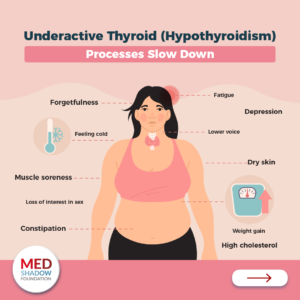
<p>When your thyroid is underactive, it isn’t making enough thyroid hormones. Many processes in your body can slow down as a result. The condition affects nearly <a href="https://medshadow.org/synthroid-side-effects/" target="_blank" rel="noreferrer noopener">5% of the population.</a></p>
<!-- /wp:paragraph -->
<!-- wp:heading {"level":4} -->
<h4 class="wp-block-heading" id="hypothyroidism-can-cause-symptoms-including">Hypothyroidism can cause <a href="https://my.clevelandclinic.org/health/diseases/12120-hypothyroidism" target="_blank" rel="noreferrer noopener">symptoms</a> including:</h4>
<!-- /wp:heading -->
<!-- wp:list -->
<ul class="wp-block-list"><!-- wp:list-item -->
<li>Fatigue</li>
<!-- /wp:list-item -->
<!-- wp:list-item -->
<li>Feeling cold</li>
<!-- /wp:list-item -->
<!-- wp:list-item -->
<li>Dry skin</li>
<!-- /wp:list-item -->
<!-- wp:list-item -->
<li>Forgetfulness</li>
<!-- /wp:list-item -->
<!-- wp:list-item -->
<li>Constipation</li>
<!-- /wp:list-item -->
<!-- wp:list-item -->
<li>Weight gain</li>
<!-- /wp:list-item -->
<!-- wp:list-item -->
<li>Muscle soreness</li>
<!-- /wp:list-item -->
<!-- wp:list-item -->
<li>Loss of interest in sex</li>
<!-- /wp:list-item -->
<!-- wp:list-item -->
<li>Lower voice</li>
<!-- /wp:list-item -->
<!-- wp:list-item -->
<li>Depression</li>
<!-- /wp:list-item -->
<!-- wp:list-item -->
<li>High cholesterol</li>
<!-- /wp:list-item --></ul>
<!-- /wp:list -->
<!-- wp:heading {"level":4} -->
<h4 class="wp-block-heading" id="causes-of-hypothyroidism">Causes of Hypothyroidism</h4>
<!-- /wp:heading -->
<!-- wp:heading {"level":4} -->
<h4 class="wp-block-heading" id="hashimotos-disease">Hashimoto’s Disease</h4>
<!-- /wp:heading -->
<!-- wp:paragraph -->
<p>Hashimoto’s disease is the most common cause of hypothyroidism. It is an autoimmune disorder in which your immune cells attack your thyroid tissue, thwarting its ability to produce hormones.</p>
<!-- /wp:paragraph -->
<!-- wp:heading {"level":4} -->
<h4 class="wp-block-heading" id="surgery">Surgery</h4>
<!-- /wp:heading -->
<!-- wp:paragraph -->
<p>Having had part or all of your thyroid removed during surgery to remove cysts or cancer can cause hypothyroidism. Without this regulating organ, your body cannot balance crucial hormones.</p>
<!-- /wp:paragraph -->
<!-- wp:paragraph -->
<p>Some people may develop hypothyroidism without having Hashimoto’s disease or surgery.</p>
<!-- /wp:paragraph -->
<!-- wp:heading {"level":4} -->
<h4 class="wp-block-heading" id="drugs-to-treat-hypothyroidism">Drugs to Treat Hypothyroidism</h4>
<!-- /wp:heading -->
<!-- wp:paragraph -->
<p>If you don’t make enough thyroid hormone, your doctor will likely prescribe synthetic thyroid hormones for you to take. The drugs don’t cure the disorder, they just replace the hormone your body isn’t making, so most people take thyroid hormones long-term.</p>
<!-- /wp:paragraph -->
<!-- wp:heading {"level":4} -->
<h4 class="wp-block-heading" id="synthroid-levothyroxine-sodium"><a href="https://medshadow.org/synthroid-side-effects/" target="_blank" rel="noreferrer noopener">Synthroid (Levothyroxine Sodium)</a></h4>
<!-- /wp:heading -->
<!-- wp:paragraph -->
<p>Synthroid is the brand name of a synthetic thyroid hormone. Your healthcare provider may need to adjust your dose to find the right balance for you. Taking too high of a dose can cause symptoms of hyperthyroidism, or an overactive thyroid, such as:</p>
<!-- /wp:paragraph -->
<!-- wp:list -->
<ul class="wp-block-list"><!-- wp:list-item -->
<li>Anxiety</li>
<!-- /wp:list-item -->
<!-- wp:list-item -->
<li>Sleeping problems</li>
<!-- /wp:list-item -->
<!-- wp:list-item -->
<li>Rapid heart rate</li>
<!-- /wp:list-item --></ul>
<!-- /wp:list -->
<!-- wp:paragraph -->
<p>Over the long term, taking too much synthroid can cause:</p>
<!-- /wp:paragraph -->
<!-- wp:list -->
<ul class="wp-block-list"><!-- wp:list-item -->
<li>Heart problems</li>
<!-- /wp:list-item -->
<!-- wp:list-item -->
<li>Weight loss</li>
<!-- /wp:list-item -->
<!-- wp:list-item -->
<li>Osteoporosis</li>
<!-- /wp:list-item --></ul>
<!-- /wp:list -->
<!-- wp:paragraph -->
<p>Synthoid can also interact with several other medications or vitamins you may be taking. Be sure to discuss any medications or supplements with your provider.</p>
<!-- /wp:paragraph -->
<!-- wp:heading {"level":4} -->
<h4 class="wp-block-heading" id="symptoms-of-overactive-thyroid-hyperthyroidism">Symptoms of Overactive Thyroid (Hyperthyroidism)</h4>
<!-- /wp:heading -->
<!-- wp:image {"id":364,"align":"right"} -->
<figure class="wp-block-image alignright"><img src="https://medshadow.org/wp-content/uploads/2025/07/FC5014105-MedShadow-Foundation-Thyroid-IG-Carousel__6-300x300.webp" alt="" class="wp-image-364"/></figure>
<!-- /wp:image -->
<!-- wp:paragraph -->
<p>When your thyroid is overactive, it’s making too much thyroid hormone and can speed some of your body’s processes up. It’s much less common than hypothyroidism. Approximately, only 1% of the population has an overactive thyroid.</p>
<!-- /wp:paragraph -->
<!-- wp:heading {"level":4} -->
<h4 class="wp-block-heading" id="symptoms-of-hyperthyroidism-include">Symptoms of <a href="https://my.clevelandclinic.org/health/diseases/14129-hyperthyroidism" target="_blank" rel="noreferrer noopener">hyperthyroidism</a> include:</h4>
<!-- /wp:heading -->
<!-- wp:list -->
<ul class="wp-block-list"><!-- wp:list-item -->
<li>Rapid heart rate</li>
<!-- /wp:list-item -->
<!-- wp:list-item -->
<li>Unexplained weight loss</li>
<!-- /wp:list-item -->
<!-- wp:list-item -->
<li>Increased appetite</li>
<!-- /wp:list-item -->
<!-- wp:list-item -->
<li>An enlarged thyroid in your neck</li>
<!-- /wp:list-item -->
<!-- wp:list-item -->
<li>More frequent bowel movements</li>
<!-- /wp:list-item -->
<!-- wp:list-item -->
<li>Intolerance to heat</li>
<!-- /wp:list-item -->
<!-- wp:list-item -->
<li>Sleeping problems</li>
<!-- /wp:list-item --></ul>
<!-- /wp:list -->
<!-- wp:heading {"level":4} -->
<h4 class="wp-block-heading" id="causes-of-hyperthyroidism">Causes of Hyperthyroidism</h4>
<!-- /wp:heading -->
<!-- wp:heading {"level":4} -->
<h4 class="wp-block-heading" id="graves-disease">Grave’s Disease</h4>
<!-- /wp:heading -->
<!-- wp:paragraph -->
<p>Grave’s disease is an autoimmune condition in which the immune system attacks the thyroid and causes it to make too much thyroid hormone.</p>
<!-- /wp:paragraph -->
<!-- wp:heading {"level":4} -->
<h4 class="wp-block-heading" id="thyroid-nodules"><a href="https://www.mayoclinic.org/diseases-conditions/thyroid-nodules/symptoms-causes/syc-20355262" target="_blank" rel="noreferrer noopener">Thyroid Nodules</a></h4>
<!-- /wp:heading -->
<!-- wp:paragraph -->
<p>Fluid-filled nodules can form on your thyroid gland. Often, they are harmless. Other times, they can cause your thyroid to make too much thyroid hormone. In rare instances, they may be <a href="https://www.cancer.org/cancer/types/thyroid-cancer/about/what-is-thyroid-cancer.html" target="_blank" rel="noreferrer noopener">cancerous</a>.</p>
<!-- /wp:paragraph -->
<!-- wp:heading {"level":4} -->
<h4 class="wp-block-heading" id="thyroiditis"><a href="https://my.clevelandclinic.org/health/diseases/15294-postpartum-thyroiditis" target="_blank" rel="noreferrer noopener">Thyroiditis</a></h4>
<!-- /wp:heading -->
<!-- wp:paragraph -->
<p>Thyroiditis is inflammation of the thyroid. It can happen for a variety of reasons, including having recently given birth. Postpartum thyroiditis can happen within a year of giving birth.</p>
<!-- /wp:paragraph -->
<!-- wp:heading {"level":4} -->
<h4 class="wp-block-heading" id="drugs-to-treat-hyperthyroidism">Drugs to Treat Hyperthyroidism</h4>
<!-- /wp:heading -->
<!-- wp:paragraph -->
<p>The drugs used to treat an overactive thyroid lower your production of thyroid hormones. If your overactive thyroid has caused an <a href="https://medshadow.org/heart-disease-prevention-treatments-and-side-effects/#Heart_Rhythm_Disorders_arrhythmias" target="_blank" rel="noreferrer noopener">irregular heartbeat</a>, you may also be prescribed <a href="https://medshadow.org/heart-disease-prevention-treatments-and-side-effects/#Side_Effects_of_Common_Medications_for_Heart_Disease" target="_blank" rel="noreferrer noopener">beta blockers</a>.</p>
<!-- /wp:paragraph -->
<!-- wp:heading {"level":4} -->
<h4 class="wp-block-heading" id="side-effects-of-antithyroid-drugs">Side Effects of Antithyroid Drugs</h4>
<!-- /wp:heading -->
<!-- wp:paragraph -->
<p>The most commonly prescribed anti-thyroid medications are thiamazole (methimazole) and carbimazole. Occasionally, doctors may prescribe propylthiouracil. Your doctor may be able to take you off of the medication after a year or two of treatment, if they believe your hyperthyroidism may be in remission.</p>
<!-- /wp:paragraph -->
<!-- wp:paragraph -->
<p><a href="https://www.ncbi.nlm.nih.gov/books/NBK499541/#:~:text=The%20main%20medications%20used%20for,tolerated%2C%20propylthiouracil%20is%20sometimes%20used." target="_blank" rel="noreferrer noopener">Side effects</a> of these drugs include:</p>
<!-- /wp:paragraph -->
<!-- wp:list -->
<ul class="wp-block-list"><!-- wp:list-item -->
<li>Rashes</li>
<!-- /wp:list-item -->
<!-- wp:list-item -->
<li>Itching</li>
<!-- /wp:list-item -->
<!-- wp:list-item -->
<li>Swelling</li>
<!-- /wp:list-item -->
<!-- wp:list-item -->
<li>Nausea and vomiting</li>
<!-- /wp:list-item -->
<!-- wp:list-item -->
<li>Changes in taste</li>
<!-- /wp:list-item -->
<!-- wp:list-item -->
<li>Joint problems</li>
<!-- /wp:list-item -->
<!-- wp:list-item -->
<li>Fever (which can be a sign of a rare blood disorder that impacts <a href="https://www.uptodate.com/contents/antithyroid-drugs-beyond-the-basics#:~:text=Minor%20side%20effects%20%E2%80%94%20Up%20to,taste%2C%20nausea%2C%20and%20vomiting." target="_blank" rel="noreferrer noopener">one out of every 200 to500 patients</a>. Contact your doctor right away.)</li>
<!-- /wp:list-item --></ul>
<!-- /wp:list -->
<!-- wp:paragraph -->
<p>Some rarer, but serious side effects include:</p>
<!-- /wp:paragraph -->
<!-- wp:list -->
<ul class="wp-block-list"><!-- wp:list-item -->
<li>Liver damage</li>
<!-- /wp:list-item -->
<!-- wp:list-item -->
<li>Anemia</li>
<!-- /wp:list-item -->
<!-- wp:list-item -->
<li>Pancreatitis</li>
<!-- /wp:list-item -->
<!-- wp:list-item -->
<li>Inflammation of the blood vessels</li>
<!-- /wp:list-item --></ul>
<!-- /wp:list -->
<!-- wp:heading {"level":4} -->
<h4 class="wp-block-heading" id="what-are-early-warning-signs-of-thyroid-problems">What Are Early Warning Signs of Thyroid Problems?</h4>
<!-- /wp:heading -->
<!-- wp:paragraph -->
<p>Thyroid issues are most <a href="https://www.nhs.uk/conditions/overactive-thyroid-hyperthyroidism/#:~:text=An%20overactive%20thyroid%20can%20affect,and%2040%20years%20of%20age." target="_blank" rel="noreferrer noopener">commonly diagnosed</a> in women between the ages of 20 and 40. It’s not always easy to identify when you might have a thyroid problem because the symptoms, such as fatigue and feeling cold, can be so nebulous. In the event that you have thyroid cancer, you might start to notice some swelling in the front of your neck or that your voice is raspier than usual.</p>
<!-- /wp:paragraph -->
<!-- wp:paragraph -->
<p>While it might not identify the underlying cause, your healthcare provider can identify a thyroid problem with a blood test, if you suspect you might have a thyroid problem.</p>
<!-- /wp:paragraph -->
<!-- wp:heading -->
<h2 class="wp-block-heading">Drugs That Can Cause Thyroid Conditions</h2>
<!-- /wp:heading -->
<!-- wp:paragraph -->
<p>Hormones, such as those produced by your thyroid, interact with each other, and many medications you take can disrupt your thyroid or thyroid medication. Some examples of <a href="https://medshadow.org/meds-that-mess-with-your-thyroid/" target="_blank" rel="noreferrer noopener">drugs that might mess with your thyroid</a> include:</p>
<!-- /wp:paragraph -->
<!-- wp:list -->
<ul class="wp-block-list"><!-- wp:list-item -->
<li><a href="https://medshadow.org/the-purple-pill-problem-ppis-and-serious-side-effects/" target="_blank" rel="noreferrer noopener">Proton pump inhibitors (PPIs)</a></li>
<!-- /wp:list-item -->
<!-- wp:list-item -->
<li><a href="https://medshadow.org/a-guide-to-contraception-and-side-effects/" target="_blank" rel="noreferrer noopener">Oral contraceptives</a> and hormone replacement therapy</li>
<!-- /wp:list-item -->
<!-- wp:list-item -->
<li><a href="https://medshadow.org/heart-disease-prevention-treatments-and-side-effects/" target="_blank" rel="noreferrer noopener">Antiarrhythmics</a></li>
<!-- /wp:list-item -->
<!-- wp:list-item -->
<li><a href="https://medshadow.org/need-know-corticosteroids/" target="_blank" rel="noreferrer noopener">Glucocorticoids</a></li>
<!-- /wp:list-item -->
<!-- wp:list-item -->
<li><a href="https://medshadow.org/anti-epileptic-drugs/" target="_blank" rel="noreferrer noopener">Antiepileptics</a></li>
<!-- /wp:list-item -->
<!-- wp:list-item -->
<li><a href="https://medshadow.org/immunotherapy-side-effects/" target="_blank" rel="noreferrer noopener">Checkpoint inhibitors</a></li>
<!-- /wp:list-item -->
<!-- wp:list-item -->
<li><a href="https://medshadow.org/meds-that-mess-with-your-thyroid/" target="_blank" rel="noreferrer noopener">Wegovy</a>, which may raise your risk for medullary thyroid cancer</li>
<!-- /wp:list-item --></ul>
<!-- /wp:list -->
<!-- wp:heading -->
<h2 class="wp-block-heading">Does Birth Control Affect My Thyroid?</h2>
<!-- /wp:heading -->
<!-- wp:paragraph -->
<p>If you have hypothyroidism, and you start taking birth control pills, your healthcare provider may need to <a href="https://health.clevelandclinic.org/can-birth-control-cause-thyroid-problems/#:~:text=Birth%20control%20pills%20(oral%20contraceptives,to%20bind%20to%20thyroid%20hormone." target="_blank" rel="noreferrer noopener">raise your dose of thyroid hormone</a> because the pills increase your levels of a protein that binds to thyroid hormones and prevents your body from using them.</p>
<!-- /wp:paragraph -->
<!-- wp:paragraph -->
<p>Taking oral contraceptives for 10 years or longer increases your risk of developing hypothyroidism, according to a <a href="https://bmjopen.bmj.com/content/11/6/e046607" target="_blank" rel="noreferrer noopener">2021 study</a>.</p>
<!-- /wp:paragraph -->
<!-- wp:heading -->
<h2 class="wp-block-heading">Is Thyroid Cancer Hereditary?</h2>
<!-- /wp:heading -->
<!-- wp:paragraph -->
<p>Certain genes can <a href="https://www.cancer.org/cancer/types/thyroid-cancer/causes-risks-prevention/risk-factors.html" target="_blank" rel="noreferrer noopener">raise your risk</a> of developing thyroid cancer, so if someone in your family has been diagnosed, you are at a greater risk. However, certain experiences, like being treated with radiation, can also cause mutations in the genes in your thyroid that can raise your risk, as well. Other risk factors include not eating enough iodine and carrying excess weight.</p>
<!-- /wp:paragraph -->
<!-- wp:heading -->
<h2 class="wp-block-heading">What Happens to Your Body After Your Thyroid is Removed?</h2>
<!-- /wp:heading -->
<!-- wp:paragraph -->
<p>If your entire thyroid is removed, you’ll need to take <a href="https://my.clevelandclinic.org/health/treatments/7016-thyroidectomy" target="_blank" rel="noreferrer noopener">thyroid hormone therapy</a> since your thyroid is no longer producing hormones. If only part of your thyroid is removed, your healthcare provider may monitor your thyroid hormones with blood tests to determine whether you need to take hormones and at what dose to prevent symptoms of hypothyroidism. Taking the hormones may also help <a href="https://www.cancer.org/cancer/types/thyroid-cancer/treating/thyroid-hormone-therapy.html" target="_blank" rel="noreferrer noopener">prevent cancer</a> in the future.</p>
<!-- /wp:paragraph -->
<!-- wp:heading -->
<h2 class="wp-block-heading">How to Get Off Thyroid Medication Naturally?</h2>
<!-- /wp:heading -->
<!-- wp:paragraph -->
<p>About a <a href="https://www.ncbi.nlm.nih.gov/pmc/articles/PMC8110016/" target="_blank" rel="noreferrer noopener">third of patients</a> with hypothyroid who stop taking the hormones go on to have normal thyroid function. This is most likely if your thyroid activity was “subclinical” or only slightly below normal. If your thyroid was more severely affected, it’s less likely you’ll have normal thyroid activity after you stop taking your medication. If you’d like to stop taking the medication, talk with your doctor about how to taper off slowly and safely, and monitor for signs of your symptoms returning. You should also have regular blood tests to see that your thyroid hormone levels remain in a healthy range.</p>
<!-- /wp:paragraph -->
<!-- wp:paragraph -->
<p>If your thyroid was removed, you will need to take the medications for life.</p>
<!-- /wp:paragraph -->
<!-- wp:paragraph -->
<p>If you have hyperthyroidism, your doctor may suggest stopping the medication after a year or two to see if you remain in remission.</p>
<!-- /wp:paragraph -->
<!-- wp:heading -->
<h2 class="wp-block-heading">Does The Thyroid Cause Weight Gain?</h2>
<!-- /wp:heading -->
<!-- wp:paragraph -->
<p>Weight gain is one of the symptoms of underactive thyroid, hypothyroidism. However this weight gain is unlikely to be <a href="https://www.thyroid.org/thyroid-and-weight/" target="_blank" rel="noreferrer noopener">more than 5 to 10 pounds</a> on average, and is not always made of fat. In many cases, the excess weight is salt and water. Once treated, you may lose up to about 10% of your excess body weight.</p>
<!-- /wp:paragraph -->
<!-- wp:heading -->
<h2 class="wp-block-heading">Thyroid Problems During <a href="https://www.niddk.nih.gov/health-information/endocrine-diseases/pregnancy-thyroid-disease#:~:text=The%20thyroid%20enlarges%20slightly%20in,both%20pregnancy%20and%20thyroid%20disorders." target="_blank" rel="noreferrer noopener">Pregnancy</a></h2>
<!-- /wp:heading -->
<!-- wp:paragraph -->
<p>When you’re not pregnant, a healthy level of thyroid stimulating hormone (TSH) can be anywhere between 0.5 and 5 mU/L, but during your pregnancy your thyroid hormone becomes slightly larger and helps make thyroid hormone for your fetus until it develops enough to make its own. Your healthcare provider will need to monitor your thyroid more closely during your pregnancy.</p>
<!-- /wp:paragraph -->
<!-- wp:paragraph -->
<p>The following <a href="https://www.thyroid.org/patient-thyroid-information/ct-for-patients/volume-7-issue-12/vol-7-issue-12-p-3/#:~:text=The%20Endocrine%20Society%20recommends%20that,L%20in%20the%20remaining%20trimesters." target="_blank" rel="noreferrer noopener">levels of TSH</a> are considered healthy during each trimester:</p>
<!-- /wp:paragraph -->
<!-- wp:list -->
<ul class="wp-block-list"><!-- wp:list-item -->
<li>1st trimester: 0.2-<2.5 mU/L</li>
<!-- /wp:list-item -->
<!-- wp:list-item -->
<li>2nd trimester:0.3-3 mU/L</li>
<!-- /wp:list-item -->
<!-- wp:list-item -->
<li>3rd trimester: 0.3-3 mU/L</li>
<!-- /wp:list-item --></ul>
<!-- /wp:list -->
<!-- wp:paragraph -->
<p>Hypothyroidism and hyperthyroidism during pregnancy cause the same symptoms as they do when you’re not pregnant, but they can also be dangerous for your fetus. Thyroid hormone is important to its development.</p>
<!-- /wp:paragraph -->
<!-- wp:paragraph -->
<p>Untreated thyroid disorders during pregnancy can lead to:</p>
<!-- /wp:paragraph -->
<!-- wp:list -->
<ul class="wp-block-list"><!-- wp:list-item -->
<li>Miscarriage</li>
<!-- /wp:list-item -->
<!-- wp:list-item -->
<li>Low birth weight</li>
<!-- /wp:list-item -->
<!-- wp:list-item -->
<li>Anemia</li>
<!-- /wp:list-item -->
<!-- wp:list-item -->
<li>Early closing of the soft spot in the baby’s skull</li>
<!-- /wp:list-item -->
<!-- wp:list-item -->
<li>Heart problems for the baby</li>
<!-- /wp:list-item --></ul>
<!-- /wp:list -->
<!-- wp:paragraph -->
<p>It’s also possible to be diagnosed with thyroiditis after giving birth.</p>
<!-- /wp:paragraph -->
<!-- wp:heading -->
<h2 class="wp-block-heading">Thyroid Eye Disease</h2>
<!-- /wp:heading -->
<!-- wp:paragraph -->
<p>About one quarter of people with hyperthyroidism caused by Grave’s disease experience <a href="https://medshadow.org/what-is-thyroid-eye-disease-do-treatments-cause-harmful-side-effects/" target="_blank" rel="noreferrer noopener">thyroid eye disease (TED).</a> TED, which is also an <a href="https://medshadow.org/autoimmune-disease/" target="_blank" rel="noreferrer noopener">autoimmune disease,</a> happens when those antibodies attack the back of the eye. This, in turn, causes inflammation. It can cause redness and swelling of the eye, and, in some patients, may cause the eye to be pushed forward to appear as a staring or bulging of the eyes.</p>
<!-- /wp:paragraph -->
<!-- wp:paragraph -->
<p>Thyroid eye disease may require treatment that’s separate from your anti-thyroid medications. Your healthcare provider may recommend the following treatments:</p>
<!-- /wp:paragraph -->
<!-- wp:list -->
<ul class="wp-block-list"><!-- wp:list-item -->
<li>Over the counter eye drops to ease irritation</li>
<!-- /wp:list-item -->
<!-- wp:list-item -->
<li>Corticosteroids to dampen inflammation</li>
<!-- /wp:list-item -->
<!-- wp:list-item -->
<li>Neuromuscular blockers such as botox</li>
<!-- /wp:list-item -->
<!-- wp:list-item -->
<li>Disease-modifying monoclonal antibodies, such as Tepezza</li>
<!-- /wp:list-item --></ul>
<!-- /wp:list -->
<!-- wp:paragraph -->
<p>Read more about TED and the side effects of treatments <a href="https://medshadow.org/what-is-thyroid-eye-disease-do-treatments-cause-harmful-side-effects/" target="_blank" rel="noreferrer noopener">here</a>.</p>
<!-- /wp:paragraph -->
<!-- wp:embed {"url":"https://www.youtube.com/watch?v=2gfN4viindM","type":"video","providerNameSlug":"youtube","responsive":true,"className":"wp-embed-aspect-16-9 wp-has-aspect-ratio"} -->
<figure class="wp-block-embed is-type-video is-provider-youtube wp-block-embed-youtube wp-embed-aspect-16-9 wp-has-aspect-ratio"><div class="wp-block-embed__wrapper">
https://www.youtube.com/watch?v=2gfN4viindM
</div></figure>
<!-- /wp:embed -->
No comments yet. Be the first to comment!