Peptide Advocates Are Challenging the FDA’s Safety Concerns. Does Their Evidence Hold Up?
Photo: Kristel Tjandra
With a background in peptide research, I wanted to understand the science behind the push for greater access. At PepMed 2026, I found an enthusiastic industry, and significant gaps in the evidence
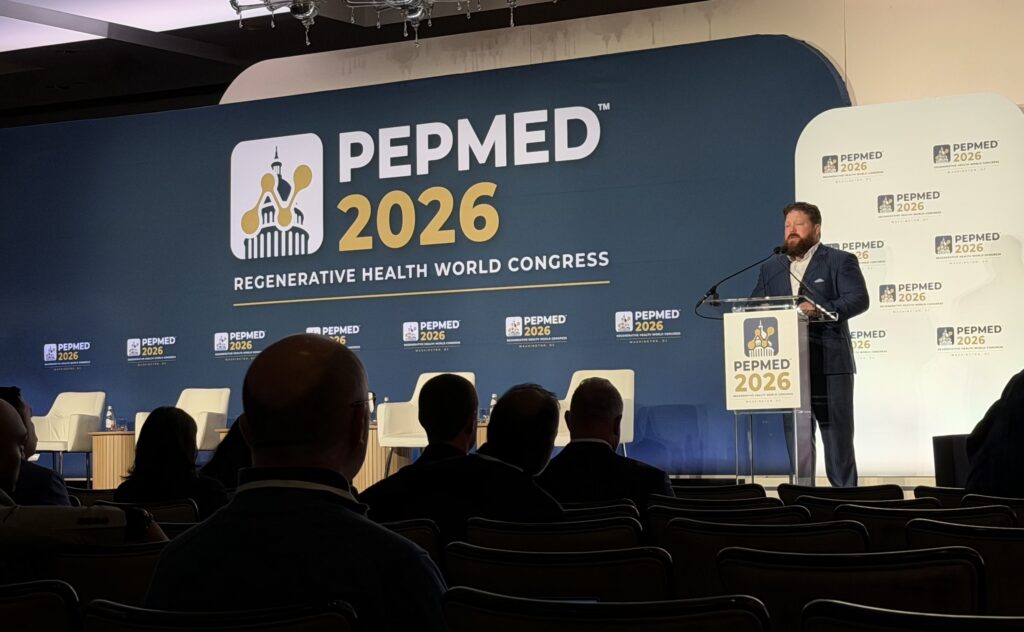
On September 17, I walked down into the basement of the Four Seasons Hotel in Washington, DC, where roughly 300 doctors, healthcare practitioners, entrepreneurs, and lawmakers were about to meet to discuss peptides.
PepMed 2026 is the American Academy of Peptide Medicine’s (AAPM) first meeting of its kind. Most of the two-day program was closed to the press, except for a one-hour window on the first day, during which about a dozen speakers gave brief remarks.
I was there that day as a staff reporter for MedShadow Foundation, where I’ve covered medication safety since December 2025. My reporting combines expert interviews with deep dives into scientific literature and public databases. Before becoming a science and health journalist, I was a postdoctoral scientist and earned a Ph.D. in medicinal chemistry, where my research focused on peptides for cancer therapy.
I like to tell my friends I knew about peptides before they were cool.
But the world I encountered at PepMed was a far cry from the cautious enthusiasm I’d experienced for peptides in academic circles.
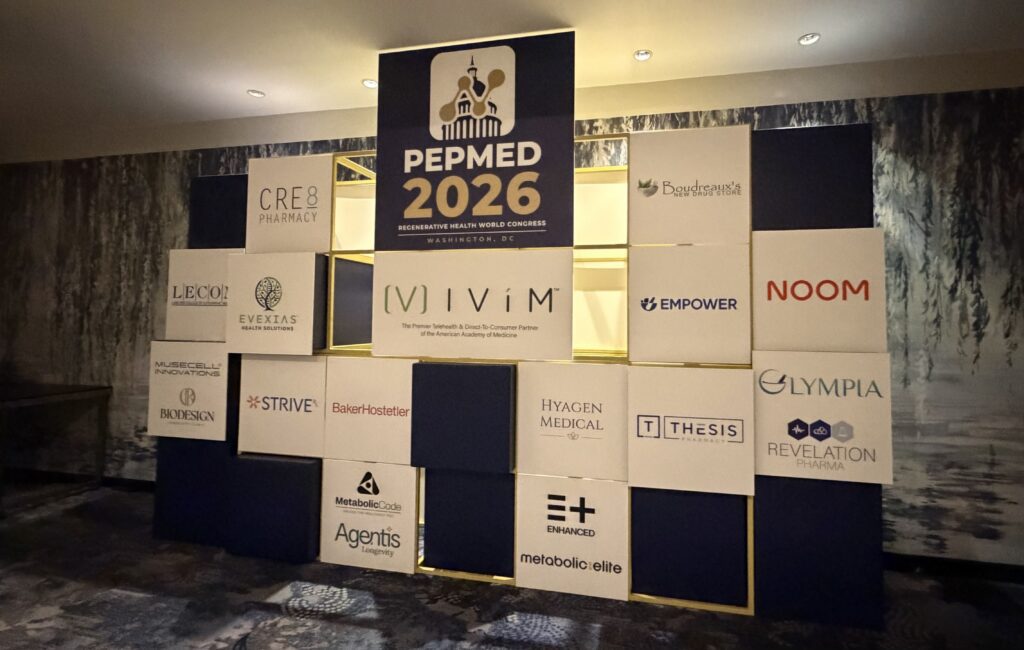
Outside the conference hall, I was greeted by exhibitor booths from compounding pharmacies, wellness clinics, and regulatory firms. There was also plenty of swag, including T-shirts that read: “Peptides CLUB – Good Science, Great Company” and hoodies with “Ask Your Doctor About Peptides” printed on them. There was even a Wellness Lounge where attendees could get free infusions of vitamin C, magnesium, zinc, and other supplements.
“The essence of why we’re here today is to give physicians, clinicians, and healthcare providers the opportunity to practice medicine without any limitations with arbitrary rules,” said Pradeep Albert, M.D., the Chief Medical Officer and co-founder of AAPM, in his opening remarks to the press. “Peptides are an integral part of healthcare.”
Dr. Albert is a board-certified physician with more than 20 years of experience in musculoskeletal radiology, a specialty focused on imaging the joints, muscles, and bones. He has presented at venues including the United Nations on stem cell and regenerative medicine.
Those “arbitrary rules,” as Dr. Albert described them, most likely referred to the FDA’s restrictions on access to certain peptides — a recurring theme throughout the morning’s speeches.
The FDA’s Changing Position on Compounded Peptides
In 2023, the FDA moved 19 widely used peptides from Category 1 — substances permitted for compounding under the agency’s interim policy — to Category 2, substances flagged for significant safety risks — citing concerns about immunogenicity (the potential to
trigger an unwanted immune response) and a lack of human safety data.
The list included peptides such as BPC-157 and TB-500 — a combination sometimes called the “Wolverine stack ”— as well as Thymosin alpha-1, Semax, and GHK-Cu, all of which athletes, dermatologists, and biohackers have promoted.
The agency’s decision did not curtail demand. In fact, peptide fans have flocked to gray-market vendors selling products labeled “for research use only” or “not for human consumption”— many of which raise concerns about purity and sterility. Self-injecting these products, including those that may be contaminated or improperly mixed, has been linked to severe harm and even deaths.
This surge of public interest in peptides has coincided with a regulatory shift back toward greater access: In February 2026, Health Secretary Robert F. Kennedy Jr. said on a podcast that roughly 14 of the 19 peptides on the FDA’s Category 2 list would be moved back to Category 1, allowing them to be compounded with a prescription. (However, the plan has not been finalized, and none of those peptides can be legally compounded as of publication.)
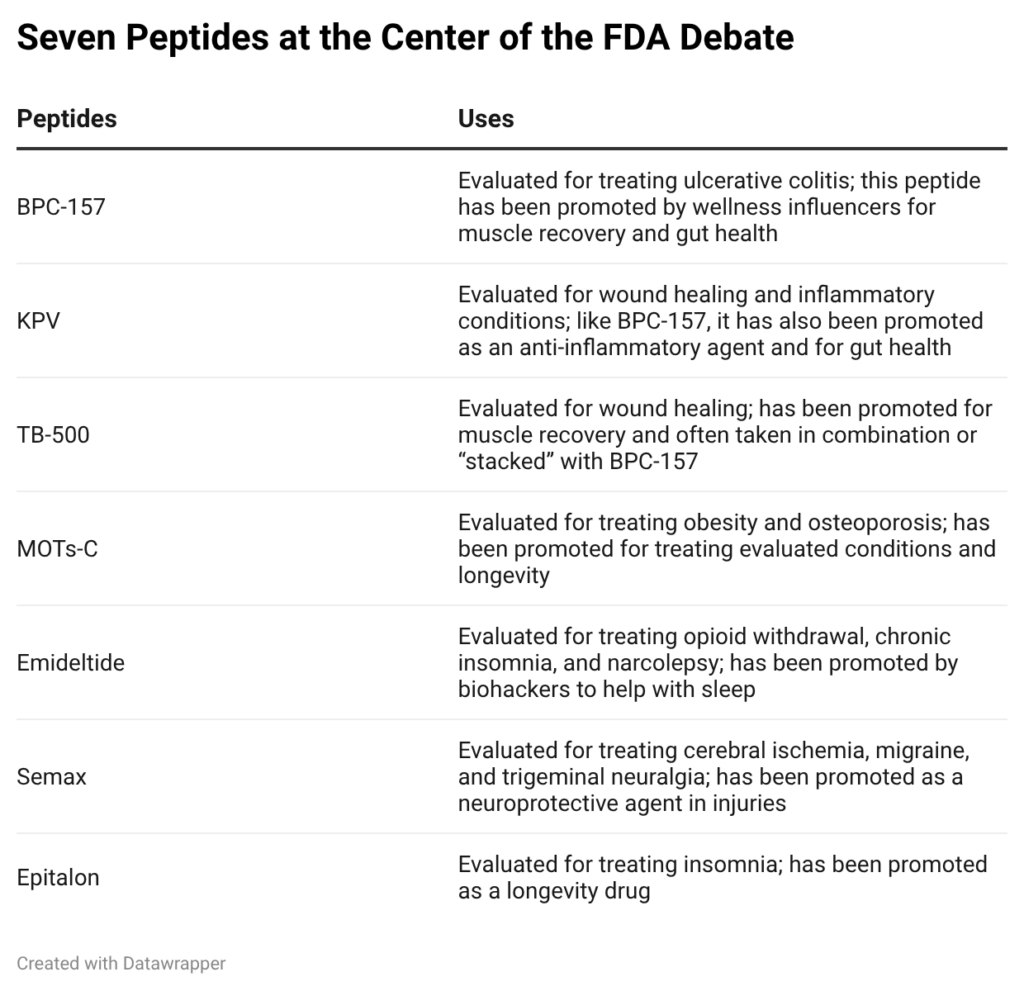
His announcement gained momentum in July, when the Pharmacy Compounding Advisory Committee (PCAC), a panel of experts who were tasked to advise the FDA on drug compounding,met to evaluate the scientific and clinical evidence for seven of the peptides.
At the end of the meeting, PCAC recommended adding all but emideltide to Category 1 — contrary to FDA staff’s recommendation against all seven. Under Section 503A of the Federal Food, Drug, and Cosmetic Act (FD&C Act), Category 1 substances may be eligible for compounding while the FDA continues evaluating their safety. However, the committee’s recommendations are non-binding.
On October 14, 2026, the FDA submitted an “interim access policy for compounding using certain peptides” for the White House to review. According to reporting by the Associated Press, the new policy “is intended to allow pharmacies to temporarily compound some of the most popular peptides, including BPC-157.”
The Weekly Wrap-Up
Independent reporting on drug recalls, medication safety, and supplements. No pharma funding.
The FDA and the White House have not yet made a final ruling as of this publication.
Still, the votes and this latest move by the FDA marked a significant victory for advocates who have pushed the agency to restore legal access to the peptides.
Peptide Advocates Say They Have Safety Data, But It’s Far From Adequate
One of the most vocal of these advocates is Lee Rosebush, PharmD, JD, a registered pharmacist and regulatory attorney who represents clients in the pharmaceutical and pharmacy industry. Dr. Rosebush, who testified at the PCAC meeting in support of the seven peptides, also serves as chairman and chief pharmacy officer at AAPM and who, along with Dr. Albert, co-founded the organization.
“To me, this event has been something that we’ve been working towards for the last 20 years,” he told PepMed’s audience after Dr. Albert’s remarks. “I want to be abundantly clear: the American Academy of Peptide Medicine’s position is that we stop the gray and black market.”
Referring to the seven peptides discussed at the FDA’s PCAC meeting, Dr. Rosebush continued: “It is extremely important that we take the opportunity and that this administration pushes forward a temporary list to allow immediate access to these compounds for pharmacists and to place these on the bulk list. By doing so, we actually stop that [grey market] importation.”
When I asked Dr. Rosebush what drew him to peptides, he pointed to his family’s personal experience. His son, Dakota, a Division I athlete, has used Semax — a peptide not approved by the FDA — following multiple concussions.
PepMed 2026 sponsors. Photo: Kristel Tjandra
“We’ve seen the differences that it’s made in him,” Dr. Rosebush told me. “I myself have used them, and I’ve [also] used them in some of my patients, and I’ve seen the differences.”
The FDA, however, has expressed significant concerns about Semax and the other peptides discussed at PCAC, citing gaps in safety data and other potential risks. Dr. Rosebush disagreed.
“Unfortunately, there’s now been a narrative that they are not safe and that there’s no human data, when we have provided those randomized controlled trials that show human data here in the United States,” Dr. Rosebush told me.
What data was he talking about? I wondered. The FDA has repeatedly noted insufficient evidence to support the safety of these peptides.
It turns out Dr. Rosebush himself has submitted evidence to the agency. In early July, he sent the FDA a report containing anonymized real-world utilization data compiled by AAPM from five clinics and six manufacturers that had dispensed or administered the seven peptides. According to the report, the data represented more than 20 million doses.
If nothing else, the numbers show that these peptides are already being widely used, particularly BPC-157. One manufacturer — identified only as “Manufacturer A” — reported dispensing more than 552,000 units of peptides, including capsules and vials, between November 2024 and June 2026, with BPC-157 by far the most commonly ordered. At “Clinic C,” BPC-157 also accounted for most of the more than 63,000 peptide units the clinic reported dispensing in just three months.
Across the manufacturers and clinics included in Dr. Rosebush’s data, AAPM reported an adverse-event rate of less than 0.007%, with reported events limited to injection-site lumps, rashes, allergic reactions, and similar hypersensitivity reactions.
Based on this data and existing research — including studies conducted in Petri dishes and animals, as well as human trials that generally involve fewer than 100 participants and lasted less than six months — Dr. Rosebush and others at AAPM argue that “the available evidence supports inclusion of these seven nominated bulk drug substances on the 503A Bulks List.”
Gathering this amount of data was no small undertaking. But the sheer volume offered me little assurance about the safety of these peptides. Many of the studies cited in the AAPM’s report were preliminary — mostly done in animals. Human studies exist, but they had limited participants, and the effects were unclear. More concerning, there appeared to be no standardized safeguards to ensure adverse events were consistently monitored, documented, and reported.
Why Peptide Safety Is So Difficult to Assess
Beyond the questions surrounding safety data, the FDA has also criticized the lack of standardized methods for characterizing these substances. In other words, a product marketed as “BPC-157” may not necessarily contain the same substance, in the same form, as another product sold under that name. For example, the agency found at least two variations of product generally labeled as “BPC-157”: BPC-157 acetate and BPC-157 free base. The five routes of administration were injection, nasal spray, transdermal cream, oral capsule, and rectal suppository.
In pharmacology, different salt forms of the same compound are not necessarily interchangeable, as they can affect how a substance behaves in the body, including absorption, tolerance, and potential side effects. Similarly, the route of administration can influence how a substance is absorbed, distributed, and ultimately affects the body.
The FDA argues that without consistent characterization, it can be difficult to know exactly what patients are receiving or how they are receiving it — let alone attribute any benefits or harms to the namesake substance itself.
PepMed 2026 offered little insight into this evidence gap. None of the speakers that morning addressed how these peptides compare with FDA-approved alternatives. No one addressed discrepancies between the peptides’ intended use and how the public is using them, either. Whether those questions came up during the main sessions — which were closed to the press — is unclear. But during the opening session, safety discussions focused largely on questionable sourcing, including offshore suppliers that may produce impure peptides, rather than on whether the peptides themselves could cause harm.
Financial Ties Raise Questions About FDA Peptide Advisers
Questions about the independence of the experts advising the FDA add another layer of uncertainty. In June, The Washington Post reported that several recently added members of the FDA’s Pharmacy Compounding Advisory Committee (PCAC) had financial ties to the pharmaceutical and peptide industries, something prohibited under 18 U.S.C. § 208(a). Despite public criticism, the committee meeting proceeded.
When I asked Dr. Rosebush about those financial ties, he dismissed the criticism, arguing that expertise in a particular field shouldn’t automatically disqualify someone from advising the FDA.
“It is ironic that every advisory committee meeting, let’s say it’s oncology, has oncologists on it. If it’s cardiology, it has cardiologists on it; does that mean every advisory committee has now been conflicted the entire time? So why all of a sudden now, when you get a decision that you don’t like, are they all conflicted? On the flip side of this, I would also say is if you’re going to have people look at peptides and advise the FDA, shouldn’t they have experience with peptides?”
The majority of the remarks at PepMed echoed Dr. Rosebush: Rather than challenging one another’s arguments, speakers largely reinforced the same case for greater access to peptides.
Phil Bryant, former Mississippi governor and a Republican, argued that greater domestic production of compounded drugs was both an economic and national-security issue, saying the U.S. should reduce its reliance on China and other countries for medicines. “I think we ought to take all of them out of China and perhaps other countries and bring it back to the United States,” he said.
Ricardo Rosselló, former governor of Puerto Rico, added: “When regulation stops, patients looking for alternatives don’t stop. Because when regulation stops, gray markets elsewhere are created that give us lack of visibility and that hinder our patients. This is not a victory for patient safety.”
I left PepMed with more questions than answers, and perhaps greater empathy for the FDA staff who insisted these peptides needed more rigorous study before expanding access. The agency has struggled to keep pace with a market that is moving far faster than the evidence. But expanding access could create another problem: If compounding pharmacies make these peptides widely available, what incentive will there be to invest in the rigorous clinical trials needed to establish their safety and effectiveness?
For now, enthusiasm for peptides seems to be outpacing the science. Until better evidence catches up, we have to navigate that uncertainty ourselves.
DISCLAIMER: MedShadow provides information and resources related to medications, their effects, and potential side effects. However, it is important to note that we are not a substitute for professional medical advice, diagnosis, or treatment. The content on our site is intended for educational and informational purposes only. Individuals dealing with medical conditions or symptoms should seek guidance from a licensed healthcare professional, such as a physician or pharmacist, who can provide personalized medical advice tailored to their specific circumstances.
While we strive to ensure the accuracy and reliability of the information presented on MedShadow, we cannot guarantee its completeness or suitability for any particular individual’s medical needs. Therefore, we strongly encourage users to consult with qualified healthcare professionals regarding any health-related concerns or decisions. By accessing and using MedShadow, you acknowledge and agree that the information provided on the site is not a substitute for professional medical advice and that you should always consult with a qualified healthcare provider for any medical concerns.
DONATE:
Help fund our fight for improved medication safety and transparency by supporting our independent journalism.
We seek to create a world where there are safer medications for all and where all people are fully informed about their medication benefits and side effects, using our explanatory and investigative journalism to both inform and stimulate public discussion to drive toward solutions.
MedShadow.org is dedicated to empowering people with our evidence-based journalism about the safest ways to take over-the-counter (OTC) and prescription (Rx) medications.
We also seek to stimulate public discussion about potential improvements to drug research, manufacturing and distribution processes. and also to encourage the improvement of processes to ensure that we are all better protected.
As a result, we encourage other nonprofit newsrooms, mission-aligned outlets, and advocacy organizations to republish our original content under the following conditions:
You May Republish Our Articles for Free If:
1. We Are Credited Fully and Clearly
You must include the byline and credit MedShadow.org as the original publisher. Please include a link to the original article at the top or bottom of the piece. Use the following attribution:
This article was originally published by MedShadow, a nonprofit foundation that focuses on the safest ways to take over-the-counter and prescription medications.
2. Our Content Isn’t Edited Without Permission
You may make small changes for clarity, such as adjusting headlines, subheadings, or transitions, but you may not change the core meaning, tone, or intent of the article. For substantive edits, email us at republish@medshadow.org for review and approval.
3. You Do Not Sell Or Use Our Content Commercially
Our work is free to share, but it may not be sold, monetized, or repurposed for commercial gain. You may not republish our articles behind a paywall or in publications whose primary purpose is advertising or product promotion. You may not place drug or supplement advertising adjacent to our story.
4. Photos, Graphics, and Multimedia Are Not Used Without Permission
Only the text of the article is available for republication. Images, graphics, and videos may not be reused without explicit written permission, unless they are clearly marked as Creative Commons licensed. Contact us if you’d like to request reuse of a visual asset.
You May Not:
Use our content to promote a product, service, or political candidate
Republish only part of an article or create derivative works without permission
Add affiliate links, advertising overlays, or lead generators
Translate the article without written permission
Contact Us
If you’re unsure whether your intended use falls within these guidelines, or would like to discuss a formal syndication or licensing arrangement, please email: republish@medshadow.org
We want our journalism to reach as many people as possible, especially those making critical decisions about medications and health.
For website editors
Copy the article HTML
Copy the article body, including its formatting and links, then paste it into your publishing system. Add the byline and required credit described in these guidelines.
Preview article HTML
<!-- wp:paragraph -->
<p>On September 17, I walked down into the basement of the Four Seasons Hotel in Washington, DC, where roughly 300 doctors, healthcare practitioners, entrepreneurs, and lawmakers were about to meet to discuss peptides.</p>
<!-- /wp:paragraph -->

<!-- wp:paragraph -->
<p>PepMed 2026 is the American Academy of Peptide Medicine's (AAPM) first meeting of its kind. Most of the two-day program was closed to the press, except for a one-hour window on the first day, during which about a dozen speakers gave brief remarks.</p>
<!-- /wp:paragraph -->

<!-- wp:paragraph -->
<p>I was there that day as a staff reporter for MedShadow Foundation, where I’ve covered medication safety since December 2025. My reporting combines expert interviews with deep dives into scientific literature and public databases. Before becoming a science and health journalist, I was a postdoctoral scientist and earned a Ph.D. in medicinal chemistry, where my research focused on peptides for cancer therapy. </p>
<!-- /wp:paragraph -->

<!-- wp:paragraph -->
<p>I like to tell my friends I knew about peptides before they were cool. </p>
<!-- /wp:paragraph -->

<!-- wp:paragraph -->
<p>But the world I encountered at PepMed was a far cry from the cautious enthusiasm I’d experienced for peptides in academic circles.</p>
<!-- /wp:paragraph -->

<!-- wp:paragraph -->
<p>Outside the conference hall, I was greeted by exhibitor booths from compounding pharmacies, wellness clinics, and regulatory firms. There was also plenty of swag, including T-shirts that read: “Peptides CLUB – Good Science, Great Company” and hoodies with “Ask Your Doctor About Peptides” printed on them. There was even a Wellness Lounge where attendees could get free infusions of vitamin C, magnesium, zinc, and other supplements.</p>
<!-- /wp:paragraph -->

<!-- wp:paragraph -->
<p>“The essence of why we're here today is to give physicians, clinicians, and healthcare providers the opportunity to practice medicine without any limitations with arbitrary rules,” said <a href="https://www.drpradeepalbert.com/">Pradeep Albert, M.D</a>., the Chief Medical Officer and co-founder of AAPM, in his opening remarks to the press. “Peptides are an integral part of healthcare.” </p>
<!-- /wp:paragraph -->

<!-- wp:paragraph -->
<p>Dr. Albert is a board-certified physician with more than 20 years of experience in musculoskeletal radiology, a specialty focused on imaging the joints, muscles, and bones. He has presented at venues including the United Nations <a href="https://www.youtube.com/watch?v=pGMJXKFH69U">on stem cell and regenerative medicine</a>. </p>
<!-- /wp:paragraph -->

<!-- wp:paragraph -->
<p>Those “arbitrary rules,” as Dr. Albert described them, most likely referred to the FDA’s restrictions on access to certain peptides — a recurring theme throughout the morning's speeches.</p>
<!-- /wp:paragraph -->

<!-- wp:heading -->
<h2 class="wp-block-heading">The FDA's Changing Position on Compounded Peptides</h2>
<!-- /wp:heading -->

<!-- wp:paragraph -->
<p>In 2023, the FDA moved 19 widely used peptides from Category 1 — substances permitted for compounding under the agency’s interim policy — to Category 2, substances flagged for significant safety risks — <a href="https://www.fda.gov/drugs/human-drug-compounding/certain-bulk-drug-substances-use-compounding-may-present-significant-safety-risks">citing concerns</a> about immunogenicity (the potential to </p>
<!-- /wp:paragraph -->

<!-- wp:paragraph -->
<p>trigger an unwanted immune response) and a lack of human safety data. </p>
<!-- /wp:paragraph -->

<!-- wp:paragraph -->
<p>The list included peptides such as BPC-157 and TB-500 — a combination sometimes called the “Wolverine stack ”— as well as Thymosin alpha-1, Semax, and GHK-Cu, all of which athletes, dermatologists, and biohackers have promoted.</p>
<!-- /wp:paragraph -->

<!-- wp:paragraph -->
<p>The agency’s decision did not curtail demand. In fact, peptide fans have <a href="https://pmc.ncbi.nlm.nih.gov/articles/PMC13355462/">flocked to gray-market vendors</a> selling products labeled “for research use only” or “not for human consumption”— many of which raise concerns about purity and sterility. Self-injecting these products, including those that may be contaminated or improperly mixed, has been linked to severe <a href="https://www.bbc.com/news/articles/c4gd82vvvdno">harm</a> and even <a href="https://www.fda.gov/drugs/human-drug-compounding/certain-bulk-drug-substances-use-compounding-may-present-significant-safety-risks">deaths</a>.</p>
<!-- /wp:paragraph -->

<!-- wp:paragraph -->
<p>This surge of public interest in peptides has coincided with a regulatory shift back toward greater access: In February 2026, Health Secretary Robert F. Kennedy Jr. said on a podcast that roughly 14 of the 19 peptides on the FDA’s Category 2 list would be moved back to Category 1, allowing them to be compounded with a prescription. (However, the plan has not been finalized, and none of those peptides can be legally compounded as of publication.)</p>
<!-- /wp:paragraph -->

<!-- wp:paragraph -->
<p>His announcement gained momentum in July, when the <a href="https://www.fda.gov/advisory-committees/pharmacy-compounding-advisory-committee/pharmacy-compounding-advisory-committee-roster">Pharmacy Compounding Advisory Committee (PCAC)</a>, a panel of experts who were tasked to advise the FDA on drug compounding<a href="https://www.fda.gov/advisory-committees/pharmacy-compounding-advisory-committee/pharmacy-compounding-advisory-committee-roster">,</a> <a href="https://www.fda.gov/advisory-committees/advisory-committee-calendar/july-23-24-2026-meeting-pharmacy-compounding-advisory-committee-07232026">met to evaluate</a> the scientific and clinical evidence for seven of the peptides.</p>
<!-- /wp:paragraph -->

<!-- wp:image {"id":35375,"sizeSlug":"large","linkDestination":"none"} -->
<figure class="wp-block-image size-large"><img src="https://medshadow.org/wp-content/uploads/2026/10/Nn7YW-seven-peptides-at-the-center-of-the-fda-debate--1024x991.png" alt="" class="wp-image-35375"/></figure>
<!-- /wp:image -->

<!-- wp:paragraph -->
<p>At the end of the meeting, PCAC recommended adding all but emideltide to Category 1 — contrary to FDA staff’s recommendation against all seven. Under Section 503A of the Federal Food, Drug, and Cosmetic Act (FD&C Act), Category 1 substances may be eligible for compounding while the FDA continues evaluating their safety. However, the committee's recommendations are non-binding. </p>
<!-- /wp:paragraph -->

<!-- wp:paragraph -->
<p>On October 14, 2026, the FDA submitted an "<a href="https://www.reginfo.gov/public/do/eoDetails?rrid=1568964">interim access policy for compounding using certain peptides</a>" for the White House to review. According to reporting by the <em>Associated Press</em>, the new policy “is intended to allow pharmacies to temporarily compound some of the most popular peptides, including BPC-157.” </p>
<!-- /wp:paragraph -->

<!-- wp:paragraph -->
<p>The FDA and the White House have not yet made a final ruling as of this publication.</p>
<!-- /wp:paragraph -->

<!-- wp:paragraph -->
<p>Still, the votes and this latest move by the FDA marked a significant victory for advocates who have pushed the agency to restore legal access to the peptides.</p>
<!-- /wp:paragraph -->

<!-- wp:heading -->
<h2 class="wp-block-heading">Peptide Advocates Say They Have Safety Data, But It’s Far From Adequate </h2>
<!-- /wp:heading -->

<!-- wp:paragraph -->
<p>One of the most vocal of these advocates is <a href="https://www.bakerlaw.com/professionals/lee-h-rosebush/">Lee Rosebush, PharmD, JD</a>, a registered pharmacist and regulatory attorney who represents clients in the pharmaceutical and pharmacy industry. Dr. Rosebush, who <a href="https://www.youtube.com/live/DhDC0DAYdBI">testified</a> at the PCAC meeting <a href="https://downloads.regulations.gov/FDA-2025-N-6895-1774/attachment_1.pdf">in support of the seven peptides</a>, also serves as chairman and chief pharmacy officer at AAPM and who, along with Dr. Albert, co-founded the organization.</p>
<!-- /wp:paragraph -->

<!-- wp:paragraph -->
<p>“To me, this event has been something that we've been working towards for the last 20 years,” he told PepMed’s audience after Dr. Albert’s remarks. “I want to be abundantly clear: the American Academy of Peptide Medicine’s position is that we stop the gray and black market.” </p>
<!-- /wp:paragraph -->

<!-- wp:paragraph -->
<p>Referring to the seven peptides discussed at the FDA’s PCAC meeting, Dr. Rosebush continued: “It is extremely important that we take the opportunity and that this administration pushes forward a temporary list to allow immediate access to these compounds for pharmacists and to place these on the bulk list. By doing so, we actually stop that [grey market] importation.”</p>
<!-- /wp:paragraph -->

<!-- wp:paragraph -->
<p>When I asked Dr. Rosebush what drew him to peptides, he pointed to his family’s personal experience. His son, Dakota, a Division I athlete, has used Semax — a peptide not approved by the FDA — following multiple concussions.</p>
<!-- /wp:paragraph -->

<!-- wp:image {"id":35398,"sizeSlug":"large","linkDestination":"none","align":"center"} -->
<figure class="wp-block-image aligncenter size-large"><img src="https://medshadow.org/wp-content/uploads/2026/10/IMG_4950-1024x650.jpeg" alt="" class="wp-image-35398"/><figcaption class="wp-element-caption">PepMed 2026 sponsors. Photo: Kristel Tjandra</figcaption></figure>
<!-- /wp:image -->

<!-- wp:paragraph -->
<p>“We've seen the differences that it's made in him,” Dr. Rosebush told me. “I myself have used them, and I've [also] used them in some of my patients, and I've seen the differences.”</p>
<!-- /wp:paragraph -->

<!-- wp:paragraph -->
<p>The FDA, however, <a href="https://www.fda.gov/media/193348/download">has expressed significant concerns about Semax</a> and the other peptides discussed at PCAC, citing gaps in safety data and other potential risks. Dr. Rosebush disagreed.</p>
<!-- /wp:paragraph -->

<!-- wp:paragraph -->
<p>“Unfortunately, there's now been a narrative that they are not safe and that there's no human data, when we have provided those randomized controlled trials that show human data here in the United States,” Dr. Rosebush told me.</p>
<!-- /wp:paragraph -->

<!-- wp:paragraph -->
<p><em>What data was he talking about?</em> I wondered. The FDA has repeatedly noted insufficient evidence to support the safety of these peptides. </p>
<!-- /wp:paragraph -->

<!-- wp:paragraph -->
<p>It turns out Dr. Rosebush himself has submitted evidence to the agency. In early July, he sent the FDA a report containing anonymized <a href="https://downloads.regulations.gov/FDA-2025-N-6895-1774/attachment_1.pdf">real-world utilization data</a> compiled by AAPM from five clinics and six manufacturers that had dispensed or administered the seven peptides. According to the report, the data represented more than 20 million doses.</p>
<!-- /wp:paragraph -->

<!-- wp:paragraph -->
<p>If nothing else, the numbers show that these peptides are already being widely used, particularly BPC-157. One manufacturer — identified only as “Manufacturer A” — reported dispensing more than 552,000 units of peptides, including capsules and vials, between November 2024 and June 2026, with BPC-157 by far the most commonly ordered. At “Clinic C,” BPC-157 also accounted for most of the more than 63,000 peptide units the clinic reported dispensing in just three months.</p>
<!-- /wp:paragraph -->

<!-- wp:paragraph -->
<p>Across the manufacturers and clinics included in Dr. Rosebush’s data, AAPM reported an adverse-event rate of less than 0.007%, with reported events limited to injection-site lumps, rashes, allergic reactions, and similar hypersensitivity reactions.</p>
<!-- /wp:paragraph -->

<!-- wp:paragraph -->
<p>Based on this data and existing research — including studies conducted in Petri dishes and animals, as well as human trials that generally involve <a href="https://downloads.regulations.gov/FDA-2025-N-6895-1774/attachment_10.pdf">fewer than 100 participants and lasted less than six months</a> — Dr. Rosebush and others at AAPM argue that “the available evidence supports inclusion of these seven nominated bulk drug substances on the 503A Bulks List.”</p>
<!-- /wp:paragraph -->

<!-- wp:paragraph -->
<p>Gathering this amount of data was no small undertaking. But the sheer volume offered me little assurance about the safety of these peptides. Many of the studies cited in <a href="https://downloads.regulations.gov/FDA-2025-N-6895-1774/attachment_10.pdf">the AAPM’s report</a> were preliminary — mostly done in animals. Human studies exist, but they had limited participants, and the effects were unclear. More concerning, there appeared to be no standardized safeguards to ensure adverse events were consistently monitored, documented, and reported.</p>
<!-- /wp:paragraph -->

<!-- wp:heading -->
<h2 class="wp-block-heading">Why Peptide Safety Is So Difficult to Assess</h2>
<!-- /wp:heading -->

<!-- wp:paragraph -->
<p>Beyond the questions surrounding safety data, the FDA has also criticized the lack of standardized methods for characterizing these substances. In other words, a product marketed as “BPC-157” may not necessarily contain the same substance, in the same form, as another product sold under that name. For example, <a href="https://www.fda.gov/media/193343/download">the agency found</a> at least two variations of product generally labeled as “BPC-157”: BPC-157 acetate and BPC-157 free base. The five routes of administration were injection, nasal spray, transdermal cream, oral capsule, and rectal suppository. </p>
<!-- /wp:paragraph -->

<!-- wp:image {"id":35400,"width":"274px","height":"auto","aspectRatio":"0.7500183109939208","sizeSlug":"large","linkDestination":"none","align":"right"} -->
<figure class="wp-block-image alignright size-large is-resized"><img src="https://medshadow.org/wp-content/uploads/2026/10/IMG_4868-768x1024.jpeg" alt="" class="wp-image-35400" style="aspect-ratio:0.7500183109939208;width:274px;height:auto"/></figure>
<!-- /wp:image -->

<!-- wp:paragraph -->
<p>In pharmacology, different salt forms of the same compound are not necessarily interchangeable, as they can affect how a substance behaves in the body, including absorption, tolerance, and potential side effects. Similarly, the route of administration can influence how a substance is absorbed, distributed, and ultimately affects the body.</p>
<!-- /wp:paragraph -->

<!-- wp:paragraph -->
<p>The FDA argues that without consistent characterization, it can be difficult to know exactly what patients are receiving or how they are receiving it — let alone attribute any benefits or harms to the namesake substance itself. </p>
<!-- /wp:paragraph -->

<!-- wp:paragraph -->
<p>PepMed 2026 offered little insight into this evidence gap. None of the speakers that morning addressed how these peptides compare with FDA-approved alternatives. No one addressed discrepancies between the peptides’ intended use and how the public is using them, either. Whether those questions came up during the main sessions — which were closed to the press — is unclear. But during the opening session, safety discussions focused largely on questionable sourcing, including offshore suppliers that may produce impure peptides, rather than on whether the peptides themselves could cause harm.</p>
<!-- /wp:paragraph -->

<!-- wp:heading -->
<h2 class="wp-block-heading">Financial Ties Raise Questions About FDA Peptide Advisers</h2>
<!-- /wp:heading -->

<!-- wp:paragraph -->
<p>Questions about the independence of the experts advising the FDA add another layer of uncertainty. In June, <a href="https://www.washingtonpost.com/health/2026/06/30/fda-staff-recommendation-undercuts-rfk-jrs-push-expand-peptides/"><em>The Washington Post</em> reported</a> that several recently added members of the FDA's Pharmacy Compounding Advisory Committee (PCAC) had financial ties to the pharmaceutical and peptide industries, something prohibited under <a href="https://ethics.od.nih.gov/18-usc-208-financial-conflicts-interest">18 U.S.C. § 208(a)</a>. Despite public criticism, the committee meeting proceeded.</p>
<!-- /wp:paragraph -->

<!-- wp:paragraph -->
<p>When I asked Dr. Rosebush about those financial ties, he dismissed the criticism, arguing that expertise in a particular field shouldn't automatically disqualify someone from advising the FDA.</p>
<!-- /wp:paragraph -->

<!-- wp:paragraph -->
<p>“It is ironic that every advisory committee meeting, let's say it's oncology, has oncologists on it. If it’s cardiology, it has cardiologists on it; does that mean every advisory committee has now been conflicted the entire time? So why all of a sudden now, when you get a decision that you don't like, are they all conflicted? On the flip side of this, I would also say is if you're going to have people look at peptides and advise the FDA, shouldn't they have experience with peptides?”</p>
<!-- /wp:paragraph -->

<!-- wp:paragraph -->
<p>The majority of the remarks at PepMed echoed Dr. Rosebush: Rather than challenging one another’s arguments, speakers largely reinforced the same case for greater access to peptides.</p>
<!-- /wp:paragraph -->

<!-- wp:paragraph -->
<p>Phil Bryant, former Mississippi governor and a Republican, argued that greater domestic production of compounded drugs was both an economic and national-security issue, saying the U.S. should reduce its reliance on China and other countries for medicines. “I think we ought to take all of them out of China and perhaps other countries and bring it back to the United States,” he said.</p>
<!-- /wp:paragraph -->

<!-- wp:paragraph -->
<p>Ricardo Rosselló, former governor of Puerto Rico, added: “When regulation stops, patients looking for alternatives don't stop. Because when regulation stops, gray markets elsewhere are created that give us lack of visibility and that hinder our patients. This is not a victory for patient safety.”</p>
<!-- /wp:paragraph -->

<!-- wp:paragraph -->
<p>I left PepMed with more questions than answers, and perhaps greater empathy for the FDA staff who insisted these peptides needed more rigorous study before expanding access. The agency has struggled to keep pace with a market that is moving far faster than the evidence. But expanding access could create another problem: If compounding pharmacies make these peptides widely available, what incentive will there be to invest in the rigorous clinical trials needed to establish their safety and effectiveness?</p>
<!-- /wp:paragraph -->

<!-- wp:paragraph -->
<p>For now, enthusiasm for peptides seems to be outpacing the science. Until better evidence catches up, we have to navigate that uncertainty ourselves.</p>
<!-- /wp:paragraph -->
What is unbiased drug-safety journalism worth to you?
We think it’s invaluable — and hope you agree. Our work is made possible by donations from readers like you.
What is Unbiased Drug-Safety Journalism Worth to You?
We think it’s invaluable — and hope you agree. Our journalism is made possible by donations from readers like you.
As a nonprofit, we don’t take a dime from pharmaceutical or supplement companies. That means we can report on the benefits, risks, and alternatives to prescription and over-the-counter drugs free from corporate pressure or influence.



 Shedding Light on the Risks
& Benefits of Medications