
Celebrating 13 Years of Nonprofit Independence
FDA Drug Recalls and WarningsFDA Recalls and Warnings: Foreign Particles Found in Compounded Semaglutide, Cancer-Causing Impurities in Bladder Drug

Republish This Story for Free

Creative Commons License (CC BY-NC-ND 4.0)

MedShadow.org is dedicated to empowering people with our evidence-based journalism about the safest ways to take over-the-counter (OTC) and prescription (Rx) medications.

We also seek to stimulate public discussion about potential improvements to drug research, manufacturing and distribution processes. and also to encourage the improvement of processes to ensure that we are all better protected.

As a result, we encourage other nonprofit newsrooms, mission-aligned outlets, and advocacy organizations to republish our original content under the following conditions:

You May Republish Our Articles for Free If:

1. We Are Credited Fully and Clearly
You must include the byline and credit MedShadow.org as the original publisher. Please include a link to the original article at the top or bottom of the piece. Use the following attribution:

This article was originally published by MedShadow, a nonprofit foundation that focuses on the safest ways to take over-the-counter and prescription medications.

2. Our Content Isn’t Edited Without Permission
You may make small changes for clarity, such as adjusting headlines, subheadings, or transitions, but you may not change the core meaning, tone, or intent of the article. For substantive edits, email us at republish@medshadow.org for review and approval.

3. You Do Not Sell Or Use Our Content Commercially
Our work is free to share, but it may not be sold, monetized, or repurposed for commercial gain. You may not republish our articles behind a paywall or in publications whose primary purpose is advertising or product promotion. You may not place drug or supplement advertising adjacent to our story.

4. Photos, Graphics, and Multimedia Are Not Used Without Permission
Only the text of the article is available for republication. Images, graphics, and videos may not be reused without explicit written permission, unless they are clearly marked as Creative Commons licensed. Contact us if you’d like to request reuse of a visual asset.

You May Not:

  • Use our content to promote a product, service, or political candidate
  • Republish only part of an article or create derivative works without permission
  • Add affiliate links, advertising overlays, or lead generators
  • Translate the article without written permission

Contact Us

If you’re unsure whether your intended use falls within these guidelines, or would like to discuss a formal syndication or licensing arrangement, please email: republish@medshadow.org

We want our journalism to reach as many people as possible, especially those making critical decisions about medications and health.

Article HTML
<!-- wp:paragraph -->
<p>Welcome to the FDA Recalls and Warnings Update, a series dedicated to keeping you informed about the latest medication recalls, manufacturing violations, and quality concerns affecting your prescriptions. In this installment, we’re highlighting drug recalls for Azelaic Acid Gel, compounded semaglutide and semaglutide/glycine, Dicyclomine, Diovan, Dorzolamide HCl-Timolol Maleate Ophthalmic Solution, and Mirabegron.</p>
<!-- /wp:paragraph --><!-- wp:paragraph -->
<p>All recalls in this installment are nationwide “Class II” recalls. Consumers may wish to check the linked enforcement report for the list of affected product lot numbers and expiration dates. For prescription drugs that don’t include a lot number on the packaging, consumers may check with their pharmacist to see whether a medication is affected by the recall. </p>
<!-- /wp:paragraph --><!-- wp:group {"layout":{"type":"constrained"}} -->
<div class="wp-block-group"><!-- wp:heading -->
<h2 class="wp-block-heading">How to Read This Report</h2>
<!-- /wp:heading --><!-- wp:accordion -->
<div role="group" class="wp-block-accordion"><!-- wp:accordion-item -->
<div class="wp-block-accordion-item"><!-- wp:accordion-heading -->
<h3 class="wp-block-accordion-heading"><button type="button" class="wp-block-accordion-heading__toggle"><span class="wp-block-accordion-heading__toggle-title">Recalls (Enforcement Reports Database)</span><span class="wp-block-accordion-heading__toggle-icon" aria-hidden="true">+</span></button></h3>
<!-- /wp:accordion-heading --><!-- wp:accordion-panel -->
<div role="region" class="wp-block-accordion-panel"><!-- wp:paragraph -->
<p>The Food and Drug Administration (FDA) categorizes product recalls in its Enforcement Report database based on the level of health risk, labeling them as Class I, II, III, or "not yet classified."</p>
<!-- /wp:paragraph --><!-- wp:paragraph -->
<p>While the database includes drugs, food, cosmetics, medical devices, biologics, tobacco, and veterinary products, this report only covers selected drug recalls.</p>
<!-- /wp:paragraph --><!-- wp:list -->
<ul class="wp-block-list"><!-- wp:list-item -->
<li>Class I recalls are the most serious. In these situations, there is "reasonable probability that the use of or exposure to a product will cause serious adverse health consequences or death."</li>
<!-- /wp:list-item --><!-- wp:list-item -->
<li>Class II recalls are for drugs that may cause temporary or medically reversible adverse health consequences or where use of the product is unlikely to result in serious adverse health consequences.</li>
<!-- /wp:list-item --><!-- wp:list-item -->
<li>Class III recalls are the least serious. Use of the product is not likely to cause adverse health consequences.</li>
<!-- /wp:list-item --></ul>
<!-- /wp:list --></div>
<!-- /wp:accordion-panel --></div>
<!-- /wp:accordion-item --></div>
<!-- /wp:accordion --><!-- wp:accordion -->
<div role="group" class="wp-block-accordion"><!-- wp:accordion-item -->
<div class="wp-block-accordion-item"><!-- wp:accordion-heading -->
<h3 class="wp-block-accordion-heading"><button type="button" class="wp-block-accordion-heading__toggle"><span class="wp-block-accordion-heading__toggle-title">Warning Letters (Warning Letters Database)</span><span class="wp-block-accordion-heading__toggle-icon" aria-hidden="true">+</span></button></h3>
<!-- /wp:accordion-heading --><!-- wp:accordion-panel -->
<div role="region" class="wp-block-accordion-panel"><!-- wp:paragraph -->
<p>Drug manufacturers, supplement companies, and medical device makers may receive a Warning Letter from the FDA if they commit serious violations of federal regulations. This letter comes from an overseeing FDA office, such as the Center for Drug Evaluation and Research. Common violations include poor manufacturing practices, false product claims, selling misbranded items, or marketing unapproved products. The letter gives the recipient a chance to correct the issues and requires a response, usually within 15 days.<br></p>
<!-- /wp:paragraph --></div>
<!-- /wp:accordion-panel --></div>
<!-- /wp:accordion-item --></div>
<!-- /wp:accordion --><!-- wp:accordion -->
<div role="group" class="wp-block-accordion"><!-- wp:accordion-item -->
<div class="wp-block-accordion-item"><!-- wp:accordion-heading -->
<h3 class="wp-block-accordion-heading"><button type="button" class="wp-block-accordion-heading__toggle"><span class="wp-block-accordion-heading__toggle-title">Drug Imports Alerts Database</span><span class="wp-block-accordion-heading__toggle-icon" aria-hidden="true">+</span></button></h3>
<!-- /wp:accordion-heading --><!-- wp:accordion-panel -->
<div role="region" class="wp-block-accordion-panel"><!-- wp:paragraph -->
<p>FDA Import Alerts notify field staff and the public when the agency has enough evidence to detain products without physical examination (DWPE) due to suspected violations of <a href="https://www.ecfr.gov/current/title-21/chapter-I/subchapter-C/part-211">FDA laws</a>, including violations of “current good manufacturing practices for finished pharmaceuticals” or <a href="https://www.ecfr.gov/current/title-21/chapter-I/subchapter-A/part-99">unapproved new drugs</a>. The violations lists are arranged by type of violation, then by country and then by the importing company. In some cases, Import Alerts may be linked to Warning Letters for issues like manufacturing violations.<br></p>
<!-- /wp:paragraph --></div>
<!-- /wp:accordion-panel --></div>
<!-- /wp:accordion-item --></div>
<!-- /wp:accordion --></div>
<!-- /wp:group --><!-- wp:heading -->
<h2 class="wp-block-heading">Drug Recalls</h2>
<!-- /wp:heading --><!-- wp:heading {"level":3} -->
<h3 class="wp-block-heading">Azelaic Acid Gel, 15% (generic for Finacia)</h3>
<!-- /wp:heading --><!-- wp:paragraph -->
<p><strong>Company</strong>: Glenmark Pharmaceuticals Inc., USA <br><strong>Manufacturing Location:</strong> Colvale-Bardez, Goa, India<br><strong>Scope</strong>: Five lots of 50-gram tubes, 15% strength<br><strong>Drug Purpose</strong>: Topical prescription treatment for mild to moderate rosacea and acne<br><strong>Recall Reason</strong>: The product was recalled after customers reported an abnormal gel consistency that felt grainy, gritty, or sandy.<br><strong>Recall Initiation Date</strong>: July 23, 2026 <br><strong>Essential Extras</strong>: In <a href="https://www.accessdata.fda.gov/scripts/ires/index.cfm?Event=97619">September 2025</a>, Glenmark <a href="https://medshadow.org/drug-updates-recalls/fda-recalls-and-warnings/fda-drug-recalls-and-warnings-atorvastatin-labeling-mix-up-with-muscle-relaxant-cyclobenzaprine-and-more/">recalled 13,824 tubes of Azelaic Acid gel</a> because of market complaints of a gritty, grainy texture. <br><strong>Link</strong>:<a href="https://www.accessdata.fda.gov/scripts/ires/index.cfm?Event=99490"> FDA Enforcement Report</a></p>
<!-- /wp:paragraph --><!-- wp:heading {"level":3} -->
<h3 class="wp-block-heading">Compounded Semaglutide and Semaglutide/Glycine Multi-Dose Vials</h3>
<!-- /wp:heading --><!-- wp:paragraph -->
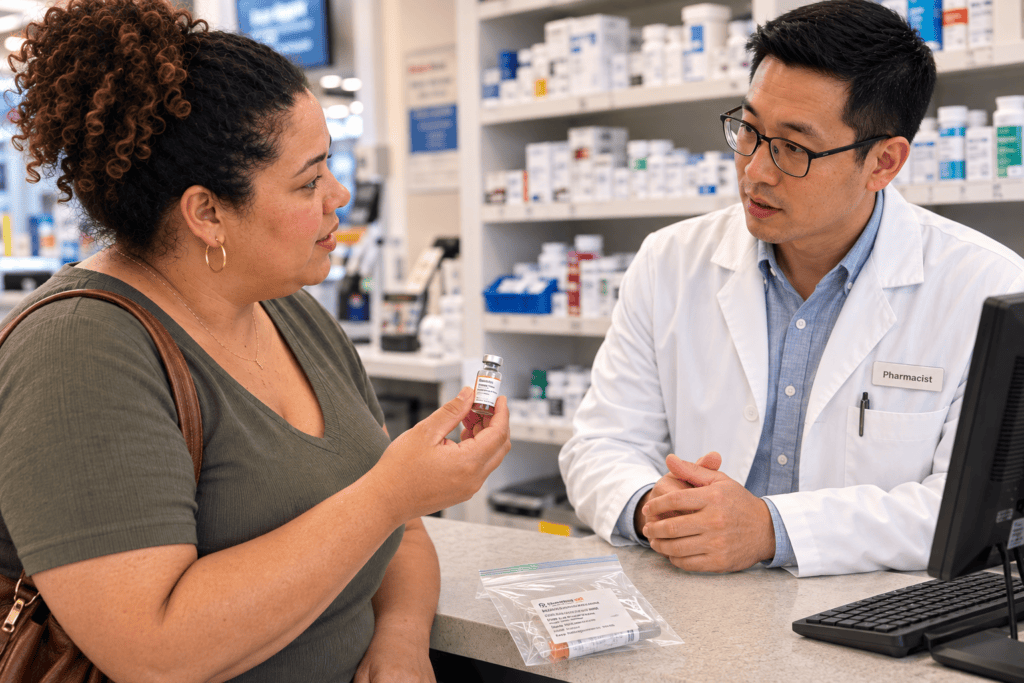
<p><strong>Company</strong>: Apollo Care, LLC <br><strong>Manufacturing Location</strong>: Columbia, Missouri, by Apollo Care, an <a href="https://www.fda.gov/drugs/human-drug-compounding/registered-outsourcing-facilities">FDA-registered 503B outsourcing pharmacy facility</a><br><strong>Scope</strong>: Nationwide distribution of 156,611 multi-dose vials of compounded semaglutide (various strengths) and 5,500 vials of multi-dose compounded semaglutide with glycine (various strengths)<br><strong>Drug Purpose</strong>: Semaglutide treats type 2 diabetes and obesity; it is the active ingredient in the brand-name drugs Ozempic and Wegovy. The semaglutide/glycine combination product contains glycine as a dietary supplement.<br><strong>Recall Reason</strong>: Presence of particulate matter in the vials, which was identified as nylon/polyamide and silk/proteinaceous-type material. <br><strong>Recall Initiation Date</strong>: July 29, 2026 <br><strong>Essential Extras</strong>: In February 2026, Apollo Care received an FDA <a href="https://www.fda.gov/inspections-compliance-enforcement-and-criminal-investigations/warning-letters/apollo-care-llc-715955-02022026">warning letter</a> regarding sterility concerns and violations of unsanitary conditions found during a 2025 inspection of the Columbia, Missouri facility. The warning letter noted that “white, fiber-like particles and debris” were observed on the floor of a lab and hallway after the area was cleaned. </p>
<!-- /wp:paragraph --><!-- wp:paragraph -->
<p>More recently, the FDA conducted an inspection of the Apollo Care facility on July 28, 2026, and issued an inspection report (Form FDA 483), according to the FDA’s <a href="https://www.fda.gov/drugs/human-drug-compounding/registered-outsourcing-facilities">Listing of Facilities Registered as Human Drug Compounding Outsourcing Facilities</a>. So far, no warning letter has been issued based on that inspection.</p>
<!-- /wp:paragraph --><!-- wp:paragraph -->
<p><a href="https://www.fda.gov/drugs/human-drug-compounding/compounding-and-fda-questions-and-answers?utm_source=chatgpt.com">Compounding pharmacies</a> sometimes add vitamins or amino acids, such as glycine, to semaglutide. Providers selling the product with added glycine say the ingredient helps improve metabolism and support muscle health during weight loss. The addition of extra ingredients creates a formulation that differs from the branded products, which compounders may use to justify producing a modified version rather than an outright copy of a brand-name drug.</p>
<!-- /wp:paragraph --><!-- wp:paragraph -->
<p>There have been four separate<a href="https://medshadow.org/drug-updates-recalls/fda-recalls-and-warnings/fda-drug-recalls-and-warnings-recalls-for-compounded-semaglutide-and-tirzepatide-wegovy-facility-warning-letters/"> recalls of semaglutide and related products</a> involving compounding pharmacies, a medical spa, and a drug wholesaler between April and July 2025. Within the last year, three FDA-registered outsourcing facilities also<a href="https://medshadow.org/drug-updates-recalls/fda-recalls-and-warnings/compounding-pharmacies-cited-for-unsanitary-conditions-and-safety-lapses/"> received FDA warning letters for unsanitary conditions</a> and other safety lapses.<br><strong>Link</strong>: <a href="https://www.accessdata.fda.gov/scripts/ires/index.cfm?Event=99505">FDA Enforcement Report</a></p>
<!-- /wp:paragraph --><!-- wp:heading {"level":3} -->
<h3 class="wp-block-heading">Dicyclomine Hydrochloride Capsules (generic for Bentyl)</h3>
<!-- /wp:heading --><!-- wp:paragraph -->
<p><strong>Company</strong>: Aurobindo Pharma USA<br><strong>Manufacturing Location</strong>: India <br><strong>Scope</strong>: 6,408 bottles (1000-count) 10 mg capsules<br><strong>Drug Purpose</strong>: Treats irritable bowel syndrome (IBS) by relieving intestinal muscle spasms <br><strong>Recall Reason</strong>: Reports of empty capsules.<br><strong>Recall Initiation Date:</strong> 8/12/2026 <br><strong>Link</strong>: <a href="https://www.accessdata.fda.gov/scripts/ires/index.cfm?Event=99492">FDA Enforcement Report</a></p>
<!-- /wp:paragraph --><!-- wp:heading {"level":3} -->
<h3 class="wp-block-heading">Diovan (Valsartan) Tablets</h3>
<!-- /wp:heading --><!-- wp:paragraph -->
<p><strong>Company</strong>: Novartis Pharmaceutical Corp. <br><strong>Manufacturing Location</strong>: Patheon Manufacturing Services LLC, Greenville, North Carolina<br><strong>Scope</strong>: Unspecified quantity of 90-count bottles containing 160 mg tablets<br><strong>Drug Purpose</strong>: An angiotensin II receptor blocker (ARB) that treats high blood pressure and heart failure.<br><strong>Recall Reason</strong>: Failed dissolution specifications; the tablets may not dissolve as intended, potentially reducing their effectiveness.<br><strong>Recall Initiation Date</strong>: August 4, 2026 <br><strong>Link</strong>: <a href="https://www.accessdata.fda.gov/scripts/ires/index.cfm?Event=99552">FDA Enforcement Report</a></p>
<!-- /wp:paragraph --><!-- wp:heading {"level":3} -->
<h3 class="wp-block-heading">Dorzolamide Hydrochloride and Timolol Maleate Ophthalmic Solution (generic for Cosopt)</h3>
<!-- /wp:heading --><!-- wp:paragraph -->
<p><strong>Company</strong>: Micro Labs USA Inc. <br><strong>Manufacturing Location</strong>: India by Micro Labs, Ltd.<br><strong>Scope</strong>: One lot of 10 ml bottles of  2%/0.5% solution<br><strong>Drug Purpose</strong>: Prescription eye drops that treat glaucoma or ocular hypertension<br><strong>Recall Reason</strong>: Defective containers; multiple complaints reported broken cap spikes and drops that could not be delivered from the bottle. <br><strong>Recall Initiation Date</strong>: July 22, 2026<br><strong>Link</strong>: <a href="https://www.accessdata.fda.gov/scripts/ires/index.cfm?Event=99481">FDA Enforcement Report</a></p>
<!-- /wp:paragraph --><!-- wp:heading {"level":3} -->
<h3 class="wp-block-heading">Mirabegron Extended-Release Tablets (generic for Myrbetriq)</h3>
<!-- /wp:heading --><!-- wp:paragraph -->
<p><strong>Company</strong>: Zydus Pharmaceuticals (USA) Inc. <br><strong>Manufacturing Location</strong>: Matoda, Ahmedabad, India, by Zydus Lifesciences Ltd.<br><strong>Scope</strong>: One lot (unspecified quantity) of 30-count bottles of 25 mg tablets<br><strong>Drug Purpose</strong>: Treats overactive bladder<br><strong>Recall Reason</strong>: Presence of nitrosamine impurities above the FDA-recommended limit.<a href="https://www.fda.gov/drugs/drug-safety-and-availability/information-about-nitrosamine-impurities-medications"> Nitrosamine impurities</a> may increase the risk of cancer.<br><strong>Recall Initiation Date</strong>: August 5, 2026 <br><strong>Link</strong>: <a href="https://www.accessdata.fda.gov/scripts/ires/index.cfm?Event=99563">FDA Enforcement Report</a></p>
<!-- /wp:paragraph -->                    

What is unbiased drug-safety journalism worth to you?

We think it’s invaluable — and hope you agree. Our work is made possible by donations from readers like you.

What is Unbiased Drug-Safety Journalism Worth to You?

We think it’s invaluable — and hope you agree. Our journalism is made possible by donations from readers like you.

As a nonprofit, we don’t take a dime from pharmaceutical or supplement companies. That means we can report on the benefits, risks, and alternatives to prescription and over-the-counter drugs free from corporate pressure or influence.

Comments

Leave a Reply

Your email address will not be published. Required fields are marked *

No comments yet. Be the first to comment!