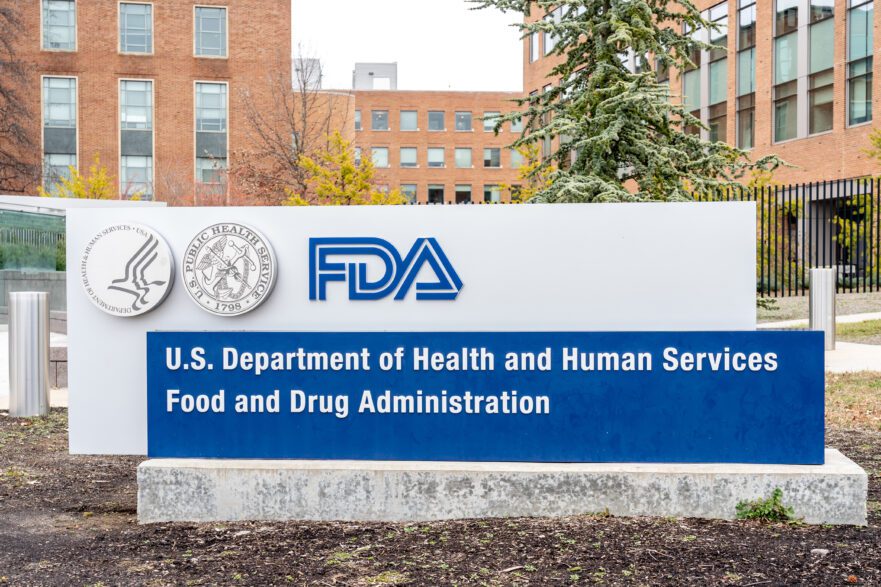

FDA drug safety updates have stalled amid new administration decisions, raising concerns about delayed warnings and public transparency

For a few months now, our writer Katie Rowley has been making sense of the Food and Drug Administration’s (FDA) updates on drug safety for MedShadow readers in her columns: FDA Side Effects Updates and FDA Drug Recalls and Warnings.
These updates, which include announcements of previously unknown risks or side effects of drugs already on the market, are often buried on the FDA’s website and filled with dense medical jargon. That’s why MedShadow is committed to making them more accessible — translating complex language into clear, easy-to-understand information. But if these updates stop, the public may have no way of knowing if their medication has just been linked to a serious, or even life-threatening, side effect.
So when Rowley noticed earlier this week that one particular database — the Drug Safety-Related Labeling Changes (SrLC) — hadn’t been updated in more than 20 days, she was concerned. Under normal circumstances, she says she sees updates at least every four days or so.
“Three and a half weeks is a long time not to have any updates,” she says. Rowley pointed out that in the 13-month period from March 1, 2024 to March 31, 2025, there were 773 updates. In just the month of March 2025, there were 92 updates. As of April 24, 2025, there have been zero for the month of April.
The drugs mentioned in these side effect updates are medications people take every day, such as non-steroidal anti-inflammatory drugs (NSAIDS), antipsychotic medications and Ozempic.
Some of MedShadow’s most-read Side Effect Update articles include:
Two New Side Effects of Ozempic
Antipsychotic Drugs and Breast Cancer Risk
Independent reporting on drug recalls, medication safety and integrative health, including supplements. No pharma funding.
NSAIDS and Life Threatening Reactions
Depo Provera and Brain Tumors, Veozah Boxed Warning and More
Gadolinium Contrast Agents and Lung Problems
After noticing the lack of updates, Rowley reached out to the FDA to inquire about the inactive status of the SrLC database, but received only an automated reply.
“Thank you for contacting the Division of Drug Information (DDI), your email is very important to us. Due to the HHS restructuring, effective April 1, 2025, our response time may vary. Thank you for your patience. You may also reach DDI by phone at 1-855-543-3784. If you reach us by phone, please let us know if you already sent an email.”
When I called the FDA’s 1-855 information line, a pharmacist confirmed that database updates had been delayed due to restructuring at the Department of Health and Human Services (HHS). After a brief hold, she said, “It looks like because of our HHS restructuring, some of the updates to many of our databases are delayed. We don’t have a specific date when that will be alleviated, but they are working on it.”
On April 24, 2025, Axios published an article with quotes from FDA officials who also confirmed Rowley’s suspicions. The officials told Axios that after layoffs of FDA staff, updates to databases that alert healthcare professionals and consumers to issues with drug quality and adverse events have been slower than usual and sometimes omit key information.
Staffing isn’t the only issue. Safety alerts — typically published within hours to protect consumers — have been delayed, potentially due to a new policy put in place in late January 2025 that required all health communications to be approved by the Department of Health and Human Services (HHS). An official told Axios that a recent alert about a joint pain supplement tainted with a corticosteroid and an NSAID took two weeks to be published, potentially leaving consumers unknowingly taking both drugs during that time.
“If you’re having to send everything through a central office, that’s really going to slow things down,” notes Rowley.
Timely, accurate information about drug safety and side effects is critical to MedShadow’s mission. The foundation continually advocates for increased transparency from regulators. If this lack of current safety information concerns you, we strongly recommend that you contact your representatives and ask them to prioritize ensuring the safety of our medications.
Use this link to find the contact information for your local representatives:
If you need help as to what to say, use this script as-is in an email, or refer to it during a phone call:
I’m one of your constituents, and I’ve recently learned that approval bottlenecks and FDA staffing cuts have led to delays and gaps in public warnings about tainted medications and newly discovered drug side effects.. I’m contacting you today to ask you to prioritize the health of your constituents by fighting to retain FDA staff and expedite crucial external communication.
If you’ve experienced side effects or medication issues related to this topic, we want to hear from you.
Submit Your StoryDISCLAIMER: MedShadow provides information and resources related to medications, their effects, and potential side effects. However, it is important to note that we are not a substitute for professional medical advice, diagnosis, or treatment. The content on our site is intended for educational and informational purposes only. Individuals dealing with medical conditions or symptoms should seek guidance from a licensed healthcare professional, such as a physician or pharmacist, who can provide personalized medical advice tailored to their specific circumstances.
While we strive to ensure the accuracy and reliability of the information presented on MedShadow, we cannot guarantee its completeness or suitability for any particular individual’s medical needs. Therefore, we strongly encourage users to consult with qualified healthcare professionals regarding any health-related concerns or decisions. By accessing and using MedShadow, you acknowledge and agree that the information provided on the site is not a substitute for professional medical advice and that you should always consult with a qualified healthcare provider for any medical concerns.

Help fund our fight for improved medication safety and transparency by supporting our independent journalism.
Give NowWe seek to create a world where there are safer medications for all and where all people are fully informed about their medication benefits and side effects, using our explanatory and investigative journalism to both inform and stimulate public discussion to drive toward solutions.
Stream our library on demand, including insights on generic drugs and pain management, straight from experts.
WATCH NOWMedShadow.org is dedicated to empowering people with our evidence-based journalism about the safest ways to take over-the-counter (OTC) and prescription (Rx) medications.
We also seek to stimulate public discussion about potential improvements to drug research, manufacturing and distribution processes. and also to encourage the improvement of processes to ensure that we are all better protected.
As a result, we encourage other nonprofit newsrooms, mission-aligned outlets, and advocacy organizations to republish our original content under the following conditions:
1. We Are Credited Fully and Clearly
You must include the byline and credit MedShadow.org as the original publisher. Please include a link to the original article at the top or bottom of the piece. Use the following attribution:
This article was originally published by MedShadow, a nonprofit foundation that focuses on the safest ways to take over-the-counter and prescription medications.
2. Our Content Isn’t Edited Without Permission
You may make small changes for clarity, such as adjusting headlines, subheadings, or transitions, but you may not change the core meaning, tone, or intent of the article. For substantive edits, email us at republish@medshadow.org for review and approval.
3. You Do Not Sell Or Use Our Content Commercially
Our work is free to share, but it may not be sold, monetized, or repurposed for commercial gain. You may not republish our articles behind a paywall or in publications whose primary purpose is advertising or product promotion. You may not place drug or supplement advertising adjacent to our story.
4. Photos, Graphics, and Multimedia Are Not Used Without Permission
Only the text of the article is available for republication. Images, graphics, and videos may not be reused without explicit written permission, unless they are clearly marked as Creative Commons licensed. Contact us if you’d like to request reuse of a visual asset.
If you’re unsure whether your intended use falls within these guidelines, or would like to discuss a formal syndication or licensing arrangement, please email: republish@medshadow.org
We want our journalism to reach as many people as possible, especially those making critical decisions about medications and health.
For website editors
Copy the article body, including its formatting and links, then paste it into your publishing system. Add the byline and required credit described in these guidelines.
<!-- wp:paragraph -->
<p>For a few months now, our writer <a href="https://medshadow.org/author/katie-rowley/" target="_blank" rel="noreferrer noopener">Katie Rowley</a> has been making sense of the Food and Drug Administration’s (FDA) updates on drug safety for MedShadow readers in her columns: FDA Side Effects Updates and FDA Drug Recalls and Warnings.</p>
<!-- /wp:paragraph -->
<!-- wp:paragraph -->
<p>These updates, which include announcements of previously unknown risks or side effects of drugs already on the market, are often buried on the FDA’s website and filled with dense medical jargon. That’s why MedShadow is committed to making them more accessible — translating complex language into clear, easy-to-understand information. But if these updates stop, the public may have no way of knowing if their medication has just been linked to a serious, or even life-threatening, side effect.</p>
<!-- /wp:paragraph -->
<!-- wp:paragraph -->
<p>So when Rowley noticed earlier this week that one particular database — the <a href="https://www.fda.gov/safety/medical-product-safety-information/drug-safety-related-labeling-changes" target="_blank" rel="noreferrer noopener">Drug Safety-Related Labeling Changes (SrLC)</a> — hadn’t been updated in more than 20 days, she was concerned. Under normal circumstances, she says she sees updates at least every four days or so.</p>
<!-- /wp:paragraph -->
<!-- wp:paragraph -->
<p>“Three and a half weeks is a long time not to have any updates,” she says. Rowley pointed out that in the 13-month period from March 1, 2024 to March 31, 2025, there were 773 updates. In just the month of March 2025, there were 92 updates. As of April 24, 2025, there have been zero for the month of April.</p>
<!-- /wp:paragraph -->
<!-- wp:paragraph -->
<p>The drugs mentioned in these side effect updates are medications people take every day, such as non-steroidal anti-inflammatory drugs (NSAIDS), antipsychotic medications and Ozempic.</p>
<!-- /wp:paragraph -->
<!-- wp:paragraph -->
<p>Some of MedShadow’s most-read Side Effect Update articles include: </p>
<!-- /wp:paragraph -->
<!-- wp:paragraph -->
<p><a href="https://medshadow.org/fda-side-effects-update-two-new-side-effects-of-ozempic/" target="_blank" rel="noreferrer noopener">Two New Side Effects of Ozempic</a></p>
<!-- /wp:paragraph -->
<!-- wp:paragraph -->
<p><a href="https://medshadow.org/fda-side-effects-update-antipsychotic-drugs-and-breast-cancer-risk/" target="_blank" rel="noreferrer noopener">Antipsychotic Drugs and Breast Cancer Risk</a></p>
<!-- /wp:paragraph -->
<!-- wp:paragraph -->
<p><a href="https://medshadow.org/nsaids-new-warning-about-rare-but-life-threatening-skin-reaction/" target="_blank" rel="noreferrer noopener">NSAIDS and Life Threatening Reactions</a></p>
<!-- /wp:paragraph -->
<!-- wp:paragraph -->
<p><a href="https://medshadow.org/fda-side-effects-update-depo-provera-brain-tumors/" target="_blank" rel="noreferrer noopener">Depo Provera and Brain Tumors, Veozah Boxed Warning and More</a></p>
<!-- /wp:paragraph -->
<!-- wp:paragraph -->
<p><a href="https://medshadow.org/fda-side-effects-update-paxil-pregnancy-and-sperm-count-rybelsus-risks/" target="_blank" rel="noreferrer noopener">Paxil’s Impact on Pregnancy</a></p>
<!-- /wp:paragraph -->
<!-- wp:paragraph -->
<p><a href="https://medshadow.org/fda-side-effects-update-gadolinium-contrast-agents-gbcas-lung-problems/" target="_blank" rel="noreferrer noopener">Gadolinium Contrast Agents and Lung Problems </a></p>
<!-- /wp:paragraph -->
<!-- wp:paragraph -->
<p>After noticing the lack of updates, Rowley reached out to the FDA to inquire about the inactive status of the SrLC database, but received only an automated reply.</p>
<!-- /wp:paragraph -->
<!-- wp:paragraph -->
<p>“Thank you for contacting the Division of Drug Information (DDI), your email is very important to us. <strong>Due to the HHS restructuring, effective April 1, 2025, our response time may vary. Thank you for your patience.</strong> You may also reach DDI by phone at 1-855-543-3784. If you reach us by phone, please let us know if you already sent an email.” </p>
<!-- /wp:paragraph -->
<!-- wp:paragraph {"className":""} -->
<p>When I called the FDA’s 1-855 information line, a pharmacist confirmed that database updates had been delayed due to restructuring at the Department of Health and Human Services (HHS). After a brief hold, she said, “It looks like because of our HHS restructuring, some of the updates to many of our databases are delayed. We don’t have a specific date when that will be alleviated, but they are working on it.”</p>
<!-- /wp:paragraph -->
<!-- wp:paragraph -->
<p>On April 24, 2025, <a href="https://www.axios.com/2025/04/24/fda-data-missing-doge-cuts?utm_source=newsletter&utm_medium=email&utm_campaign=newsletter_axiosvitals&stream=top" target="_blank" rel="noreferrer noopener">Axios</a> published an article with quotes from FDA officials who also confirmed Rowley’s suspicions. The officials told Axios that after layoffs of FDA staff, updates to databases that alert healthcare professionals and consumers to issues with drug quality and adverse events have been slower than usual and sometimes omit key information. </p>
<!-- /wp:paragraph -->
<!-- wp:paragraph -->
<p>Staffing isn’t the only issue. Safety alerts — typically published within hours to protect consumers — have been delayed, potentially due to a new policy put in place in late January 2025 that required all health communications to be approved by the Department of Health and Human Services (HHS). An official told <em>Axios</em> that <a href="https://www.fda.gov/drugs/medication-health-fraud/painflex-forte-may-be-harmful-due-hidden-drug-ingredients" target="_blank" rel="noreferrer noopener">a recent alert</a> about a joint pain supplement tainted with a corticosteroid and an NSAID took two weeks to be published, potentially leaving consumers unknowingly taking both drugs during that time.</p>
<!-- /wp:paragraph -->
<!-- wp:paragraph -->
<p>“If you’re having to send everything through a central office, that’s really going to slow things down,” notes Rowley.</p>
<!-- /wp:paragraph -->
<!-- wp:paragraph -->
<p>Timely, accurate information about drug safety and side effects is critical to MedShadow’s mission. The foundation continually advocates for increased transparency from regulators. If this lack of current safety information concerns you, we strongly recommend that you contact your representatives and ask them to prioritize ensuring the safety of our medications. </p>
<!-- /wp:paragraph -->
<!-- wp:paragraph -->
<p>Use this link to find the contact information for your local representatives:</p>
<!-- /wp:paragraph -->
<!-- wp:embed {"url":"https://www.usa.gov/elected-officials"} -->
<figure class="wp-block-embed"><div class="wp-block-embed__wrapper">
https://www.usa.gov/elected-officials
</div></figure>
<!-- /wp:embed -->
<!-- wp:paragraph -->
<p>If you need help as to what to say, use this script as-is in an email, or refer to it during a phone call:</p>
<!-- /wp:paragraph -->
<!-- wp:paragraph -->
<p><em>I’m one of your constituents, and I’ve recently learned that approval bottlenecks and FDA staffing cuts have led to delays and gaps in public warnings about tainted medications and newly discovered drug side effects.. I’m contacting you today to ask you to prioritize the health of your constituents by fighting to retain FDA staff and expedite crucial external communication. </em></p>
<!-- /wp:paragraph -->We think it’s invaluable — and hope you agree. Our work is made possible by donations from readers like you.
We think it’s invaluable — and hope you agree. Our journalism is made possible by donations from readers like you.
As a nonprofit, we don’t take a dime from pharmaceutical or supplement companies. That means we can report on the benefits, risks, and alternatives to prescription and over-the-counter drugs free from corporate pressure or influence.
No comments yet. Be the first to comment!
We've noticed that you're interested in this topic. Would you read a dedicated newsletter about it?