Andrew Kolodny, M.D., has treated enough people with opioid addiction to recognize withdrawal when he sees it: sweating, vomiting, agonizing pain. But increasingly, he says, patients are presenting with those familiar symptoms while also testing negative for opioids.
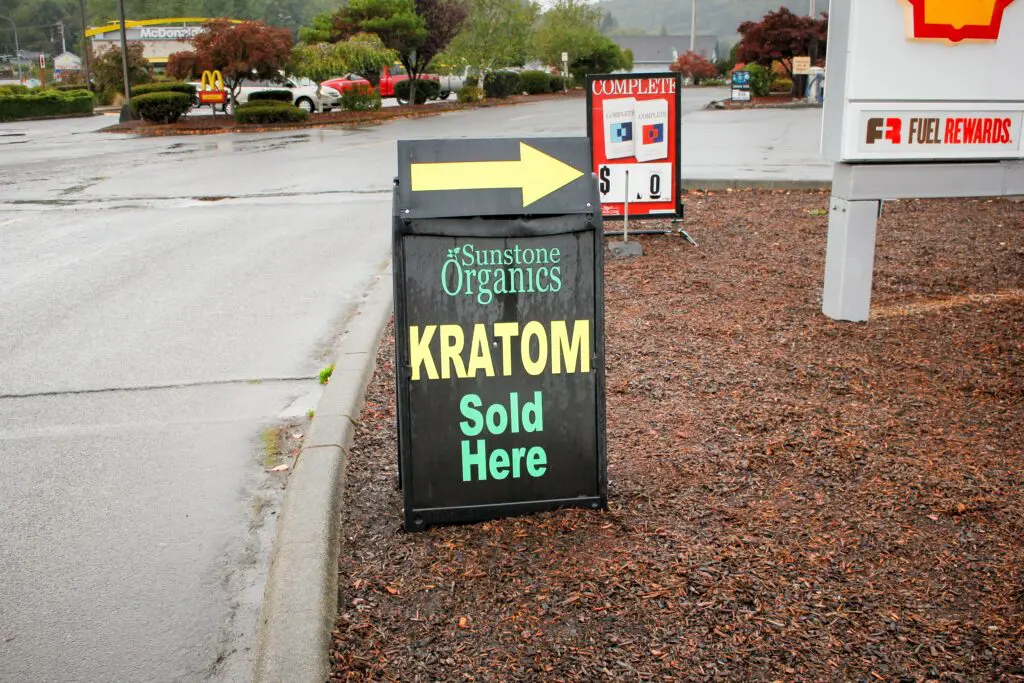
The culprit isn’t heroin or fentanyl. It’s kratom, a plant-based substance readily sold by gas stations, convenience stores, vape shops, and online vendors.
“While in the hospital, they weren’t using their kratom anymore, and they started to go through severe withdrawal,” says Dr. Kolodny, medical director of the Opioid Policy Research Collaborative at Brandeis University. “And the withdrawal from kratom is really no different than the withdrawal from other opioids. It can be an excruciating experience.”
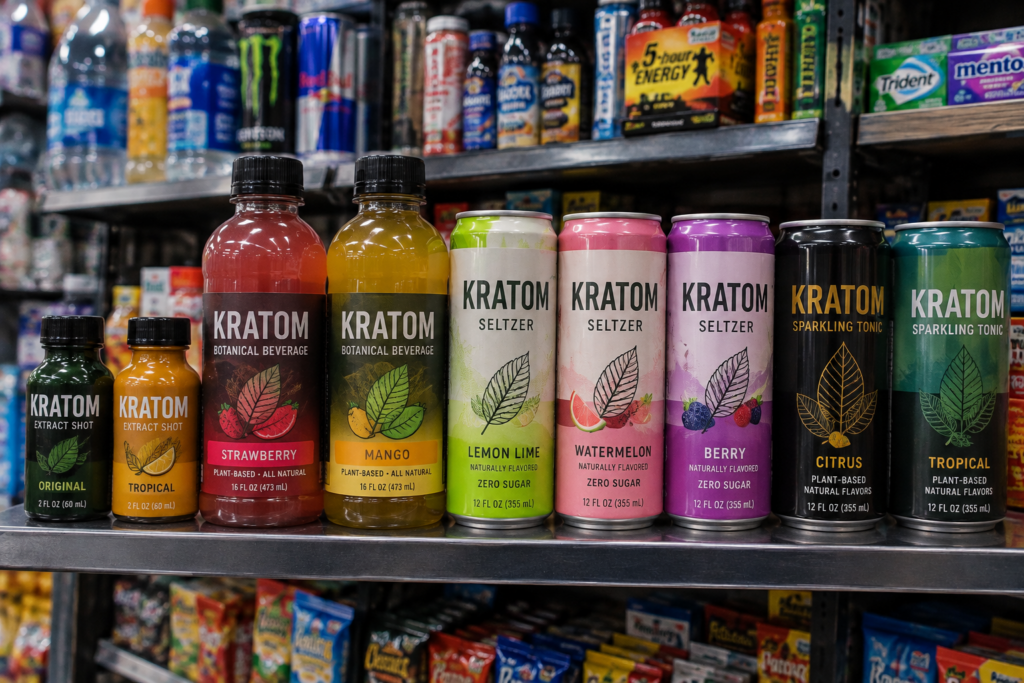
Many kratom products can look more like wellness aids than potentially addictive substances, coming in a variety of forms such as drinks, capsules, gummies, and powders. Some claim to enhance energy and focus, while others promise feelings of calm and clarity. But Dr. Kolodny, one of the first physicians to sound the alarm on the U.S. opioid crisis, warns that kratom poses substantial risks to users that are often downplayed or misunderstood.
“[Consumers] need to know it’s an opioid, which means that we can apply much of what we already know about opioids to kratom,” he says. “For example, we know that opioids are not good drugs for daily use because of tolerance and dependence.”
In a 2025 YouTube video titled “This Gas Station Drug Nearly Ruined My Life,” which has nearly 3 million views, creator Evan Edinger describes how kratom initially “felt like a miracle drug” for treating his attention deficit hyperactivity disorder (ADHD). In the video, Edinger says he was officially diagnosed with ADHD earlier in 2025 but had started taking kratom years before because he felt therapy wasn’t working and something “natural” seemed more appealing than traditional pharmaceuticals.
Eventually, however, the substance stopped working its magic, and he said he had to take more to stave off feeling awful: “What once was something I’d occasionally take to treat my ADHD slowly became something I had to take so that I wasn’t going to feel overwhelmingly anxious,” he told his viewers.
Comments below the video echo his experience, with users describing panic attacks and hellish withdrawals.
The U.S. Food and Drug Administration (FDA) has not approved any prescription kratom drug products or over-the-counter drugs containing kratom or its known alkaloids and warns consumers not to use kratom because of the risk of serious adverse events, including liver toxicity, seizures, and substance use disorder.
Despite these warnings, kratom’s popularity continues to skyrocket in the U.S., with over 5 million Americans reporting the use of kratom at least once in their lifetime.
What Is Kratom?
Kratom is a tropical evergreen tree (Mitragyna speciosa) native to Southeast Asia, whose leaves have been used for centuries to alleviate fatigue and pain. Traditionally, fresh leaves were chewed or brewed into tea. However, current Western formulations of powders and extracts are often much more concentrated than traditional preparations. Kratom began appearing in U.S. markets in leaf-based forms in the late twentieth century, with some experts suggesting that Americans increasingly turned to it as a substitute for prescription opioids.
Like some atypical opioids (such as tramadol), kratom has both opioid and stimulant-like effects. At lower doses, kratom can increase alertness, physical energy, and talkativeness, while at higher doses, it acts more like a sedative.
This unusual, dose-dependent profile is a result of over 40 known chemical compounds — called alkaloids — found in kratom leaves. The active alkaloids in kratom have a range of stimulant and depressive effects on the body. The most prominent is mitragynine, which works like an opioid compound with milder effects: it binds to the same receptors in your brain that fentanyl and oxycodone do, but it doesn’t activate them as strongly. In addition to opioid receptors, mitragynine also binds to receptors that likely produce some of the stimulant effects at low doses.
Another alkaloid, 7-hydroxymitragynine (7-OH), acts exclusively on opioid receptors and activates them at a level several times stronger than morphine. It is also generated from the metabolism of mitragynine in the liver. Concentrated, semi-synthetic 7-OH products in the form of tablets, drink mixes and shots, fruit-flavored gummies, and candies started appearing in the U.S. around 2023, sometimes labeled as kratom.
“Kratom is evolving,” says Abhisheak Sharma, M.Pharm., Ph.D., Assistant Professor of Pharmaceutics and Co-Director for Translational Drug Development Core at the University of Florida, Gainesville. “Kratom [started as] a leaf material, and then it moved to organic extracts, so they can put a very high dose in a small pill or liquid shot.” More recently, semi-synthetic derivatives have begun appearing on the market.
Kratom extracts can contain 5 to 50 times the alkaloid content of the native leaf, and purified compounds like 7-OH are associated with a higher risk of dependence and overdose potential. For example, a 2022 study in mice found that mitragynine could mildly suppress respiration but had a ceiling effect that prevented serious respiratory depression, whereas 7-OH did not.
In July, the U.S. Drug Enforcement Administration (DEA) filed its intent to temporarily place 7-OH above a specified threshold, along with three related substances, into Schedule I of the Controlled Substances Act, the category reserved for substances with a high potential for abuse and no accepted medical use. Three related semi-synthetic derivatives of 7-OH (mitragynine pseudoindoxyl, MGM-15, and MGM-16) have been classified as Schedule I for two years on an emergency basis.
Does Kratom Have Any Medical Benefits?
Despite the FDA’s warning against the use of kratom for medical treatment, researchers at the National Institute on Drug Abuse (NIDA) have been supporting and conducting research into its potential medicinal uses since at least 2020. In June, the NIDA’s Investigational New Drug (IND) application for mitragynine took effect with the FDA, paving the way for the first randomized, double-blind, placebo-controlled phase I clinical trial to assess the compound in humans. Kratom has a long history of medicinal use in Southeast Asia, and some studies suggest that it has therapeutic properties, such as pain-relieving and antidepressant benefits.
But evidence that kratom can safely and effectively treat medical conditions remains limited. A 2023 review found that people commonly reported using it for acute/chronic pain and psychiatric symptoms, sometimes with perceived benefits. The same research also documented intoxication and dependence, underscoring a central tension in the research: Kratom may have clinical potential, but its risks — and how to use it safely — are still not fully understood.
The Weekly Wrap-Up
Independent reporting on drug recalls, medication safety and integrative health, including supplements. No pharma funding.
From Self-Treatment to Dependence
Many who use kratom say they are seeking to self-treat chronic issues such as pain, anxiety, depression, and substance use disorders. However, like other opioids, repeated use of kratom can lead to physical dependence, withdrawal, and tolerance. While “kratom use disorder” is not formally included in the Diagnostic and Statistical Manual of Mental Disorders, Fifth Edition (DSM-5), researchers and clinicians use the term when kratom consumers meet the DSM-5 criteria for a substance use disorder.
A 2024 study of over 2,000 kratom users found that more than a quarter met criteria for kratom use disorder. Tolerance and withdrawal were the most commonly reported symptoms, followed by cravings, increased use, and inability to cut down on use. Similarly, nearly half of the more than 8,000 kratom users surveyed in 2017 reported experiencing withdrawal symptoms within 12 to 48 hours of stopping.
“One thing we know is, when you talk about the potential risks to kratom, there’s a very clear, pronounced withdrawal syndrome that can make stopping use of kratom difficult,” says Zach Walsh, Ph.D., Professor of Psychology at the University of British Columbia. “You can call that addiction if you like, for sure.”
Meanwhile, reports of kratom exposure to U.S. poison centers — and hospitalizations associated with them — have surged over the last decade. In 2025 alone, 53 U.S. poison centers collectively documented 3,434 exposures, a stark contrast to the 258 exposures reported in 2015. Most reports involved males and young adults aged 20-39 years, according to the 2026 study.
“We looked over the last 11 years to see how many reports to national poison centers included kratom, and to our surprise, reports increased 1,200%,” says study author Blair Towers, M.D., Ph.D., a psychiatry resident at the University of Virginia School of Medicine. “We were expecting it to increase, but I think the jump from 2024 to 2025, particularly, was really shocking.”
Exposure reports had largely plateaued from 2020 through 2024 before rising sharply in 2025. In a single year, the rate more than doubled, from 2,171 per 1 million drug exposures in 2024 to 4,445 per 1 million in 2025.
“The increase from 2024 to 2025 does align with record-high volumes of kratom-containing products entering the U.S.,” says Towers, citing an FDA Import Alert published in 2026. “We think that this jump from 2024 to 2025 could be attributed to increased access and increased supply in our country, and more people using the substance.”
Hospitalizations involving kratom have also risen dramatically: among single-substance exposures, they increased from 43 cases in 2015 to 538 in 2025. Hospitalizations involving multiple substances climbed from 40 to 549.
How Is Kratom Withdrawal Managed?
Severalcasestudies describe the use of buprenorphine or a combination of buprenorphine and naloxone (sold under the brand name Suboxone) for management of kratom use disorder. These medications, agents used for detoxification and withdrawal symptoms, are well-known for their efficacy in treating traditional opioid use disorder.
One case report describes a 54-year-old woman who went to the emergency department for weakness, fatigue, dizziness, and vomiting, diagnosed as kratom withdrawal. She had previously been taking 30mg of 7-OH extract daily and stopped, with an unknown time of last consumption. Clinicians gave her buprenorphine, slowly increasing the dose, and her symptoms gradually improved. She was discharged four days after admission with a 30-day supply of buprenorphine for maintenance and continued to follow up with the outpatient clinic for additional buprenorphine treatment.
The Dangers of Drug Interactions
For those who take kratom alongside prescription medications, recreational drugs, or alcohol, the risks can become even more complicated. Researchers are becoming increasingly concerned not only about the effects of combining psychoactive substances but also about kratom’s ability to interfere with the way the body processes certain medications.
According to the NIDA, case reports suggest that mixing kratom with other substances can lead to severe adverse effects, such as liver problems and death.
Dr. Towers and her colleagues saw evidence of this. While single-substance kratom exposures made up the majority (62%) of reports to poison centers, multiple-substance exposures were more likely to result in hospitalizations and serious medical outcomes. They also accounted for the vast majority of kratom-associated deaths.
The most common substances involved in multiple-substance exposure reports were alcohol, opioids, benzodiazepines, antidepressants, cannabis and cannabinoids, and stimulants.
“Essentially, if you’re taking something that is a stimulant or depressant of the nervous system, and you add on additional stimulants or depressants, you’re more or less amplifying the effects,” says Christopher McCurdy, Ph.D., distinguished professor of medicinal chemistry at the University of Florida College of Pharmacy. “We don’t understand all of the interactions and reactions with kratom and other substances, but it just stands to reason that if you additively combine multiple substances that give you psychoactivity, you’re going to enhance or create a riskier situation with those.”
In a 2025 review, Dr. McCurdy, Dr. Sharma, and their colleagues concluded that kratom may cause significant drug interactions, especially at high doses. Preclinical and clinical studies have demonstrated that kratom alkaloids can impact the pharmacokinetics and pharmacodynamics of other drugs, potentially increasing the risk of adverse effects or altering how well medications work.
For instance, mitragynine inhibits CYP3A4 and CYP2D6, enzymes responsible for metabolizing many medications, including opioids and benzodiazepines. When these enzymes are inhibited, drug levels in the blood can rise to dangerous levels, increasing the risk of toxicity and overdose.
“If somebody on a potent CYP2D6-metabolizing drug has high concentrations of mitragynine in their blood, then that particular CYP2D6 substance will go into an overdose kind of situation, and that person could die because of this drug interaction,” Dr. Sharma says.
But Dr. Towers cautions against interpreting the data to mean that kratom is dangerous only when combined with other substances. Her study also identified serious outcomes among reports involving kratom alone.
“One in four people just reporting kratom use were also hospitalized, and the deaths for 2025 were about equal in multiple- and single-substance use cases,” she says. “I don’t want the message just to be that using it with other substances is dangerous, because we are seeing concerns when it’s just kratom reported in these exposures.”
“An Opioid Available to Millions”
Many experts agree that the “Wild West” of today’s kratom industry — with 7-OH products and other semi-synthetics, as well as formulations that enable higher, more concentrated, and more frequent dosing — needs reining in.
Aside from the three banned 7-OH-related substances, there is currently no federal scheduling of kratom as a DEA-controlled substance. In 2016, the DEA announced plans to classify kratom and its alkaloids as Schedule I substances, but the notice was met with considerable backlash from members of Congress as well as kratom advocacy groups and subsequently set aside. The DEA currently lists kratom as a Drug and Chemical of Concern, and the FDA states that “kratom is not lawfully marketed in the U.S. as a drug product, a dietary supplement, or a food additive in conventional food.”
While not federally controlled, a growing number of states have taken matters into their own hands and either enacted an outright ban on kratom or regulated sales and possession.
At the time of publication, 10 states — Alabama, Arkansas, Connecticut, Indiana, Kansas, Louisiana, Massachusetts,, Tennessee, Vermont, and Wisconsin — ban kratom under state analogs of the Controlled Substances Act. California has a de facto commercial ban through the California Department of Public Health, which has declared the retail and online sale of kratom and 7-OH products in any form for consumption illegal.
Other states have age restrictions, such as banning sales to people under 18 or 21, or potency caps that prohibit the sale of products with high alkaloid content. Ohio, North Dakota, and Utah have banned “non-pure leaf kratom” products, including 7-OH and other semi-synthetics, and New York looks to follow suit.
But for physicians on the frontline, banning 7-OH alone isn’t enough. “People just using kratom, who we see clinically, need to be treated similarly to those with other opioid use disorders,” says Dr. Towers. “I’ve seen people in clinics being prescribed Suboxone for kratom use disorder, and I have seen them bring their products in. They are just labeled kratom, and are not 7-OH derivatives.”
“I think that this narrative of ‘7-OH bad, kratom good’ is wrong, and that’s a narrative that’s being pushed by the industry and pushed by scientists who have serious conflicts of interest,” Dr. Kolodny adds. He stresses that the DEA needs to control kratom in all its forms, not just 7-OH. Until then, an opioid will be available to millions of Americans without a prescription, just a simple click or short drive away.
DISCLAIMER: MedShadow provides information and resources related to medications, their effects, and potential side effects. However, it is important to note that we are not a substitute for professional medical advice, diagnosis, or treatment. The content on our site is intended for educational and informational purposes only. Individuals dealing with medical conditions or symptoms should seek guidance from a licensed healthcare professional, such as a physician or pharmacist, who can provide personalized medical advice tailored to their specific circumstances.
While we strive to ensure the accuracy and reliability of the information presented on MedShadow, we cannot guarantee its completeness or suitability for any particular individual’s medical needs. Therefore, we strongly encourage users to consult with qualified healthcare professionals regarding any health-related concerns or decisions. By accessing and using MedShadow, you acknowledge and agree that the information provided on the site is not a substitute for professional medical advice and that you should always consult with a qualified healthcare provider for any medical concerns.
We seek to create a world where there are safer medications for all and where all people are fully informed about their medication benefits and side effects, using our explanatory and investigative journalism to both inform and stimulate public discussion to drive toward solutions.
MedShadow.org is dedicated to empowering people with our evidence-based journalism about the safest ways to take over-the-counter (OTC) and prescription (Rx) medications.
We also seek to stimulate public discussion about potential improvements to drug research, manufacturing and distribution processes. and also to encourage the improvement of processes to ensure that we are all better protected.
As a result, we encourage other nonprofit newsrooms, mission-aligned outlets, and advocacy organizations to republish our original content under the following conditions:
You May Republish Our Articles for Free If:
1. We Are Credited Fully and Clearly
You must include the byline and credit MedShadow.org as the original publisher. Please include a link to the original article at the top or bottom of the piece. Use the following attribution:
This article was originally published by MedShadow, a nonprofit foundation that focuses on the safest ways to take over-the-counter and prescription medications.
2. Our Content Isn’t Edited Without Permission
You may make small changes for clarity, such as adjusting headlines, subheadings, or transitions, but you may not change the core meaning, tone, or intent of the article. For substantive edits, email us at republish@medshadow.org for review and approval.
3. You Do Not Sell Or Use Our Content Commercially
Our work is free to share, but it may not be sold, monetized, or repurposed for commercial gain. You may not republish our articles behind a paywall or in publications whose primary purpose is advertising or product promotion. You may not place drug or supplement advertising adjacent to our story.
4. Photos, Graphics, and Multimedia Are Not Used Without Permission
Only the text of the article is available for republication. Images, graphics, and videos may not be reused without explicit written permission, unless they are clearly marked as Creative Commons licensed. Contact us if you’d like to request reuse of a visual asset.
You May Not:
Use our content to promote a product, service, or political candidate
Republish only part of an article or create derivative works without permission
Add affiliate links, advertising overlays, or lead generators
Translate the article without written permission
Contact Us
If you’re unsure whether your intended use falls within these guidelines, or would like to discuss a formal syndication or licensing arrangement, please email: republish@medshadow.org
We want our journalism to reach as many people as possible, especially those making critical decisions about medications and health.
For website editors
Copy the article HTML
Copy the article body, including its formatting and links, then paste it into your publishing system. Add the byline and required credit described in these guidelines.
Preview article HTML
<!-- wp:paragraph -->
<p><a href="https://scholarworks.brandeis.edu/esploro/profile/andrew_kolodny/overview">Andrew Kolodny</a>, M.D., has treated enough people with opioid addiction to recognize withdrawal when he sees it: sweating, vomiting, agonizing pain. But increasingly, he says, patients are presenting with those familiar symptoms while also testing negative for opioids.</p>
<!-- /wp:paragraph -->

<!-- wp:paragraph -->
<p>The culprit isn’t heroin or fentanyl. It’s kratom, a plant-based substance readily sold by gas stations, convenience stores, vape shops, and online vendors.</p>
<!-- /wp:paragraph -->

<!-- wp:paragraph -->
<p>“While in the hospital, they weren't using their kratom anymore, and they started to go through severe withdrawal,” says Dr. Kolodny, medical director of the Opioid Policy Research Collaborative at Brandeis University. “And the withdrawal from kratom is really no different than the withdrawal from other opioids. It can be an excruciating experience.”<br><br>Many kratom products can look more like wellness aids than potentially addictive substances, coming in a variety of forms such as drinks, capsules, gummies, and powders. Some claim to enhance <a href="https://botanictonics.com/products/feel-free-classic-tonic">energy and focus</a>, while others promise feelings of <a href="https://drinknewbrew.com/">calm and clarity</a>. But Dr. Kolodny, one of the first physicians <a href="https://www.brandeis.edu/magazine/2018/spring/featured-stories/opioid.html">to sound the alarm on the U.S. opioid crisis</a>, warns that kratom poses substantial risks to users that are often downplayed or misunderstood.<br><br>“[Consumers] need to know it's an <a href="https://medshadow.org/drug-updates-recalls/drug-safety/inconsistent-generic-opioids-patient-stories/">opioid</a>, which means that we can apply much of what we already know about opioids to kratom,” he says. “For example, we know that opioids are not good drugs for daily use because of tolerance and dependence.”</p>
<!-- /wp:paragraph -->

<!-- wp:paragraph -->
<p>Across social media, kratom users describe needing increasingly frequent or higher doses and experiencing brutal withdrawal symptoms when they try to stop. On Reddit, the <a href="https://www.reddit.com/r/quittingkratom/">r/QuittingKratom</a> forum serves as an online support group composed of nearly 20,000 members, with posts bearing titles like <a href="https://www.reddit.com/r/quittingkratom/comments/1w4psp5/getting_on_kratom_was_a_horrible_mistake/">“getting on kratom was a horrible mistake,”</a> <a href="https://www.reddit.com/r/quittingkratom/comments/1w50oqu/never_thought_i_had_any_dependency_on_kratom/">“Never thought I had any dependency on Kratom. blindsided,”</a> and <a href="https://www.reddit.com/r/quittingkratom/comments/1vya25c/i_was_ignorant_to_how_badly_kratom_has_been/">“I was ignorant to how badly kratom has been destroying me...”<br><br></a>In a 2025 YouTube video titled <a href="https://www.youtube.com/watch?v=TLObpcBR2yw">“This Gas Station Drug Nearly Ruined My Life,”</a> which has nearly 3 million views, creator Evan Edinger describes how kratom initially “felt like a miracle drug” for treating his attention deficit hyperactivity disorder (ADHD). In the video, Edinger says he was officially <a href="https://medshadow.org/conditions-treatments/adhd/investigating-generics-the-trouble-with-generic-vyvanse/">diagnosed with ADHD</a> earlier in 2025 but had started taking kratom years before because he felt therapy wasn’t working and something “natural” seemed more appealing than traditional pharmaceuticals. </p>
<!-- /wp:paragraph -->

<!-- wp:paragraph -->
<p>Eventually, however, the substance stopped working its magic, and he said he had to take more to stave off feeling awful: “What once was something I’d occasionally take to treat my ADHD slowly became something I had to take so that I wasn’t going to feel overwhelmingly anxious,” he told his viewers. </p>
<!-- /wp:paragraph -->

<!-- wp:paragraph -->
<p>Comments below the video echo his experience, with users describing panic attacks and hellish withdrawals.<br><br>The <a href="https://www.fda.gov/news-events/public-health-focus/fda-and-kratom">U.S. Food and Drug Administration (FDA)</a> has not approved any prescription kratom drug products or over-the-counter drugs containing kratom or its known alkaloids and warns consumers not to use kratom because of the risk of serious adverse events, including liver toxicity, seizures, and substance use disorder. </p>
<!-- /wp:paragraph -->

<!-- wp:paragraph -->
<p>Despite these warnings, kratom’s popularity continues to <a href="https://ihpi.umich.edu/news-events/news/national-study-finds-kratom-use-rising">skyrocket</a> in the U.S., with <a href="https://www.ovid.com/jnls/journaladdictionmedicine/abstract/10.1097/adm.0000000000001701~kratom-use-and-associations-with-mental-health-in-the-united">over 5 million Americans</a> reporting the use of kratom at least once in their lifetime.</p>
<!-- /wp:paragraph -->

<!-- wp:heading -->
<h2 class="wp-block-heading">What Is Kratom?</h2>
<!-- /wp:heading -->

<!-- wp:paragraph -->
<p><a href="https://www.tandfonline.com/doi/full/10.1080/13880209.2025.2590311">Kratom</a> is a tropical evergreen tree (<em>Mitragyna speciosa</em>) native to Southeast Asia, whose leaves have been used for centuries to alleviate fatigue and pain. Traditionally, fresh leaves were chewed or brewed into tea. However, current Western formulations of powders and extracts are often much more concentrated than traditional preparations. Kratom began appearing in U.S. markets in <a href="https://analyticalsciencejournals.onlinelibrary.wiley.com/doi/full/10.1002/dta.70122?casa_token=9E9pH8nhBDsAAAAA%3A_8aBYT95e8gUMES6N6rjOGmTuYp9letu7d2nxAyNIMOyduZTIESQ-HKKuLSGySplJHhyuhCeHj0FNfM">leaf-based forms</a> in the late twentieth century, with some experts suggesting that Americans increasingly turned to it as a <a href="https://link.springer.com/article/10.1007/s40429-023-00476-5">substitute for prescription opioids</a>.<br><br>Like some atypical opioids (such as tramadol), <a href="https://www.dea.gov/factsheets/kratom">kratom</a> has both opioid and stimulant-like effects. At lower doses, kratom can increase alertness, physical energy, and talkativeness, while at higher doses, it acts more like a sedative.</p>
<!-- /wp:paragraph -->

<!-- wp:paragraph -->
<p>This unusual, dose-dependent profile is a result of <a href="https://link.springer.com/article/10.1007/s11920-025-01631-7">over 40 known chemical compounds</a> — called alkaloids — found in kratom leaves. The active alkaloids in kratom have a range of stimulant and depressive effects on the body. The most prominent is mitragynine, which works like an opioid compound with milder effects: it binds to the same receptors in your brain that fentanyl and oxycodone do, but it doesn’t activate them as strongly. In addition to opioid receptors, mitragynine also binds to receptors that likely produce some of the stimulant effects at low doses.</p>
<!-- /wp:paragraph -->

<!-- wp:image {"id":35294,"sizeSlug":"large","linkDestination":"none"} -->
<figure class="wp-block-image size-large"><img src="https://medshadow.org/wp-content/uploads/2026/10/Colorful-Kratom-Beverage-Shelf-Display-1-1024x683.png" alt="" class="wp-image-35294"/></figure>
<!-- /wp:image -->

<!-- wp:paragraph -->
<p>Another alkaloid, 7-hydroxymitragynine (7-OH), acts exclusively on opioid receptors and activates them at a level several times stronger than morphine. It is also generated from the metabolism of mitragynine in the liver. Concentrated, semi-synthetic 7-OH products in the form of tablets, drink mixes and shots, fruit-flavored gummies, and candies started appearing in the U.S. <a href="https://jamanetwork.com/journals/jama/fullarticle/2838093">around 2023</a>, sometimes labeled as kratom.<br><br>“Kratom is evolving,” says <a href="https://pharmacy.ufl.edu/profile/sharma-abhisheak/">Abhisheak Sharma</a>, M.Pharm., Ph.D., Assistant Professor of Pharmaceutics and Co-Director for Translational Drug Development Core at the University of Florida, Gainesville. “Kratom [started as] a leaf material, and then it moved to organic extracts, so they can put a very high dose in a small pill or liquid shot.” More recently, semi-synthetic derivatives have begun appearing on the market.<br><br>Kratom extracts can contain <a href="https://www.dovepress.com/a-review-of-kratom-product-evolution-and-its-associated-health-outcome-peer-reviewed-fulltext-article-SAR">5 to 50 times</a> the alkaloid content of the native leaf, and purified compounds like 7-OH are associated with a higher risk of dependence and overdose potential. For example, a 2022 <a href="https://bpspubs.onlinelibrary.wiley.com/doi/10.1111/bph.15832">study</a> in mice found that mitragynine could mildly suppress respiration but had a ceiling effect that prevented serious respiratory depression, whereas 7-OH did not.<br><br>In July, the U.S. Drug Enforcement Administration (DEA) <a href="https://www.dea.gov/press-releases/2026/07/01/dea-temporarily-schedule-7-oh-and-related-substances-protect-public">filed its intent</a> to temporarily place 7-OH above a specified threshold, along with three related substances, into <a href="https://medshadow.org/drug-updates-recalls/drug-safety/controlled-drug-classifications-schedule-i-ii-iii-iv-v/">Schedule I</a> of the Controlled Substances Act, the category reserved for substances with a high potential for abuse and no accepted medical use. Three related semi-synthetic derivatives of 7-OH (mitragynine pseudoindoxyl, MGM-15, and MGM-16) have been <a href="https://www.justice.gov/opa/pr/justice-department-announces-emergency-scheduling-three-potent-opioid-compounds">classified as Schedule I</a> for two years on an emergency basis.</p>
<!-- /wp:paragraph -->

<!-- wp:heading {"level":3} -->
<h3 class="wp-block-heading">Does Kratom Have Any Medical Benefits?</h3>
<!-- /wp:heading -->

<!-- wp:paragraph -->
<p>Despite the FDA’s warning against the use of kratom for medical treatment, researchers at the <a href="https://nida.nih.gov/research-topics/kratom#medicine">National Institute on Drug Abuse (NIDA)</a> have been supporting and conducting research into its potential medicinal uses since <a href="https://www.thieme-connect.com/products/ejournals/abstract/10.1055/a-1212-5475">at least 2020</a>. In June, the NIDA’s <a href="https://nida.nih.gov/news-events/news-releases/2026/6/nih-research-clears-way-for-study-of-experimental-treatment-for-opioid-use-disorder">Investigational New Drug (IND) application</a> for mitragynine took effect with the FDA, paving the way for the first randomized, double-blind, placebo-controlled phase I clinical trial to assess the compound in humans. Kratom has a long history of medicinal use in Southeast Asia, and some studies suggest that it has therapeutic properties, such as pain-relieving and antidepressant benefits. </p>
<!-- /wp:paragraph -->

<!-- wp:paragraph -->
<p>But evidence that kratom can safely and effectively treat medical conditions remains limited. A 2023 <a href="https://link.springer.com/article/10.1007/s40429-023-00478-3">review</a> found that people commonly reported using it for acute/chronic pain and psychiatric symptoms, sometimes with perceived benefits. The same research also documented intoxication and dependence, underscoring a central tension in the research: Kratom may have clinical potential, but its risks — and how to use it safely — are still not fully understood.</p>
<!-- /wp:paragraph -->

<!-- wp:heading -->
<h2 class="wp-block-heading">From Self-Treatment to Dependence</h2>
<!-- /wp:heading -->

<!-- wp:paragraph -->
<p>Many who use kratom say they are seeking to <a href="https://doi.org/10.1080/00952990.2024.2414319">self-treat</a> chronic issues such as pain, anxiety, depression, and substance use disorders. <a href="https://nida.nih.gov/research-topics/kratom#medicine"></a>However, like other opioids, repeated use of kratom can lead to physical dependence, withdrawal, and tolerance. While “kratom use disorder” is not formally included in the <em>Diagnostic and Statistical Manual of Mental Disorders</em>, <em>Fifth Edition</em> (<em>DSM-5</em>), researchers and clinicians use the term when kratom consumers meet the DSM-5 criteria for a substance use disorder.<br><br>A 2024 <a href="https://www.ovid.com/jnls/journaladdictionmedicine/fulltext/10.1097/adm.0000000000001290~prevalence-of-kratom-use-disorder-among-kratom-consumers?an=01271255-202405000-00013&casa_token=yMDahvwadCwAAAAA%3A_IG886e5QaZ1VRk8sdjA1d5VNdd4VPfIzO1OPXKrr1YFeMsp_bX7m3LU-BxS8mj9ohG8APYGPczSxnFpk0CkX6k">study</a> of over 2,000 kratom users found that more than a quarter met criteria for kratom use disorder. Tolerance and withdrawal were the most commonly reported symptoms, followed by cravings, increased use, and inability to cut down on use. Similarly, nearly half of the more than 8,000 kratom users surveyed in 2017 <a href="https://www.sciencedirect.com/science/article/abs/pii/S0376871617301825">reported</a> experiencing withdrawal symptoms within 12 to 48 hours of stopping.<br><br>“One thing we know is, when you talk about the potential risks to kratom, there's a very clear, pronounced withdrawal syndrome that can make stopping use of kratom difficult,” says <a href="https://psych.ok.ubc.ca/about/contact/zach-walsh/">Zach Walsh</a>, Ph.D., Professor of Psychology at the University of British Columbia. “You can call that addiction if you like, for sure.”</p>
<!-- /wp:paragraph -->

<!-- wp:paragraph -->
<p>Meanwhile, reports of kratom exposure to U.S. poison centers — and hospitalizations associated with them — have surged over the last decade. In 2025 alone, 53 U.S. poison centers collectively documented 3,434 exposures, a stark contrast to the 258 exposures reported in 2015. Most reports involved males and young adults aged 20-39 years, according to the 2026 <a href="https://www.cdc.gov/mmwr/volumes/75/wr/mm7511a1.htm?utm_campaign=13476383-Psychiatric%20News%20Alert&utm_medium=email&_hsmi=411334574&utm_content=411334574&utm_source=hs_email#suggestedcitation">study</a>.<br><br>“We looked over the last 11 years to see how many reports to national poison centers included kratom, and to our surprise, reports increased 1,200%,” says study author <a href="https://search.people.virginia.edu/person/et3h">Blair Towers</a>, M.D., Ph.D., a psychiatry resident at the University of Virginia School of Medicine. “We were expecting it to increase, but I think the jump from 2024 to 2025, particularly, was really shocking.”<br><br>Exposure reports had largely plateaued from 2020 through 2024 before rising sharply in 2025. In a single year, the rate more than doubled, from 2,171 per 1 million drug exposures in 2024 to 4,445 per 1 million in 2025. </p>
<!-- /wp:paragraph -->

<!-- wp:paragraph -->
<p>“The increase from 2024 to 2025 does align with record-high volumes of kratom-containing products entering the U.S.,” says Towers, citing an <a href="https://www.accessdata.fda.gov/CMS_IA/importalert_1137.html">FDA Import Alert</a> published in 2026. “We think that this jump from 2024 to 2025 could be attributed to increased access and increased supply in our country, and more people using the substance.”</p>
<!-- /wp:paragraph -->

<!-- wp:paragraph -->
<p>Hospitalizations involving kratom have also risen dramatically: among single-substance exposures, they increased from 43 cases in 2015 to 538 in 2025. Hospitalizations involving multiple substances climbed from 40 to 549.</p>
<!-- /wp:paragraph -->

<!-- wp:myplugin/custom-alignment-block {"align":"right"} -->
<div class="wp-block-myplugin-custom-alignment-block alignright"><h2><strong>How Is Kratom Withdrawal Managed?</strong></h2><p><a href="https://accp1.onlinelibrary.wiley.com/doi/full/10.1002/jcph.2001?casa_token=rjZk_scOBoUAAAAA%3AlYnISfAub0pGnXafZENTdaMKgkvl_5CZ2ihkOX_2gyFv8KCFykVSG_LQgIUCGFe-7AB8PzvBUcRPqYQ">Several</a> <a href="https://www.tandfonline.com/doi/full/10.1080/15563650.2025.2552436">case</a> <a href="https://www.tandfonline.com/doi/full/10.1080/02791072.2024.2424278?casa_token=kY7IcxzGSpcAAAAA%3Aw27nOVLK-32LySCEBC4KuKXICV7nniv1MW4wK9AYko27cCBSV_OrTN6jNIBo7dGptsDr2vaoWNmD">studies</a> describe the use of buprenorphine or a combination of buprenorphine and naloxone (sold under the brand name Suboxone) for management of kratom use disorder. These medications, agents used for detoxification and withdrawal symptoms, are well-known for their efficacy in treating traditional opioid use disorder. <br><br>One <a href="https://www.tandfonline.com/doi/full/10.1080/15563650.2025.2552436">case report</a> describes a 54-year-old woman who went to the emergency department for weakness, fatigue, dizziness, and vomiting, diagnosed as kratom withdrawal. She had previously been taking 30mg of 7-OH extract daily and stopped, with an unknown time of last consumption. Clinicians gave her buprenorphine, slowly increasing the dose, and her symptoms gradually improved. She was discharged four days after admission with a 30-day supply of buprenorphine for maintenance and continued to follow up with the outpatient clinic for additional buprenorphine treatment. </p></div>
<!-- /wp:myplugin/custom-alignment-block -->

<!-- wp:heading -->
<h2 class="wp-block-heading">The Dangers of Drug Interactions</h2>
<!-- /wp:heading -->

<!-- wp:paragraph -->
<p>For those who take kratom alongside prescription medications, recreational drugs, or alcohol, the risks can become even more complicated. Researchers are becoming increasingly concerned not only about the effects of combining psychoactive substances but also about kratom’s ability to interfere with the way the body processes certain medications.</p>
<!-- /wp:paragraph -->

<!-- wp:paragraph -->
<p>According to the <a href="https://nida.nih.gov/research-topics/kratom#safe">NIDA</a>, case reports suggest that mixing kratom with other substances can lead to severe adverse effects, such as liver problems and death.<br><br>Dr. Towers and her colleagues saw evidence of this. While single-substance kratom exposures made up the majority (62%) of reports to poison centers, multiple-substance exposures were more likely to result in hospitalizations and serious medical outcomes. They also accounted for the vast majority of kratom-associated deaths. </p>
<!-- /wp:paragraph -->

<!-- wp:paragraph -->
<p>The most common substances involved in multiple-substance exposure reports were alcohol, opioids, benzodiazepines, <a href="https://medshadow.org/drug-updates-recalls/fda-side-effect-updates/antidepressants-stimulants-interfere-with-parkinsons-test/">antidepressants</a>, <a href="https://medshadow.org/conditions-treatments/cannabis/risk-and-relief-reckoning-with-the-complicated-side-effects-of-cannabis/">cannabis</a> and cannabinoids, and stimulants.<br><br>“Essentially, if you're taking something that is a stimulant or depressant of the nervous system, and you add on additional stimulants or depressants, you're more or less amplifying the effects,” says <a href="https://pharmacy.ufl.edu/profile/mccurdy-christopher/">Christopher McCurdy</a>, Ph.D., distinguished professor of medicinal chemistry at the University of Florida College of Pharmacy. “We don't understand all of the interactions and reactions with kratom and other substances, but it just stands to reason that if you additively combine multiple substances that give you psychoactivity, you're going to enhance or create a riskier situation with those.”<br><br>In a 2025 <a href="https://doi.org/10.1080/17425255.2025.2521045">review</a>, Dr. McCurdy, Dr. Sharma, and their colleagues concluded that kratom may cause significant drug interactions, especially at high doses. Preclinical and clinical studies have demonstrated that kratom alkaloids can impact the pharmacokinetics and pharmacodynamics of other drugs, potentially increasing the risk of adverse effects or altering how well medications work.<br><br>For instance, mitragynine inhibits CYP3A4 and CYP2D6, enzymes responsible for metabolizing many medications, including opioids and benzodiazepines. When these enzymes are inhibited, drug levels in the blood can rise to dangerous levels, increasing the risk of toxicity and overdose.<br><br>“If somebody on a potent CYP2D6-metabolizing drug has high concentrations of mitragynine in their blood, then that particular CYP2D6 substance will go into an overdose kind of situation, and that person could die because of this drug interaction,” Dr. Sharma says.<br><br>But Dr. Towers cautions against interpreting the data to mean that kratom is dangerous only when combined with other substances. Her study also identified serious outcomes among reports involving kratom alone. </p>
<!-- /wp:paragraph -->

<!-- wp:paragraph -->
<p>“One in four people just reporting kratom use were also hospitalized, and the deaths for 2025 were about equal in multiple- and single-substance use cases,” she says. “I don't want the message just to be that using it with other substances is dangerous, because we are seeing concerns when it's just kratom reported in these exposures.”</p>
<!-- /wp:paragraph -->

<!-- wp:heading -->
<h2 class="wp-block-heading">“An Opioid Available to Millions”</h2>
<!-- /wp:heading -->

<!-- wp:paragraph -->
<p>Many experts agree that the “Wild West” of today’s kratom industry — with 7-OH products and other semi-synthetics, as well as formulations that enable higher, more concentrated, and more frequent dosing — needs reining in.<br><br>Aside from the three banned 7-OH-related substances, there is currently <a href="https://www.congress.gov/crs_external_products/LSB/PDF/LSB11082/LSB11082.1.pdf">no federal scheduling</a> of kratom as a DEA-controlled substance. In 2016, the DEA announced plans to classify kratom and its alkaloids as Schedule I substances, but the notice was met with considerable backlash from members of Congress as well as kratom advocacy groups and subsequently set aside. The DEA currently lists kratom as a <a href="https://www.dea.gov/sites/default/files/2025-01/Kratom-Drug-Fact-Sheet.pdf">Drug and Chemical of Concern</a>, and the FDA states that “kratom is not lawfully marketed in the U.S. as a drug product, a dietary supplement, or a food additive in conventional food.”<br><br>While not federally controlled, <a href="https://rockinst.org/issue-areas/state-local-government/kratom-policy-dashboard/">a growing number of states</a> have taken matters into their own hands and either enacted an outright ban on kratom or regulated sales and possession.<br><br>At the time of publication, 10 states — Alabama, Arkansas, Connecticut, Indiana, Kansas, Louisiana, Massachusetts,, Tennessee, Vermont, and Wisconsin — ban kratom under state analogs of the Controlled Substances Act. California has a de facto commercial ban through the <a href="https://www.cdph.ca.gov/Programs/CEH/DFDCS/CDPH%20Document%20Library/FDB/FoodSafetyProgram/KratomLetterTobaccoRetailers.pdf">California Department of Public Health</a>, which has declared the retail and online sale of kratom and 7-OH products in any form for consumption illegal.<br><br>Other states have age restrictions, such as banning sales to people under 18 or 21, or potency caps that prohibit the sale of products with high alkaloid content. Ohio, North Dakota, and Utah have banned “non-pure leaf kratom” products, including 7-OH and other semi-synthetics, and <a href="https://www.localsyr.com/news/local-news/ban-on-7-oh-products/">New York</a> looks to follow suit.<br><br>But for physicians on the frontline, banning 7-OH alone isn’t enough. "People just using kratom, who we see clinically, need to be treated similarly to those with other opioid use disorders,” says Dr. Towers. “I've seen people in clinics being prescribed Suboxone for kratom use disorder, and I have seen them bring their products in. They are just labeled kratom, and are not 7-OH derivatives.”<br><br>“I think that this narrative of ‘7-OH bad, kratom good’ is wrong, and that's a narrative that's being pushed by the industry and pushed by scientists who have serious conflicts of interest,” Dr. Kolodny adds. He stresses that the DEA needs to control kratom in all its forms, not just 7-OH. Until then, an opioid will be available to millions of Americans without a prescription, just a simple click or short drive away.</p>
<!-- /wp:paragraph -->
What is unbiased drug-safety journalism worth to you?
We think it’s invaluable — and hope you agree. Our work is made possible by donations from readers like you.
What is Unbiased Drug-Safety Journalism Worth to You?
We think it’s invaluable — and hope you agree. Our journalism is made possible by donations from readers like you.
As a nonprofit, we don’t take a dime from pharmaceutical or supplement companies. That means we can report on the benefits, risks, and alternatives to prescription and over-the-counter drugs free from corporate pressure or influence.



 Shedding Light on the Risks
& Benefits of Medications