Photo: Shutterstock
The Trump administration is seeking industry input as it pushes to increase domestic production of critical generic drugs

Photo: Shutterstock
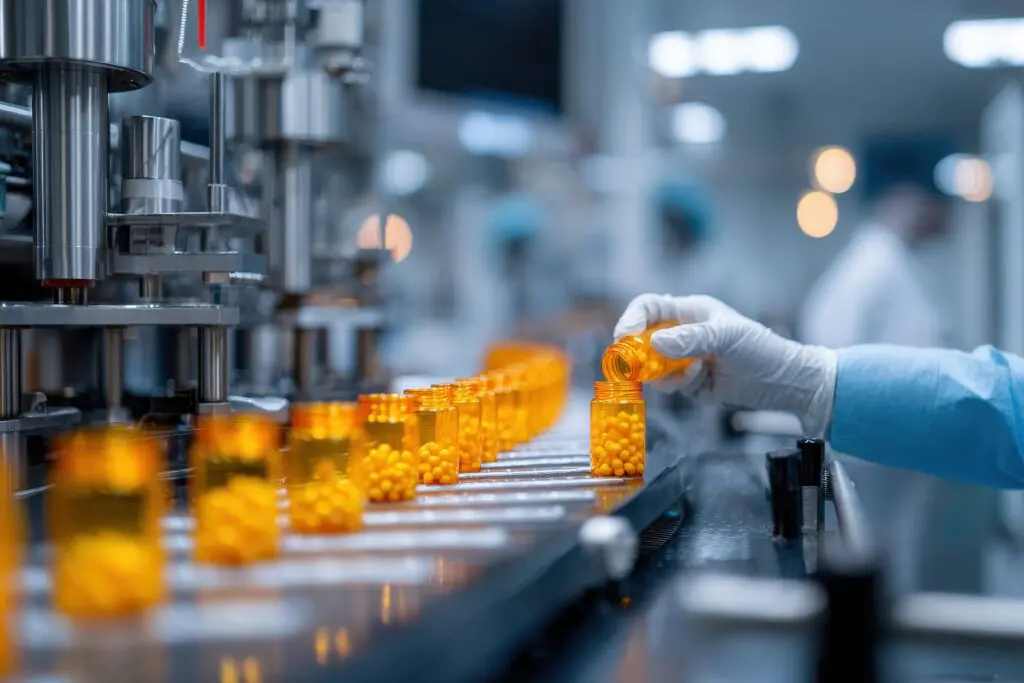
The Trump administration is seeking information from drug companies about their ability to support domestic production of critical generic drugs that are currently largely sourced overseas, amid concerns about drug shortages and national security.
Reliance on foreign manufacturers for medicines Americans depend on every day has come under greater scrutiny as the COVID-19 pandemic and ongoing geopolitical conflicts have exposed vulnerabilities in the pharmaceutical supply chain.
On September 25, the Office of Management and Budget (OMB), a White House office that oversees federal spending, published a request for information seeking market research on domestic and near-shore manufacturing capacity for 86 essential medicines, mostly generics.
The administration says it aims to secure production of those drugs and their ingredients within 18 months.
Drug manufacturers can participate voluntarily, and the request does not commit the government to action. OMB also wants the same information on domestic and near-shore production of the antibiotics amoxicillin and ciprofloxacin, citing potential supply chain vulnerabilities.
“There is a reason manufacturing has been moving overseas, and most of it is cost,” said Erin Fox, PharmD, associate chief pharmacy officer at University of Utah Health and a national expert on drug shortages.
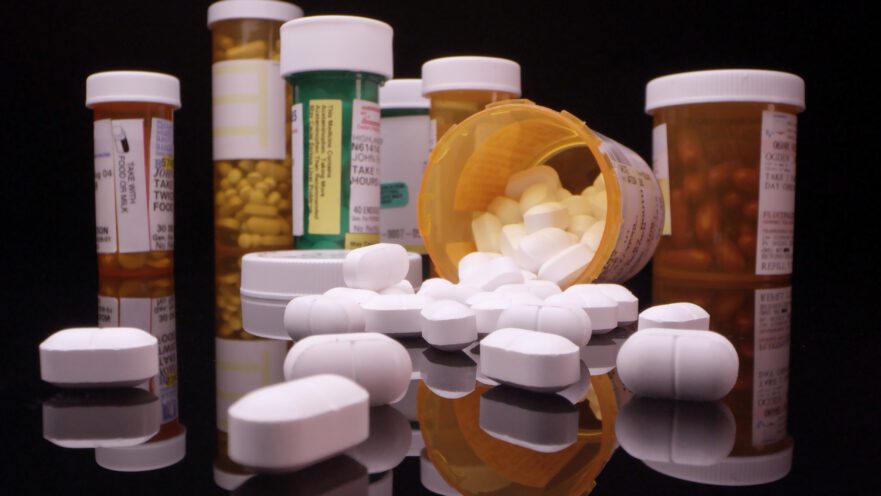
That cost difference matters especially for generic drugs, which are sold at a fraction of the price of their brand-name counterparts and operate on thin profit margins.
Independent reporting on drug recalls, medication safety and integrative health, including supplements. No pharma funding.
Under its request for information, the OMB is asking manufacturers in the pharmaceutical, chemical, and petrochemical industries about unused manufacturing capacity that could be brought online, as well as planned new capacity, at domestic or near-shore sites. The agency is seeking information on facilities that can produce finished doses, active ingredients, or starting materials for the 86 medicines that federal reviews have deemed essential. The OMB says responses may inform federal contracting and potential financial assistance, and is excluding companies controlled by China, Russia, Iran, or North Korea.
Responses from manufacturers are due October 26.
“This is a voluntary exercise. I’m not convinced generic suppliers will respond to this,” Dr. Fox said. “I am fascinated to see if they get any answers.”
The Association for Accessible Medicines (AAM), an industry group that represents generic drug manufacturers and bulk ingredient suppliers, has previously supported reopening idle production facilities. It cites a 2022 survey by Anthony Sardella, an adjunct lecturer at Washington University in St. Louis’s Olin Business School, which found that nearly half of the manufacturing capacity at 37 surveyed U.S. generic drug facilities was going unused.
Generic and biosimilar medicines dominate the U.S. prescription drug market. In 2025, generics and biosimilars accounted for nearly 90% of prescriptions filled in the United States but only 12% of prescription drug spending, according to AAM.
The low prices that make generic drugs affordable can also make it difficult for manufacturers to justify the higher cost of producing them in the U.S.
“We want more manufacturing in the U.S. but are [Americans] willing to pay for it?” Dr. Fox asks. “At the same time, we also keep hearing from the government that they want costs to be lower.”
The OMB’s initiative comes as the Trump administration is imposing tariffs on certain drugs made overseas. Imported patented pharmaceuticals and their ingredients can now face tariffs of up to 100%. While generic drugs are largely exempt for the time being, the president said in July that imported generics would remain tariff-free for just two years, after which they would face a 100% tariff, rising to 200% a year later.
Concerns about overseas manufacturing go beyond whether the U.S. can actually produce more medicines domestically. Policymakers and public health experts have also warned that concentrating pharmaceutical production abroad leaves the U.S. vulnerable to supply disruptions.
Chan Harjivan, a visiting fellow at Duke University’s Margolis Institute for Health Policy and former White House health official, told the Senate Aging Committee earlier this year that “even if China never intentionally weaponizes medicines, the combination of geopolitical conflict risk and upstream concentration creates a plausible national emergency scenario.”
One alternative to bringing all of that manufacturing back to the U.S. is “friendshoring.” Dr. Fox and others have proposed this approach, which would shift production of critical, lifesaving generic drugs away from higher-risk regions like China and toward geopolitical allies such as Canada, Mexico, and European countries.
DISCLAIMER: MedShadow provides information and resources related to medications, their effects, and potential side effects. However, it is important to note that we are not a substitute for professional medical advice, diagnosis, or treatment. The content on our site is intended for educational and informational purposes only. Individuals dealing with medical conditions or symptoms should seek guidance from a licensed healthcare professional, such as a physician or pharmacist, who can provide personalized medical advice tailored to their specific circumstances.
While we strive to ensure the accuracy and reliability of the information presented on MedShadow, we cannot guarantee its completeness or suitability for any particular individual’s medical needs. Therefore, we strongly encourage users to consult with qualified healthcare professionals regarding any health-related concerns or decisions. By accessing and using MedShadow, you acknowledge and agree that the information provided on the site is not a substitute for professional medical advice and that you should always consult with a qualified healthcare provider for any medical concerns.
Help fund our fight for improved medication safety and transparency by supporting our independent journalism.
Give NowWe seek to create a world where there are safer medications for all and where all people are fully informed about their medication benefits and side effects, using our explanatory and investigative journalism to both inform and stimulate public discussion to drive toward solutions.
MedShadow.org is dedicated to empowering people with our evidence-based journalism about the safest ways to take over-the-counter (OTC) and prescription (Rx) medications.
We also seek to stimulate public discussion about potential improvements to drug research, manufacturing and distribution processes. and also to encourage the improvement of processes to ensure that we are all better protected.
As a result, we encourage other nonprofit newsrooms, mission-aligned outlets, and advocacy organizations to republish our original content under the following conditions:
1. We Are Credited Fully and Clearly
You must include the byline and credit MedShadow.org as the original publisher. Please include a link to the original article at the top or bottom of the piece. Use the following attribution:
This article was originally published by MedShadow, a nonprofit foundation that focuses on the safest ways to take over-the-counter and prescription medications.
2. Our Content Isn’t Edited Without Permission
You may make small changes for clarity, such as adjusting headlines, subheadings, or transitions, but you may not change the core meaning, tone, or intent of the article. For substantive edits, email us at republish@medshadow.org for review and approval.
3. You Do Not Sell Or Use Our Content Commercially
Our work is free to share, but it may not be sold, monetized, or repurposed for commercial gain. You may not republish our articles behind a paywall or in publications whose primary purpose is advertising or product promotion. You may not place drug or supplement advertising adjacent to our story.
4. Photos, Graphics, and Multimedia Are Not Used Without Permission
Only the text of the article is available for republication. Images, graphics, and videos may not be reused without explicit written permission, unless they are clearly marked as Creative Commons licensed. Contact us if you’d like to request reuse of a visual asset.
If you’re unsure whether your intended use falls within these guidelines, or would like to discuss a formal syndication or licensing arrangement, please email: republish@medshadow.org
We want our journalism to reach as many people as possible, especially those making critical decisions about medications and health.
For website editors
Copy the article body, including its formatting and links, then paste it into your publishing system. Add the byline and required credit described in these guidelines.
<!-- wp:paragraph --> <p>The Trump administration is seeking information from drug companies about their ability to support domestic production of critical generic drugs that are currently largely sourced overseas, amid concerns about drug shortages and national security.</p> <!-- /wp:paragraph --> <!-- wp:paragraph --> <p>Reliance on foreign manufacturers for medicines Americans depend on every day has come under greater scrutiny as the COVID-19 pandemic and ongoing geopolitical conflicts have exposed vulnerabilities in the pharmaceutical supply chain.</p> <!-- /wp:paragraph --> <!-- wp:paragraph --> <p>On September 25, the Office of Management and Budget (OMB), a White House office that oversees federal spending, published a <a href="https://www.federalregister.gov/documents/2026/09/25/2026-19646/request-for-information-domestic-and-near-shore-manufacturing-of-essential-medicines-on-the-aspr-86">request for information</a> seeking market research on domestic and near-shore manufacturing capacity for 86 essential medicines, mostly generics. </p> <!-- /wp:paragraph --> <!-- wp:paragraph --> <p>The administration says it aims to secure production of those drugs and their ingredients within 18 months.</p> <!-- /wp:paragraph --> <!-- wp:paragraph --> <p>Drug manufacturers can participate voluntarily, and the request does not commit the government to action. OMB also wants the same information on domestic and near-shore production of the antibiotics amoxicillin and <a href="https://medshadow.org/conditions-treatments/antibiotics/the-unsettling-truth-about-ciprofloxacin-a-wonder-drugs-darker-side/">ciprofloxacin</a>, citing potential supply chain vulnerabilities.</p> <!-- /wp:paragraph --> <!-- wp:paragraph --> <p>"There is a reason manufacturing has been moving overseas, and most of it is cost," said <a href="https://pharmacyservices.utah.edu/residency/drug-info-staff">Erin Fox, PharmD</a>, associate chief pharmacy officer at University of Utah Health and a national expert on drug shortages.</p> <!-- /wp:paragraph --> <!-- wp:paragraph --> <p>That cost difference matters especially for <a href="https://medshadow.org/investigating-generics/investigating-generics-americas-overlooked-drug-crisis/">generic drugs</a>, which are sold at a fraction of the price of their brand-name counterparts and operate on thin profit margins.</p> <!-- /wp:paragraph --> <!-- wp:paragraph --> <p>Under its request for information, the OMB is asking manufacturers in the pharmaceutical, chemical, and petrochemical industries about unused manufacturing capacity that could be brought online, as well as planned new capacity, at domestic or near-shore sites. The agency is seeking information on facilities that can produce finished doses, active ingredients, or starting materials for the 86 medicines that federal reviews have deemed essential. The OMB says responses may inform federal contracting and potential financial assistance, and is excluding companies controlled by China, Russia, Iran, or North Korea. </p> <!-- /wp:paragraph --> <!-- wp:paragraph --> <p>Responses from manufacturers are due October 26. </p> <!-- /wp:paragraph --> <!-- wp:paragraph --> <p>"This is a voluntary exercise. I'm not convinced generic suppliers will respond to this," Dr. Fox said. "I am fascinated to see if they get any answers."</p> <!-- /wp:paragraph --> <!-- wp:paragraph --> <p>The Association for Accessible Medicines (AAM), an industry group that represents generic drug manufacturers and bulk ingredient suppliers, has <a href="https://accessiblemeds.org/resources/blog/quickest-route-us-essential-medicines-production-existing-and-idle-production-sites/">previously supported</a> reopening idle production facilities. It cites a 2022 survey by Anthony Sardella, an adjunct lecturer at Washington University in St. Louis's Olin Business School, which found that nearly half of the manufacturing capacity at 37 surveyed U.S. generic drug facilities was going unused.</p> <!-- /wp:paragraph --> <!-- wp:heading --> <h2 class="wp-block-heading">Bringing Generic Drug Manufacturing Back to the U.S. Comes at a Cost</h2> <!-- /wp:heading --> <!-- wp:paragraph --> <p>Generic and biosimilar medicines dominate the U.S. prescription drug market. In 2025, generics and biosimilars accounted for <a href="https://drugstorenews.com/aam-us-generic-biosimilar-medicines-saved-496b-2025">nearly 90% of prescriptions filled in the United States but only 12% of prescription drug spending</a>, according to AAM.</p> <!-- /wp:paragraph --> <!-- wp:paragraph --> <p>The low prices that make generic drugs affordable can also make it difficult for manufacturers to justify the higher cost of producing them in the U.S.</p> <!-- /wp:paragraph --> <!-- wp:paragraph --> <p>"We want more manufacturing in the U.S. but are [Americans] willing to <a href="https://medshadow.org/investigating-generics/investigating-generics-two-thirds-of-americans-would-pay-more-for-safer-drugs/">pay for it</a>?" Dr. Fox asks. "At the same time, we also keep hearing from the government that they want costs to be lower."</p> <!-- /wp:paragraph --> <!-- wp:paragraph --> <p>The OMB’s initiative comes as the Trump administration is <a href="https://www.ropesgray.com/en/insights/alerts/2026/04/100-on-brand-us-imposes-new-tariffs-and-key-exemptions-on-patented-pharmaceuticals">imposing tariffs on certain drugs made overseas</a>. Imported patented pharmaceuticals and their ingredients can now face tariffs of up to 100%. While generic drugs are <a href="https://edition.cnn.com/2026/09/29/economy/trump-tariffs-drugmakers">largely exempt</a> for the time being, the president said in July that imported generics would remain tariff-free for just two years, <a href="https://www.usnews.com/news/us/articles/2026-07-21/trump-says-generic-drugs-to-face-no-us-tariffs-for-2-years-before-rates-of-100-and-200-later">after which they would face a 100% tariff, rising to 200% a year later</a>.</p> <!-- /wp:paragraph --> <!-- wp:heading --> <h2 class="wp-block-heading">Reliance on Foreign Drug Manufacturing Raises Security Concerns</h2> <!-- /wp:heading --> <!-- wp:paragraph --> <p>Concerns about overseas manufacturing go beyond whether the U.S. can actually produce more medicines domestically. Policymakers and public health experts have also warned that concentrating pharmaceutical production abroad leaves the U.S. vulnerable to supply disruptions.</p> <!-- /wp:paragraph --> <!-- wp:paragraph --> <p><a href="https://healthpolicy.duke.edu/people/chan-harjivan">Chan Harjivan</a>, a visiting fellow at Duke University’s Margolis Institute for Health Policy and former White House health official, told the Senate Aging Committee earlier this year that “even if China never intentionally weaponizes medicines, the combination of geopolitical conflict risk and upstream concentration creates <a href="https://www.aging.senate.gov/imo/media/doc/0c8b8e82-fe72-daff-8137-d3a4ba88d7b2/Testimony_Harjivan%2003.11.26.pdf">a plausible national emergency scenario."</a></p> <!-- /wp:paragraph --> <!-- wp:paragraph --> <p>One alternative to bringing all of that manufacturing back to the U.S. is “friendshoring.” Dr. Fox and others have proposed this approach, which would shift production of critical, lifesaving generic drugs away from higher-risk regions like China and toward geopolitical allies such as Canada, Mexico, and European countries.</p> <!-- /wp:paragraph -->
We think it’s invaluable — and hope you agree. Our work is made possible by donations from readers like you.
We think it’s invaluable — and hope you agree. Our journalism is made possible by donations from readers like you.
As a nonprofit, we don’t take a dime from pharmaceutical or supplement companies. That means we can report on the benefits, risks, and alternatives to prescription and over-the-counter drugs free from corporate pressure or influence.
We've noticed that you're interested in this topic. Would you read a dedicated newsletter about it?