

May 1, 2025
 Shedding Light on the Risks
& Benefits of Medications
Shedding Light on the Risks
& Benefits of Medications 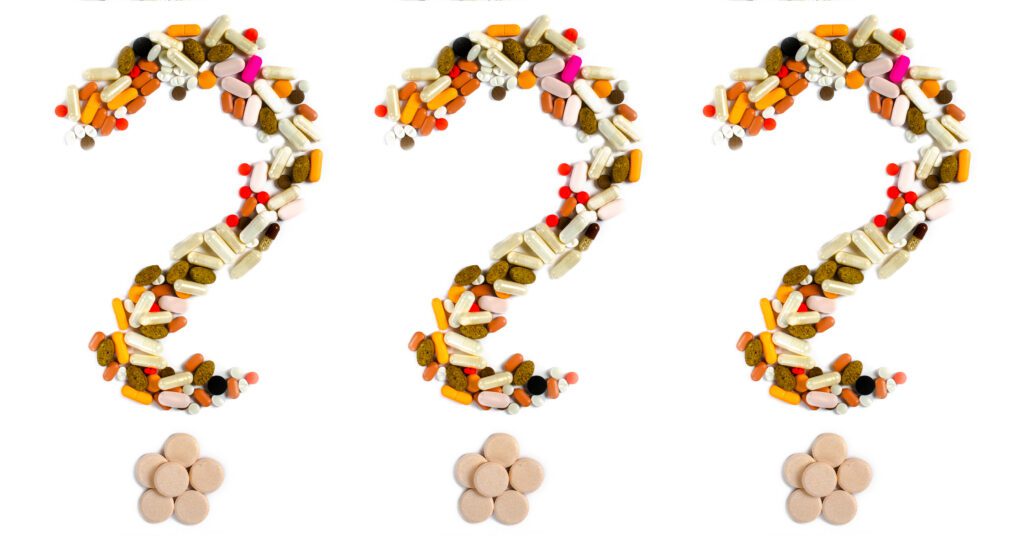
Copyright (c) 2018 Vadim379/Shutterstock.
Like prescription drugs, supplements have side effects — but without FDA oversight, consumers are often left to assess the risks on their own.
Copyright (c) 2018 Vadim379/Shutterstock.
Their bottles line drugstore aisles. Their ads interrupt your favorite podcast. Chances are, you have a few supplements in your kitchen cabinet right now. Maybe they’re already running through your bloodstream.
Dietary supplements are a booming industry—and their popularity keeps rising. According to Grandview Research, the supplement market is valued at $177 billion worldwide—and this is projected to balloon to more than $325 billion by 2030. Today, nearly three-quarters of adults in the United States occasionally take supplements, with 55% identifying as regular users.
While supplements are often framed as upside-only additives for your overall health, the Food and Drug Administration (FDA) does not have the authority to approve them before they hit the market. This means that supplement claims aren’t always backed by credible data, and the products aren’t tested for safety the way drugs are. As a result, benefits can be overpromised, while risks may only become apparent after widespread use.
“We know that the FDA does not require that supplements be tested before being sold, so the testing happens on the consumers, and it is the consumers who have the responsibility of identifying dangerous and faulty supplements,” says Mahtab Jafari, PharmD., professor of pharmaceutical sciences, in her book The Truth About Dietary Supplements.
For example, the weight-loss supplement ephedra was banned in 2004 only after reports of serious side effects, including heart attacks and induced psychosis, some even resulting in death. Similarly, comfrey, an herbal supplement used for digestive issues and joint pain, was banned in 2001 after it was linked to liver damage.
Independent reporting on drug recalls, medication safety and integrative health, including supplements. No pharma funding.
These aren’t isolated cases. Many supplements that cause severe side effects remain on the market. In fact, a 2015 study found that adverse events from supplements are responsible for 23,000 ER visits a year.
“Many patients believe supplements are ‘natural’ and therefore harmless, but this isn’t true,” says Ana Reisdorf, a registered dietitian and creator of the healthy-eating blog, The Food Trends. “A common misunderstanding is assuming more is better, which can lead to toxicity or negative health effects.”
While many supplements can be beneficial for issues such as vitamin and mineral deficiencies, their risks — just like medications — should be weighed alongside their benefits.
Here are some of today’s most popular supplements, along with potential side effects you may not be aware of.
What is it?: Made from the root of an evergreen shrub, ashwagandha has been used for centuries in Ayurvedic and Unani alternative-medicine systems.
Benefits: Clinical studies have found that ashwagandha may be helpful in treating stress and anxiety. In a recent meta-analysis of 12 eligible papers, researchers found that supplementation with ashwagandha reduced stress when taken at a dose of 300-600 mg/d and reduced anxiety at a dose of 12,000 mg/d. However, due to a lack of scrutiny in the studies, the authors of the meta- analysis noted the that the evidence shouldn’t be considered strong.
Risks: Side effects are typically mild (stomach upset or nausea) and the National Center for Complementary and Integrative Health says that the root may be safe when used for up to three months. However, there have been limited reports of liver injury for individuals taking the supplement for even short amounts of time (one week to four months). In all cases of healthy individuals, the liver problems self-corrected when the supplement was stopped. Patients with preexisting liver issues, on the other hand, have experienced acute liver injury.
“You have to be thoughtful here,” says Alison Acerra, a registered dietitian nutritionist and MedShadow Health and Medical Advisory Panelist. “If you’ve had elevated [liver function tests] in the past or have some sort of liver dysfunction, ashwagandha is going to be more risky — but it’s not very common.”
Additional research suggests that ashwagandha can also have an impact on thyroid function. Research has found that adults taking a dose of 300 mg/d for eight weeks saw evidence of elevated thyroid activity. Acerra says, “It could be potentially helpful for someone with hypothyroidism but detrimental for someone with hyperthyroidism.”
Ashwagandha may influence sex hormones, with some reports suggesting it can increase testosterone in men. In 2024, Denmark banned ashwagandha due to concerns about its effects on reproductive hormones, though critics argue that the decision lacks strong scientific backing. Despite the debate, the National Center for Complementary and Integrative Health advises against its use for those who are pregnant or breastfeeding.
What is it?: Melatonin is a naturally occurring hormone that helps to regulate our sleep-wake cycles. The brain releases the hormone in low light or darkness to prepare for sleep. Melatonin supplements contain a synthetic form of this hormone.
Benefits: Melatonin has been shown to have some benefits for adults with specific sleep disorders, including jet lag and delayed sleep-wake phase disorder. One 2015 meta-review also found that melatonin may be as effective as midazolam (a prescription benzodiazepine) at reducing anxiety before surgery. Melatonin may also improve sleep for children with conditions including autism spectrum disorder, ADHD, atopic dermatitis, and chronic sleep-onset insomnia.
Risks: While melatonin is considered safe in the short term, little is known about the long-term effects of taking this synthetic hormone. Research shows that melatonin may reduce fertility in women, especially when taken at high doses. It can also exacerbate depression in some people and may worsen symptoms of bleeding disorders and high blood pressure.
Acerra says that while she recommends melatonin to some patients (especially menopausal women) to help with sleep, it’s best to uncover the root cause of the sleep issues before treating them with a medication or supplement. “I think we want to be really cautious that we’re not ‘band-aiding’ an issue,” she says.
What is it?: The medicinal use of this flowering plant dates back to ancient Greece. Historically, St. John’s wort (Hypericum perforatum) has been used to treat a number of conditions including kidney disease and depression.
Benefits: Some studies have shown St. John’s wort to be more effective than a placebo (which is to say, taking nothing) and possibly effective in easing some symptoms of depression. It may also help relieve premenstrual syndrome (PMS) symptoms, including cramping and mood swings, as well as symptoms related to menopause (hot flashes and depression). However, in all cases, researchers point out that what’s sold on the market can vary in their pharmaceutical makeup and that a study’s results apply only to the products tested for that study.
Risks: St. John’s wort carries a number of known side effects, including increased sensitivity to sun, making both the skin and the eyes more susceptible to sun damage. Other adverse effects include insomnia, increased anxiety, digestive distress, headache, and fatigue.
Men who take St. John’s wort may experience issues around sex, including reduced libido and erectile dysfunction. But Courtney Pelitera, a registered dietician with Top Nutrition Coaching, says that one of the biggest risks in taking St. John’s wort is not knowing how it will interact with other medications, both over-the-counter and prescription. “St. John’s Wort has many medication interactions, including warfarin, contraceptive medications, allergy medications, omeprazole, Xanax, and antidepressants,” she says.
What is it?: Made from the roots of a plant native to the South Pacific, kava is known to have sedative properties and psychoactive effects. Kava is sold as a pill, powder, tincture, or beverage.
Benefits: Some studies show that kava may be effective for generalized anxiety disorder (GAD). However, a recent double-blind, randomized, placebo-controlled study found no benefit over the course of 16 weeks. Kava is also used to improve sleep, but there’s limited research that it’s even effective for treating insomnia.
Risks: While kava is sometimes promoted as a “safe” alternative to alcohol, it’s been associated with liver toxicity. In fact, in 2002, the FDA issued an advisory that kava supplements are linked to cirrhosis, hepatitis, and liver failure. This is mainly because Kava has been found to reduce glutathione, an important antioxidant that helps protect the liver, while also slowing the enzymes that break down harmful substances. For that reason, using kava and alcohol together is warned against as the combination can greatly increase the risk of liver damage.
Even though kava is still readily sold as a dietary supplement, the FDA states that it is not generally recognized as safe (GRAS). Other adverse effects include vision impairment, rashes, nausea, and seizures.
What is it?: Vitamin D is an essential fat-soluble vitamin that’s available in foods including eggs, seafood, and liver. It’s also a hormone produced naturally by our exposure to the sun. Available in supplement form, it’s one of the most widely used vitamins in the United States, long believed to help support bone and heart health.
Benefits: While our bodies do need vitamin D to maintain strong bones, taking vitamin D in supplement form may not actually improve bone health. In 2024, the U.S. Preventive Services Task Force published a draft recommendation stating that vitamin D supplements have no real benefit when it comes to the prevention of fractures in older adults.
One potential benefit is improved immunity. “We have vitamin D receptors all over the body,” says Acerra, “and it does seem to be helpful for the immune system.” Indeed, studies have found that vitamin D may have protective effects against respiratory infections in the general population (especially for those deficient in the vitamin) and certain strains of the flu virus in children.
Risks: In rare cases, taking excessively high doses of vitamin D (doses exceeding 10,000 IU/day), can be toxic, with symptoms ranging from weakness and fatigue to cardiac arrhythmia and coma. For context, the recommended daily amount of vitamin D for the general public, ages one to 70, including pregnant and breastfeeding women, is 600 IU/day, according to the National Institutes of Health. In 2021, U.S. poison control centers reported more than 11,000 instances of vitamin D toxicity, with the majority of cases being children 12 and under.
An excess of vitamin D can also make the intestines absorb too much calcium. This can lead to kidney stones, calcium deposits in the heart and lungs, weakness, and disorientation. If you do choose to supplement with vitamin D, some experts recommend a formulation that combines vitamin D with vitamin K2 to help avoid this issue. “Vitamin K2 can help by moving calcium out of the arteries and into the bones,” says Acerra.
Most people who take supplements usually don’t consider them as serious or important as their prescription medications. This probably accounts for why some 75% of adults in this country don’t think to disclose their supplement use to their doctors. However, the FDA warns that mixing certain supplements with a variety of medications can be dangerous.
“It’s crucial to consult a healthcare provider before combining supplements with medications,” says Mascha Davis, a registered dietitian nutritionist and author of Eat Your Vitamins. Davis explains that even a simple calcium supplement, for example, can block antibiotic absorption, thereby reducing its ability to fight infection.
According to the National Institutes of Health (NIH), dietary supplements may be appropriate for those who don’t get sufficient nutrients from their diet. However, “the best way to ensure you are taking the correct supplements in an appropriate dose is to get bloodwork done and have your labs properly evaluated by a doctor or registered dietitian,” says Pelitera.
If you do need a dietary supplement, Davis recommends discussing your options with a healthcare professional who can help you choose a high-quality option. In her practice, Davis looks for third-party-testing certifications, such as ConsumerLab, US Pharmacopeia (USP), and the National Science Foundation (NSF), all of which indicate that the product has been tested for potency and purity. She also examines the label to avoid supplement products with harmful additives or artificial dyes.
While supplements can support health, they can also pose unexpected risks when taken incorrectly, which includes mixing with medications or taken in doses that are too high for what you need. Since supplements do not have the benefit of FDA oversight, it’s up to consumers to do their own research. Check for certifications, read up on the different brands, and most importantly, talk to a healthcare professional before randomly adding any supplement to your routine to make sure it’s right for you.

If you’ve experienced side effects or medication issues related to this topic, we want to hear from you.
Submit Your StoryDISCLAIMER: MedShadow provides information and resources related to medications, their effects, and potential side effects. However, it is important to note that we are not a substitute for professional medical advice, diagnosis, or treatment. The content on our site is intended for educational and informational purposes only. Individuals dealing with medical conditions or symptoms should seek guidance from a licensed healthcare professional, such as a physician or pharmacist, who can provide personalized medical advice tailored to their specific circumstances.
While we strive to ensure the accuracy and reliability of the information presented on MedShadow, we cannot guarantee its completeness or suitability for any particular individual’s medical needs. Therefore, we strongly encourage users to consult with qualified healthcare professionals regarding any health-related concerns or decisions. By accessing and using MedShadow, you acknowledge and agree that the information provided on the site is not a substitute for professional medical advice and that you should always consult with a qualified healthcare provider for any medical concerns.
Help fund our fight for improved medication safety and transparency by supporting our independent journalism.
Give NowWe seek to create a world where there are safer medications for all and where all people are fully informed about their medication benefits and side effects, using our explanatory and investigative journalism to both inform and stimulate public discussion to drive toward solutions.
No comments yet. Be the first to comment!