


Menu
 Shedding Light on the Risks
& Benefits of Medications
Shedding Light on the Risks
& Benefits of Medications Are Pregnant Women Getting Enough Choline?
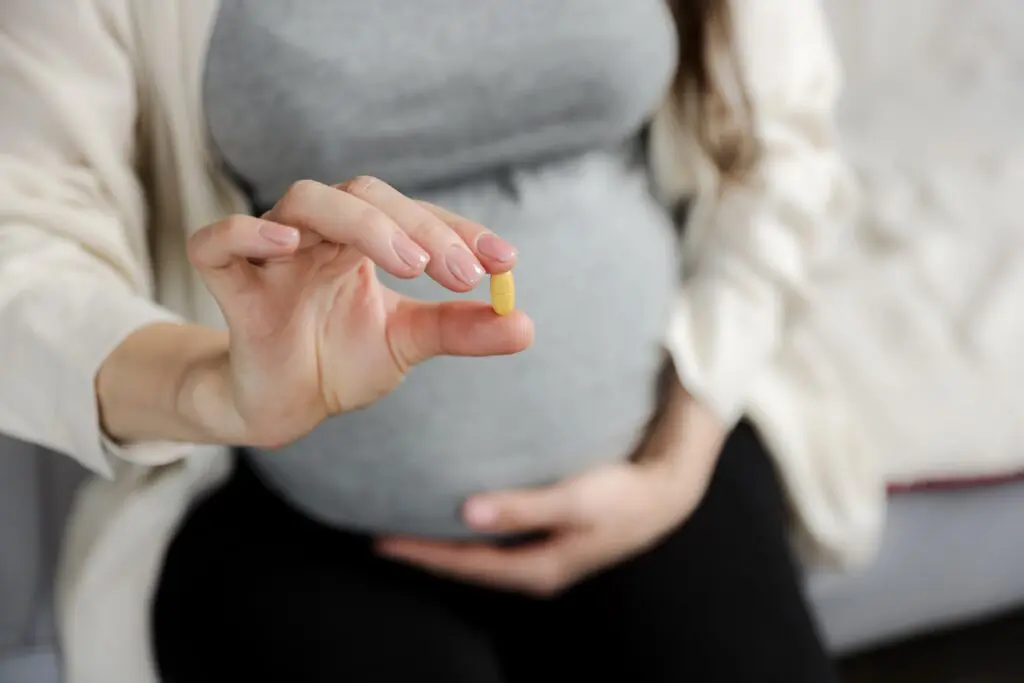
Photo: Shutterstock
Choline plays an important role in fetal brain development, but many pregnant women don’t get enough, and most prenatal vitamins provide little or none
November 20, 2026
0 Comments
republishPhoto: Shutterstock
FACT CHECKED
republish this story
On this page
|
Getting your Trinity Audio player ready... |
When she first heard the word “choline,” Michel Hansen, a photographer from Littleton, Colorado, was at a routine obstetrics appointment. A research assistant from the nearby University of Colorado School of Medicine in Aurora was asking her to participate in a clinical trial testing whether the nutrient might support fetal brain development. Although this was her second pregnancy, Hansen says, “It was totally a new word to me.”
Hansen isn’t alone. Unlike some supplements, such as folate, choline isn’t widely talked about among obstetricians and people who are pregnant or trying to conceive. But studies in cells and animals show choline is critical for proper neurodevelopment.
“In order to get healthy cellular structures like membranes and the ability to wire a complex brain, you need choline,” says Cynthia Bearer, M.D., Ph.D., a neonatologist and biochemist at Case Western Reserve University in Cleveland.
Recent research linking choline levels during pregnancy to children’s neurodevelopmental outcomes suggests that choline’s cognitive benefits extend to humans as well. However, most people don’t get enough choline to meet recommended levels, and pregnant women may be lagging even further behind.
“The need for choline increases during pregnancy and lactation,” says Isis Trujillo-Gonzalez, Ph.D., a nutrition researcher at the University of North Carolina’s Nutrition Research Institute in Kannapolis.
As important as the nutrient is during pregnancy, most prenatal vitamins don’t contain choline, and those that do fall woefully short of the daily intake recommended by the National Institutes of Health (NIH). While some researchers believe the nutrient should be a mainstay of prenatal nutrition, whether through diet or supplements, others think we need more data on how much choline pregnant people actually need.
Where Does Choline Come From and What Does It Do?
Choline is a small molecule with big jobs throughout the body. It’s part of a pathway our cells use to add epigenetic tags to DNA, which direct how much and how often certain genes are turned into proteins. Cells also use choline to synthesize molecules called phospholipids, which make up our cell membranes.
Additionally, choline is a critical component of the neurotransmitter acetylcholine, which neurons use to transmit signals involved in attention, memory and learning, motor function, and more. And those are just some of the activities we know about, says Dr. Bearer.
The liver produces some choline, but humans still need to obtain it from their diets to avoid liver damage, muscle damage, and cognitive problems. In 1998, the National Academies of Science, Engineering and Medicine’s (NASEM) Food and Nutrition Board designated choline as an essential nutrient and set the adequate daily intake at 550 mg for men.
Although it set a recommendation of 450mg per day for pregnant women (compared to 400-425 mg for non-pregnant women), the board had little human pregnancy data to draw on. Instead, it relied in part on studies in pregnant rats to arrive at an adequate intake.
Animal products are among the richest dietary sources of choline, with eggs providing more than 100 mg each, mostly in the yolk. Liver, beef, chicken, and fish are also rich sources. Among plant foods, cruciferous vegetables, peas and peanuts are among the best sources.
What Does the Research Say About Choline and Brain Development?
Cell line and animal studies have established choline as a major part of neuron growth and brain development, Dr. Bearer says. “If you’re a neuron, you’re just a little ball initially, but then you have to connect with other neurons.” That process, she says, requires extensive cell membrane construction, which means lots of choline.
For decades, researchers like Dr. Bearer have used animal models to demonstrate that choline is critical to offspring’s cognitive abilities, including attention and the ability to remember environments and sequences of events. Some published and ongoing clinical studies suggest the same may be true for people. For example, a 2012 observational study found a positive association between how much choline pregnant women consumed in their diets during their second trimesters and their children’s scores on a memory test seven years later. Other intelligence tests were unaffected by the mothers’ choline intake.
Early Evidence of Cognitive Benefits
In a clinical trial underway for over 14 years, a research team at Cornell University in Ithaca, New York, has studied children whose mothers consumed either 480 mg or 930 mg of choline per day via diet and supplementation during pregnancy. The trial is small, including just 24 infant-mother pairs, but highly controlled, with participants eating specific diets. At four time points after birth, researchers measured the children’s reaction times by recording how quickly they redirected their gaze when shown images moving from one place to another on a screen.
Infants whose mothers were in the high-dose choline group had faster reaction times, which have been correlated with faster processing speeds and higher IQs later in childhood. Seven years later, children born to mothers in the high-dose choline group performed better on computer-based tests measuring their ability to sustain attention than children whose mothers took the lower dose. The study — which has been supported in part by choline manufacturer Balchem and egg and beef promotional organizations — is ongoing and will assess the children’s attention, memory, executive function, and mental health as they enter adolescence.
Choline’s Role in Brain Resilience
The University of Colorado research group that enrolled Hansen has spent years studying a possible connection between choline during pregnancy and CHRNA7, a gene associated with schizophrenia. In one randomized controlled trial, researchers used an auditory EEG to measure infants’ ability to filter out background noise — a process that is often impaired in people with schizophrenia. Poorer auditory filtering in infancy has also been associated with a greater likelihood of anxiety, depression, and ADHD symptoms later in childhood.
In the Colorado study, infants whose mothers took choline supplements during pregnancy showed better auditory filtering, including those who carried a CHRNA7 variant associated with poorer filtering.
The researchers later followed the children to 40 months and found that those whose mothers had taken choline were also less likely to show behavioral challenges, including symptoms of ADHD and withdrawal from social interactions. The association was strongest among children with the CHRNA7 variant.
Additionally, the University of Colorado group has been studying whether choline can modulate the effects of stressors, such as infection, on neurodevelopmental outcomes. “We know with stress and inflammation that moms will sequester the choline in their livers for themselves to utilize,” says Camille Hoffman-Shuler, M.D., Ms.C., an obstetrician and researcher at the University of Colorado School of Medicine who co-leads the ongoing work.
Hoffman’s team is now doing prospective studies to test whether supplementing with choline will offset the negative impacts of stress, infection, and cannabis exposure on neurodevelopment.
It’s already well-known from animal studies that choline can counteract some of alcohol’s damaging effects on the developing brain and body. Infants exposed to alcohol in the womb tend to be born with smaller brain, head, and body sizes, and recent studies have found that high doses of choline mitigated these effects.
While choline can’t prevent all of the effects of alcohol on a fetus, this work demonstrates that it is a vital building block for brain development and repair, says Jeffrey Wozniak, Ph.D., L.P., a pediatric neuropsychologist at the University of Minnesota in Minneapolis, who studies fetal alcohol spectrum disorders. Rather than a treatment, he says, “it is a core component of the nutritional package that’s needed for normal brain development.”
How Can Pregnant People Be Sure They’re Getting Enough Choline?
Although guidelines recommend how much choline pregnant women should consume, researchers don’t yet know what blood levels of choline or its metabolites indicate that someone is getting enough, says Dr. Trujillo-Gonzalez, who is currently studying the question. ACOG follows NASEM’s recommendation of 450 mg per day for pregnant women, according to Dr. Kurt Wharton, M.D., an obstetrician in Royal Oak, Michigan, and member of ACOG’s Nutrition Expert Work Group.
Dr. Trujillo-Gonzalez agrees that pregnant women should include high-choline foods in their diets. For example, two eggs provide about 250 mg of choline. Add a bowl of Cheerios with milk, a serving each of beans, broccoli, potatoes, and beef or salmon, and you’ve reached your goal.
But what if you’re a vegetarian or vegan, or can’t stomach eggs — or anything, for that matter, because of pregnancy-related nausea? “Because vegans and vegetarians may be unable to get the recommended amount of choline through eggs, milk or meat, these groups should consider supplementation during pregnancy and lactation,” Dr. Wharton wrote in a statement to MedShadow.
People with low vitamin B12 levels or certain variations in the genes PEMT and CHDH (choline dehydrogenase) may be at higher risk for choline deficiency and may also want to consider a supplement.
However, Dr. Kevin Klatt, Ph.D., R.D., who studies nutrition at the University of Toronto, says there is no rigorous scientific evidence that certain groups, like vegans, definitely need to supplement.
Do Prenatal Vitamins Contain Enough Choline?
Experts vary in how strongly they recommend choline supplements during pregnancy.
Dr. Bearer recommends that anyone who’s pregnant or trying to conceive take a prenatal vitamin with choline. But finding one that provides enough could be difficult. Although the American Medical Association called for choline’s inclusion in prenatal multivitamins in 2017, it still isn’t a standard ingredient. And a 2024 analysis of 50 prenatal supplements found that only 23 contained choline — and none provided ACOG’s recommended daily amount.
“Just because it says choline doesn’t mean that there’s enough choline in there for even daily recommended amounts, let alone pregnancy,” notes Dr. Wozniak.
Choline can be difficult to formulate into a multivitamin because it’s hygroscopic, meaning it attracts water molecules that take up extra space, adds Dr. Trujillo. Getting enough of the nutrient can therefore often require larger or multiple pills, which can be a hurdle for many women during pregnancy.
That was Hansen’s experience during the University of Colorado trial. “I had a really hard time swallowing the pills because they were so big and I was really nauseous,” she remembers. The trial used phosphatidylcholine, a well-absorbed form of choline that is also bulkier and more expensive than some alternatives.
Choline bitartrate, another form of the molecule, is less hygroscopic than other forms and it is becoming more widely used by supplement manufacturers. Choline chloride is another affordable option, Dr. Hoffman notes, though in clinical practice she most often recommends choline citrate and choline bitartrate because they’re readily available. “Those are the two that are easiest to get,” she says.
But whether the current recommendation is appropriate for pregnancy remains an open question. Dr. Klatt points out that the recommended intake isn’t linked to fetal development or maternal health outcomes. “It’s not linked to anything related to fetal development or maternal health during pregnancy,” he says. While pregnancy increases metabolic demand for choline, he says, a large-scale clinical trial is still needed to determine how much is required for a healthy pregnancy.
Notably, studies that found potential neurocognitive benefits used choline intakes well above the recommended 450 mg per day. Still, experts differ on whether pregnant women should aim higher. Dr. Wozniak recommends staying close to 450 mg per day, while Dr. Hoffman recommends aiming for 900 mg through a combination of diet and supplements.
“So far, nobody has really measured any downside of choline for brain development,” says Dr. Wozniak. “And we know that there are a lot of downsides to not having sufficient choline. But theoretically, there may be other effects that we don’t know of.”
One of those unanswered questions is how higher choline intake might affect the gut microbiome, which Dr. Trujillo-Gonzalez and her colleagues are currently studying.
Can You Take Too Much Choline?
The upper limit for choline is 3,500 mg per day for adults, according to the NIH and NASEM. Consuming more could lead to liver problems, sweating, vomiting, and low blood pressure. However, according to Dr. Hoffman, consuming more than 3,500 mg in a day is almost impossible.
Some gut bacteria break down certain forms of choline into trimethylamine (TMA), which, at sufficiently high levels, can be excreted in sweat, breath, and urine, causing a fishy body odor. TMA can also be converted into TMAO, a compound associated with cardiovascular disease. However, it’s unclear whether TMAO contributes to cardiovascular disease or is simply a marker, Dr. Trujillo-Gonzalez notes.
For her part, Hansen says she has positive associations with choline. She doesn’t yet know whether she was in the test or placebo arm of the study, but she says she’s glad to have been part of something that might help other moms make the best choices possible to support their children’s development.
If she becomes pregnant again, Hansen says she’ll be mindful to include the nutrient in her diet. “I actually am taking a prenatal just in case, and I made sure it had choline,” she says.
Disclosures
Camille Hoffman-Shuler, M.D., Ms.C., has held speaking engagements for Balchem, a company that sells ingredients for human and animal nutrition.
Isis Trujillo-Gonzalez, Ph.D., disclosed that Balchem provides funding for a postdoctoral fellow in her lab. Trujillo-Gonzalez said Balchem has no input into her experimental design, research questions or how the research is conducted.
- Rickman, N. C., Liu, G., Franz, A. R., Bernhard, W., & Bearer, C. F. (2026). The role of choline in neurodevelopment. Pediatric research, 10.1038/s41390-026-05021-4. Advance online publication.
- US Department of Agriculture Agricultural Research Service (2023). What We Eat in America, NHANES 2017-March 2020 Prepandemic,
- Bailey, R. L., Pac, S. G., Fulgoni, V. L., Reidy, K. C., & Catalano, P. M. (2019). Estimation of Total Usual Dietary Intakes of Pregnant Women in the United States. JAMA Network Open, 2(6).
- Derbyshire, E., & Obeid, R. (2020). Choline, Neurological Development and Brain Function: A Systematic Review Focusing on the First 1000 Days. Nutrients, 12(6), 1731.
- National Academies of Sciences, Engineering, and Medicine. (1998). Dietary Reference Intakes for Thiamin, Riboflavin, Niacin, Vitamin B6, Folate, Vitamin B12, Pantothenic Acid, Biotin, and Choline. Washington, DC: The National Academies Press.
- Patterson, K. Y., Bhagwat, S. A., Williams, J. R., Howe, J. C., Holden, J. M., Zeisel, S. H., Dacosta, K. A., & Mar, M.-H. (2008). USDA Database for the Choline Content of Common Foods Release Two.
- Boeke, C. E., Gillman, M. W., Hughes, M. D., Rifas-Shiman, S. L., Villamor, E., & Oken, E. (2013). Choline intake during pregnancy and child cognition at age 7 years. American journal of epidemiology, 177(12), 1338–1347.
- Caudill, M. A., Strupp, B. J., Muscalu, L., Nevins, J. E. H., & Canfield, R. L. (2018). Maternal choline supplementation during the third trimester of pregnancy improves infant information processing speed: a randomized, double-blind, controlled feeding study. FASEB journal : official publication of the Federation of American Societies for Experimental Biology, 32(4), 2172–2180.
- Bahnfleth, C. L., Strupp, B. J., Caudill, M. A., & Canfield, R. L. (2022). Prenatal choline supplementation improves child sustained attention: A 7-year follow-up of a randomized controlled feeding trial. FASEB journal : official publication of the Federation of American Societies for Experimental Biology, 36(1), e22054.
- Ross, R. G., Hunter, S. K., McCarthy, L., Beuler, J., Hutchison, A. K., Wagner, B. D., … Freedman, R. (2013). Perinatal Choline Effects on Neonatal Pathophysiology Related to Later Schizophrenia Risk. American Journal of Psychiatry, 170(3), 290–298.
- Hutchison, A. K., Hunter, S. K., Wagner, B. D., Calvin, E. A., Zerbe, G. O., & Ross, R. G. (2017). Diminished Infant P50 Sensory Gating Predicts Increased 40-Month-Old Attention, Anxiety/Depression, and Externalizing Symptoms. Journal of attention disorders, 21(3), 209–218.
- Ross, R. G., Hunter, S. K., Hoffman, M. C., McCarthy, L., Chambers, B. M., Law, A. J., Leonard, S., Zerbe, G. O., & Freedman, R. (2016). Perinatal phosphatidylcholine supplementation and early childhood behavior problems: Evidence for CHRNA7 moderation. American Journal of Psychiatry, 173(5), 509–516.
- Freedman, R., Hunter, S. K., Law, A. J., Wagner, B. D., D'Alessandro, A., Christians, U., Noonan, K., Wyrwa, A., & Hoffman, M. C. (2019). Higher Gestational Choline Levels in Maternal Infection Are Protective for Infant Brain Development. The Journal of Pediatrics, 208, 198–206.e2.
- Hunter, S. K., Hoffman, M. C., D'Alessandro, A., Wyrwa, A., Noonan, K., Zeisel, S. H., Law, A. J., & Freedman, R. (2022). Prenatal choline, cannabis, and infection, and their association with offspring development of attention and social problems through 4 years of age. Psychological medicine, 52(14), 3019–3028.
- Larson, E. A., Smith, L. E., Flores, A., Lam, A., Syed, A., Perng, W., & Field, C. J. (2026). Recent Choline Intake Is Inversely Associated with Inflammation in Pregnancy - Evidence from the Canadian APrON Cohort. The Journal of nutrition, 156(2), 101278.
- Jacobson, S. W., Carter, R. C., Molteno, C. D., Stanton, M. E., Herbert, J. S., Lindinger, N. M., Lewis, C. E., Dodge, N. C., Hoyme, H. E., Zeisel, S. H., Meintjes, E. M., Duggan, C. P., & Jacobson, J. L. (2018). Efficacy of Maternal Choline Supplementation During Pregnancy in Mitigating Adverse Effects of Prenatal Alcohol Exposure on Growth and Cognitive Function: A Randomized, Double-Blind, Placebo-Controlled Clinical Trial. Alcoholism, clinical and experimental research, 42(7), 1327–1341.
- Warton, F. L., Molteno, C. D., Warton, C. M. R., Wintermark, P., Lindinger, N. M., Dodge, N. C., Zöllei, L., van der Kouwe, A. J. W., Carter, R. C., Jacobson, J. L., Jacobson, S. W., & Meintjes, E. M. (2021). Maternal choline supplementation mitigates alcohol exposure effects on neonatal brain volumes. Alcoholism, clinical and experimental research, 45(9), 1762–1774.
- National Institutes of Health Office of Dietary Supplements. (2022). Choline Fact Sheet for Consumers. https://ods.od.nih.gov/factsheets/Choline-HealthProfessional/ Berg, Sarah (2017). AMA backs global health experts in calling infertility a disease.
- Cai, F., Young, B. K., & Mccoy, J. A. (2024). Commercially Available Prenatal Vitamins Do Not Meet American College of Obstetricians and Gynecologists Nutritional Guidelines. American journal of perinatology, 41(S 01), e2547–e2554.
DISCLAIMER: MedShadow provides information and resources related to medications, their effects, and potential side effects. However, it is important to note that we are not a substitute for professional medical advice, diagnosis, or treatment. The content on our site is intended for educational and informational purposes only. Individuals dealing with medical conditions or symptoms should seek guidance from a licensed healthcare professional, such as a physician or pharmacist, who can provide personalized medical advice tailored to their specific circumstances.
While we strive to ensure the accuracy and reliability of the information presented on MedShadow, we cannot guarantee its completeness or suitability for any particular individual’s medical needs. Therefore, we strongly encourage users to consult with qualified healthcare professionals regarding any health-related concerns or decisions. By accessing and using MedShadow, you acknowledge and agree that the information provided on the site is not a substitute for professional medical advice and that you should always consult with a qualified healthcare provider for any medical concerns.
DONATE:
Help fund our fight for improved medication safety and transparency by supporting our independent journalism.
Give NowRECOMMENDED:


DONATE:
Help fund our fight for improved medication safety and transparency by supporting our independent journalism.
Give NowWe seek to create a world where there are safer medications for all and where all people are fully informed about their medication benefits and side effects, using our explanatory and investigative journalism to both inform and stimulate public discussion to drive toward solutions.
