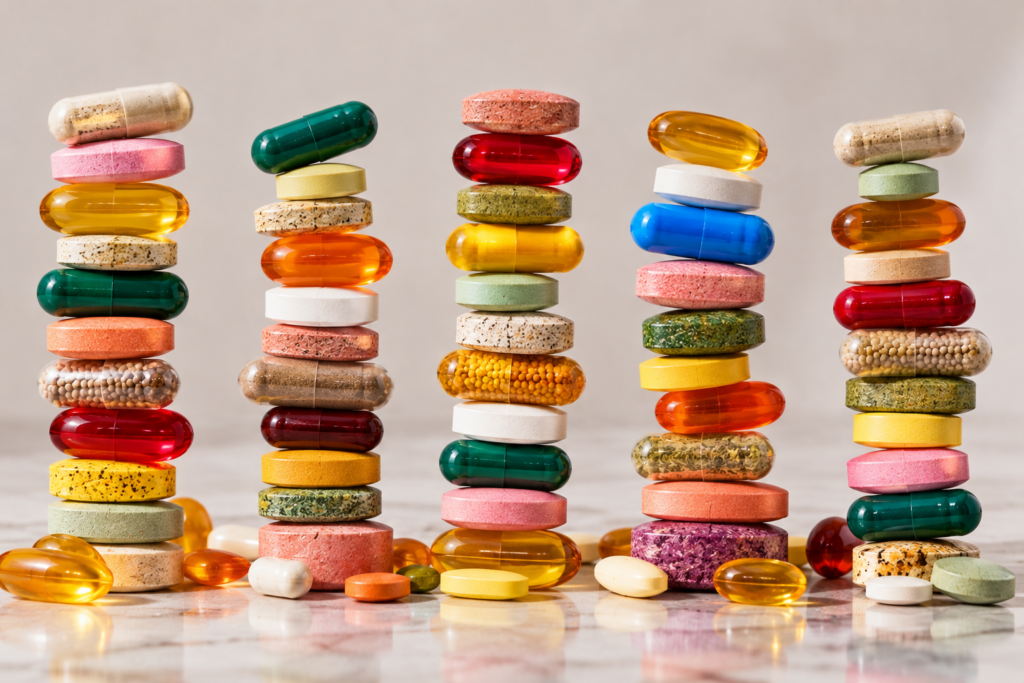

Photo: Created with AI
Doctors say the growing popularity of supplement stacking has exposed more Americans to botanicals like turmeric and ashwagandha that can, in some cases, damage the liver

Photo: Created with AI
Naveen Kathuria was no stranger to supplements. As a health tech executive in his 40s, he says he was steeped in the industry’s “culture of optimization.”
In June 2024, Kathuria started taking a popular herbal supplement called ashwagandha, which he heard could help with relaxation. While there’s no official medical guidance on how much of the supplement someone should take, Kathuria started with 150 mg, a dose that falls within the range studied in clinical trials. After a few months, he started to feel uncharacteristically lethargic.
He visited his doctor, where blood tests revealed a number of biomarkers — most notably his liver enzymes — showed signs of trouble. On his doctor’s advice, he stopped taking the supplement, but his health continued to deteriorate.
“My body felt like it was overheating, like it was on fire. I was itching all the time,” Kathuria says.
Within months, he lost more than 40 pounds and came dangerously close to needing a liver transplant.
After moving nearer to family for support during his illness and visiting a number of doctors in the area, Kathuria credits his eventual recovery to Robert Fontana, M.D., a professor of internal medicine at the University of Michigan Medical School who has been researching the rise of supplement-induced liver injury.
Ashwagandha, Dr. Fontana says, is a common culprit behind liver injury, along with turmeric and green tea extract.
These three are also among the most commonly consumed herbal supplements in the U.S., according to a JAMA Network Open study. They are often included as part of a “stack,” or supplement regimens promoted for weight loss or relaxation — and sometimes, ironically, for liver health.
As of 2017, the most recent data available, an estimated 20% of liver toxicity cases nationwide were thought to be linked to herbal and dietary supplements, according to a review in the journal Hepatology. In this paper, it wasn’t necessarily that people took an excessive amount — rather, the researchers suggested some people experience an “idiosyncratic” reaction to an exposure within the range of the recommended dosage.
Whether it’s 20% or higher, Dr. Fontana believes that figure has likely continued to climb. “I think it’s getting worse,” he says.
“The biggest misconception is that people think natural supplements mean safe,” says Stephanie Widmer, D.O., an emergency medical physician and medical toxicologist based in Whitestone, New York. Some of the most severe liver injuries Dr. Widmer has witnessed, she says, have been caused not by prescription medications, but by supplements.
It can be difficult to know exactly how many people experience more subtle signs of supplement-related liver injury because often only the most severe cases are reported, notes Dr. Fontana. At the same time, social media can rapidly amplify supplement trends. On TikTok, he says, “everyone jumps on the bandwagon.”
Today, Kathuria is fully recovered. He believes he experienced an idiosyncratic reaction — an unpredictable individual response — to the supplements he was taking. Still, he hopes to raise awareness about the “perverse incentives” of influencer-based supplement advertising, which is subject to little government oversight.
“I was someone who believed that if a supplement was widely available, it was safe,” Kathuria says. “If my experience causes others to pause, ask questions, and think more carefully about what they’re putting into their body, then telling this story is worth it.”
The supplement business is booming: Americans spent an estimated $74.15 billion on dietary supplements in 2025, up more than 7% from the year before, according to the Nutrition Business Journal.
The liver plays a major role in processing substances that enter the body, including medications and many compounds found in supplements. That makes it particularly susceptible to injury from certain drugs, herbs, and dietary supplements.
Prescription drugs account for most cases of drug-induced liver injury in the United States, with antibiotics among the most common culprits. Many of these drugs are known to carry a risk of liver toxicity even when manufactured and taken as intended. But herbal and dietary supplements are becoming increasingly implicated.
The latest nationally representative CDC survey, from 2021, found that more than half of Americans had taken a dietary supplement within the previous 30 days. More recently, a 2024 JAMA Network Open study co-authored by Dr. Fontana estimated that more than 15 million American adults regularly take at least one of six botanicals — including turmeric, green tea extract, and ashwagandha — that have been linked in case reports to liver injury.
Dr. Fontana is one of the founding members of the Drug-Induced Liver Injury Network, a research group that has been tracking the growing number of people who are experiencing supplement-induced liver injuries.
“In our own network, we’ve seen a significant increase just within the past 20 years,” Dr. Fontana says. Even so, the number of cases is likely under-reported, he says.
“Think of the liver as your body’s chemical processing plant, and every supplement you swallow has to pass through it,” says Dr. Widmer.
Over the last 25 years, there has been an eight-fold increase in drug-induced liver failures that required getting waitlisted for a transplant, according to a 2022 analysis in the journal Liver Transplantation.
Relatively few people who experience liver injury end up sick enough to wind up on a liver transplant list. However, many Americans might be experiencing silent and more subtle liver damage, which, over the years, could create a risk of mounting strain and increasing inflammation.
That may have been the case for Meghan Barrasso, 29, a marketing and events manager based in Massachusetts. She went to her doctor for an annual exam in 2025, during which a routine blood panel revealed elevated liver enzymes.
Her doctor advised her to stop drinking alcohol and taking acetaminophen (Tylenol) in an effort to restore normal liver function. He also asked if she was taking any supplements.
Three weeks earlier, Barrasso had, in fact, started taking a popular gummy vitamin promoted by Kourtney Kardashian — but she hadn’t thought anything of it. “He asked if I was taking supplements, and I really wasn’t thinking that [the gummy] was a supplement,” Barrasso says. So she kept taking it, even as she cut out other potentially liver-toxic substances.
“He asked if I was taking supplements, and I really wasn’t thinking that [the gummy] was a supplement.”
When she went back for repeat labs two weeks later, her liver enzymes were elevated even higher. Specifically, her ALT enzymes — a key measure of liver health — had nearly doubled. Barrasso and her doctor were shocked.
Her doctor ordered a liver ultrasound and sent her to see a specialist. At that point, Barrasso mentioned the gummies, which contained 300 mg of ashwagandha per serving. After a full workup to rule out other possibilities, Barrasso and her doctor concluded that her elevated liver enzymes were likely caused by gummies, even though Barrasso was taking the recommended amount.
Independent reporting on drug recalls, medication safety and integrative health, including supplements. No pharma funding.
“I was falling into the trap of the ‘all-natural TikTok side,’ where it’s like ‘ashwagandha is good for you,’” Barrasso says. “I don’t know the long-term effects, and I wasn’t even thinking of that.”
Dr. Fontana says stories like Barrasso’s are common. For many people, “it’s not even in their consciousness that it could be the product they’re taking to improve their health is making their health worse.”
Identifying the supplement behind a liver injury can be difficult enough when someone is taking a single product. But when an individual is taking multiple supplements at the same time, pinpointing the culprit becomes even harder.
Supplement ‘stacking’ is the practice of combining multiple supplements, which are often intended to work together toward a specific health goal, such as weight loss, better sleep, or longevity.
The concept of “stacking” originated in the bodybuilding culture as far back as the 1980s, with a goal of layering treatments to optimize performance. More recently, longevity influencers have used social media to popularize branded, sellable “protocols.”
Tech entrepreneur and longevity influencer Bryan Johnson, who famously said he’s trying to make death ‘optional,’ is perhaps the most extreme case. Johnson, who has no medical degree and as of September 2026, a following of 2.2 million on YouTube, says his daily regimen includes dozens of pills and powders taken at carefully timed intervals.
Johnson also sells his own branded supplement stacks through his company, Blueprint, combining multiple ingredients into a single pill.
Johnson isn’t the only stack slinger. Even a cursory scroll through TikTok reveals influencers promoting a range of combinations.
One post with 57,200 views suggests that mixing magnesium, vitamin D, turmeric, rhodiola, and ashwagandha can “balance cortisol and hormone levels.” However, the post does not explain how much of the supplements one should take to achieve these purported benefits.
Other accounts promote stacks that include turmeric explicitly to support liver health or for a liver detox.
But doctors say that when it comes to supplements, more is not more.
“Most of the patients that I see for liver toxicity are taking multiple supplements,” Dr. Fontana says.
“Two different supplements may contain the same exact ingredients under different names, and that could lead to accidental overdosing,” Dr. Widmer adds.
It’s common, for example, for people to take a lot more turmeric than they realize, because it may alternatively be labeled as “curcumin” or “curcumin extract” — the distilled ingredient.
A 2026 review by the group United States Pharmacopeia (USP), an independent organization that evaluates supplement quality, documented multiple cases in which people were taking a standalone turmeric or curcumin product alongside a multivitamin or other supplement that also contained this ingredient.
The USP’s expert committee recommended adding a cautionary statement to the monographs for turmeric and curcuminoids warning about the rare risk of liver problems.
A lack of oversight over the supplement industry also means there can often be inconsistencies from batch to batch, or a mismatch between the dose stated on the label and what’s actually in the bottle.
Another problem has to do with the stacking itself: layering multiple products that separately have the potential to strain the liver. When people stack, Dr. Widmer says, “[their] liver doesn’t know the difference between products from different bottles. It just sees a very large chemical workload, and it can get overwhelmed and start to shut down.”
Harrison Wolf, a 35-year-old project manager from Seattle who practices jujitsu and weight training, was already taking creatine, protein powder, a sleep-and-recovery capsule, as well as over-the-counter painkillers when he added turmeric to the mix.
He’d heard it could help with sports-related injuries and ease recovery, and the product was being promoted alongside supplements he was already taking. He had no reason to suspect that adding one more supplement could be a problem.
That changed in 2025, when Wolf was hospitalized for an unrelated health issue following a concussion. Routine blood tests revealed elevated ALT levels, and he was referred to a gastroenterologist who told him his liver was likely under strain in large part due to the turmeric supplement.
Wolf says he isn’t sure whether the combination of everything he was taking contributed to the liver strain or, as the gastroenterologist suspected, whether the turmeric itself was the primary culprit. His gastroenterologist also told him that some ingredients in his other supplements could potentially affect the liver, though Wolf doesn’t remember which ones.
He stopped taking the turmeric — and the rest of his stack — and his enzyme levels returned to normal within a few months.
While he’s grateful it wasn’t worse, Wolf says the experience changed him. He’s stopped drinking alcohol, and now he only takes a simplified regimen of creatine and fish oil.
“I think there needs to be education, regulation, and advocacy around that because anything — supplements, peptides — people are going to do them,” he says.
But, Wolf adds, “with that lack of regulation …. it’s still [the] wild, wild west. And we’re getting hurt.”
Typically, any company that wants to sell a medication needs to prove that its product is safe and effective. For pharmaceutical companies, that means lengthy — and expensive — clinical trials to earn the FDA’s stamp of approval.
Unlike prescription drugs, dietary supplements are regulated under the 1994 Dietary Supplement Health and Education Act (DSHEA), which allows them to be marketed without the extensive premarket clinical testing required for pharmaceuticals.
“The people who manufacture these things don’t have to do any kind of human testing,” Dr. Fontana says. In most cases, supplements can remain on the market unless evidence emerges that they are unsafe, according to the FDA.
But even when products are pulled, Dr. Widmer says it can become a game of whack-a-mole. “The second something gets recalled, a hundred more hit the market,” she says.
Doctors and patient safety advocates worry that everyday Americans falsely assume supplements are regulated more stringently than they actually are.
Fontana points to the fact that the ease with which certain supplements can be obtained can create a false sense of security. “If there’s so many of them and I can go to the gas station and buy these things, then they must be safe’,” he says. “It gets very confusing, I think, to the average consumer.”
Like Wolf, Meghan Barrasso was shaken by her experience, and was surprised to learn how lightly regulated the supplement industry really is.
“I honestly was kind of like, ‘oh, if it’s being sold and people are buying it, it’s fine’,” she says. “We don’t know anymore what’s good for us and what’s bad.”
The shortcomings of the current regulatory system have been apparent for decades. In October 2013, Hawaii became the epicenter of a liver-injury cluster tied to a weight-loss supplement called OxyElite Pro. The cluster is now cited as a common case study that highlights the structural limitations of the FDA’s ability to regulate dietary supplements.
Even after the liver injury was linked to OxyElite Pro, the FDA lacked the authority to immediately mandate a recall. For weeks, the company defended its product, implying that injured customers had used counterfeit versions.
Ultimately, dozens of people were harmed, two needed liver transplants, and one died.
“The FDA has to hold back until they have a clear-cut signal,” explains Dr. Fontana. “They’re kind of legally hampered because Congress passed this legislation that restricts their ability to regulate these things.”
Meanwhile, physician and celebrity endorsements on social media are fueling an increasing demand for capsules, tinctures, and proprietary blends.
“I fell into the TikTok trap,” says Barrasso. “It was the Lemme Vitamin Gummies, and it was Kourtney Kardashian, and I just fell into the trap. They were everywhere. Everyone’s promoting them.”
“[People] can be skeptical about things that a doctor will recommend, but then they’ll put anything in their body that they see on TikTok or online,” Dr. Widmer says. “You have to be careful who you’re trusting out there on the internet.”
Despite the risk, people are going to continue to take supplements, notes Dr. Widmer, and, she says, it’s unlikely the industry will see any enhanced regulation in the near future.
In the meantime, she wants people to understand the early warning signs of liver injury, which, according to Dr. Fontana, can be “insidious in onset,’ initially feeling like fatigue and weakness. These subtle symptoms can progress to nausea, abdominal pain, and vomiting. Tell-tale signs of a serious issue include jaundice —- or yellowing of the eyes and skin —- dark urine, and unexplained weight loss.
If those appear, Dr. Widmer says to seek medical attention immediately, because “acute liver failure can progress surprisingly quickly.”
“If you’re not sure, stop what you’re doing and call your doctor… In an hour, I can tell you whether your liver is inflamed or not,” Dr. Fontana adds.
Before trying a new supplement, consider checking LiverTox, a free online database for healthcare professionals and the public. It summarizes published reports of liver injury linked to medications, supplements, and herbal products, allowing users to see whether liver-related safety concerns have been documented
The good news, Dr. Fontana says, is that most people who develop liver injury from a medication or supplement have a good prognosis. The primary treatment is to stop taking the supplement and carefully monitor after that. Depending on each patient’s case, they might receive different types of supportive care. Some are sick enough to be hospitalized or added to the liver transplant list.
Fontana estimates that 80% recover to normal within six months, meaning roughly 20% will still experience mild residual liver injury, even six months after stopping the offending agent.
“Along the way, some people will not do well,” he says. “Some may die, and some may get a liver transplant. And those are the ones that get headlines.”
Barrasso is grateful she caught her liver injury before it could progress to something more dangerous. But she is now hundreds of dollars in debt from the bloodwork and specialist visits it took to find the cause. While she still can’t say with certainty that the gummies were responsible, she came away convinced enough to warn others off the trend that led her there — telling her own TikTok followers to stop taking cues from influencers who may not take the products themselves.
Barrasso says she bought Lemme Chill gummies on Amazon, where they retail for roughly $29.99. She said that “mistake” landed her with roughly $1,000 in medical debt.
“I am honestly still paying off the bills,” she says.
MedShadow reached out to the FDA, Lemme and TikTok and did not receive a response.
DISCLAIMER: MedShadow provides information and resources related to medications, their effects, and potential side effects. However, it is important to note that we are not a substitute for professional medical advice, diagnosis, or treatment. The content on our site is intended for educational and informational purposes only. Individuals dealing with medical conditions or symptoms should seek guidance from a licensed healthcare professional, such as a physician or pharmacist, who can provide personalized medical advice tailored to their specific circumstances.
While we strive to ensure the accuracy and reliability of the information presented on MedShadow, we cannot guarantee its completeness or suitability for any particular individual’s medical needs. Therefore, we strongly encourage users to consult with qualified healthcare professionals regarding any health-related concerns or decisions. By accessing and using MedShadow, you acknowledge and agree that the information provided on the site is not a substitute for professional medical advice and that you should always consult with a qualified healthcare provider for any medical concerns.

Help fund our fight for improved medication safety and transparency by supporting our independent journalism.
Give NowWe seek to create a world where there are safer medications for all and where all people are fully informed about their medication benefits and side effects, using our explanatory and investigative journalism to both inform and stimulate public discussion to drive toward solutions.
Stream our library on demand, including insights on generic drugs and pain management, straight from experts.
WATCH NOWMedShadow.org is dedicated to empowering people with our evidence-based journalism about the safest ways to take over-the-counter (OTC) and prescription (Rx) medications.
We also seek to stimulate public discussion about potential improvements to drug research, manufacturing and distribution processes. and also to encourage the improvement of processes to ensure that we are all better protected.
As a result, we encourage other nonprofit newsrooms, mission-aligned outlets, and advocacy organizations to republish our original content under the following conditions:
1. We Are Credited Fully and Clearly
You must include the byline and credit MedShadow.org as the original publisher. Please include a link to the original article at the top or bottom of the piece. Use the following attribution:
This article was originally published by MedShadow, a nonprofit foundation that focuses on the safest ways to take over-the-counter and prescription medications.
2. Our Content Isn’t Edited Without Permission
You may make small changes for clarity, such as adjusting headlines, subheadings, or transitions, but you may not change the core meaning, tone, or intent of the article. For substantive edits, email us at republish@medshadow.org for review and approval.
3. You Do Not Sell Or Use Our Content Commercially
Our work is free to share, but it may not be sold, monetized, or repurposed for commercial gain. You may not republish our articles behind a paywall or in publications whose primary purpose is advertising or product promotion. You may not place drug or supplement advertising adjacent to our story.
4. Photos, Graphics, and Multimedia Are Not Used Without Permission
Only the text of the article is available for republication. Images, graphics, and videos may not be reused without explicit written permission, unless they are clearly marked as Creative Commons licensed. Contact us if you’d like to request reuse of a visual asset.
If you’re unsure whether your intended use falls within these guidelines, or would like to discuss a formal syndication or licensing arrangement, please email: republish@medshadow.org
We want our journalism to reach as many people as possible, especially those making critical decisions about medications and health.
For website editors
Copy the article body, including its formatting and links, then paste it into your publishing system. Add the byline and required credit described in these guidelines.
<!-- wp:paragraph -->
<p>Naveen Kathuria was no stranger to supplements. As a health tech executive in his 40s, he says he was steeped in the industry's "culture of optimization." </p>
<!-- /wp:paragraph -->
<!-- wp:paragraph -->
<p>In June 2024, Kathuria started taking a popular herbal supplement called ashwagandha, which he heard could help with relaxation. While there’s no official medical guidance on how much of the supplement someone should take, Kathuria started with 150 mg, a dose that falls within t<a href="https://ods.od.nih.gov/factsheets/Ashwagandha-HealthProfessional/">he range studied in clinical trials</a>. After a few months, he started to feel uncharacteristically lethargic. </p>
<!-- /wp:paragraph -->
<!-- wp:paragraph -->
<p>He visited his doctor, where blood tests revealed a number of biomarkers — most notably his liver enzymes — showed signs of trouble. On his doctor’s advice, he stopped taking the supplement, but his health continued to deteriorate. </p>
<!-- /wp:paragraph -->
<!-- wp:paragraph -->
<p>"My body felt like it was overheating, like it was on fire. I was itching all the time," Kathuria says. </p>
<!-- /wp:paragraph -->
<!-- wp:paragraph -->
<p>Within months, he lost more than 40 pounds and came dangerously close to needing a liver transplant. </p>
<!-- /wp:paragraph -->
<!-- wp:paragraph -->
<p>After moving nearer to family for support during his illness and visiting a number of doctors in the area, Kathuria credits his eventual recovery to <a href="https://www.uofmhealth.org/profile/1700968237/robert-john-fontana">Robert Fontana, M.D.</a>, a professor of internal medicine at the University of Michigan Medical School who has been researching the rise of supplement-induced liver injury. </p>
<!-- /wp:paragraph -->
<!-- wp:paragraph -->
<p>Ashwagandha, Dr. Fontana says, is a common culprit behind liver injury, along with turmeric and green tea extract. </p>
<!-- /wp:paragraph -->
<!-- wp:paragraph -->
<p>These three are also among the most commonly consumed herbal supplements in the U.S., according to a <a href="https://jamanetwork.com/journals/jamanetworkopen/fullarticle/2821951"><em>JAMA Network</em></a> <em>Open study</em>. They are often included as part of a "stack,” or supplement regimens promoted for weight loss or relaxation — and sometimes, ironically, for liver health. </p>
<!-- /wp:paragraph -->
<!-- wp:paragraph -->
<p>As of 2017, the most recent data available, an estimated 20% of liver toxicity cases nationwide were thought to be linked to herbal and dietary supplements, according to a review in the journal <a href="https://pubmed.ncbi.nlm.nih.gov/27677775/"><em>Hepatology</em></a><em>.</em> In this paper, it wasn’t necessarily that people took an excessive amount — rather, the researchers suggested some people experience an “idiosyncratic” reaction to an exposure within the range of the recommended dosage. </p>
<!-- /wp:paragraph -->
<!-- wp:paragraph -->
<p>Whether it’s 20% or higher, Dr. Fontana believes that figure has likely continued to climb. "I think it's getting worse," he says. </p>
<!-- /wp:paragraph -->
<!-- wp:paragraph -->
<p>"The biggest misconception is that people think natural supplements mean safe," says <a href="https://health.usnews.com/doctors/stephanie-widmer-1053295">Stephanie Widmer,</a> D.O., an emergency medical physician and medical toxicologist based in Whitestone, New York. Some of the most severe liver injuries Dr. Widmer has witnessed, she says, have been caused not by prescription medications, but by supplements.</p>
<!-- /wp:paragraph -->
<!-- wp:paragraph -->
<p>It can be difficult to know exactly how many people experience more subtle signs of supplement-related liver injury because often only the most severe cases are reported, notes Dr. Fontana. At the same time, social media can rapidly amplify supplement trends. On TikTok, he says, “everyone jumps on the bandwagon.”</p>
<!-- /wp:paragraph -->
<!-- wp:paragraph -->
<p>Today, Kathuria is fully recovered. He believes he experienced an idiosyncratic reaction — an unpredictable individual response — to the supplements he was taking. Still, he hopes to raise awareness about the "perverse incentives" of influencer-based supplement advertising, which is subject to little government oversight. </p>
<!-- /wp:paragraph -->
<!-- wp:paragraph -->
<p>“I was someone who believed that if a supplement was widely available, it was safe,” Kathuria says. “If my experience causes others to pause, ask questions, and think more carefully about what they're putting into their body, then telling this story is worth it.” </p>
<!-- /wp:paragraph -->
<!-- wp:heading -->
<h2 class="wp-block-heading">Silently Toxic & Underreported<strong> </strong></h2>
<!-- /wp:heading -->
<!-- wp:paragraph -->
<p>The supplement business is booming: Americans spent an estimated $74.15 billion on dietary supplements in 2025, up more than 7% from the year before, according to the <a href="https://finance.yahoo.com/news/nutrition-business-journal-report-provides-165000296.html"><em>Nutrition Business Journal</em></a><em>.</em></p>
<!-- /wp:paragraph -->
<!-- wp:myplugin/custom-alignment-block {"align":"right"} -->
<div class="wp-block-myplugin-custom-alignment-block alignright"><h2><strong>Why Is the Liver Vulnerable to Supplements?</strong></h2><p>The liver plays a major role in processing substances that enter the body, including medications and many compounds found in supplements. That makes it <a href="https://www.ncbi.nlm.nih.gov/books/NBK548441/">particularly susceptible</a> to injury from certain drugs, herbs, and dietary supplements.</p></div>
<!-- /wp:myplugin/custom-alignment-block -->
<!-- wp:paragraph -->
<p>Prescription drugs <a href="https://pmc.ncbi.nlm.nih.gov/articles/PMC4446235/">account for most cases</a> of drug-induced liver injury in the United States, with <a href="https://pubmed.ncbi.nlm.nih.gov/35353431/">antibiotics among the most common culprits</a>. Many of these drugs are known to carry a risk of liver toxicity even when manufactured and taken as intended. But herbal and dietary supplements are becoming increasingly implicated.</p>
<!-- /wp:paragraph -->
<!-- wp:paragraph -->
<p>The latest nationally representative CDC survey, from 2021, found that <a href="https://www.cdc.gov/nchs/products/databriefs/db399.htm">more than half of Americans</a> had taken a dietary supplement within the previous 30 days. More recently, a 2024 <em>JAMA Network Open</em> study co-authored by Dr. Fontana estimated that more than <a href="https://jamanetwork.com/journals/jamanetworkopen/fullarticle/2821951">15 million</a> American adults regularly take at least one of six botanicals — including turmeric, green tea extract, and ashwagandha — that have been linked in case reports to liver injury.</p>
<!-- /wp:paragraph -->
<!-- wp:paragraph -->
<p>Dr. Fontana is one of the founding members of the <a href="https://dilin.org/">Drug-Induced Liver Injury Network</a>, a research group that has been tracking the growing number of people who are experiencing supplement-induced liver injuries.</p>
<!-- /wp:paragraph -->
<!-- wp:paragraph -->
<p>“In our own network, we've seen a significant increase just within the past 20 years,” Dr. Fontana says. Even so, the number of cases is likely under-reported, he says. </p>
<!-- /wp:paragraph -->
<!-- wp:heading {"level":3} -->
<h3 class="wp-block-heading">How Liver Injuries Can Stay Hidden</h3>
<!-- /wp:heading -->
<!-- wp:paragraph -->
<p>"Think of the liver as your body's chemical processing plant, and every supplement you swallow has to pass through it,” says Dr. Widmer. </p>
<!-- /wp:paragraph -->
<!-- wp:paragraph -->
<p>Over the last 25 years, there has been an eight-fold increase in drug-induced liver failures that required getting waitlisted for a transplant, according to a 2022 analysis in the journal <a href="https://pubmed.ncbi.nlm.nih.gov/34331346/"><em>Liver Transplantation.</em></a></p>
<!-- /wp:paragraph -->
<!-- wp:paragraph -->
<p>Relatively few people who experience liver injury end up sick enough to wind up on a liver transplant list. However, many Americans might be experiencing silent and more subtle liver damage, which, over the years, could create a risk of mounting strain and increasing inflammation. </p>
<!-- /wp:paragraph -->
<!-- wp:paragraph -->
<p>That may have been the case for Meghan Barrasso, 29, a marketing and events manager based in Massachusetts. She went to her doctor for an annual exam in 2025, during which a routine blood panel revealed elevated liver enzymes. </p>
<!-- /wp:paragraph -->
<!-- wp:paragraph -->
<p>Her doctor advised her to stop drinking alcohol and taking acetaminophen (Tylenol) in an effort to restore normal liver function. He also asked if she was taking any supplements. </p>
<!-- /wp:paragraph -->
<!-- wp:paragraph -->
<p>Three weeks earlier, Barrasso had, in fact, started taking a popular gummy vitamin promoted by Kourtney Kardashian — but she hadn’t thought anything of it. "He asked if I was taking supplements, and I really wasn't thinking that [the gummy] was a supplement," Barrasso says. So she kept taking it, even as she cut out other potentially liver-toxic substances. </p>
<!-- /wp:paragraph -->
<!-- wp:quote -->
<blockquote class="wp-block-quote"><!-- wp:paragraph -->
<p>"He asked if I was taking supplements, and I really wasn't thinking that [the gummy] was a supplement." </p>
<!-- /wp:paragraph --></blockquote>
<!-- /wp:quote -->
<!-- wp:paragraph -->
<p>When she went back for repeat labs two weeks later, her liver enzymes were elevated even higher. Specifically, her ALT enzymes — a <a href="http://ncbi.nlm.nih.gov/pmc/articles/PMC10529728/">key measure</a> of liver health — had nearly doubled. Barrasso and her doctor were shocked.</p>
<!-- /wp:paragraph -->
<!-- wp:paragraph -->
<p>Her doctor ordered a liver ultrasound and sent her to see a specialist. At that point, Barrasso mentioned the gummies, which contained 300 mg of ashwagandha per serving. After a full workup to rule out other possibilities, Barrasso and her doctor concluded that her elevated liver enzymes were likely caused by gummies, even though Barrasso was taking the recommended amount.</p>
<!-- /wp:paragraph -->
<!-- wp:paragraph -->
<p>"I was falling into the trap of the ‘all-natural TikTok side,’ where it's like ‘ashwagandha is good for you,’" Barrasso says. "I don't know the long-term effects, and I wasn't even thinking of that."</p>
<!-- /wp:paragraph -->
<!-- wp:paragraph -->
<p>Dr. Fontana says stories like Barrasso's are common. For many people, "it's not even in their consciousness that it could be the product they're taking to improve their health is making their health worse."</p>
<!-- /wp:paragraph -->
<!-- wp:heading -->
<h2 class="wp-block-heading">Supplement <strong></strong>Stacking: A Perfect Storm </h2>
<!-- /wp:heading -->
<!-- wp:paragraph -->
<p>Identifying the supplement behind a liver injury can be difficult enough when someone is taking a single product. But when an individual is taking multiple supplements at the same time, pinpointing the culprit becomes even harder.</p>
<!-- /wp:paragraph -->
<!-- wp:paragraph -->
<p>Supplement 'stacking' is the practice of combining multiple supplements, which are often intended to work together toward a specific health goal, such as weight loss, better sleep, or longevity. </p>
<!-- /wp:paragraph -->
<!-- wp:paragraph -->
<p>The concept of “stacking” <a href="https://nida.nih.gov/research-topics/anabolic-steroids#used">originated</a> in the bodybuilding culture as far back as the 1980s, with a goal of layering treatments to optimize performance. More recently, longevity influencers have used social media to popularize branded, sellable “protocols.” </p>
<!-- /wp:paragraph -->
<!-- wp:paragraph -->
<p>Tech entrepreneur and longevity influencer Bryan Johnson, who famously said he’s trying to make death 'optional,' is perhaps the most extreme case. Johnson, who has no medical degree and as of September 2026, a following of <a href="https://www.youtube.com/BryanJohnson">2.2 million</a> on YouTube, says his daily regimen includes dozens of pills and powders taken at carefully timed intervals.</p>
<!-- /wp:paragraph -->
<!-- wp:paragraph -->
<p>Johnson also sells his own branded supplement stacks through his company, Blueprint, combining multiple ingredients into a single pill.</p>
<!-- /wp:paragraph -->
<!-- wp:paragraph -->
<p>Johnson isn’t the only stack slinger. Even a cursory scroll through TikTok reveals influencers promoting a range of combinations. </p>
<!-- /wp:paragraph -->
<!-- wp:paragraph -->
<p>One post with <a href="http://tiktok.com/@amamawhogetsit/video/7333439017981103402?is_from_webapp=1&sender_device=pc&web_id=7652080433387947551">57,200 views</a> suggests that mixing magnesium, vitamin D, turmeric, rhodiola, and ashwagandha can "balance cortisol and hormone levels." However, the post does not explain how much of the supplements one should take to achieve these purported benefits.</p>
<!-- /wp:paragraph -->
<!-- wp:paragraph -->
<p>Other <a href="https://www.tiktok.com/@kristina.smith46/video/7592771347705548062?_r=1&_t=ZT-982NsjFfzCg">accounts</a> promote <a href="https://www.tiktok.com/@drew.review1/video/7531174860798627102?_r=1&_t=ZT-982OJYAhHvq">stacks</a> that include turmeric explicitly to support liver health or for a liver detox.</p>
<!-- /wp:paragraph -->
<!-- wp:heading -->
<h2 class="wp-block-heading">More Is Not Always Better</h2>
<!-- /wp:heading -->
<!-- wp:paragraph -->
<p>But doctors say that when it comes to supplements, more is not more.</p>
<!-- /wp:paragraph -->
<!-- wp:paragraph -->
<p>"Most of the patients that I see for liver toxicity are taking multiple supplements," Dr. Fontana says. </p>
<!-- /wp:paragraph -->
<!-- wp:paragraph -->
<p>"Two different supplements may contain the same exact ingredients under different names, and that could lead to accidental overdosing," Dr. Widmer adds. </p>
<!-- /wp:paragraph -->
<!-- wp:paragraph -->
<p>It's common, for example, for people to take a lot more turmeric than they realize, because it may alternatively be labeled as "curcumin" or "curcumin extract" — the distilled ingredient. </p>
<!-- /wp:paragraph -->
<!-- wp:myplugin/custom-alignment-block {"align":"right"} -->
<div class="wp-block-myplugin-custom-alignment-block alignright"><h2>Taking the Same Ingredient Twice</h2><p>A <a href="https://pmc.ncbi.nlm.nih.gov/articles/PMC13312837/">2026 review</a> by the group United States Pharmacopeia (USP), an independent organization that evaluates supplement quality, documented multiple cases in which people were taking a standalone turmeric or curcumin product alongside a multivitamin or other supplement that also contained this ingredient. <br><br>The USP’s expert committee recommended adding a cautionary statement to the monographs for turmeric and curcuminoids warning about the rare risk of liver problems.</p></div>
<!-- /wp:myplugin/custom-alignment-block -->
<!-- wp:paragraph -->
<p><a href="https://medshadow.org/integrative-health/non-drug-supplements/tejocote-root-supplements-yellow-oleander-fda-investigation/">A lack of oversight over the supplement industry</a> also means there can often be <a href="https://pmc.ncbi.nlm.nih.gov/articles/PMC2265035/">inconsistencies</a> from batch to batch, or a <a href="https://www.sciencedirect.com/science/article/pii/S0002916522047840">mismatch</a> between the dose stated on the label and what's actually in the bottle. </p>
<!-- /wp:paragraph -->
<!-- wp:paragraph -->
<p>Another problem has to do with the stacking itself: layering multiple products that separately have the potential to strain the liver. When people stack, Dr. Widmer says, "[their] liver doesn't know the difference between products from different bottles. It just sees a very large chemical workload, and it can get overwhelmed and start to shut down."</p>
<!-- /wp:paragraph -->
<!-- wp:paragraph -->
<p>Harrison Wolf, a 35-year-old project manager from Seattle who practices jujitsu and weight training, was already taking creatine, protein powder, a sleep-and-recovery capsule, as well as over-the-counter painkillers when he added turmeric to the mix. </p>
<!-- /wp:paragraph -->
<!-- wp:paragraph -->
<p>He’d heard it could help with sports-related injuries and ease recovery, and the product was being promoted alongside supplements he was already taking. He had no reason to suspect that adding one more supplement could be a problem. </p>
<!-- /wp:paragraph -->
<!-- wp:paragraph -->
<p>That changed in 2025, when Wolf was hospitalized for an unrelated health issue following a concussion. Routine blood tests revealed elevated ALT levels, and he was referred to a gastroenterologist who told him his liver was likely under strain in large part due to the turmeric supplement. </p>
<!-- /wp:paragraph -->
<!-- wp:paragraph -->
<p>Wolf says he isn't sure whether the combination of everything he was taking contributed to the liver strain or, as the gastroenterologist suspected, whether the turmeric itself was the primary culprit. His gastroenterologist also told him that some ingredients in his other supplements could potentially affect the liver, though Wolf doesn't remember which ones.</p>
<!-- /wp:paragraph -->
<!-- wp:paragraph -->
<p>He stopped taking the turmeric — and the rest of his stack — and his enzyme levels returned to normal within a few months. </p>
<!-- /wp:paragraph -->
<!-- wp:quote -->
<blockquote class="wp-block-quote"><!-- wp:paragraph -->
<p>He stopped taking the turmeric — and the rest of his stack — and his enzyme levels returned to normal within a few months. </p>
<!-- /wp:paragraph --></blockquote>
<!-- /wp:quote -->
<!-- wp:paragraph -->
<p>While he’s grateful it wasn't worse, Wolf says the experience changed him. He's stopped drinking alcohol, and now he only takes a simplified regimen of creatine and fish oil. </p>
<!-- /wp:paragraph -->
<!-- wp:paragraph -->
<p>"I think there needs to be education, regulation, and advocacy around that because anything — supplements, peptides — people are going to do them," he says. </p>
<!-- /wp:paragraph -->
<!-- wp:paragraph -->
<p>But, Wolf adds, "with that lack of regulation …. it's still [the] wild, wild west. And we're getting hurt." </p>
<!-- /wp:paragraph -->
<!-- wp:heading -->
<h2 class="wp-block-heading">The Supplement Safety Gap</h2>
<!-- /wp:heading -->
<!-- wp:paragraph -->
<p>Typically, any company that wants to sell a medication needs to prove that its product is safe and effective. For pharmaceutical companies, that means lengthy — and expensive — clinical trials to earn the FDA's stamp of approval. </p>
<!-- /wp:paragraph -->
<!-- wp:paragraph -->
<p>Unlike prescription drugs, dietary supplements are regulated under the <a href="https://ods.od.nih.gov/About/DSHEA_Wording.aspx">1994 Dietary Supplement Health and Education Act (DSHEA)</a>, which allows them to be marketed without the extensive premarket clinical testing required for pharmaceuticals.</p>
<!-- /wp:paragraph -->
<!-- wp:paragraph -->
<p>"The people who manufacture these things don't have to do any kind of human testing," Dr. Fontana says. In most cases, supplements can remain on the market unless evidence emerges that they are unsafe, <a href="https://www.fda.gov/food/dietary-supplements/information-consumers-using-dietary-supplements">according to the FDA</a>.</p>
<!-- /wp:paragraph -->
<!-- wp:paragraph -->
<p>But even when products are pulled, Dr. Widmer says it can become a game of whack-a-mole. "The second something gets recalled, a hundred more hit the market," she says. </p>
<!-- /wp:paragraph -->
<!-- wp:video {"id":35130} -->
<figure class="wp-block-video"><video controls src="https://medshadow.org/wp-content/uploads/2026/10/SupplementStacking-2-2.mp4"></video><figcaption class="wp-element-caption">Video: Peter Hemmel</figcaption></figure>
<!-- /wp:video -->
<!-- wp:paragraph -->
<p>Doctors and patient safety advocates worry that everyday Americans falsely assume supplements are regulated more stringently than they actually are. </p>
<!-- /wp:paragraph -->
<!-- wp:paragraph -->
<p>Fontana points to the fact that the ease with which certain supplements can be obtained can create a false sense of security. "If there's so many of them and I can go to the gas station and buy these things, then they must be safe’," he says. "It gets very confusing, I think, to the average consumer."</p>
<!-- /wp:paragraph -->
<!-- wp:paragraph -->
<p>Like Wolf, Meghan Barrasso was shaken by her experience, and was surprised to learn how lightly regulated the supplement industry really is. </p>
<!-- /wp:paragraph -->
<!-- wp:paragraph -->
<p>"I honestly was kind of like, ‘oh, if it's being sold and people are buying it, it's fine’," she says. "We don't know anymore what's good for us and what's bad."</p>
<!-- /wp:paragraph -->
<!-- wp:paragraph -->
<p>The <a href="https://medshadow.org/integrative-health/non-drug-supplements/prevagen-memory-claims-explained/">shortcomings of the current regulatory system</a> have been apparent for decades. In October 2013, Hawaii became the epicenter of a <a href="https://stacks.cdc.gov/view/cdc/54740">liver-injury cluster</a> tied to a weight-<s>loss</s> supplement called OxyElite Pro. The cluster is now cited as a common case study that highlights the structural limitations of the FDA’s ability to regulate dietary supplements. </p>
<!-- /wp:paragraph -->
<!-- wp:paragraph -->
<p>Even after the liver injury was linked to OxyElite Pro, the FDA lacked the authority to immediately mandate a recall. For weeks, the company <a href="https://www.raps.org/resource/usplabs-succumbs-to-regulatory-pressure-recalls-s.html">defended</a> its product, implying that injured customers had used counterfeit versions. </p>
<!-- /wp:paragraph -->
<!-- wp:paragraph -->
<p>Ultimately, dozens of people were harmed, two needed liver transplants, and one died. </p>
<!-- /wp:paragraph -->
<!-- wp:paragraph -->
<p>"The FDA has to hold back until they have a clear-cut signal," explains Dr. Fontana. "They're kind of legally hampered because Congress passed this legislation that restricts their ability to regulate these things."</p>
<!-- /wp:paragraph -->
<!-- wp:paragraph -->
<p>Meanwhile, physician and celebrity endorsements on social media are fueling an increasing demand for capsules, tinctures, and proprietary blends. </p>
<!-- /wp:paragraph -->
<!-- wp:paragraph -->
<p>"I fell into the TikTok trap," says Barrasso. "It was the Lemme Vitamin Gummies, and it was Kourtney Kardashian, and I just fell into the trap. They were everywhere. Everyone's promoting them."</p>
<!-- /wp:paragraph -->
<!-- wp:quote -->
<blockquote class="wp-block-quote"><!-- wp:paragraph -->
<p>"I fell into the TikTok trap," says Barrasso. "It was the Lemme Vitamin Gummies, and it was Kourtney Kardashian, and I just fell into the trap. They were everywhere. Everyone's promoting them."</p>
<!-- /wp:paragraph --></blockquote>
<!-- /wp:quote -->
<!-- wp:paragraph -->
<p>"[People] can be skeptical about things that a doctor will recommend, but then they'll put anything in their body that they see on TikTok or online," Dr. Widmer says. “You have to be careful who you’re trusting out there on the internet.”</p>
<!-- /wp:paragraph -->
<!-- wp:heading -->
<h2 class="wp-block-heading">Early Warning Signs: How To Watch Out For Liver Injury </h2>
<!-- /wp:heading -->
<!-- wp:paragraph -->
<p>Despite the risk, people are going to continue to take supplements, notes Dr. Widmer, and, she says, it's unlikely the industry will see any enhanced regulation in the near future. </p>
<!-- /wp:paragraph -->
<!-- wp:paragraph -->
<p>In the meantime, she wants people to understand the <a href="https://pmc.ncbi.nlm.nih.gov/articles/PMC13312837/">early warning signs of liver injury</a>, which, according to Dr. Fontana, can be “insidious in onset,’ initially feeling like fatigue and weakness. These subtle symptoms can progress to nausea, abdominal pain, and vomiting. Tell-tale signs of a serious issue include jaundice —- or yellowing of the eyes and skin —- dark urine, and unexplained weight loss. </p>
<!-- /wp:paragraph -->
<!-- wp:paragraph -->
<p>If those appear, Dr. Widmer says to seek medical attention immediately, because "acute liver failure can progress surprisingly quickly."</p>
<!-- /wp:paragraph -->
<!-- wp:paragraph -->
<p>"If you're not sure, stop what you're doing and call your doctor... In an hour, I can tell you whether your liver is inflamed or not," Dr. Fontana adds. </p>
<!-- /wp:paragraph -->
<!-- wp:myplugin/custom-alignment-block {"align":"right"} -->
<div class="wp-block-myplugin-custom-alignment-block alignright"><h2><strong>Use Liver Tox To Research Your Supplements</strong></h2><p>Before trying a new supplement, consider checking <a href="https://www.ncbi.nlm.nih.gov/books/NBK547852/">LiverTox</a>, a free online database for healthcare professionals and the public. It summarizes published reports of liver injury linked to medications, supplements, and herbal products, allowing users to see whether liver-related safety concerns have been documented</p></div>
<!-- /wp:myplugin/custom-alignment-block -->
<!-- wp:paragraph -->
<p>The good news, Dr. Fontana says, is that most people who develop liver injury from a medication or supplement have a good prognosis. The primary treatment is to stop taking the supplement and carefully monitor after that. Depending on each patient’s case, they might receive different types of supportive care. Some are sick enough to be hospitalized or added to the liver transplant list. </p>
<!-- /wp:paragraph -->
<!-- wp:paragraph -->
<p>Fontana estimates that 80% recover to normal within six months, meaning roughly 20% will still experience mild residual liver injury, even six months after stopping the offending agent. </p>
<!-- /wp:paragraph -->
<!-- wp:paragraph -->
<p>"Along the way, some people will not do well," he says. "Some may die, and some may get a liver transplant. And those are the ones that get headlines." </p>
<!-- /wp:paragraph -->
<!-- wp:paragraph -->
<p>Barrasso is grateful she caught her liver injury before it could progress to something more dangerous. But she is now hundreds of dollars in debt from the bloodwork and specialist visits it took to find the cause. While she still can't say with certainty that the gummies were responsible, she came away convinced enough to warn others off the trend that led her there — <a href="https://www.tiktok.com/t/ZTAdYjvaT/">telling her own TikTok followers</a> to stop taking cues from influencers who may not take the products themselves.</p>
<!-- /wp:paragraph -->
<!-- wp:paragraph -->
<p>Barrasso says she bought Lemme Chill gummies on Amazon, where they retail for roughly $29.99. She said that “mistake” landed her with roughly $1,000 in medical debt. </p>
<!-- /wp:paragraph -->
<!-- wp:paragraph -->
<p>“I am honestly still paying off the bills,” she says. </p>
<!-- /wp:paragraph -->
<!-- wp:paragraph -->
<p><em>MedShadow reached out to the FDA, Lemme and TikTok and did not receive a response. </em></p>
<!-- /wp:paragraph -->We think it’s invaluable — and hope you agree. Our work is made possible by donations from readers like you.
We think it’s invaluable — and hope you agree. Our journalism is made possible by donations from readers like you.
As a nonprofit, we don’t take a dime from pharmaceutical or supplement companies. That means we can report on the benefits, risks, and alternatives to prescription and over-the-counter drugs free from corporate pressure or influence.
We've noticed that you're interested in this topic. Would you read a dedicated newsletter about it?