
March 17, 2025
 Shedding Light on the Risks
& Benefits of Medications
Shedding Light on the Risks
& Benefits of Medications 
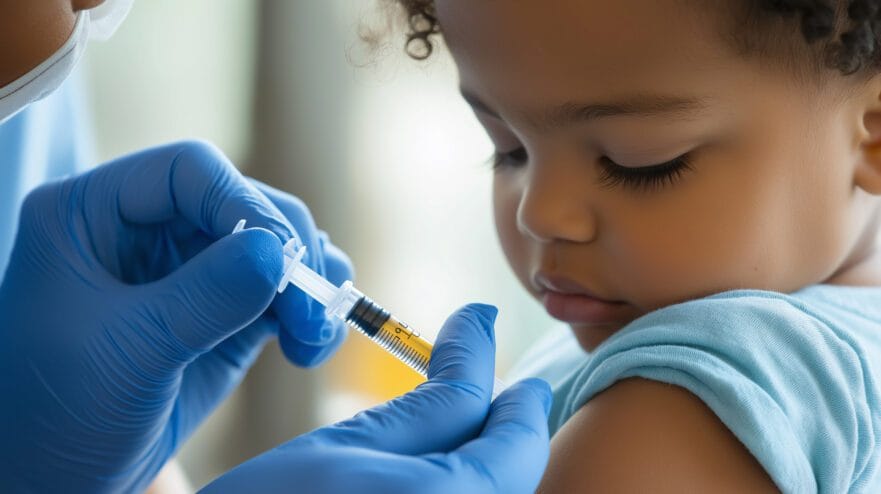
Photo: Shutterstock
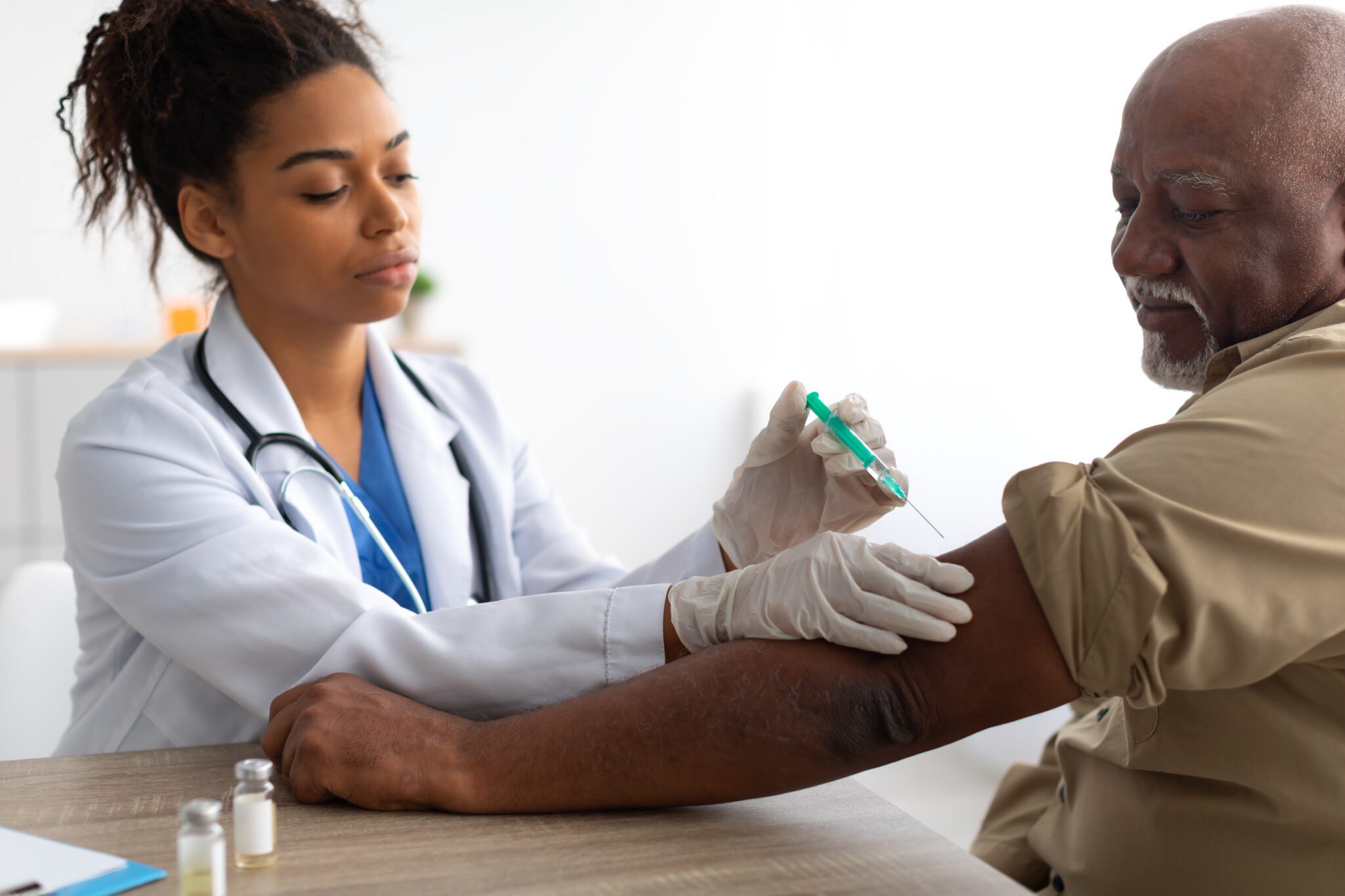
Photo: Shutterstock
Adam is the youngest of three children. His older brother and sister came down with a cough and fever when Adam was nearly a month old. A week or so later, Adam was coughing as well, but his cough was phlegmy, and he started vomiting after each feeding. He tested positive for RSV (respiratory syncytial virus).
After 12 hours, he hadn’t wet his diaper at all. His mother had to rush him to the hospital, where he spent four days and three nights. He got oxygen, IV fluids, and antibiotics. Still, since there are no antiviral drugs specifically to fight RSV, those treatments only supported his body while his immune system gradually fought off the virus.
In the Fall of 2022, pediatric hospitals were filled with patients like Adam.
RSV is not a new disease.
“It’s been around forever” says Ed Ward, MD, a Mayo Clinic Hospital Physician. But it may feel new to some of us. While we were all isolated to avoid COVID in 2020 and 2021, rates of other respiratory infections such as influenza and RSV declined, but as we emerged from our “bubbles” in 2022, RSV came back.
Ahead of the 2023-24 RSV season, the Food and Drug Administration (FDA) recently approved two new RSV vaccines and a monoclonal antibody treatment for infants. It may seem like these treatments came out of a sudden need, like the COVID vaccines and treatments, but Ward calls that “an illusion.”
RSV was one of the earliest diseases that researchers developed vaccines for after polio. Unfortunately, those very early vaccines ended up causing some children to become even sicker when they were exposed to RSV in 1966-67. Two infants died, and scientists paused vaccine development for RSV for decades. But in the 1980s and 1990s, experiments in animals helped scientists start to understand RSV better, and vaccine development began anew.
The two new vaccines include GlaxoSmith Kline’s Arexvy for adults over the age of 60, and Pfizer’s Abrysvo, for adults over the age of 60, as well as pregnant mothers to provide immunity for their newborns.
Lastly, there is a new monoclonal antibody treatment to prevent disease in infants called Beyfortus (nirsevimab-alip). Monoclonal antibodies provide what’s called “passive immunity.” When you get a vaccine, your own immune system makes its own antibodies to protect itself. Those antibodies circulate your blood for a while, but eventually disappear (the timeline for this differs for each vaccine.) However, your immune system retains the memory of how to make those antibodies again quickly if that same virus enters your body, so it can quickly fight it off. Monoclonal antibody treatments deliver the antibodies directly, so they protect you for a while, but your body never learns how to produce them itself, so when those antibodies fade away, so does any protection you had against the virus.
RSV is a respiratory illness caused by a virus called respiratory syncytial virus. For most people, it causes mild, cold-like symptoms (note: common colds are also caused by viruses, but different ones). Most of us will contract RSV multiple times throughout our lives without even knowing it. We won’t get tested because the virus infects our upper airways in our noses and throats, just like the common cold.
However, like influenza and COVID, a virus that causes mild symptoms for some people can cause serious problems for others. If the virus travels to your lungs it can cause inflammation and difficulty breathing, and can be fatal. Infants, toddlers, and those over the age of 65 are at the highest risk of severe outcomes.
The CDC estimates that each year, RSV causes:
Having the following conditions raises your risk of severe outcomes with RSV:
RSV season tends to hit a little earlier than flu season. It lasts from September to May, peaking between December and February in most areas of the United States. In Florida, however, the season seems to start earlier, according to the CDC.
If you or your child gets RSV, you’ll probably be OK if you stay home, rest, drink fluids, and take ibuprofen or Tylenol (acetaminophen) for fever or pain as needed. However, if it becomes difficult to breathe, you’ll need to head to the hospital. Still, even at the hospital, “it’s basically supportive care,” explains Ward.
At the hospital where he works, patients usually get supplemental oxygen, along with steroids that decrease inflammation, and bronchodilators such as albuterol that help to open airways so they can get more air in their lungs. However, none of these “kill the virus,” they just allow your body to function better while you fight it.
“It seems to be a reasonably good vaccine,” says Ward. Vaccines from both companies work through a very similar mechanism. They target a protein that the virus uses to enter your cells, blocking it from replicating inside your body.
The Advisory Committee on Immunization Practices (ACIP) reviewed the published clinical trial data for both vaccines and also some unpublished data. The trials reported on the vaccine’s efficacy for one season, though the companies are still collecting data to see how long it remains effective.
In older adults, one dose of GSK’s Arexvy was 82.6% effective at preventing symptomatic RSV that were confirmed by a laboratory test, during the first season after they were given the vaccine. After a year, during the second RSV season, protection dropped to 56.1%.
For Prizer’s Abrysvo, efficacy during the first season was 88.9%. After a year, it fell to 78.6%. Only a few patients in either group ended up hospitalized with severe illness, so the vaccine’s efficacy against severe disease was not quantified, but the experts suggested that since it prevents symptomatic disease, it will likely also reduce hospitalization.
The group recommended that individuals aged 60 or over may get the vaccine, after discussing it with their healthcare providers. There were a small number of rare side effects that the group wanted monitored as the vaccines hit the market.
The committee wrote, “until additional evidence becomes available from post-marketing surveillance clarifying the existence of any potential risk, RSV vaccination in older adults should be targeted to those who are at highest risk for severe RSV disease and therefore most likely to benefit from vaccination. The recommendation for shared clinical decision-making is intended to allow flexibility for providers and patients to consider individual risk for RSV disease, while taking into account patient preferences.”
Both GSK and Pfizer intended that their vaccines would be given to women late in their pregnancies, so that they’d mount an immune response and pass antibodies on to their babies that would protect them from RSV during their infancy. However, early trials suggested an increased risk of preterm birth (more on that later). Pfizer pressed on, and its vaccine was approved to be given between weeks 32 and 36 of pregnancy.
Given at this time, the shots lowered the risk of lower respiratory tract disease by 34.7% in newborns and the risk of severe lower respiratory tract disease by 91.1% up to 90 days after the babies were born. Six months after they were born, the risk of any disease was lowered 57.3% and the risk of severe disease was lowered by 76.5%.
Some experts have pointed out that the efficacy seems to drop off before the babies reach a year of age.
“It’s not clear to me that the data is really showing a benefit,” says Adam Urato, MD, a maternal-fetal medicine specialist at Beth Israel Deaconess Medical Center.
He noted that the researchers neglected to include several outcomes he’d liked to have seen, such as all-cause hospitalizations.
“That’s important because you may be preventing RSV lower respiratory tract infection, but you may just be opening up the door to another organism,” he adds.
Urato is also concerned about the lack of data on longer-term effects.
“Are these children more susceptible to some other infection down the line? Do they develop autoimmune diseases down the line? Do they develop other chronic health issues down the line like allergies, asthma, things like that?” he asks. “These studies are fairly limited.”
RSV is a seasonal illness. It doesn’t mutate as much as respiratory viruses like COVID or influenza, but since most of us are infected multiple times throughout our lives, it’s reasonable to guess that vaccine-induced immunity will not last forever. Of course, at this point, we simply don’t know. The research is ongoing.
“We know nothing” about the longevity of these vaccines yet, says Ward.
Peter Hotez, MD, PhD, a pediatrician and vaccine expert at Baylor College of Medicine got the Arexvy shot on Aug. 21, 2023 and documented the experience on X (formerly Twitter).
The next day, he reported soreness in his arm. Later that night, he says he experienced fever and sweats, but that they were gone by the morning. This reflected what most trial participants seemed to have experienced. The common side effects were those that we see with most vaccines, as a result of our immune systems becoming activated.
“The main side effects that we know are what we expected: people feel sore on the arm, people feel achy, some malaise, a little bit of a headache,” says Ward.
However, there were a few rare, but worrisome, side effects that ACIP pointed out it will be keeping an eye on. The group said that between both vaccines for older adults, six individuals (out of tens of thousands of people in the trials) had inflammatory neurologic events such as Guillain-Barre syndrome in which your immune system attacks your nerves and can cause temporary or long-term paralysis, and acute disseminated myeloencephalitis which is temporary multiple-sclerosis-like inflammation that can cause long-term damage.
“Whether these events occurred due to chance, or whether RSV vaccination increases the risk for inflammatory neurologic events is currently unknown. Until additional evidence becomes available from post marketing surveillance clarifying the existence of any potential risk, RSV vaccination in older adults should be targeted to those who are at highest risk for severe RSV disease and therefore most likely to benefit from vaccination,” the committee wrote.
Ward adds that, “a lot of people will assume that we know a lot of things about medicines when they come to market, like how often you’re going to have to give [the shots] or what the rare side effects are. We don’t know those things when drugs come to market. Those only come from time and giving it to millions of people.”
On October 6, 2023, the CDC announced that it would soon be using V-Safe, an app developed to monitor side effects of the Covid vaccines in 2020, to monitor how adults felt after receiving RSV shots. If you enroll in V-Safe, you’ll receive text messages to remind you to record updates about how you feel in the app or on a computer so scientists can keep track of any trends as new side effects emerge.
There’s one specific burning question that has some experts worried about giving the RSV shot to pregnant women. Since infants are at higher risk for severe outcomes from RSV, scientists hope that vaccinating mom during the last few weeks of pregnancy will help her make antibodies, which will then be passed on to her child. In theory, this would protect the infant, at least temporarily. Protection wouldn’t be as likely to last long-term, because the infant’s immune system would not have learned to make its own antibodies, it would just be getting them from mom. The researchers suggested waiting until this late in gestation to provide the shot to lower the risk of the shot causing preterm birth.
But, “the clinical trial data is concerning to me,” says Urato. “GSK reported that their trial of the vaccine [in pregnant women] led to increased preterm births and increased neonatal deaths, so they pulled the plug on their program on it.”
Pfizer’s vaccine works the same way as GSK’s, but in the Pfizer trial, there was only a slight increase in preterm births that the company says did not reach statistical significance.
“You can see that in their Phase Two data where they’re looking at different formulations of the vaccine,” says Urato. “They said it wasn’t statistically significant, but the numbers weren’t that high or what was being studied. It’s very concerning because preterm birth is a big concern.”
In the data that the FDA reviewed, 5.6% of women given the vaccine had preterm births, compared to 4.7% of those who did not take the vaccine.
Other scientists have also expressed their concern about the risk of preterm births with the RSV vaccine for pregnant women. Family medicine physician Buzz Hollander, MD, published his concerns in April 2023. Medical student and blogger, Dave the Knave, a medical student, also analyzed the data in his Substack, and presented it at an open public hearing for the FDA advisory committee evaluating the vaccine.
“That led four people on a 14-member committee, their scientific committee, to say, ‘we worry about the side effects,’” says Ward. But those four were in the minority. The committee voted 10-4 to recommend approving the treatment, and the FDA moved forward with approval.
The FDA also noted a slight increase in the number of women who experienced preeclampsia, a condition characterized by dangerously high blood pressure, after taking the vaccine. Upon its approval, the FDA stipulated that the company must conduct post-marketing studies on the risk of preterm birth and preeclampsia.
There’s little data on the safety and efficacy of getting the RSV vaccine at the same time as other shots. Some patients have received both the flu shot and GSK’s RSV vaccine together, and they still produced similar immune responses to both. However, the shots have not been tested with other vaccines such as COVID, pneumococcal, and tetanus.
There are two monoclonal antibody infusions that can be given to infants to help protect them from RSV. One called palivizumab has been around since 1998, but was not commonly used because the protection wears off quickly, and babies need to get monthly infusions throughout the RSV season.
Side effects of palivizumab include:
It’s important to note that while monoclonal antibodies used for COVID-19 mostly treated the disease after you got infected, these monoclonal antibodies are used for preventing RSV, not treating active infections.
The new monoclonal antibody is Beyfortus (nirsevimab). Made by Sanofi and AstraZeneca, it was approved by the FDA for infants who are younger than 8-months-old during RSV season and 8- to 24-month-olds with higher risk for severe infection. One dose is thought to be enough to protect the child for five months. It was 79% effective at preventing severe RSV during that time, and the panel of FDA advisors voted unanimously in favor of its approval.
Common Side Effects of Beyfortus included:
Ward emphasizes that “we know how to cut back on respiratory viruses, and even specifically RSV,” says Ward. The same things that slowed COVID, such as quarantining, work for RSV too. “There was almost no RSV in 2020 and 2021,” because people were taking precautions like social distancing, wearing masks, staying home when they’re sick, and ventilating indoor areas.”
Urato suggests asking the following questions if your healthcare provider recommends the shot or any other treatment.
Ward adds that RSV “is not nearly as bad as flu and COVID. If people want to wait,” until more data on the vaccines comes out before getting a shot, “that’s fine.”

If you’ve experienced side effects or medication issues related to this topic, we want to hear from you.
Submit Your StoryDISCLAIMER: MedShadow provides information and resources related to medications, their effects, and potential side effects. However, it is important to note that we are not a substitute for professional medical advice, diagnosis, or treatment. The content on our site is intended for educational and informational purposes only. Individuals dealing with medical conditions or symptoms should seek guidance from a licensed healthcare professional, such as a physician or pharmacist, who can provide personalized medical advice tailored to their specific circumstances.
While we strive to ensure the accuracy and reliability of the information presented on MedShadow, we cannot guarantee its completeness or suitability for any particular individual’s medical needs. Therefore, we strongly encourage users to consult with qualified healthcare professionals regarding any health-related concerns or decisions. By accessing and using MedShadow, you acknowledge and agree that the information provided on the site is not a substitute for professional medical advice and that you should always consult with a qualified healthcare provider for any medical concerns.
Help fund our fight for improved medication safety and transparency by supporting our independent journalism.
Give NowWe seek to create a world where there are safer medications for all and where all people are fully informed about their medication benefits and side effects, using our explanatory and investigative journalism to both inform and stimulate public discussion to drive toward solutions.
No comments yet. Be the first to comment!