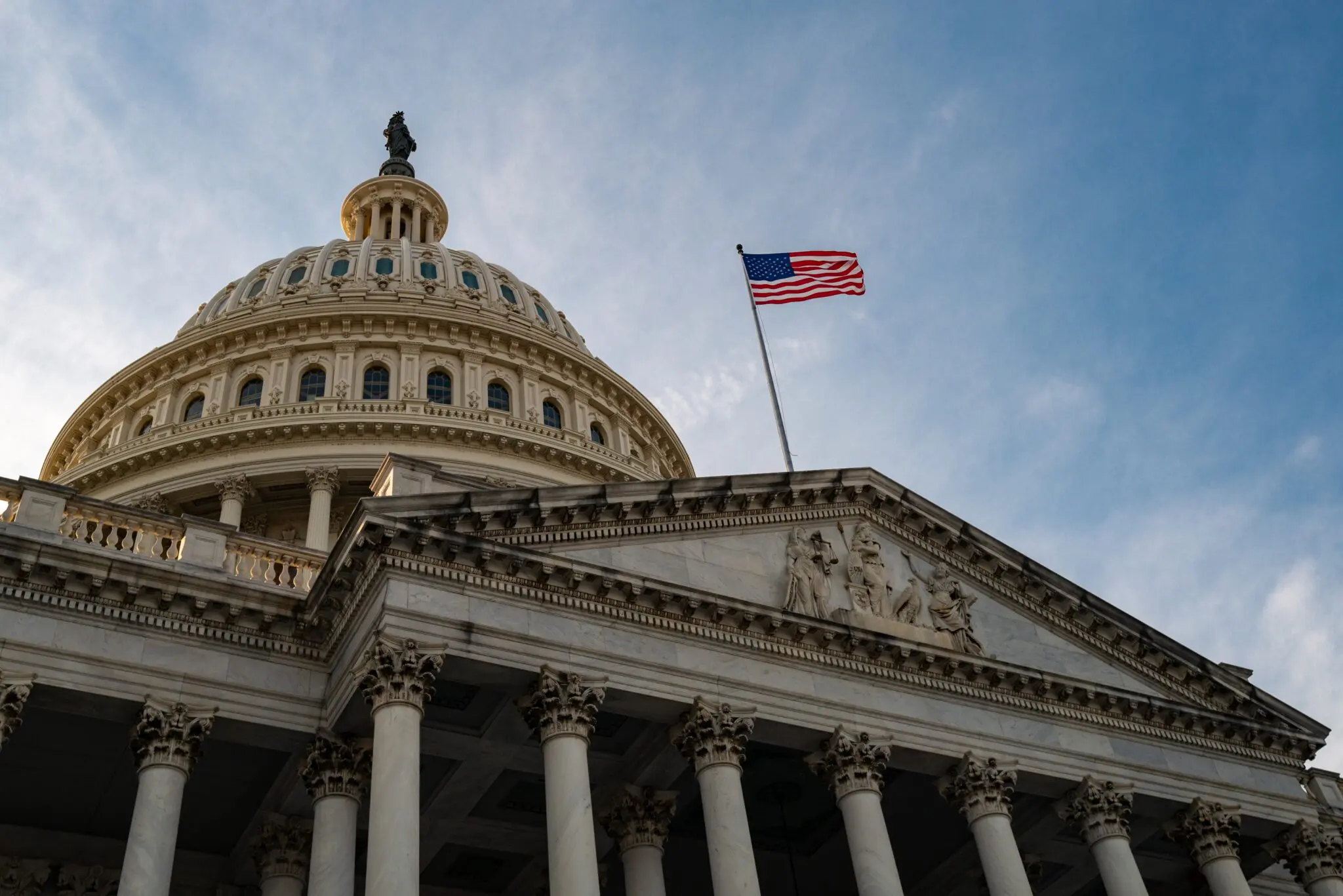
On September 16 and 17, 2026, I spoke at the FDA’s public hearings on the Prescription Drug User Fee Act (PDUFA) and Generic Drug User Fee Amendments (GDUFA) in Washington, D.C. I spoke in support of greater accountability of the pharmaceutical industry and for stronger safety protections for those who take generic and brand-name prescription drugs, which is roughly two-thirds of the adult population.
PDUFA, first enacted in 1992, allows the FDA to collect fees from pharmaceutical companies to help fund the review and post-approval safety oversight of new drugs. GDUFA, enacted in 2012, similarly collects fees from generic drug manufacturers to help fund the FDA’s generic drug program, including reviewing applications and inspecting drug manufacturing facilities, and monitoring generic drug safety and quality after approval.
Taken together, these industry fees provide a substantial share of the funding for the FDA’s drug review programs. This makes sense to me. Pharmaceutical companies are in business to profit from developing and marketing drugs, and I believe that FDA review fees are no different than other drug development costs to do business. Right now, the FDA is negotiating with pharmaceutical companies over the deadlines it will meet for drug approvals and what the companies will pay for their work. These negotiations take place every five years as PDUFA and GDUFA come up for reauthorization.
But the negotiations are terribly lopsided. The FDA is held to specific timelines for reviewing applications, responding to companies, and holding meetings throughout the drug review process — often measured in a set number of days. Yet after a drug hits the market, pharmaceutical companies may be required to submit safety reports or conduct follow-up studies without facing the same accountability if they fail to meet those obligations.
This is the first year that I’ve spoken at a GDUFA meeting. I did so because the American public needs more people and organizations like MedShadow to demand that the pharmaceutical industry step up, file its reports on time, and respond quickly to violations and red flags. Both the PDUFA and GDUFA agreements should include safety and quality metrics in their drug quality requirements.
The Weekly Wrap-Up
Independent reporting on drug recalls, medication safety and integrative health, including supplements. No pharma funding.
MedShadow has been investigating the safety of generic drugs for several years. Many of you attended our webinars and have read our articles. Most generic drugs are what they should be: less expensive substitutions for brand-name medications that work the same way as the originals. But manufacturing and quality control issues can sometimes affect how a generic drug performs. Issues such as incorrect potency, differences in how quickly a drug dissolves, or contamination can affect its safety or effectiveness — and, in rare cases, lead to serious harm.
Even when a drug is manufactured exactly as intended, however, our understanding of its risks evolves.
A drug is approved based on limited information from a limited population over a limited period of time (i.e., clinical trials). Then it enters the real world. Millions of people may take it. They may also take other drugs with it. These people have conditions and characteristics that may not have been well represented in initial clinical trials. As a drug’s reach expands, we learn more about adverse events, interactions, long-term effects, and real-world effectiveness.
But much of the system designed to identify problems after a drug reaches the market is reactive. Quality problems may only come to light through patient complaints or reports of adverse events from healthcare professionals. Those reports are largely what prompt the FDA to investigate further, including by testing the drug itself.
Some degree of postmarket surveillance will always be necessary; no preapproval process can uncover every potential problem. We, the people and the patients, serve as the primary warning system for preventable manufacturing and quality failures. Since that is true, the FDA and pharma must respond early and quickly to safety signals.
PDUFA and GDUFA play an important role in getting good medications to patients as quickly as reasonably possible. But speed cannot be the only measure of success.
As the FDA and drug manufacturers negotiate the next PDUFA and GDUFA agreements, they have an opportunity to strengthen the systems that protect patients after a drug reaches the market — not just those that get it there. Patient safety should be part of those negotiations from the start.
To learn more, you can watch my full comments from the hearings below.
DISCLAIMER: MedShadow provides information and resources related to medications, their effects, and potential side effects. However, it is important to note that we are not a substitute for professional medical advice, diagnosis, or treatment. The content on our site is intended for educational and informational purposes only. Individuals dealing with medical conditions or symptoms should seek guidance from a licensed healthcare professional, such as a physician or pharmacist, who can provide personalized medical advice tailored to their specific circumstances.
While we strive to ensure the accuracy and reliability of the information presented on MedShadow, we cannot guarantee its completeness or suitability for any particular individual’s medical needs. Therefore, we strongly encourage users to consult with qualified healthcare professionals regarding any health-related concerns or decisions. By accessing and using MedShadow, you acknowledge and agree that the information provided on the site is not a substitute for professional medical advice and that you should always consult with a qualified healthcare provider for any medical concerns.
We seek to create a world where there are safer medications for all and where all people are fully informed about their medication benefits and side effects, using our explanatory and investigative journalism to both inform and stimulate public discussion to drive toward solutions.
MedShadow.org is dedicated to empowering people with our evidence-based journalism about the safest ways to take over-the-counter (OTC) and prescription (Rx) medications.
We also seek to stimulate public discussion about potential improvements to drug research, manufacturing and distribution processes. and also to encourage the improvement of processes to ensure that we are all better protected.
As a result, we encourage other nonprofit newsrooms, mission-aligned outlets, and advocacy organizations to republish our original content under the following conditions:
You May Republish Our Articles for Free If:
1. We Are Credited Fully and Clearly
You must include the byline and credit MedShadow.org as the original publisher. Please include a link to the original article at the top or bottom of the piece. Use the following attribution:
This article was originally published by MedShadow, a nonprofit foundation that focuses on the safest ways to take over-the-counter and prescription medications.
2. Our Content Isn’t Edited Without Permission
You may make small changes for clarity, such as adjusting headlines, subheadings, or transitions, but you may not change the core meaning, tone, or intent of the article. For substantive edits, email us at republish@medshadow.org for review and approval.
3. You Do Not Sell Or Use Our Content Commercially
Our work is free to share, but it may not be sold, monetized, or repurposed for commercial gain. You may not republish our articles behind a paywall or in publications whose primary purpose is advertising or product promotion. You may not place drug or supplement advertising adjacent to our story.
4. Photos, Graphics, and Multimedia Are Not Used Without Permission
Only the text of the article is available for republication. Images, graphics, and videos may not be reused without explicit written permission, unless they are clearly marked as Creative Commons licensed. Contact us if you’d like to request reuse of a visual asset.
You May Not:
Use our content to promote a product, service, or political candidate
Republish only part of an article or create derivative works without permission
Add affiliate links, advertising overlays, or lead generators
Translate the article without written permission
Contact Us
If you’re unsure whether your intended use falls within these guidelines, or would like to discuss a formal syndication or licensing arrangement, please email: republish@medshadow.org
We want our journalism to reach as many people as possible, especially those making critical decisions about medications and health.
For website editors
Copy the article HTML
Copy the article body, including its formatting and links, then paste it into your publishing system. Add the byline and required credit described in these guidelines.
Preview article HTML
<!-- wp:paragraph -->
<p>On September 16 and 17, 2026, I spoke at the FDA's public hearings on the Prescription Drug User Fee Act (PDUFA) and Generic Drug User Fee Amendments (GDUFA) in Washington, D.C. I spoke in support of greater accountability of the pharmaceutical industry and for stronger safety protections for those who take generic and brand-name prescription drugs, which is roughly <a href="https://acrobat.adobe.com/link/spaces/urn:aaid:sc:US:a5663563-3e7d-46fa-b139-e007fbc24a6e">two-thirds of the adult population</a>.</p>
<!-- /wp:paragraph -->

<!-- wp:paragraph -->
<p><a href="https://www.fda.gov/industry/fda-user-fee-programs/prescription-drug-user-fee-amendments">PDUFA, first enacted in 1992</a>, allows the FDA to collect fees from pharmaceutical companies to help fund the review and post-approval safety oversight of new drugs. <a href="https://www.fda.gov/industry/generic-drug-user-fee-amendments/gdufa-i">GDUFA, enacted in 2012</a>, similarly collects fees from generic drug manufacturers to help fund the FDA’s generic drug program, including reviewing applications and inspecting drug manufacturing facilities, and monitoring generic drug safety and quality after approval.</p>
<!-- /wp:paragraph -->

<!-- wp:paragraph -->
<p>Taken together, these industry fees <a href="https://www.fda.gov/about-fda/user-fee-reports/user-fee-financial-reports">provide a substantial share</a> of the funding for the FDA’s drug review programs. This makes sense to me. Pharmaceutical companies are in business to profit from developing and marketing drugs, and I believe that FDA review fees are no different than other drug development costs to do business. Right now, the FDA is negotiating with pharmaceutical companies over the deadlines it will meet for drug approvals and what the companies will pay for their work. These negotiations take place every five years as PDUFA and GDUFA come up for reauthorization.</p>
<!-- /wp:paragraph -->

<!-- wp:paragraph -->
<p>But the negotiations are terribly lopsided. <a href="https://www.fda.gov/media/151712/download">The FDA is held to specific timelines</a> for reviewing applications, responding to companies, and holding meetings throughout the drug review process — often measured in a set number of days. Yet after a drug hits the market, pharmaceutical companies may be required to submit safety reports or conduct follow-up studies <a href="https://oig.hhs.gov/documents/evaluation/2591/OEI-01-14-00390-Complete%20Report.pdf">without facing the same accountability</a> if they fail to meet those obligations.</p>
<!-- /wp:paragraph -->

<!-- wp:paragraph -->
<p>This is the first year that I’ve spoken at a GDUFA meeting. I did so because the American public needs more people and organizations like MedShadow to demand that the pharmaceutical industry step up, file its reports on time, and respond quickly to violations and red flags. Both the PDUFA and GDUFA agreements should include safety and quality metrics in their drug quality requirements. </p>
<!-- /wp:paragraph -->

<!-- wp:paragraph -->
<p>MedShadow has been <a href="https://medshadow.org/investigating-generics/">investigating the safety of generic drugs</a> for several years. Many of you attended our <a href="https://medshadow.org/webinars/">webinars</a> and have read our articles. Most generic drugs are what they should be: less expensive substitutions for brand-name medications that work the same way as the originals. But manufacturing and quality control issues can sometimes affect how a generic drug performs. Issues such as incorrect potency, differences in how quickly a drug dissolves, or contamination can affect its safety or effectiveness — and, in rare cases, lead to serious harm.</p>
<!-- /wp:paragraph -->

<!-- wp:paragraph -->
<p>Even when a drug is manufactured exactly as intended, however, our understanding of its risks evolves.</p>
<!-- /wp:paragraph -->

<!-- wp:paragraph -->
<p>A drug is approved based on limited information from a limited population over a limited period of time (i.e., clinical trials). Then it enters the real world. Millions of people may take it. They may also take other drugs with it. These people have conditions and characteristics that may not have been well represented in initial clinical trials. As a drug’s reach expands, we learn more about adverse events, interactions, long-term effects, and real-world effectiveness.</p>
<!-- /wp:paragraph -->

<!-- wp:paragraph -->
<p>But much of the system designed to identify problems after a drug reaches the market is <em>reactive</em>. Quality problems may only come to light through patient complaints or reports of adverse events from healthcare professionals. Those reports are largely what prompt the FDA to investigate further, including by testing the drug itself.</p>
<!-- /wp:paragraph -->

<!-- wp:paragraph -->
<p>Some degree of postmarket surveillance will always be necessary; no preapproval process can uncover every potential problem. We, the people and the patients, serve as the primary warning system for preventable manufacturing and quality failures. Since that is true, the FDA and pharma must respond early and quickly to safety signals.</p>
<!-- /wp:paragraph -->

<!-- wp:paragraph -->
<p>PDUFA and GDUFA play an important role in getting good medications to patients as quickly as reasonably possible. But speed cannot be the only measure of success.</p>
<!-- /wp:paragraph -->

<!-- wp:paragraph -->
<p>As the FDA and drug manufacturers negotiate the next PDUFA and GDUFA agreements, they have an opportunity to strengthen the systems that protect patients after a drug reaches the market — not just those that get it there. Patient safety should be part of those negotiations from the start.</p>
<!-- /wp:paragraph -->

<!-- wp:paragraph -->
<p>To learn more, you can watch my full comments from the hearings below.</p>
<!-- /wp:paragraph -->

<!-- wp:embed {"url":"https://www.youtube.com/watch?v=mNxJyh8dOHo","type":"video","providerNameSlug":"youtube","responsive":true,"className":"wp-embed-aspect-16-9 wp-has-aspect-ratio"} -->
<figure class="wp-block-embed is-type-video is-provider-youtube wp-block-embed-youtube wp-embed-aspect-16-9 wp-has-aspect-ratio"><div class="wp-block-embed__wrapper">
https://www.youtube.com/watch?v=mNxJyh8dOHo
</div></figure>
<!-- /wp:embed -->
What is unbiased drug-safety journalism worth to you?
We think it’s invaluable — and hope you agree. Our work is made possible by donations from readers like you.
What is Unbiased Drug-Safety Journalism Worth to You?
We think it’s invaluable — and hope you agree. Our journalism is made possible by donations from readers like you.
As a nonprofit, we don’t take a dime from pharmaceutical or supplement companies. That means we can report on the benefits, risks, and alternatives to prescription and over-the-counter drugs free from corporate pressure or influence.



 Shedding Light on the Risks
& Benefits of Medications
Shedding Light on the Risks
& Benefits of Medications