The Experimental Fertility Treatment Dividing IVF Physicians
Photo: Peter Hemmel
Rapamycin has become a favorite among longevity enthusiasts. Now, some fertility specialists are prescribing it off-label to improve IVF outcomes, while others say the evidence isn't strong enough to justify its use
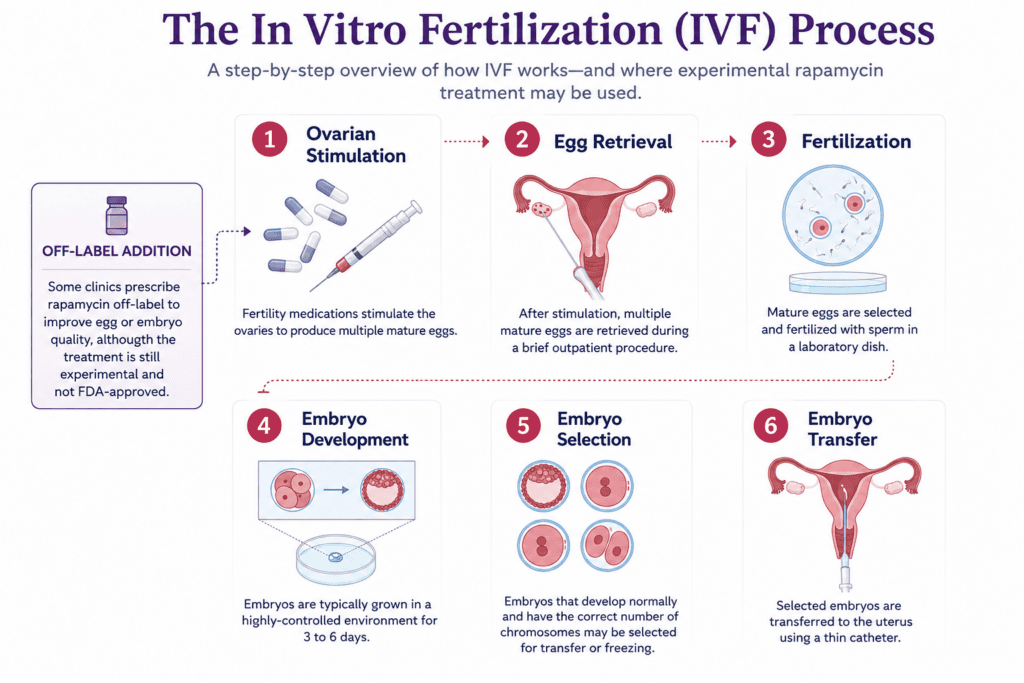
Rapamycin is FDA-approved to help prevent organ rejection after kidney transplants — not for fertility. Some fertility specialists are now prescribing it off-label in hopes of improving egg quality and IVF outcomes.
Early research is promising, but limited. A small 2025 trial found higher clinical pregnancy rates among women who received rapamycin during IVF, but larger studies are needed.
Pregnancy safety is a key concern. Rapamycin can cause fetal harm if taken during pregnancy. Doctors who prescribe it for fertility say they stop treatment several weeks before embryo transfer, but questions remain about its safety around conception.
Experts remain divided. Some fertility specialists already offer rapamycin, while others say it should remain experimental until its safety and effectiveness are better established.
On this page
Sarah, a 40-year-old professional chef who lives in the mountains outside Sacramento, California, fills her kitchen with locally sourced organic food, exercises regularly, and pays close attention to what she puts in her body.
But despite those habits that doctors say could help with fertility, she and her partner spent nearly four years trying unsuccessfully to conceive.
The experience was so painful that Sarah asked MedShadow to identify her by her first name only because she did not want family members to know that she is undergoing fertility treatment.
“It’s just such a painful process,” she says. “I just didn’t want to have to [keep updating everyone] with disappointments all the time.”
When Sarah was in her mid-30s, she turned to in vitro fertilization (IVF), the most common form of assisted reproductive technology, hoping to learn whether she still had viable eggs.
The first procedure ended before doctors could retrieve any. They told her there weren’t enough eggs to collect and, she says, offered little explanation for why.
“I had asked: ‘Can we try to figure out what’s going on? Can we do blood work? Can we see if there’s anything that we can do to mitigate infertility naturally?’” Sarah recalled. “And they straight up told me: ‘That’s not what we’re here for. We’re here to do egg retrievals, and that’s it.’”
The ‘Egg Whisperer’ Who Prescribes Rapamycin to Her Patients, And Herself
Fertility tends to decline with age, and when conception doesn’t happen on its own, many women turn to assisted reproductive technologies such as IVF.
Although IVF can improve the chances of pregnancy by retrieving multiple eggs and selecting the healthiest embryos, it cannot reverse the age-related decline in the number or quality of a woman’s eggs. “There’s a lot of misunderstanding about that,” says Aimee Eyvazzadeh, M.D., a fertility specialist with a private practice in San Ramon, California. ”One hundred percent of [women] will become infertile, because we’ll all run out of eggs.”
Dr. Eyvazzadeh — who calls herself “The Egg Whisperer” — says many women in their mid-to-late 40s or early 50s arrive at her private clinic hoping for a successful IVF cycle using their own eggs. By that point, however, there are often too few eggs left to retrieve. “IVF doctors are not gods. We can’t wave a wand and all of a sudden — poof! — give you healthy eggs,” she adds.
According to the Centers for Disease Control and Prevention (CDC) IVF Success Estimator, a healthy 25-year-old woman undergoing IVF has about a 55% chance of having a baby after her first egg retrieval. By the time she turns 40, that chance drops to about 20%. Meanwhile, data from 2016 to 2023 show that women are increasingly delaying childbirth, making age-related fertility decline a growing concern.
For years, fertility specialists have encouraged women to freeze their eggs while they’re younger. But egg freezing is expensive, physically demanding, and far from a guarantee.
In 2021, Dr. Eyvazzadeh said she came across a 2017 study on rapamycin — an FDA-approved drug used to help prevent organ rejection after transplants — that had experimentally prolonged ovarian lifespan in mice and suggested it might one day help delay menopause, which naturally occurs when the ovaries run out of viable eggs.
“I was like, if they’re going to study this, and there’s this evidence that it could actually work, I’m going to just be patient zero,” she said. So, Dr. Eyvazzadeh decided to start taking rapamycin intermittently in the hopes that it would delay menopause.
The side effects Dr. Eyvazzadeh has personally experienced have been mild and don’t bother her: “I get zits once in a while. I don’t care. I get a mouth sore here and there. Don’t care. That’s really it.”
Now in her 50s, she says she has no signs of menopause, continues to have regular periods, and feels “great” overall — benefits she attributes to taking rapamycin.
How Rapamycin Became Fertility’s New Hope
First isolated in 1964 from soil bacteria collected on Easter Island, a Chilean territory in the southeastern Pacific Ocean, rapamycin was initially identified for its antifungal properties. The compound was named by scientists at Ayerst Pharmaceuticals (now part of Pfizer) after the island’s Indigenous name, Rapa Nui.
The discovery of rapamycin led to another breakthrough: a biological pathway known as the mechanistic target of rapamycin, or mTOR. Scientists now know that mTOR helps regulate cell growth, metabolism, protein production, and immune function. In 1999, the FDA approved rapamycin to help prevent organ rejection after kidney transplantation by suppressing the immune system.
Much of the excitement around rapamycin can be traced to a landmark 2009 Naturestudy by researchers at multiple institutions, including The Jackson Laboratory in Maine, the University of Texas San Antonio Health Science Center, and the University of Michigan. Working independently, the three labs found that rapamycin extended the lifespan of female mice by 14%, helping establish the drug as one of the most promising candidates in longevity research.
Although the FDA has not approved rapamycin as an anti-aging treatment, it has become what one researcher called “the darling of longevity enthusiasts.” Physician and podcast host Peter Attia, M.D., and tech entrepreneur Bryan Johnson are among the public figures who have said they have taken the drug in hopes of extending their health span or lifespan.
But for Dr. Eyvazzadeh and a growing number of fertility specialists, the most intriguing question isn’t whether rapamycin can extend life — it’s whether it can extend fertility.
“Fertility and aging are so intimately connected,” says Steven Palter, M.D., a fertility specialist and medical director at Gold Coast IVF, a private clinic in Woodbury, New York. “There’s always a potential that an early signal of [breakthrough] will come from that [longevity] group, that I can then take and learn for my field.”
He believes that signal has arrived.
Both Dr. Palter and Dr. Eyvazzadeh prescribe rapamycin off-label to some patients in their fertility clinics, despite the lack of FDA approval for either infertility or fertility preservation.
According to Dr. Eyvazzadeh, she’s prescribed rapamycin to more than 600 patients. One of her earliest patients was a 41-year-old woman who had entered menopause. Dr. Eyvazzadeh says that after taking rapamycin for three months, the patient resumed ovulating and later became pregnant.
Similar stories have appeared on Reddit’s r/40Plus_IVF forum, where some people undergoing IVF discuss their experiences with rapamycin. Some users report successful pregnancies that they believe were aided by the drug:
The Weekly Wrap-Up
Independent reporting on drug recalls, medication safety and integrative health, including supplements. No pharma funding.
“Hi! Could you share your results with rapamycin?”
“I went through my third IVF cycle. I stopped the rapamycin a month before the current cycle. I had a slight increase in follicle recruitment, had a very tiny increase in follicles retrieved, follicles appeared better synchronized, and my maturation rate increased… I did a fresh embryo transfer but have four remaining and we will see if any of those grow to blast. Certainly no harm, possible benefit. I am hopeful it improves quality measures.”
“If you don’t mind sharing, how was your fresh embryo transfer after the rapa?
So far the pregnancy is progressing well, I am taking it one milestone at a time as it’s still high risk and still early…“
“…I’m grateful to be pregnant for the first time in my life. Prior to this, I wasn’t even sure it could happen for me“
While stories like these can fuel excitement, some experts remain unconvinced that the drug should be widely prescribed. At least, not yet.
How Much Evidence Is Enough?
In 2025, David Keefe, M.D., chief of reproductive endocrinology and infertility at UMass Memorial Health, and his former postdoctoral fellow, Lin Liu, Ph.D., now a reproductive biologist at Nankai University in China, published one of the first randomized clinical trials to examine rapamycin for age-related infertility in humans.
The study enrolled 100 Chinese women ages 23 to 48 who were undergoing IVF. Half received standard ovarian stimulation alone, while the other half received standard treatment plus 1 milligram of rapamycin daily for 21 to 28 days.
The results were “profound,” Dr. Palter says. Women who received rapamycin — even those who had previously undergone unsuccessful IVF cycles — were about 20% more likely to achieve a clinical pregnancy than those who received standard IVF treatment alone.
“The quality of eggs related to aging has always been thought to be fixed and immutable.” Dr. Palter says. “This was a remarkable demonstration that that may be wrong.”
For Dr. Palter, Dr. Eyvazzadeh, and other private-practice fertility specialists who have begun prescribing rapamycin, the study provided encouraging evidence that the drug could improve fertility in some patients.
But Dr. Keefe and Dr. Lin came away with a different conclusion. While they consider the findings promising, to them, they aren’t yet strong enough to justify prescribing rapamycin outside of a clinical trial.
“This study represents a milestone in understanding age‑related infertility. It undoubtedly sheds new light on tackling this challenging condition,” Dr. Lin wrote in an email to MedShadow. But “whether rapamycin will become a mainstay [therapy] is still too early to say,” he adds.
Several factors underpin their caution. The study was relatively small, involved a single population, and was conducted in China, where IVF protocols differ from those used in the United States. And, as with any single study, there’s always the possibility that chance played a role. “We’re not sure to what extent these same things apply [in other settings],” says Dr. Keefe.
Since the paper was published, Dr. Keefe says some of his patients have read it and asked whether he would prescribe rapamycin, but he has declined. In his view, the findings justify larger, real-world clinical trials — not changes to clinical practice.
“I say, ‘I don’t want you hurt, we don’t know enough about this, and you’re asking me [if] it’s okay if you do an experiment on yourself and your offspring?’ I strongly discourage my patients from doing this,” he says. ”My message is that a little skepticism goes a long way.”
Rapamycin’s Biological Trade-Offs
Dr. Keefe’s concerns stem from how rapamycin works in the body. The drug’s appeal, and its controversy, both come down to the same cellular pathway.
Women are born with a finite number of oocytes — the female germ cells that can develop into mature eggs — stored in their ovaries. At birth, there are about 1 to 2 million. (Although people often use the terms interchangeably, oocytes and eggs are biologically distinct.)
Each month, the body recruits more than 1,000 oocytes, each housed within a fluid-filled sac called a follicle, to begin maturing. Typically, only one develops into a mature egg that is released during ovulation. The rest are lost through a natural process of cellular degeneration and death known as follicular atresia.
By the time she reaches puberty, a woman’s body will store about 300,000 to 500,000 oocytes. This amount decreases drastically after she turns 34. And as she hits her 50s, the oocyte count drops to around 1,000.
There is often a misconception that low oocyte or egg numbers go hand in hand with low egg quality, explains Dr. Keefe. As a result, fertility medicine has long focused on measuring ovarian reserve — the number of oocytes a woman has left. Blood tests that measure anti-Müllerian hormone (AMH) and follicle-stimulating hormone (FSH) help estimate the number of remaining “immature” oocytes and follicles and are commonly used to predict the outcome of fertility treatment.
However, many researchers argue that these numbers are not reliable. Some women may have a low number of very high-quality oocytes, which leads to a successful pregnancy, Dr. Keefe says. The “most urgent, and most pressing problem,” Dr. Keefe adds, is the fact that we do not have any reliable markers of oocyte quality, which are better indicators of fertility.
As women age, the cumulative damage from inflammation and other stressors can contribute to tissue dysfunction and disorders. For the ovary, these aging symptoms could stunt oocyte development into mature eggs and lead to other complications, such as abnormal chromosome numbers in eggs that can result in miscarriages.
Dr. Keefe’s research has focused on whether rapamycin can interrupt some of the cellular processes that contribute to ovarian aging.
Rapamycin targets the mTOR pathway, slowing protein production and other cellular processes that may contribute to ovarian aging. Other researchers have shown that short-term use of rapamycin reduces monthly oocyte loss and restores the cellular environment needed for oocytes to mature into healthy eggs.
Safety Questions Remain
But hijacking the protein production machinery might come at a cost, Dr. Keefe says. “There’s a lot of ways to experimentally inhibit protein translation that are known to be really bad.”
Stopping protein production has been explored in the development of cancer treatment or antibiotics as a way to induce cell death.
While rapamycin is generally well tolerated and safe when taken under a doctor’s supervision, Dr. Keefe adds that the medication has a very narrow therapeutic window. At the right dose, it appears to be safe, but doses that are too high can be toxic, while those that are too low may not be effective.
What Do We Know About Rapamycin During Pregnancy?
A teratogen is any substance that can cause abnormalities in a developing fetus. However, the potential teratogenic effects of many medications, including rapamycin, remain uncertain because of a lack of controlled studies in pregnant women.
The general clinical recommendation is to stop rapamycin six weeks before conception to allow the drug to clear the body or fall to negligible levels, limiting potential harm to the fetus. Rapamycin has an elimination half-life of approximately 60 hours, meaning the amount of drug in the body falls by about half every 2.5 days.
Animal studies have found abnormal development and mortality among offspring exposed to rapamycin during pregnancy. Human data, however, is limited and comes largely from case reports.
In 2021, researchers reported on a 29-year-old woman who continued taking rapamycin during pregnancy to treat a rare genetic disorder called blue rubber bleb nevus syndrome. Her baby was born full-term but underweight at, 4.85 pounds. Despite his size, he continued to be healthy and caught up with other toddlers by the age of 2. The woman later had a second baby while taking rapamycin; he was also small at birth but otherwise healthy.
In rare circumstances, doctors have even given rapamycin off-label during pregnancy to treat a rare condition in an unborn baby. In a 2025 case report from Poland, a woman received rapamycin to treat her fetus’s vascular malformation. The baby was born prematurely at 35 weeks and continued receiving rapamycin after birth. The doctors noted that the baby’s condition improved throughout the rapamycin treatment and with no reported birth defects.
Despite these outcomes, the limited number of reported cases cannot establish that rapamycin as safe during pregnancy. Doctors, including those who spoke with MedShadow, remain cautious about exposing pregnant women to the drug because harmful effects may not have been captured by the limited data.
“You really need very good data to ensure that you optimize the dose and the regimen, and then you’ve got safety measures in place to reduce the risk that somebody mixes it wrong or takes the wrong dose, or figures — ‘oh, you know, I’ll take one milligram a day, but, oh, wait a minute, I want twins, so I’ll take two milligrams a day,’” Dr. Keefe says.
Those concerns are one reason doctors worry about the growing number of rapamycin dosing regimens circulating on social media. Physicians who spoke with MedShadow say the protocols are experimental and should not be copied without medical supervision.
Rahi Victory, M.D., a reproductive endocrinologist and infertility specialist with private practices in both Canada and the United States, says he offers rapamycin to his patients on a case-by-case basis. “No medication is ever one size fits all,” he says. “If you’re taking it, understand that you’re taking it experimentally; [not] because it’s proven to benefit you.”
More concerningly, rapamycin is also a known teratogen, meaning it can cause birth defects if taken during pregnancy. Because of that risk, Dr. Keefe worries the drug could harm the children many women hope to have if it has not been fully cleared from the body before conception.
That’s why doctors who prescribe rapamycin for fertility told MedShadow they are careful to have their patients stop the medication several weeks before transferring embryos to the uterus to ensure it has cleared the patient’s body before pregnancy begins. According to the National Center for Biotechnology Information database, Rapamycin has an elimination half-life of approximately 60 hours, meaning the amount of drug in the body falls by about half every 2.5 days. Some clinical literature recommends stopping rapamycin six weeks before conception to ensure that the drug has cleared the body or is in negligible amounts, to limit any potential harm to the fetus. MedShadow is not currently aware of any reported cases of birth defects associated with IVF treatment involving rapamycin.
Despite this, the Colorado Center for Reproductive Medicine (CCRM), one of the country’s largest fertility clinic networks, shares Dr. Keefe’s concerns and does not recommend rapamycin as a fertility treatment.
James Nodler, M.D., CCRM’s medical director and vice president of clinical strategy and policy, says the available evidence is not yet strong enough to support the drug’s routine use. “I wouldn’t say that we can be 100% confident yet in its safety and efficacy,” he says. “As this develops more, and hopefully it does, it’s something we would likely do under research protocol at CCRM, where we’re trying it on a limited basis, making sure it’s safe and effective.”
Dr. Nodler said that when it comes to improving egg and embryo quality, the data supporting healthy nutrition is “very strong.” This includes consuming foods such as fish rich in omega-3 fatty acids, whole grains rich in antioxidants, and protein such as eggs, nuts, and lean meat.
While no diet has been proven to reverse age-related declines in egg quality, some research suggests that women who follow a Mediterranean-style diet — rich in fish, whole grains, fruits, vegetables, legumes, and healthy fats — may have better fertility or IVF outcomes. However, those studies are observational, meaning they can only show an association between diet and fertility outcomes, not that diet directly improves egg quality.
‘My Rapamycin Baby’
Still, for many women, the prospect of improving the odds, even slightly, is enough to consider treatments that remain unproven.
After speaking with a friend who had been trying to get pregnant for years and finally conceived after seeing Dr. Eyvazzadeh, Sarah says she felt hopeful enough to book a consultation, even though she was 40 years old at the time.
Eventually, Sarah decided to undergo IVF at Dr. Eyvazzadeh’s clinic in San Ramon, making the three-hour drive each way for every appointment. “I told her I’d try just about anything,” she says.
During her first two rounds of the procedure, Sarah says the results were much like those from her earlier IVF cycle. But for her third round, Dr. Eyvazzadeh added rapamycin to Sarah’s treatment protocol. Sarah says that within a week, she felt clearer-headed and more energetic, her skin appeared to glow, and her body looked leaner. “I felt amazing,” she says. She also says the IVF cycle yielded twice as many eggs as her previous rounds, a result she attributes to taking 2.5 mg of rapamycin once a week for nine weeks.
By July 2026, Sarah was pregnant, according to pregnancy test results and prescription records reviewed by MedShadow.
“My rapamycin baby,” she calls it. “It’s kind of hard to believe.”
The Future of Rapamycin In Fertility Treatment
Interest in rapamycin as a fertility treatment continues to grow. In 2023, researchers at Columbia University launched a randomized, double-blind, placebo-controlled pilot study to evaluate whether low-dose rapamycin can slow ovarian aging in women ages 35 to 45. The study is expected to conclude in September 2026.
Dr. Keefe and his team are also preparing a real-world evidence study, which uses data collected during routine medical care rather than in a traditional clinical trial, to evaluate outcomes among U.S. women undergoing IVF who receive rapamycin.
He understands, however, why some patients are unwilling to wait.
“I get it,” he says. “But at the same time, [physicians are] still charged with ‘first, do no harm.'”
For Dr. Keefe, that means not offering rapamycin for fertility treatment until its benefits and risks have been firmly established.
DISCLAIMER: MedShadow provides information and resources related to medications, their effects, and potential side effects. However, it is important to note that we are not a substitute for professional medical advice, diagnosis, or treatment. The content on our site is intended for educational and informational purposes only. Individuals dealing with medical conditions or symptoms should seek guidance from a licensed healthcare professional, such as a physician or pharmacist, who can provide personalized medical advice tailored to their specific circumstances.
While we strive to ensure the accuracy and reliability of the information presented on MedShadow, we cannot guarantee its completeness or suitability for any particular individual’s medical needs. Therefore, we strongly encourage users to consult with qualified healthcare professionals regarding any health-related concerns or decisions. By accessing and using MedShadow, you acknowledge and agree that the information provided on the site is not a substitute for professional medical advice and that you should always consult with a qualified healthcare provider for any medical concerns.
We seek to create a world where there are safer medications for all and where all people are fully informed about their medication benefits and side effects, using our explanatory and investigative journalism to both inform and stimulate public discussion to drive toward solutions.
MedShadow.org is dedicated to empowering people with our evidence-based journalism about the safest ways to take over-the-counter (OTC) and prescription (Rx) medications.
We also seek to stimulate public discussion about potential improvements to drug research, manufacturing and distribution processes. and also to encourage the improvement of processes to ensure that we are all better protected.
As a result, we encourage other nonprofit newsrooms, mission-aligned outlets, and advocacy organizations to republish our original content under the following conditions:
You May Republish Our Articles for Free If:
1. We Are Credited Fully and Clearly
You must include the byline and credit MedShadow.org as the original publisher. Please include a link to the original article at the top or bottom of the piece. Use the following attribution:
This article was originally published by MedShadow, a nonprofit foundation that focuses on the safest ways to take over-the-counter and prescription medications.
2. Our Content Isn’t Edited Without Permission
You may make small changes for clarity, such as adjusting headlines, subheadings, or transitions, but you may not change the core meaning, tone, or intent of the article. For substantive edits, email us at republish@medshadow.org for review and approval.
3. You Do Not Sell Or Use Our Content Commercially
Our work is free to share, but it may not be sold, monetized, or repurposed for commercial gain. You may not republish our articles behind a paywall or in publications whose primary purpose is advertising or product promotion. You may not place drug or supplement advertising adjacent to our story.
4. Photos, Graphics, and Multimedia Are Not Used Without Permission
Only the text of the article is available for republication. Images, graphics, and videos may not be reused without explicit written permission, unless they are clearly marked as Creative Commons licensed. Contact us if you’d like to request reuse of a visual asset.
You May Not:
Use our content to promote a product, service, or political candidate
Republish only part of an article or create derivative works without permission
Add affiliate links, advertising overlays, or lead generators
Translate the article without written permission
Contact Us
If you’re unsure whether your intended use falls within these guidelines, or would like to discuss a formal syndication or licensing arrangement, please email: republish@medshadow.org
We want our journalism to reach as many people as possible, especially those making critical decisions about medications and health.
For website editors
Copy the article HTML
Copy the article body, including its formatting and links, then paste it into your publishing system. Add the byline and required credit described in these guidelines.
Preview article HTML
<!-- wp:paragraph -->
<p>Sarah, a 40-year-old professional chef who lives in the mountains outside Sacramento, California, fills her kitchen with locally sourced organic food, exercises regularly, and pays close attention to what she puts in her body.</p>
<!-- /wp:paragraph -->

<!-- wp:paragraph -->
<p>But despite those habits that doctors say <a href="https://doi.org/10.1186/1477-7827-11-66">could help with fertility</a>, she and her partner spent nearly four years trying unsuccessfully to conceive.</p>
<!-- /wp:paragraph -->

<!-- wp:paragraph -->
<p>The experience was so painful that Sarah asked MedShadow to identify her by her first name only because she did not want family members to know that she is undergoing fertility treatment.</p>
<!-- /wp:paragraph -->

<!-- wp:paragraph -->
<p>“It's just such a painful process,” she says. “I just didn't want to have to [keep updating everyone] with disappointments all the time.”</p>
<!-- /wp:paragraph -->

<!-- wp:paragraph -->
<p>When Sarah was in her mid-30s, she turned to in vitro fertilization (IVF), the most common form of assisted reproductive technology, hoping to learn whether she still had viable eggs.</p>
<!-- /wp:paragraph -->

<!-- wp:paragraph -->
<p>The first procedure ended before doctors could retrieve any. They told her there weren't enough eggs to collect and, she says, offered little explanation for why.</p>
<!-- /wp:paragraph -->

<!-- wp:paragraph -->
<p>“I had asked: ‘Can we try to figure out what's going on? Can we do blood work? Can we see if there's anything that we can do to mitigate infertility naturally?’” Sarah recalled. “And they straight up told me: ‘That's not what we're here for. We're here to do egg retrievals, and that's it.’” </p>
<!-- /wp:paragraph -->

<!-- wp:heading -->
<h2 class="wp-block-heading">The ‘Egg Whisperer’ Who Prescribes Rapamycin to Her Patients, And Herself</h2>
<!-- /wp:heading -->

<!-- wp:paragraph -->
<p>Fertility tends to decline with age, and when conception doesn't happen on its own, many women turn to assisted reproductive technologies such as IVF.</p>
<!-- /wp:paragraph -->

<!-- wp:paragraph -->
<p>Although IVF can improve the chances of pregnancy by retrieving multiple eggs and selecting the healthiest embryos, it cannot reverse the age-related decline in the number or quality of a woman's eggs. “There’s a lot of misunderstanding about that,” says <a href="https://draimee.org/about">Aimee Eyvazzadeh, M.D</a>., a fertility specialist with a private practice in San Ramon, California. ”One hundred percent of [women] will become infertile, because we'll all run out of eggs.”</p>
<!-- /wp:paragraph -->

<!-- wp:paragraph -->
<p>Dr. Eyvazzadeh — who calls herself “<a href="https://draimee.org/">The Egg Whisperer</a>” — says many women in their mid-to-late 40s or early 50s arrive at her private clinic hoping for a successful IVF cycle using their own eggs. By that point, however, there are often too few eggs left to retrieve. “IVF doctors are not gods. We can't wave a wand and all of a sudden — <em>poof!</em> — give you healthy eggs,” she adds. </p>
<!-- /wp:paragraph -->

<!-- wp:paragraph -->
<p>According to the <a href="https://www.cdc.gov/art/ivf-success-estimator/index.html">Centers for Disease Control and Prevention (CDC</a>) IVF Success Estimator, a healthy 25-year-old woman undergoing IVF has about a 55% chance of having a baby after her first egg retrieval. By the time she turns 40, that chance drops to about 20%. Meanwhile, <a href="https://www.cdc.gov/nchs/data/nvsr/nvsr74/nvsr74-09.pdf">data </a>from 2016 to 2023 show that women are increasingly <a href="https://www.cdc.gov/nchs/blog/posts/2025/06/the-rising-age-of-motherhood-in-the-united-states.html#cdc_bulletin_section_1-get-the-data-story">delaying childbirth</a>, making age-related fertility decline a growing concern.</p>
<!-- /wp:paragraph -->

<!-- wp:paragraph -->
<p>For years, fertility specialists have encouraged women to freeze their eggs while they're younger. But egg freezing is expensive, physically demanding, and far from a guarantee.</p>
<!-- /wp:paragraph -->

<!-- wp:paragraph -->
<p>In 2021, Dr. Eyvazzadeh said she came across a 2017 study on rapamycin — an FDA-approved drug used to help prevent organ rejection after transplants — that had experimentally <a href="https://pmc.ncbi.nlm.nih.gov/articles/PMC5506398/">prolonged ovarian lifespan in mice</a> and suggested it might one day help delay menopause, which naturally occurs when the ovaries run out of viable eggs.</p>
<!-- /wp:paragraph -->

<!-- wp:paragraph -->
<p>“I was like, if they're going to study this, and there's this evidence that it could actually work, I'm going to just be patient zero,” she said. <a href="https://pmc.ncbi.nlm.nih.gov/articles/PMC5506398/">So</a>, Dr. Eyvazzadeh decided to start taking rapamycin intermittently in the hopes that it would delay menopause.</p>
<!-- /wp:paragraph -->

<!-- wp:paragraph -->
<p>The side effects Dr. Eyvazzadeh has personally experienced have been mild and don't bother her: "I get zits once in a while. I don't care. I get a mouth sore here and there. Don't care. That's really it."</p>
<!-- /wp:paragraph -->

<!-- wp:paragraph -->
<p>Now in her 50s, she says she has no signs of menopause, continues to have regular periods, and feels “great” overall — benefits she attributes to taking rapamycin.</p>
<!-- /wp:paragraph -->

<!-- wp:heading -->
<h2 class="wp-block-heading">How Rapamycin Became Fertility's New Hope</h2>
<!-- /wp:heading -->

<!-- wp:paragraph -->
<p>First <a href="https://pmc.ncbi.nlm.nih.gov/articles/PMC9494524/">isolated in 1964</a> from soil bacteria collected on Easter Island, a Chilean territory in the southeastern Pacific Ocean, rapamycin was initially identified for its antifungal properties. The compound was named by scientists at Ayerst Pharmaceuticals (now part of Pfizer) after the island's Indigenous name, Rapa Nui.</p>
<!-- /wp:paragraph -->

<!-- wp:paragraph -->
<p>The discovery of rapamycin led to another breakthrough: a biological pathway known as the <a href="https://www.pnas.org/doi/10.1073/pnas.1716173114">mechanistic target of rapamycin</a>, or mTOR. Scientists now know that mTOR helps regulate cell growth, metabolism, protein production, and immune function. In 1999, the FDA approved rapamycin to help prevent organ rejection after kidney transplantation by suppressing the immune system.</p>
<!-- /wp:paragraph -->

<!-- wp:paragraph -->
<p>Because mTOR plays a role in <a href="https://www.nature.com/articles/s41392-023-01608-z">so many biological processes</a>, scientists soon began exploring whether rapamycin could have <a href="https://www.cell.com/cell-metabolism/fulltext/S1550-4131(14)00007-2">broader therapeutic uses</a>. Today, the pathway is a major focus of research into <a href="https://aacrjournals.org/clincancerres/article/10/18/6382S/281698/Mammalian-Target-of-Rapamycin-Inhibition?guestAccessKey=">cancer</a>, <a href="https://pubmed.ncbi.nlm.nih.gov/31794280/">metabolic disease</a>, and <a href="https://www.frontiersin.org/journals/aging/articles/10.3389/fragi.2025.1628187/full">aging</a>.</p>
<!-- /wp:paragraph -->

<!-- wp:image {"id":31573,"sizeSlug":"large","linkDestination":"none"} -->
<figure class="wp-block-image size-large"><img src="https://medshadow.org/wp-content/uploads/2026/08/rapa-2-1024x682.png" alt="rapamycin and fertility" class="wp-image-31573"/><figcaption class="wp-element-caption">Photo: Peter Hemmel</figcaption></figure>
<!-- /wp:image -->

<!-- wp:paragraph -->
<p>Much of the excitement around rapamycin can be traced to a landmark 2009 <em>Nature</em> <a href="https://www.nature.com/articles/nature08221">study</a> by researchers at multiple institutions, including The Jackson Laboratory in Maine, the University of Texas San Antonio Health Science Center, and the University of Michigan. Working independently, the three labs found that rapamycin extended the lifespan of female mice by 14%, helping establish the drug as one of the most promising candidates in longevity research.</p>
<!-- /wp:paragraph -->

<!-- wp:paragraph -->
<p>Although the FDA has not approved rapamycin as an anti-aging treatment, it has become what one researcher called "<a href="https://wapo.st/4wGCrPQ">the darling of longevity enthusiasts</a>." Physician and podcast host Peter Attia, M.D., and tech entrepreneur Bryan Johnson are among the public figures who have said they have taken the drug in hopes of extending their health span or lifespan.</p>
<!-- /wp:paragraph -->

<!-- wp:paragraph -->
<p>But for Dr. Eyvazzadeh and a growing number of fertility specialists, the most intriguing question isn't whether rapamycin can extend life — it's whether it can extend fertility.</p>
<!-- /wp:paragraph -->

<!-- wp:paragraph -->
<p>“Fertility and aging are so intimately connected,” says <a href="https://www.goldcoastivf.com/who-we-are/steven-palter-m-d/">Steven Palter, M.D.</a>, a fertility specialist and medical director at Gold Coast IVF, a private clinic in Woodbury, New York. “There’s always a potential that an early signal of [breakthrough] will come from that [longevity] group, that I can then take and learn for my field.” </p>
<!-- /wp:paragraph -->

<!-- wp:paragraph -->
<p>He believes that signal has arrived. </p>
<!-- /wp:paragraph -->

<!-- wp:paragraph -->
<p>Both Dr. Palter and Dr. Eyvazzadeh prescribe rapamycin off-label to some patients in their fertility clinics, despite the lack of FDA approval for either infertility or fertility preservation.</p>
<!-- /wp:paragraph -->

<!-- wp:paragraph -->
<p>According to Dr. Eyvazzadeh, she’s prescribed rapamycin to more than 600 patients. One of her earliest patients was a 41-year-old woman who had entered menopause. Dr. Eyvazzadeh says that after taking rapamycin for three months, the patient resumed ovulating and later became pregnant.</p>
<!-- /wp:paragraph -->

<!-- wp:paragraph -->
<p>Similar stories have appeared on Reddit's <a href="https://www.reddit.com/r/40Plus_IVF/comments/1pia4uy/has_anyone_had_rapamycin_as_part_of_their_protocol/">r/40Plus_IVF</a> forum, where some people undergoing IVF discuss their experiences with rapamycin. Some users report successful pregnancies that they believe were aided by the drug:</p>
<!-- /wp:paragraph -->

<!-- wp:paragraph -->
<p><strong><em>“Hi! Could you share your results with rapamycin?”</em></strong><strong><em> </em></strong></p>
<!-- /wp:paragraph -->

<!-- wp:paragraph -->
<p><em>“I went through my third IVF cycle. I stopped the rapamycin a month before the current cycle. I had a slight increase in follicle recruitment, had a very tiny increase in follicles retrieved, follicles appeared better synchronized, and my maturation rate increased… I did a fresh embryo transfer but have four remaining and we will see if any of those grow to blast. Certainly no harm, possible benefit. I am hopeful it improves quality measures.”</em><em><br></em></p>
<!-- /wp:paragraph -->

<!-- wp:paragraph -->
<p><strong><em>“If you don't mind sharing, how was your fresh embryo transfer after the rapa?</em></strong><strong><em> </em></strong></p>
<!-- /wp:paragraph -->

<!-- wp:paragraph -->
<p><em>So far the pregnancy is progressing well, I am taking it one milestone at a time as it's still high risk and still early…</em>"</p>
<!-- /wp:paragraph -->

<!-- wp:paragraph -->
<p><em>“...I'm grateful to be pregnant for the first time in my life. Prior to this, I wasn't even sure it could happen for me</em>"</p>
<!-- /wp:paragraph -->

<!-- wp:paragraph -->
<p>While stories like these can fuel excitement, some experts remain unconvinced that the drug should be widely prescribed. At least, not yet. </p>
<!-- /wp:paragraph -->

<!-- wp:heading {"level":3} -->
<h3 class="wp-block-heading">How Much Evidence Is Enough?</h3>
<!-- /wp:heading -->

<!-- wp:paragraph -->
<p>In 2025, <a href="https://providers.ummhealth.org/DavidKeefeMD/060236">David Keefe, M.D.</a>, chief of reproductive endocrinology and infertility at UMass Memorial Health, and his former postdoctoral fellow, <a href="https://sklmcb-en.nankai.edu.cn/info/1941/1173.htm">Lin Liu, Ph.D</a>., now a reproductive biologist at Nankai University in China, published one of the first randomized clinical trials to examine rapamycin for age-related infertility in humans.</p>
<!-- /wp:paragraph -->

<!-- wp:paragraph -->
<p>The <a href="https://www.cell.com/cell-reports-medicine/fulltext/S2666-3791(25)00497-5">study</a> enrolled 100 Chinese women ages 23 to 48 who were undergoing IVF. Half received standard ovarian stimulation alone, while the other half received standard treatment plus 1 milligram of rapamycin daily for 21 to 28 days.</p>
<!-- /wp:paragraph -->

<!-- wp:paragraph -->
<p>The results were “profound,” Dr. Palter says. Women who received rapamycin — even those who had previously undergone unsuccessful IVF cycles — were about 20% more likely to achieve a clinical pregnancy than those who received standard IVF treatment alone. </p>
<!-- /wp:paragraph -->

<!-- wp:paragraph -->
<p>"The quality of eggs related to aging has always been thought to be fixed and immutable." Dr. Palter says. "This was a remarkable demonstration that that may be wrong."</p>
<!-- /wp:paragraph -->

<!-- wp:paragraph -->
<p>For Dr. Palter, Dr. Eyvazzadeh, and other private-practice fertility specialists who have begun prescribing rapamycin, the study provided encouraging evidence that the drug could improve fertility in some patients.</p>
<!-- /wp:paragraph -->

<!-- wp:paragraph -->
<p>But Dr. Keefe and Dr. Lin came away with a different conclusion. While they consider the findings promising, to them, they aren't yet strong enough to justify prescribing rapamycin outside of a clinical trial. </p>
<!-- /wp:paragraph -->

<!-- wp:paragraph -->
<p>“This study represents a milestone in understanding age‑related infertility. It undoubtedly sheds new light on tackling this challenging condition,” Dr. Lin wrote in an email to MedShadow. But “whether rapamycin will become a mainstay [therapy] is still too early to say,” he adds. </p>
<!-- /wp:paragraph -->

<!-- wp:paragraph -->
<p>Several factors underpin their caution. The study was relatively small, involved a single population, and was conducted in China, where IVF protocols differ from those used in the United States. And, as with any single study, there's always the possibility that chance played a role. “We're not sure to what extent these same things apply [in other settings],” says Dr. Keefe. </p>
<!-- /wp:paragraph -->

<!-- wp:paragraph -->
<p>Since the paper was published, Dr. Keefe says some of his patients have read it and asked whether he would prescribe rapamycin, but he has declined. In his view, the findings justify larger, real-world clinical trials — not changes to clinical practice.</p>
<!-- /wp:paragraph -->

<!-- wp:paragraph -->
<p>“I say, ‘I don't want you hurt, we don't know enough about this, and you're asking me [if] it’s okay if you do an experiment on yourself and your offspring?’ I strongly discourage my patients from doing this,” he says. ”My message is that a little skepticism goes a long way.” </p>
<!-- /wp:paragraph -->

<!-- wp:heading -->
<h2 class="wp-block-heading">Rapamycin’s Biological Trade-Offs</h2>
<!-- /wp:heading -->

<!-- wp:paragraph -->
<p>Dr. Keefe's concerns stem from how rapamycin works in the body. The drug's appeal, and its controversy, both come down to the same cellular pathway.</p>
<!-- /wp:paragraph -->

<!-- wp:paragraph -->
<p>Women are born with <a href="https://www.ncbi.nlm.nih.gov/books/NBK576440/">a finite number of oocytes</a> — the female germ cells that can develop into mature eggs — stored in their ovaries. At birth, there are about 1 to 2 million. (Although people often use the terms interchangeably, oocytes and eggs are biologically distinct.)</p>
<!-- /wp:paragraph -->

<!-- wp:image {"id":31554,"sizeSlug":"large","linkDestination":"none"} -->
<figure class="wp-block-image size-large"><img src="https://medshadow.org/wp-content/uploads/2026/08/ChatGPT-Image-Aug-21-2026-10_11_31-AM-1024x683.png" alt="" class="wp-image-31554"/></figure>
<!-- /wp:image -->

<!-- wp:paragraph -->
<p>Each month, the body recruits more than 1,000 oocytes, each housed within a fluid-filled sac called a follicle, to begin maturing. Typically, only one develops into a mature egg that is released during ovulation. The rest are lost through a natural process of cellular degeneration and death known as <a href="https://pmc.ncbi.nlm.nih.gov/articles/PMC12500450/">follicular atresia</a>.</p>
<!-- /wp:paragraph -->

<!-- wp:paragraph -->
<p>By the time she reaches puberty, a woman’s body will store about 300,000 to 500,000 oocytes. This amount decreases drastically after she turns 34. And as she hits her 50s, the oocyte count drops to around 1,000. </p>
<!-- /wp:paragraph -->

<!-- wp:paragraph -->
<p>There is often a misconception that low oocyte or egg numbers go hand in hand with low egg quality, explains Dr. Keefe. As a result, fertility medicine has long focused on measuring ovarian reserve — the number of oocytes a woman has left. <a href="https://medlineplus.gov/lab-tests/anti-mullerian-hormone-test/">Blood tests</a> that measure <a href="https://pmc.ncbi.nlm.nih.gov/articles/PMC7486884/#s1">anti-Müllerian hormone</a> (AMH) and <a href="https://www.ncbi.nlm.nih.gov/books/NBK535442/">follicle-stimulating hormone (FSH)</a> help estimate the number of remaining “immature” oocytes and follicles and are commonly used to predict the outcome of fertility treatment. </p>
<!-- /wp:paragraph -->

<!-- wp:paragraph -->
<p>However, many researchers argue that these numbers are <a href="https://www.fertstert.org/article/S0015-0282(25)00598-9/fulltext">not reliable</a>. Some women may have a low number of very high-quality oocytes, which leads to a successful pregnancy, Dr. Keefe says. The “most urgent, and most pressing problem,” Dr. Keefe adds, is the fact that we do not have any reliable markers of oocyte quality, which are better indicators of fertility. </p>
<!-- /wp:paragraph -->

<!-- wp:paragraph -->
<p>As women age, the <a href="https://pmc.ncbi.nlm.nih.gov/articles/PMC9957516/">cumulative </a>damage from inflammation and other stressors can contribute to tissue dysfunction and disorders. For the ovary, these aging symptoms could stunt oocyte development into mature eggs and lead to other complications, such as a<a href="https://pmc.ncbi.nlm.nih.gov/articles/PMC7139522/">bnormal chromosome numbers</a> in eggs that can result in miscarriages. </p>
<!-- /wp:paragraph -->

<!-- wp:paragraph -->
<p>Dr. Keefe's research has focused on whether rapamycin can interrupt some of the cellular processes that contribute to ovarian aging.</p>
<!-- /wp:paragraph -->

<!-- wp:paragraph -->
<p>Rapamycin targets the mTOR pathway, slowing protein production and other cellular processes that may contribute to ovarian aging. Other researchers have shown that short-term use of rapamycin reduces monthly<a href="https://doi.org/10.1111/acel.12617"> oocyte loss</a> and restores<a href="https://www.fertstert.org/article/S0015-0282(24)00850-1/fulltext"> the cellular environment</a> needed for oocytes to mature into healthy eggs. </p>
<!-- /wp:paragraph -->

<!-- wp:heading {"level":3} -->
<h3 class="wp-block-heading">Safety Questions Remain</h3>
<!-- /wp:heading -->

<!-- wp:paragraph -->
<p>But hijacking the protein production machinery might come at a cost, Dr. Keefe says.  “There's a lot of ways to experimentally inhibit protein translation that are known to be really bad." </p>
<!-- /wp:paragraph -->

<!-- wp:paragraph -->
<p><a href="https://www.nature.com/articles/s41467-026-69891-2">Stopping protein production</a> has been explored in the development of cancer treatment or antibiotics as a way to induce cell death.  </p>
<!-- /wp:paragraph -->

<!-- wp:paragraph -->
<p>While rapamycin is generally well tolerated and safe when taken under a doctor’s supervision, Dr. Keefe adds that the medication has a very narrow therapeutic window. At the right dose, it appears to be safe, but doses that are too high can be toxic, while those that are too low may not be effective.</p>
<!-- /wp:paragraph -->

<!-- wp:myplugin/custom-alignment-block {"align":"right"} -->
<div class="wp-block-myplugin-custom-alignment-block alignright"><h2><strong>What Do We Know About Rapamycin During Pregnancy?</strong></h2><p>A teratogen is any substance that can cause <a href="https://www.ncbi.nlm.nih.gov/books/NBK132140/?report=reader">abnormalities in a developing fetus</a>. However, the potential teratogenic effects of many medications, including rapamycin, remain uncertain because of a lack of controlled studies in pregnant women.<br><br>The <a href="https://www.ccjm.org/content/84/10/750">general clinical recommendation</a> is to <a href="https://pmc.ncbi.nlm.nih.gov/articles/PMC5155089/">stop rapamycin six weeks</a> before conception to allow the drug to clear the body or fall to negligible levels, limiting potential harm to the fetus. Rapamycin has an elimination half-life of approximately 60 hours, meaning the amount of drug in the body falls by about half every 2.5 days. <br><br>Animal studies have found <a href="https://link.springer.com/article/10.2165/00003495-200262160-00004">abnormal development and mortality</a> among offspring exposed to rapamycin during pregnancy. Human data, however, is limited and comes largely from case reports. <br><br>In 2021, researchers <a href="https://pmc.ncbi.nlm.nih.gov/articles/PMC8565690/">reported</a> on a 29-year-old woman who continued taking rapamycin during pregnancy to treat a rare genetic disorder called blue rubber bleb nevus syndrome. Her baby was born full-term but underweight at, 4.85 pounds. Despite his size, he continued to be healthy and caught up with other toddlers by the age of 2. The woman later had a second baby while taking rapamycin; he was also small at birth but otherwise healthy.<br><br>In rare circumstances, doctors have even given rapamycin off-label during pregnancy to <a href="https://pmc.ncbi.nlm.nih.gov/articles/PMC12378660/">treat a rare condition in an unborn baby</a>. In a 2025 case report from Poland, a woman received rapamycin to treat her fetus’s vascular malformation. The baby was born prematurely at 35 weeks and continued receiving rapamycin after birth. The doctors noted that the baby’s condition improved throughout the rapamycin treatment and with no reported birth defects. <br><br>Despite these outcomes, the limited number of reported cases cannot establish that rapamycin as safe during pregnancy. Doctors, including those who spoke with MedShadow, remain cautious about exposing pregnant women to the drug because harmful effects may not have been captured by the limited data.<br></p></div>
<!-- /wp:myplugin/custom-alignment-block -->

<!-- wp:paragraph -->
<p>“You really need very good data to ensure that you optimize the dose and the regimen, and then you've got safety measures in place to reduce the risk that somebody mixes it wrong or takes the wrong dose, or figures — ‘oh, you know, I'll take one milligram a day, but, oh, wait a minute, I want twins, so I'll take two milligrams a day,’” Dr. Keefe says. </p>
<!-- /wp:paragraph -->

<!-- wp:paragraph -->
<p>Those concerns are one reason doctors worry about the growing number of rapamycin dosing regimens circulating on social media. Physicians who spoke with MedShadow say the protocols are experimental and should not be copied without medical supervision.</p>
<!-- /wp:paragraph -->

<!-- wp:paragraph -->
<p><a href="https://www.drvictory.com/our-team/">Rahi Victory, M.D.</a>, a reproductive endocrinologist and infertility specialist with private practices in both Canada and the United States, says he offers rapamycin to his patients on a case-by-case basis. "No medication is ever one size fits all," he says. “If you're taking it, understand that you're taking it experimentally; [not] because it’s proven to benefit you.”</p>
<!-- /wp:paragraph -->

<!-- wp:paragraph -->
<p>Some women taking rapamycin have reported mild side effects including <a href="https://pmc.ncbi.nlm.nih.gov/articles/PMC4592504/">mouth sores</a>, <a href="https://www.sciencedirect.com/science/article/abs/pii/S0016508515004497">upset stomach</a>, and <a href="https://pmc.ncbi.nlm.nih.gov/articles/PMC9586500/">a rash</a>. At <a href="https://onlinelibrary.wiley.com/doi/full/10.1111/acel.12405">higher doses and with prolonged use</a>, the drug has also been associated with <a href="https://www.sciencedirect.com/science/article/abs/pii/S002228361830086X">an increased risk of diabetes</a> and a <a href="https://www.sciencedirect.com/science/article/abs/pii/S1521661622001760">weakened immune response</a>, which can leave people more susceptible to serious infections.</p>
<!-- /wp:paragraph -->

<!-- wp:paragraph -->
<p>More concerningly, rapamycin is also <a href="https://pmc.ncbi.nlm.nih.gov/articles/PMC8565690/">a known teratogen</a>, meaning it can cause birth defects if taken during pregnancy. Because of that risk, Dr. Keefe worries the drug could harm the children many women hope to have if it has not been fully cleared from the body before conception.</p>
<!-- /wp:paragraph -->

<!-- wp:paragraph -->
<p>That’s why doctors who prescribe rapamycin for fertility told MedShadow they are careful to have their patients stop the medication several weeks before transferring embryos to the uterus to ensure it has cleared the patient’s body before pregnancy begins. <a href="https://pubchem.ncbi.nlm.nih.gov/compound/5284616">According to the National Center for Biotechnology Information database</a>, Rapamycin has an elimination half-life of approximately 60 hours, meaning the amount of drug in the body falls by about half every 2.5 days. <a href="https://www.ccjm.org/content/84/10/750">Some clinical literature</a> recommends stopping rapamycin <a href="https://pmc.ncbi.nlm.nih.gov/articles/PMC5155089/">six weeks before conception</a> to ensure that the drug has cleared the body or is in negligible amounts, to limit any potential harm to the fetus. MedShadow is not currently aware of any reported cases of birth defects associated with IVF treatment involving rapamycin.</p>
<!-- /wp:paragraph -->

<!-- wp:paragraph -->
<p>Despite this, the Colorado Center for Reproductive Medicine (CCRM), one of the country's largest fertility clinic networks, shares Dr. Keefe's concerns and does not recommend rapamycin as a fertility treatment.</p>
<!-- /wp:paragraph -->

<!-- wp:paragraph -->
<p><a href="https://www.ccrmivf.com/ccrm-fertility-doctors/james-nodler/">James Nodler, M.D</a>., CCRM's medical director and vice president of clinical strategy and policy, says the available evidence is not yet strong enough to support the drug's routine use. “I wouldn’t say that we can be 100% confident yet in its safety and efficacy,” he says. “As this develops more, and hopefully it does, it's something we would likely do under research protocol at CCRM, where we're trying it on a limited basis, making sure it's safe and effective.” </p>
<!-- /wp:paragraph -->

<!-- wp:paragraph -->
<p>Dr. Nodler said that when it comes to improving egg and embryo quality, the <a href="https://pmc.ncbi.nlm.nih.gov/articles/PMC5826784/">data supporting healthy nutrition</a> is “very strong.” This includes consuming foods such as fish rich in omega-3 fatty acids, whole grains rich in antioxidants, and <a href="https://odphp.health.gov/myhealthfinder/pregnancy/nutrition-and-physical-activity/eat-healthy-during-pregnancy-quick-tips">protein</a> such as eggs, nuts, and lean meat. </p>
<!-- /wp:paragraph -->

<!-- wp:paragraph -->
<p>While no diet has been proven to reverse age-related declines in egg quality, <a href="https://pubmed.ncbi.nlm.nih.gov/35042510/">some research suggests</a> that women who follow a Mediterranean-style diet — rich in fish, whole grains, fruits, vegetables, legumes, and healthy fats — may have better fertility or IVF outcomes. However, those studies are observational, meaning they can only show an association between diet and fertility outcomes, not that diet directly improves egg quality.</p>
<!-- /wp:paragraph -->

<!-- wp:heading -->
<h2 class="wp-block-heading">‘My Rapamycin Baby’</h2>
<!-- /wp:heading -->

<!-- wp:paragraph -->
<p>Still, for many women, the prospect of improving the odds, even slightly, is enough to consider treatments that remain unproven.</p>
<!-- /wp:paragraph -->

<!-- wp:paragraph -->
<p>After speaking with a friend who had been trying to get pregnant for years and finally conceived after seeing Dr. Eyvazzadeh, Sarah says she felt hopeful enough to book a consultation, even though she was 40 years old at the time.</p>
<!-- /wp:paragraph -->

<!-- wp:paragraph -->
<p>Eventually, Sarah decided to undergo IVF at Dr. Eyvazzadeh's clinic in San Ramon, making the three-hour drive each way for every appointment. "I told her I'd try just about anything," she says.</p>
<!-- /wp:paragraph -->

<!-- wp:paragraph -->
<p>During her first two rounds of the procedure, Sarah says the results were much like those from her earlier IVF cycle. But for her third round, Dr. Eyvazzadeh added rapamycin to Sarah's treatment protocol. Sarah says that within a week, she felt clearer-headed and more energetic, her skin appeared to glow, and her body looked leaner. "I felt amazing," she says. She also says the IVF cycle yielded twice as many eggs as her previous rounds, a result she attributes to taking 2.5 mg of rapamycin once a week for nine weeks.</p>
<!-- /wp:paragraph -->

<!-- wp:paragraph -->
<p>By July 2026, Sarah was pregnant, according to pregnancy test results and prescription records reviewed by MedShadow.</p>
<!-- /wp:paragraph -->

<!-- wp:paragraph -->
<p>"My rapamycin baby," she calls it. "It's kind of hard to believe."</p>
<!-- /wp:paragraph -->

<!-- wp:heading -->
<h2 class="wp-block-heading">The Future of Rapamycin In Fertility Treatment</h2>
<!-- /wp:heading -->

<!-- wp:paragraph -->
<p>Interest in rapamycin as a fertility treatment continues to grow. In 2023, researchers at Columbia University launched a <a href="https://clinicaltrials.gov/study/NCT05836025">randomized, double-blind, placebo-controlled pilot study</a> to evaluate whether low-dose rapamycin can slow ovarian aging in women ages 35 to 45. The study is expected to conclude in September 2026.</p>
<!-- /wp:paragraph -->

<!-- wp:paragraph -->
<p>Dr. Keefe and his team are also preparing a <a href="https://www.fda.gov/science-research/science-and-research-special-topics/real-world-evidence">real-world evidence</a> study, which uses data collected during routine medical care rather than in a traditional clinical trial, to evaluate outcomes among U.S. women undergoing IVF who receive rapamycin.</p>
<!-- /wp:paragraph -->

<!-- wp:paragraph -->
<p>He understands, however, why some patients are unwilling to wait.</p>
<!-- /wp:paragraph -->

<!-- wp:paragraph -->
<p>"I get it," he says. "But at the same time, [physicians are] still charged with 'first, do no harm.'"</p>
<!-- /wp:paragraph -->

<!-- wp:paragraph -->
<p>For Dr. Keefe, that means not offering rapamycin for fertility treatment until its benefits and risks have been firmly established.</p>
<!-- /wp:paragraph -->
What is unbiased drug-safety journalism worth to you?
We think it’s invaluable — and hope you agree. Our work is made possible by donations from readers like you.
What is Unbiased Drug-Safety Journalism Worth to You?
We think it’s invaluable — and hope you agree. Our journalism is made possible by donations from readers like you.
As a nonprofit, we don’t take a dime from pharmaceutical or supplement companies. That means we can report on the benefits, risks, and alternatives to prescription and over-the-counter drugs free from corporate pressure or influence.



 Shedding Light on the Risks
& Benefits of Medications
Shedding Light on the Risks
& Benefits of Medications